
From 26/11 to Delhi Blasts: Why the “False Flag” Narrative Must End in India

What surprises me more than the terror attacks in India is the speed with which some Indians dismiss them as “false flag operations.” For instance, a look at the comments under Faye D’Souza’s Instagram post about the Delhi terror blasts shows several users mocking the incident and blaming the Indian government instead of the perpetrators. Many genuinely seem to believe it’s a political ploy to influence votes rather than an act of terror.

The “false flag” narrative isn’t new. It has surfaced after nearly every major terror attack in India. Even the 26/11 Mumbai attacks were, at first, misrepresented by some as an internal operation. The claim gained attention mainly because Ajmal Kasab, one of the attackers, wore a saffron thread on his wrist. Those spreading the theory strangely assumed such a thread could only belong to members of BJP or RSS. They overlooked the possibility that it might have been deliberately used to mislead investigators.

Ajmal Kasab with Saffron Thread on His Wrist

Kasab’s real plan, as later revealed, was to die appearing as a “Hindu” and thus shift suspicion away from Pakistan-based handlers, reinforcing the myth of “saffron terror.” Thankfully, due to the extraordinary courage and sacrifice of Assistant Sub-Inspector Tukaram Omble, Kasab was captured alive and later confessed to being a Pakistani national trained by terrorists.

Tukaram Omble and Mumbai 26/11 Attacks
Tukaram Omble

By then, however, the false-flag theory had already gained widespread circulation. Well-known public figures even released a book titled 26/11: RSS ki Saazish? that promoted the “false flag” theory surrounding the attacks.

Influential Figures Promoting RSS ki Saazish Book
Influential Indian Figures Promoting “26/11: RSS ki Saazish?” Book

The “false flag” narrative resurfaced after the Pulwama terror attack, when a suicide bomber from Jaish-e-Mohammed (JeM) drove an explosive-laden vehicle into a CRPF convoy in Pulwama, Jammu & Kashmir, killing 40 soldiers. Following the attack, some voices in Pakistan, including senior officials, suggested that India might have staged the incident to influence the upcoming 2019 elections. Commentators in India echoed similar theories online, framing the tragedy as politically motivated rather than acknowledging it as an act of cross-border terrorism.

Then came the recent Pahalgam attacks, where Pakistani media outlets and online commentators claimed that India had staged the incident to divert attention from domestic issues and influence elections. They described it as part of an alleged “Indian playbook” of false-flag operations. Soon after, similar talking points appeared in sections of Indian social media and commentary spaces.

In each case, claims of “false flag operations” lacked credible evidence and were primarily rooted in conspiracy theories first circulated in Pakistan and later amplified by certain opinion groups in India.

The Global “False Flag” Obsession

It’s worrying that many people in India tend to believe external narratives about terror attacks rather than trusting verified investigations at home.

This pattern might have been up for serious debate if it only happened locally, but the deflection from religious extremism appears to be a global trend. To cite a few examples:

  • The 9/11 attacks are still viewed by some as a “false flag” orchestrated by the U.S. or Israel to malign Muslims. This is a theory long disproved but still used by extremist groups to recruit followers. They thrive on anger, convincing vulnerable minds that violence is the only response to perceived oppression. In India, extremist recruiters have similarly exploited stories like the Babri Masjid while dismissing events like the Godhra train burning as conspiracies, weaving grievance into a tool for radicalization.
  • The October 7 attacks in Israel were also met with widespread conspiracy claims, framed as a false flag operation meant to discredit certain groups.
  • Likewise, criticism of regimes such as Iran’s leadership, the Taliban, or Hamas is often dismissed as Western propaganda. This is another form of deflection that prevents honest introspection.

Conspiracies Shield Extremists

It’s time to move past the overused “false flag” narrative.

Each time a terror attack is dismissed as a conspiracy, it insults the victims, weakens trust, and blurs the line between truth and propaganda. These baseless claims don’t protect anyone. They only embolden extremists and deepen divisions.

Real courage and national unity will come from confronting facts, condemning violence without bias, and demanding accountability from those who spread hate, no matter where it comes from.

Ending the false flag obsession is the first step toward restoring integrity in how we respond to terrorism.

Even Goddesses Have Their Limits: Learning to Walk Away

I’m a divorcee. I have been for many years now. I’ve never hidden this fact. But I also never imagined my marriage would end the way it did. Then again, who does?

We all grow up believing our marriages will last forever. I also used to think of myself as a tolerant person, so the idea of my marriage failing felt impossible. In my mind, this is something that others might have to go through, the ones with anger issues, those who couldn’t compromise. Not me.

I followed every piece of advice perfectly. The kind you might have seen relationship gurus meting out on social media nowadays, i.e., communicate respectfully, try to understand the other person’s perspective, etc. But over time, I realized communication isn’t a one-way effort; it takes two people to make it work. If only one partner keeps trying while the other sits back, believing they have nothing to change, it slowly chips away at your happiness.

With time, after observing other marriages around me, I understood that maybe I wasn’t as tolerant as I thought — at least not by Indian standards.

Different Levels of Tolerance in Relationships

My regrets in relationships are less about the ex and more about how I handled things. “Why did I let others influence my decisions? Why did I tolerate and compromise more than required?

Of course, every relationship requires compromises. But each partner also has their own tolerance limits. For me, physical or emotional abuse is unacceptable. Yet, even I, someone who might appear intolerant of everything, tolerated it for a while before deciding I’d had enough. Many women, however, make peace with such situations in their marriages (and relationships in general) for their own reasons (dependency, fear, children, financial pressures, and more).

To cite an example of varying levels of tolerance: When I kept hearing cries of domestic violence in my building, I complained to the building association, even though people advised me not to. “It’s their family, their rules.” But I couldn’t just sit there doing nothing while hearing those cries. It was traumatizing. I took this step because there were times, even in my own relationship, that I wished my neighbors had intervened. Probably, ring the doorbell or knock on the door. It would have provided that much-needed relief.

After my complaint, it hasn’t happened since. But who’s to say the guy didn’t just find quieter ways to hurt his wife? I would’ve run away if such things had happened to me repeatedly, even if it meant begging on the streets for the rest of my life. But his wife might be thinking, “It’s okay. He’s doing it all out of love.” Who’s to know? You can’t save someone who doesn’t want to be saved.

Different levels of tolerance.

People also need to understand that no one files for divorce after just one instance of mistreatment. It happens when the same behavior repeats, even after requests, pleas, and calm conversations. Some choose to walk away, while others make peace with the idea that this is how their life will be. So the common advice of “give it one more chance” is mostly useless, and a bit insensitive, because the ones involved might have already given it multiple chances before deciding to let go.

Power of Faith During Tough Times

Even though I’m not a religious Hindu, having faith in some form has always helped me through tough times. It’s the one thing to hold onto when it feels like your world is falling apart. Even now, I rarely visit temples or follow rituals properly, but in moments of extreme heaviness, I still pray. Not to any specific god. I believe we’re all praying to the same divine force, just using different names and stories. What else could explain miracles happening in every community?

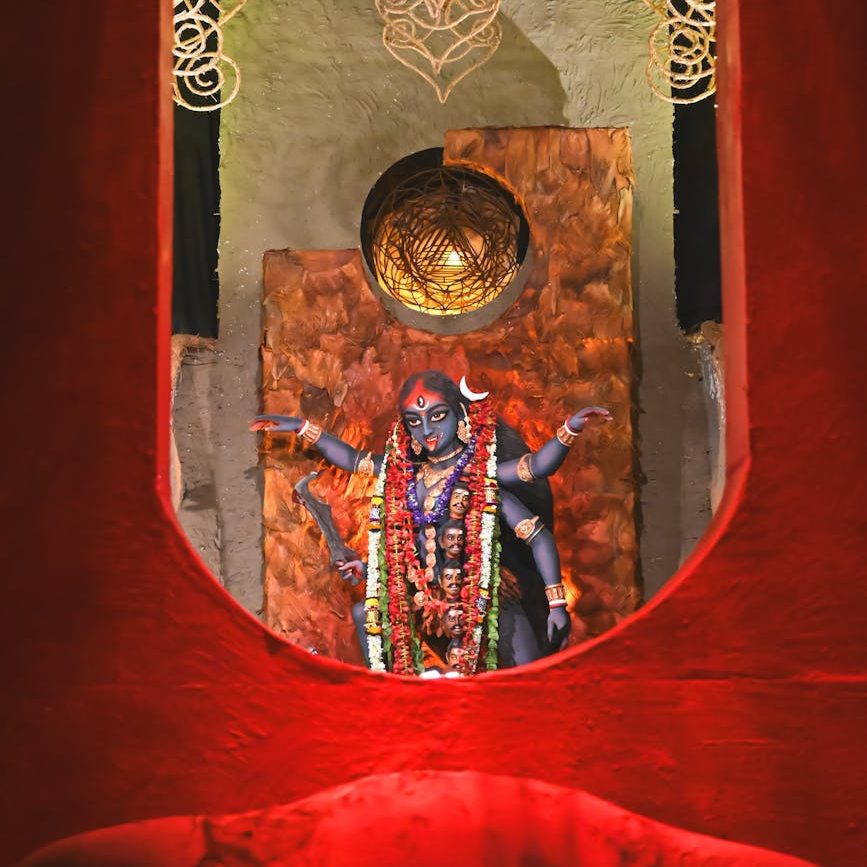
I remember, when I was married, our home had a lone idol of Goddess Kali, a deity I had rarely prayed to before. My parents usually had Lord Krishna at home. I still remember looking at the deity and crying. I asked if this was how it would be for the rest of my life – painful and broken on the inside, faking happiness on the outside (especially for social media).

I sometimes think I might have continued living that way if I hadn’t been pushed by some greater power to take a stand for myself. Probably it was Her. Must have been fed up with me always looking at Her, crying and whining. Even goddesses have their tolerance limits. Also, gods only help those who help themselves, right? Or as we Malayalees say, “Thaan paathi, dhaivam paathi” (you must put in your half of the effort, and God will take care of the rest). Maa Kali might have gone, “Bitch, why don’t you just leave the marriage, instead of troubling me all the bloody time?

The day I walked out of my marriage was also the day I told my parents, “If you don’t help me, I’ll do it on my own.” Thankfully, they stood by me when I made that decision. I also had the confidence to stand on my own feet. I wasn’t employed then, but my freelance work brought in some income. I knew that if I left the marriage, I wouldn’t be a burden on anyone. That same freelance experience later helped me secure a job. It formed the bulk of my resume, and it convinced my employers that I could handle responsibilities independently, even while working from home, at a time when WFH wasn’t even common.

When I look back, I feel the universe was guiding me in small but meaningful ways toward a life that may be inadequate for someone else, but is absolutely correct for a homebody, introverted feminist like me.

Taking Marriage Advice from Society

But the point is, society will tell you not to take advice from a woman like me. Because I’m a divorcee. What would I know about marriage and relationships, right?

Yet it will encourage you to listen to the woman who keeps enduring it all, at the cost of her well-being, because that’s what a “good wife” does.

Society doesn’t really care about what a woman thinks or feels. It just wants you to stick to the rules.

***

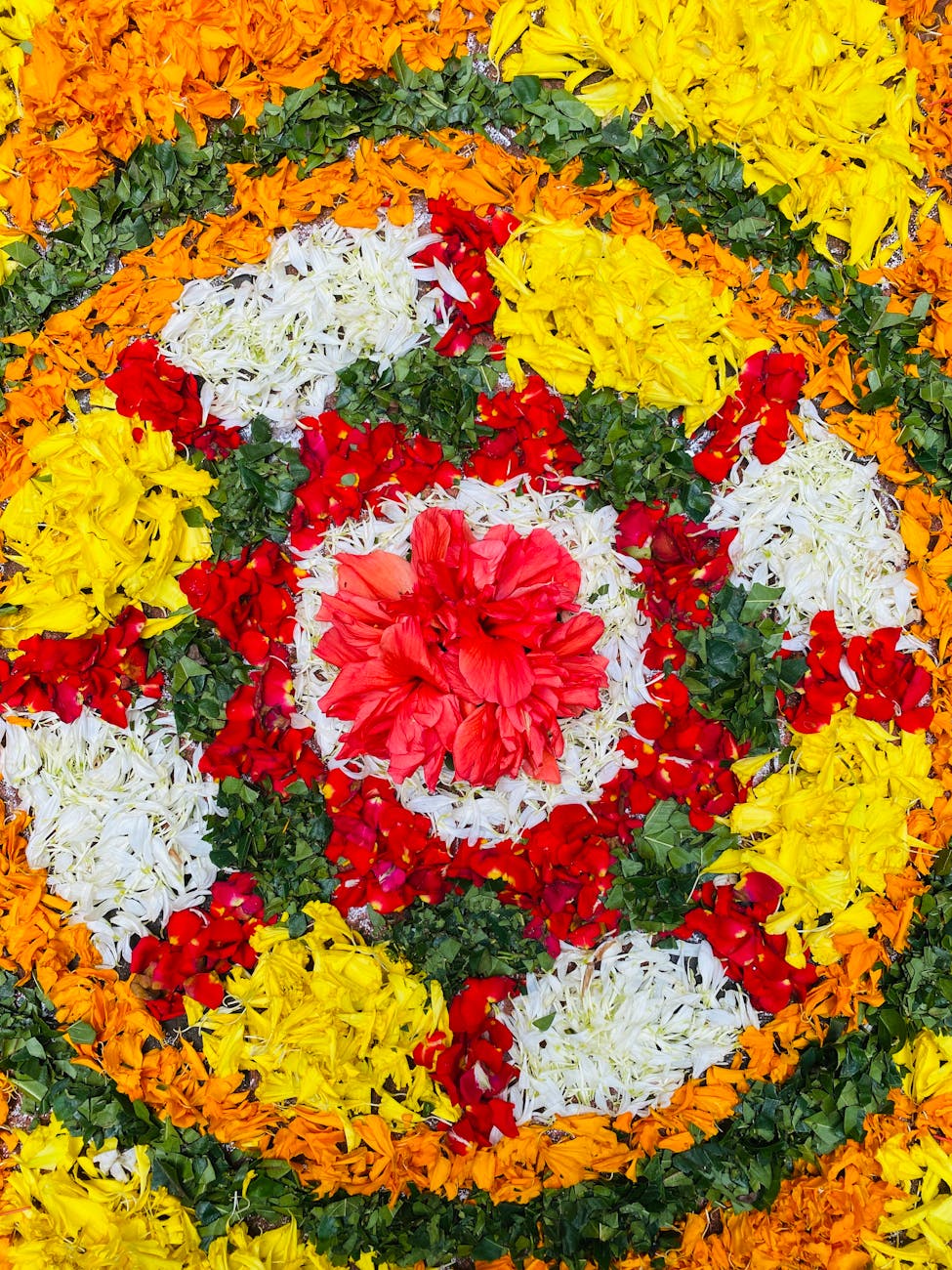
Photo by Monojit Dutta

Communal Harmony in India: Easier Than We Think?

Onam flowers

After celebrating Onam and engaging in numerous social activities, my introvert battery hit rock bottom. I needed a desperate recharge. So what do I do? Naturally, I retreated to every introvert’s most favourite new-gen comfort zone: scrolling endless Instagram reels. Nothing says “I’ve had enough of people” quite like being a couch potato, locked up in your house, while going through everyone else’s social lives.

As I scrolled through the multiple Onam-related posts, I couldn’t help but appreciate the inclusivity in Kerala. Malayalees across religions, whether they are Hindus, Christians, or Muslims, celebrated Onam with equal enthusiasm. Everyone welcomed Mahabali with open arms. A few voices did try to stop their communities, saying Onam is a “Hindu festival,” but not many paid attention. That’s a good sign. People are choosing to step out of religious bubbles to celebrate together.

Still, Kerala, often praised as a secular state, has been showing sporadic worrying signs of exclusion. Just before Onam, a teacher told students not to participate in the festival because “our religion doesn’t allow it.” The outrage led to her suspension, but this mindset isn’t limited to one person. How widespread is the thought? No one can quantify. It’s impossible to analyze each and every Indian’s thought. However, there is an increasing number of cases that advocate for exclusionary behaviour. You are penalized for celebrating other festivals, or for respecting someone else’s god, or for chanting something as simple as “Bharat Mata ki Jai.”

India guarantees freedom of religion for all communities. But if we use that freedom only to exclude ourselves from others, we risk creating deeper divides. True communal harmony comes from participation: joining in festivals, enjoying each other’s food, and refusing to see other faiths as “untouchable.”

For India to stay secular, this effort has to come from all of us. We’ve come far since independence, but there’s still a long way to go. It’s up to us to ensure religion doesn’t become a wall, but a bridge.

***

Photo by Saran Indokera

An Ode to Zarna Garg & Family

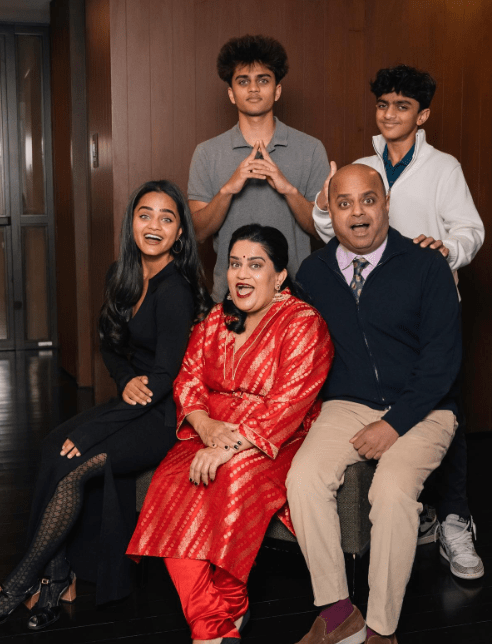
Zarna Garg and Family

I recently started watching Zarna Garg’s stand-up videos. Until then, I had only seen snippets of her interviews on Instagram reels. At that time, I assumed she was yet another comic who makes a living by criticizing India, as many Indian comedians do. Negative takes on India tend to get more attention, and I, honestly, had grown a bit tired of that negativity. So I stayed away from watching Zarna’s videos for the longest time.

Eventually, I decided to watch her special Practical People Win on JioHotstar (originally on Hulu). That special led me to the Zarna Garg Family podcast on YouTube, where I found Zarna, her husband, Shalabh, and their three children having honest, open conversations. Something every Indian family could learn from.

In my opinion, it’s a brilliant marketing tactic on her part to build that curiosity around her family in her specials. She says, “My son… so handsome,” “My daughter… so nerdy,” so you naturally want to know more about this family, what they look like, and witness their quirks in real life. This is the intention of the podcast – to get you more involved in the Garg family brand.

People like me crave a more personal connection with celebrities, influencers, and comedians. I want to hear their real thoughts, personal likes and dislikes, without sugarcoating or political correctness. The Garg family brings exactly that authenticity, which keeps you hooked. Bollywood, on the other hand, lacks this today. Most interviews feel overly scripted, with celebrities giving dull, promotional takes right before a movie release.

Zarna calls herself the quintessential “Indian aunty.” As someone in my 40s, I relate to many of her traditional views. Opinions that I did not hold in my 20s. Her daughter Zoya, on the other hand, reminds me of my younger self: idealistic and confident that hard work and determination can achieve anything. But life eventually teaches you that not everything goes your way. However, this is a lesson only experience teaches you. It cannot be taught by others.

I would like to take this chance to point out how much I admire Zoya. She is articulate and strikingly pretty, with the most gorgeous eyes, even though the Garg family often jokes about the eldest son being the most attractive. Zoya is never dismissive or disrespectful to her parents, even when they go against her views. I find this refreshing, especially today when many youngsters tend to be more casual, even rude, with their parents. As an old-school millennial who values parental respect, this stands out to me.

The podcast drew me into Zarna’s world. I ended up binge-watching episodes where the family openly discusses topics like dating, marriage, interracial relationships, and finances. All of them, including the children, are articulate and express themselves clearly and thoughtfully. As someone unmarried and child-free, I couldn’t help but compare their conversations to those my cousins and siblings have with their children. One of my nieces is dating a white man (and she has a history of dating only white men), so Zarna and her husband’s confusion and concerns felt very relatable. The podcast not only helps you reflect on your own feelings but also offers a fresh perspective from the younger generation. This is something new-gen parents can highly benefit from.

What endears me most to Zarna is her unapologetic Indianness. Many Indians abroad change their attire, avoid Indian clothes or bindis, culture, and even end up cooking less traditional food so that the masala smell doesn’t linger on their clothes. They have to compromise on their Indianness, just to blend in, be accepted, and respected. Despite these compromises, racism still continues. So, how much of this “blending in” has proven effective?

I’m of the belief that to enjoy Indian culture fully and unabashedly, one needs to stay back in India. Other countries, unfamiliar with the Indian, especially Hindu, way of life, may not be as accepting or comfortable with it. Living abroad often means diluting many aspects of your culture just to make others feel at ease. Zarna, however, proudly wears her Indian identity on her sleeve. She wears Indian outfits and a bindi on stage, despite admitting she constantly faces racist remarks in the USA over it. Her refusal to shed her identity to fit in is admirable. It takes courage and conviction to stay true to oneself in a foreign land, and Zarna has that in abundance. As racism against Indians has reached new heights globally, Zarna’s pride in her identity is truly inspiring. She shows that we should not cower before hate but instead embrace and celebrate our culture and traditions without fear.

***

Picture Source: Instagram/ZarnaGarg

Interracial Romance and the Indian Mindset

Interracial Romance in Indian Families

I recently watched a thoughtful discussion by Zarna Garg on interracial romance, featuring her own family. Based in the US, their candid conversation offers a refreshing glimpse into how Indian-American families are navigating such topics. It was heartening to see everyone, parents and kids, engage so openly. In many Indian households, these conversations either happen too late or not at all, often wrapped in hesitation or silence. But here was a family talking honestly about dating, identity, and interracial relationships. A big shoutout to them for their openness and clarity. It’s these dialogues that make a real difference.

Watch the video below:

Thoughts

I’ve spent most of my life abroad before choosing to return to India. Yet even while living overseas, I always knew my relationships would be with Indian men. Perhaps it’s because I studied in an Indian school and mostly socialized within the Indian community, even outside the country. I look Indian, dress Indian, and speak with an Indian accent. So it was natural to feel more comfortable with Indian men.

However, in today’s globalized world, with increasing interracial mingling, millennials like me must come to terms with the fact that more non-Indians are likely to become part of our families. Someone recently remarked how the world is blending in such a way that you can no longer easily tell someone’s ethnicity. Even appearances are getting “globalized.” It was an eye-opener. I’ve come to realize this holds especially true in the Indian context. Today’s new-generation kids often no longer look or sound traditionally Indian, especially the kids in Indian metros. Their accents, fashion, and even body language reflect a more global identity.

A few months ago, a relative married a Spanish man, the first white partner in our family. Surprisingly, everyone, including the older generation, was welcoming. No drama. No resistance. That in itself feels like progress. Our extended family no longer fusses over caste or religion in love marriages. Marrying someone from a “lower caste” has become normal (though I personally reject terms like “lower” and “upper” caste, which are inherently divisive). Only a few super-senior relatives seem to hold on to rigid views, but even that seems to be fading.

I wonder if this shift is due to the older generation’s growing access to YouTube and social media. Many now watch global discussions on love, identity, and acceptance. One moment really stood out: a senior aunt watched Kaathal, a Malayalam film about same-sex love, and casually remarked, “Being gay or lesbian is fine. It’s not a disease.” That kind of acceptance would’ve been unthinkable even a decade ago. But it’s happening now, and that matters.

More recently, one of my nieces fell in love with a white guy. It’s a bit more delicate because it hits closer to home. While I’m happy she found someone, I can’t help but feel a bit anxious. Our cultures are worlds apart, and it’s not just the couple that has to adjust, but the families too. At this age, do I or her parents have the patience? I’m unsure. On second thought, it doesn’t concern me or her family, as the relationship is hers to navigate. Still, as Zarna Garg wisely said in her family discussion, any relationship can thrive if the core values align: education, family, career, loyalty, and health. Everything else is secondary and can be worked around.

One comment from Zarna’s husband lingered with me. He mentioned that their eldest daughter has only dated white men, and he took it personally. He had read somewhere that girls whose fathers aren’t ideal husbands are more likely to do this. That struck a chord. My niece also has a pattern of dating white men, and to be honest, her father isn’t exactly the perfect partner either. Could there be a subconscious link? I wouldn’t dare bring it up now, especially since she lives abroad, but maybe someday in person.

There’s so much our generation is still figuring out. As millennials in our 40s, we stand between tradition and transition. We want to be open-minded and inclusive, but also grounded. At times, it worries us to see the younger generation drifting away from tradition. There’s a quiet fear: will our culture someday fade into oblivion? But these are changing times, and change demands a degree of acceptance. We may not always agree, but we must learn to adapt. I also see a growing trend among young parents today: trying too hard to be politically correct, often avoiding difficult conversations just to stay in their children’s good books. This might be a measure to ensure they don’t repeat their parents’ mistakes of being too restrictive. But experience teaches us that hard truths, spoken with love, are just as necessary today as it was yesterday.

Some of the advice I dismissed in my 20s now makes perfect sense. You only begin to understand your parents once you reach their age. That’s how life unfolds. You gain clarity with time. Until then, all we can do is trust, adapt, and hope it all works out in the end.

***

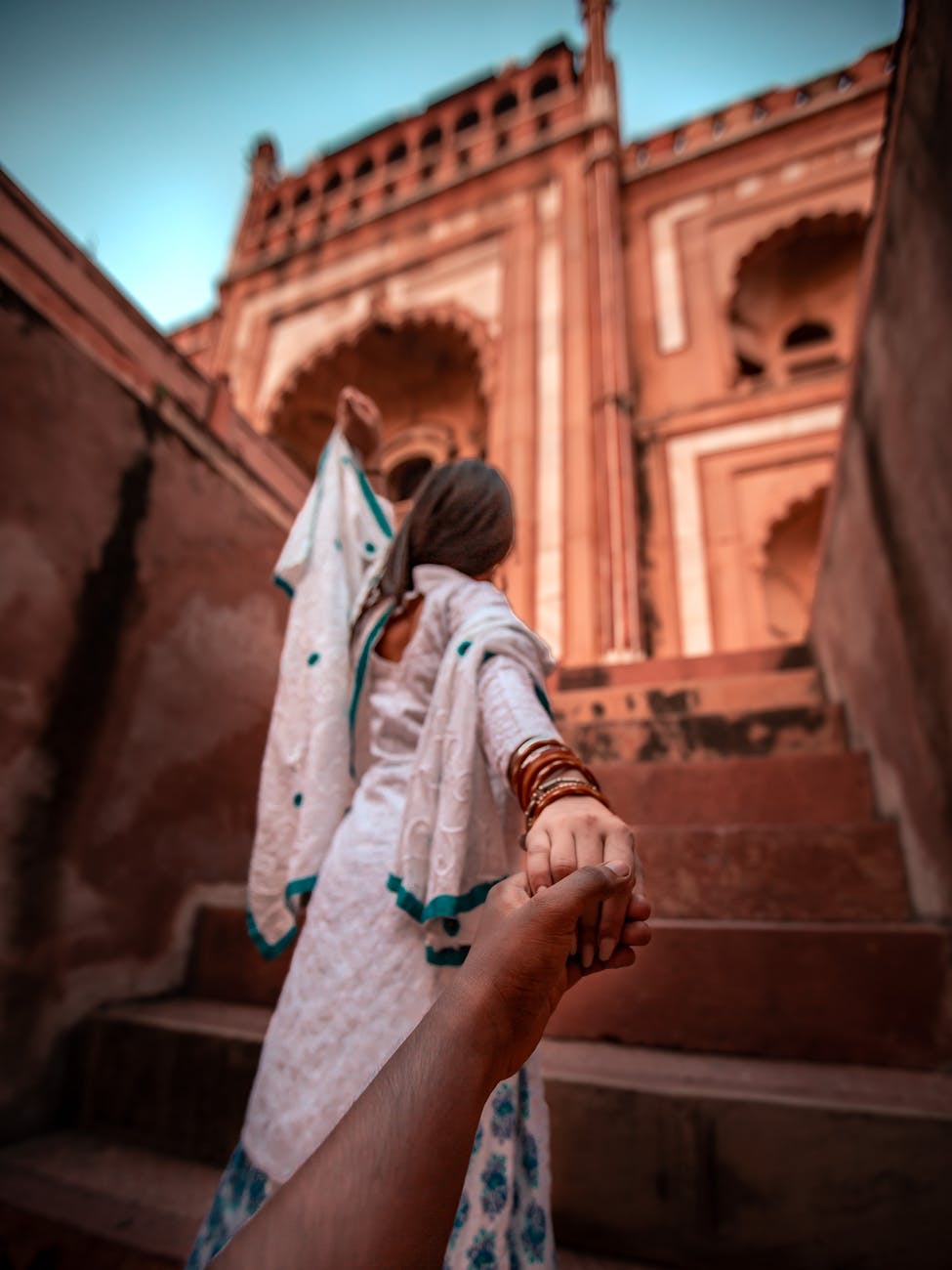
Photo by Bhavitya Indora

Godless Yet Hindu: How Hinduism Welcomes Every Kind of Belief

For a major part of my life, I considered Hinduism just a religion. But as you grow older, you enter a stage when you wish to know more. That’s when I realized Hinduism is more than a religion. It’s a broad philosophical framework that accepts a wide range of beliefs, including atheism.

Did you know Hindus can believe in multiple gods or a single god if they wish, but they are also free not to believe in any god if they wish not to? Non-believers are still considered Hindu. They are not ostracized or excluded from the community. This openness is reflected in ancient Hindu schools of thought, such as the Carvaka and Samkhya schools. These schools, although lesser known, even among Hindus, are testaments to Hindu philosophy’s pluralistic nature.

Carvaka: The Atheist School of Hinduism

Carvaka is an ancient Indian philosophy that openly rejects belief in God, the soul, karma, reincarnation, and life after death.

The core idea of Carvaka is that only tangible things, such as those we can see, touch, or directly experience, are real. The rest is fluff. Its thinkers believe that Gods and heavens are man-made concepts designed to control people.

The main focus of the Carvaka school is to live a happy life in the present, without tying your actions to living a good afterlife, because there’s none. The Carvaka philosophy endorses materialism, which is good news for those who are all about living the good life.

In short, Carvaka says, “Enjoy your life here and now, because that’s all there is.”

Samkhya: A Spiritual but God-Free Philosophy

Samkhya is a Hindu school of philosophy that is spiritual but does not rely on the concept of a creator god. Its core idea is that the universe consists of two things: Purusha (pure consciousness) and Prakriti (nature). The goal is to free yourself from suffering by understanding that your true self is not your body or mind, but pure awareness.

Samkhya does not completely deny the existence of God, but rather states that belief in God is not necessary for achieving spiritual liberation. You must have seen this philosophy being practiced through methods such as Yoga.

Personal Beliefs & Their Acceptance in Hinduism

I’m not religious. However, I’m not an atheist either. I’m someone who ardently believes we are all praying to the same universal energy, just under different names, with different rules.

If there’s only one true religion, how does one explain miracles occurring in every faith?

I have had my prayers answered when I was a traditional Hindu believer, praying to Goddess Durga. My prayers were also answered when I prayed to the universe. This has shaped my impression that God is universal, one divine energy known by many names. Each path may look different, but they all lead to the same source. The only thing that matters when you pray is the depth of your emotions.

Hinduism accommodates thoughts like mine. I’m not judged or ostracized for holding such views. The religion does not demand that I conform to rigid principles. Instead, it allows space to question and for my beliefs to evolve. This openness and freedom are what make Hinduism deeply meaningful to me. I can still call myself a Hindu, even without being traditionally religious.

This openness in Hinduism extends beyond individual beliefs to matters like gender and sexuality. Ancient texts and temple sculptures across India depict a spectrum of gender identities, showing that Hinduism has historically acknowledged and embraced LGBTQ individuals. Few traditional religions offer this level of acceptance. That is what makes Hinduism not just a religion, but an inclusive way of life.

A Message to Hindu Youth: Your Religion Is More Open Than You Think

Despite its pluralistic, “modern” nature, many Hindu youth today feel that Hinduism isn’t “cool” enough. Perhaps because its rich philosophy is rarely taught during childhood. Outside India, Hinduism isn’t widely practiced or represented on global platforms, and the Western media often reduces it to stereotypes. There is also a lot of misinformation spread about Hinduism by people who know very little about the religion.

What many don’t realize is that Hinduism is one of the most liberal and inclusive systems of thought in the world. It is secular in spirit, embracing all forms of belief, including atheism. Hindus are free to question religious leaders and traditions without fear of punishment, reflecting the openness and reformative spirit that lies at the core of their faith. This is why you see many Hindus questioning even our religious leaders.

Conclusion

While some Hindu hardliners insist on rigid practices, such views do not represent the true essence of Hinduism. There is no single rulebook. Instead, there are diverse schools of thought that uphold intellectual freedom and individual choice. That is something to be proud of. I hope Hindus remember this when they encounter misrepresentation, hate, and misinformation about our religion and culture online or offline. Rather than accepting distorted narratives, we should take pride in the fact that Hinduism offers space for everyone: believers, skeptics, and reformers alike.

***

Photo by Sujit Hirapara