AI and Its Impending Doom (?)

Recently, Jacob Coxon, a safety researcher who resigned from Anthropic in September 2026, said that both Anthropic and Open AI were “gambling with our lives” by racing toward self-improving superintelligence. He warned that there is a strong chance unchecked progress in artificial intelligence could lead to human extinction by the end of this decade.

The “self-improving superintelligence” part immediately reminded me of a fictional story I read recently called My Friend Aaron by Rory McMeekin (Google it). It was published in August, and it has all the elements of a Black Mirror short story. After reading Coxon’s recent comments about AI safety and superintelligence, that story feels almost uncomfortably real.

As someone who has been working for 15+ years in IT and now uses AI extensively for research, work, and fun, I can understand why many people aren’t taking these warnings from AI experts too seriously. Millennials have heard similar criticisms before, although about different technologies.

A few years back, AI for me at work basically meant Grammarly. It would automatically detect and correct my grammar mistakes. But there was almost a sense of guilt attached to using it, especially with so many people online shaming those who relied on writing tools. Apparently, if we are writers, we should get everything right on our own.

But I am someone who is much more comfortable thinking quickly and writing as I think than writing slowly, consciously, and perfectly. So I found Grammarly to be the perfect companion. It would catch my mistakes when I was speeding up my writing. Yet I still felt like I was doing something wrong by using the app.

It was only after ChatGPT came along that using Grammarly somehow became the lesser sin.

Now, people say, “Don’t use ChatGPT. Use Grammarly for writing and correcting small mistakes.”

If we look at the history of technology, I think this has always been the norm. A new product or technology arrives, people criticize it, and there are predictions about how it is going to ruin society or even end humanity. We saw it with the internet. We saw it with computers. And now we are seeing it with artificial intelligence.

Then something newer and more powerful comes along, and the technology that was previously considered controversial suddenly becomes normal.

I wonder if online AI bots will eventually achieve the same acceptance when something even more advanced comes along. Maybe that will be robots that look and speak like humans. Maybe it will be something we can’t even imagine yet.

Only time can tell.

Technology is definitely moving at a pace that I couldn’t have imagined a few years ago. Things that seemed like science fiction are becoming part of everyday life, and the conversation around AI is changing almost as quickly as the technology itself.

I don’t think banning AI is the answer. AI tools are helping many people, including me, speed up their work and get things done more efficiently. At the same time, I understand the criticism that AI can also make people lazy.

The problem is not using AI itself. It is how we use it. There is a big difference between using AI as an “add-on” to your work, something that helps you speed up what you already know, and using it as a complete replacement for your own knowledge and thinking.

Where that line should be drawn is something technology experts will have to figure out. And, as ordinary users, it is something we will only understand better as AI continues to evolve.

***

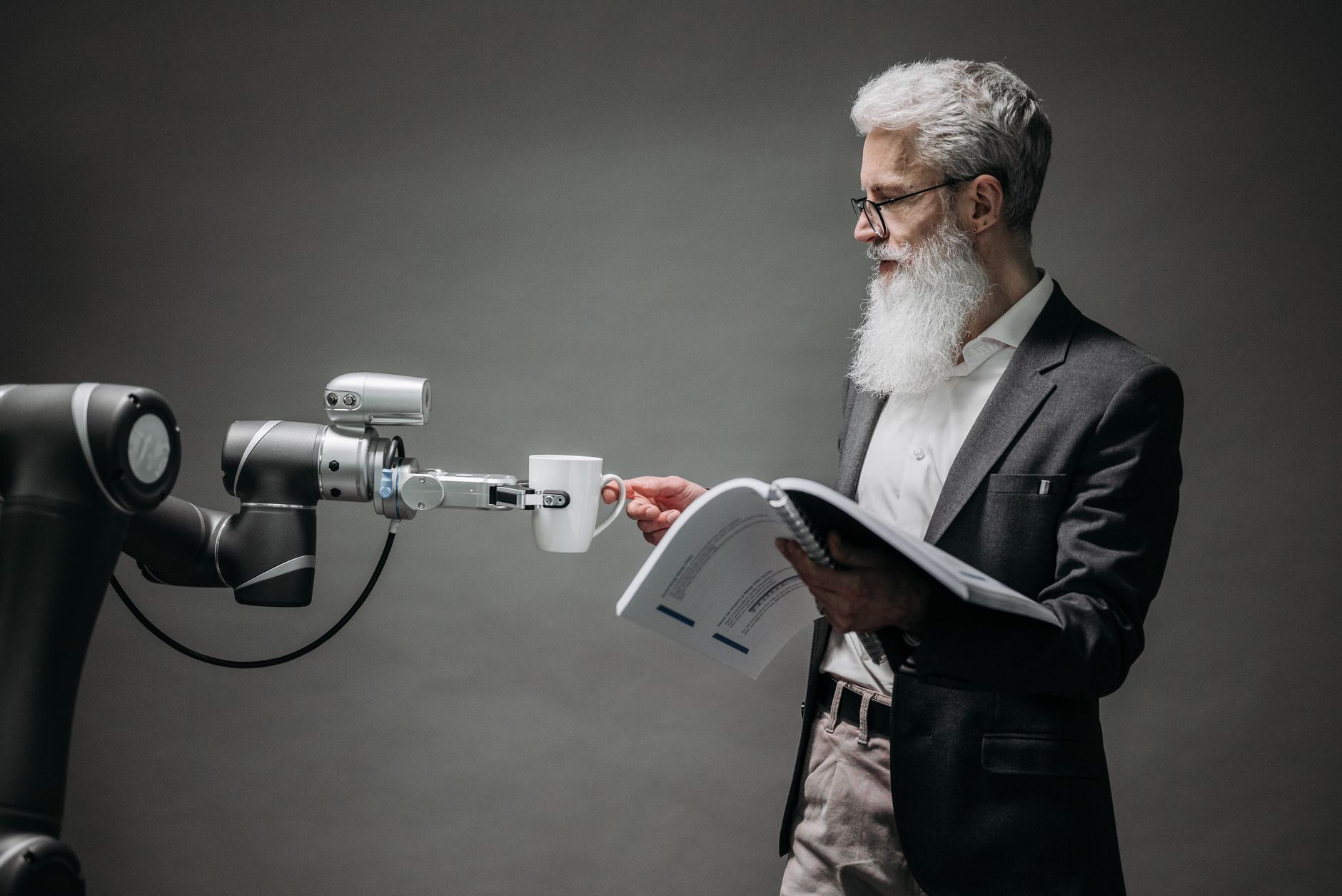
Photo by Pavel Danilyuk

Not an MJ Fan, But This Movie Won Me Over!

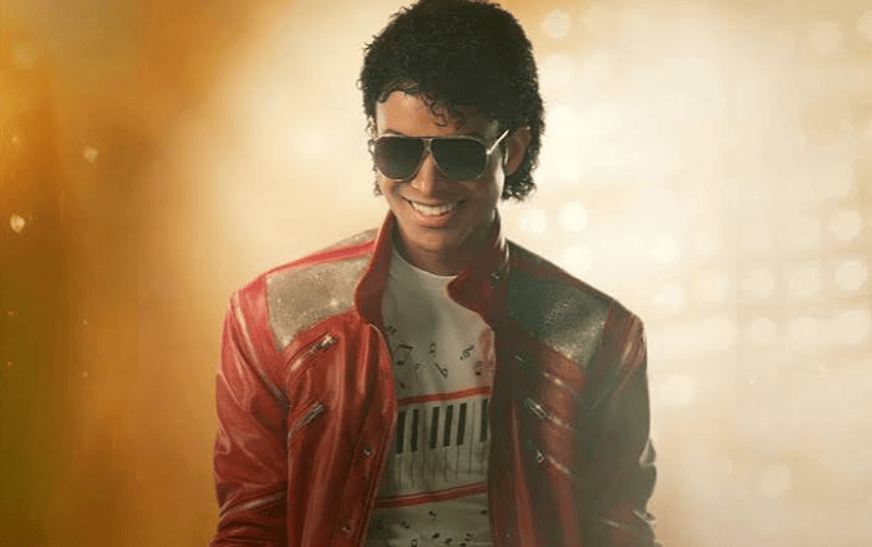
Michael Jackson Poster

Okay, I have to be honest first. I’m not a diehard Michael Jackson fan, which is probably why it took me some time to finally watch Michael. I’m actually not a diehard fan of any celebrity or public figure – you know, the kind of fan who can’t even hear anything negative about their hero without getting defensive.

I always tiptoe around such fans, concerned about whether I would offend them. This has been the case after one specific personal incident. I remember discussing a controversy with someone who was a huge MJ fan, and he went absolutely batshit crazy. He started abusing me simply because I pointed out the news when it came out.

So, in a world full of different kinds of “bhakts” covering politicians across ideologies, sportsmen, football clubs, actors, singers, influencers, religion, and everything else, I’m pretty much bhaktless. It still baffles me when people treat their favorite personalities as gods who can do no wrong or act as if they cannot be questioned.

But having said all that, I really enjoyed this movie! It was genuinely so much fun to watch.

I’m guessing there’s going to be a sequel because this movie seems to focus mainly on Michael Jackson’s troubled relationship with his father. There’s clearly a lot more of his life and career to explore.

Jaafar Jackson’s acting was phenomenal. To be cast in the lead role of his uncle might have been intimidating, but he passed with flying colors.

The song and dance sequences in the movie were incredibly energetic. The movie left me with one big feeling: positive vibes!

Michael is streaming on JioHotstar.

The Butcher of Bosnia and the Illusion of Threat

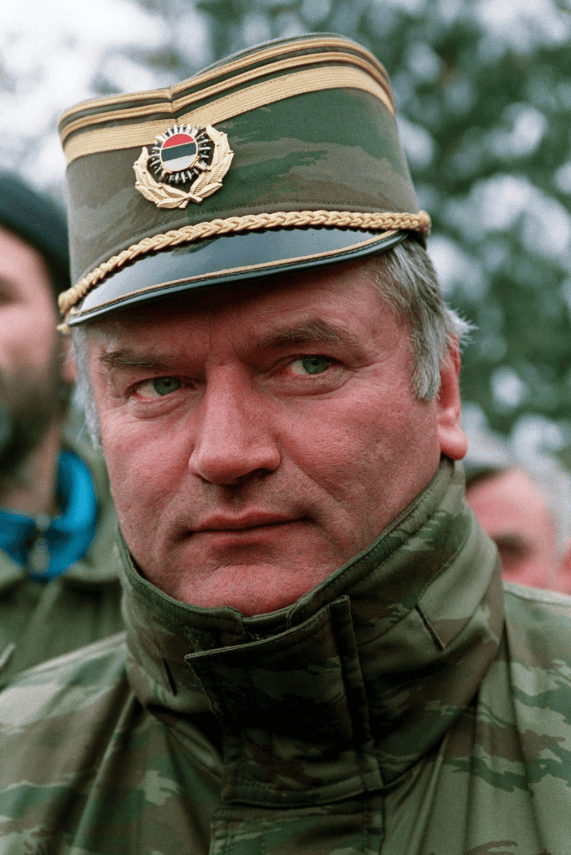
Butcher of Bosnia Image

I came across a news report about thousands of people attending the funeral of the man referred to as the “Butcher of Bosnia.” His name is Ratko Mladić. The report said that he was convicted of genocide for his role in the killing of more than 8000 mostly Muslim Bosniak men and boys in Srebrenica, Bosnia and Herzegovina. He died in prison at the age of 84 in August this year.

I was totally taken aback by this information and I had to look into why such a controversial figure is being considered a hero by many. I found that his supporters remember him as a military commander who defended their community against what they saw as “perceived threats” from Bosniak Muslims during the Bosnian War, which began in 1992.

I can’t help but notice a pattern here: violence is often justified nowadays by this very “perceived threat” – the belief that another community poses a threat to our existence, religion, culture, or way of life. Maybe this pattern has always been there, or maybe social media has simply made these attitudes much more visible.

Let’s take a look at some examples.

Israel’s ongoing conflict with Palestinians is framed by supporters of Israel around threats to its existence, while Palestinians and their supporters describe the consequences in terms of occupation, displacement, and violence against civilians.

Hitler is also being glorified on TikTok today, with his actions being presented through the deeply disturbing logic that he “helped eradicate” a community, Jews, whom they view as a threat to the world.

Afzal Guru and Ajmal Kasab are considered heroes by many because their actions are framed as acts of resistance against perceived threats or justified through a particular political narrative.

Savarkar is hated by many, even more strongly than some historical figures associated with mass violence, but he is also considered a hero by many who believe Hinduism and Hindu identity have been under threat.

I remember feeling absolute dread (a feeling of threat) when thousands attended Yakub Memon’s funeral in Mumbai.

And that is what makes this whole subject so uncomfortable.

Mourning, glorifying, or defending people who have done questionable things simply because they supposedly acted against “perceived threats to our existence” is becoming mainstream.

Closer to home, Hindus have attacked minorities in India because they believe their religion or cultural identity is under threat.

Christians in places like Tamil Nadu have also staged protests when public spaces in their area are used for festivals associated with other religions, with some viewing this as a threat to their own religious identity or traditions.

Then there are Kashmiri Pandits, who are being portrayed as a threat to the “culture” or “religion” of the land even when they are simply celebrating their festivals in a place with which they have a deep historical connection.

The circumstances are obviously different. But the underlying psychology is worth examining.

Once we convince ourselves that another community is an existential threat, almost anything can start being rationalised in the name of protecting our own.

And that leaves me wondering: who is going to do what next in the name of a “perceived threat”?

No community is completely free from this tendency, and no community can automatically claim moral superiority. Across religions, nationalities, ethnic groups, and political movements, people have at different points convinced themselves that their identity, culture, religion, or very existence is under threat.

Once “they are a threat” starts gaining ground, the question is no longer simply who is right or wrong. The question becomes how far people are willing to go to bring down or harm the people they have decided are the threat.

It’s Okay to Not Be Okay: Moon Gang-tae Has Officially Ruined Men for Women Everywhere

It's Okay to Not Be Okay Poster

I kept delaying watching It’s Okay to Not Be Okay because I have a bit of an aversion to hospital dramas. Several friends had recommended this popular Korean drama to me, but I kept putting it off. I was judging the series by its title, and honestly, I wasn’t in the mood for what I assumed would be an intense emotional rollercoaster.

I finally took the plunge a couple of weeks ago.

It took me some time to finish the series because each episode runs for over an hour, and there are 16 episodes in total. I am also not much of a binge-watcher, especially when a series deals with serious or emotionally heavy topics. So yes, completing It’s Okay to Not Be Okay took me a while.

But the time I took to finish it doesn’t take away from the fact that It’s Okay to Not Be Okay is an entertaining, thoughtful and beautifully layered K-drama.

Let’s talk about the male lead first.

Moon Gang-tae, played by the enigmatic Kim Soo-hyun, is such a major green flag that he might just make pursuing relationships in the real world a tad more difficult for women. Because honestly, who can even compete with this kind of surreal charm, patience and thoughtfulness?

He is calm, sorted, emotionally aware and dependable. He is the person you would want beside you when things get difficult. He handles uncomfortable situations with a level of maturity and emotional intelligence that makes you think, “Yes, this is exactly how my partner should behave.”

Basically, Moon Gang-tae is the ultimate go-to guy.

Go Moon-young, played by Seo Yea-ji, is completely different.

She is volatile, unpredictable and unapologetically herself. But beneath all that intensity, she also shows moments of compassion when the situation calls for it. She has a magnetic personality. What makes her even more interesting is that she knows exactly how powerful her presence can be and the effect she has on people.

She is not the easiest character to understand, but she is definitely difficult to ignore.

For me, though, the real star of It’s Okay to Not Be Okay was Oh Jung-se. He plays Moon Sang-tae, the autistic older brother of the male lead, and his performance was so convincing that there were moments when I genuinely wondered whether he was autistic in real life. Yes, I actually Googled him. That, in itself, says a lot about how convincing his portrayal was.

His performance was heartfelt, nuanced and incredibly believable. In my opinion, he absolutely deserved every award and recognition that came his way for this role.

At its core, It’s Okay to Not Be Okay is a serious drama that explores mental well-being, emotional healing, trauma, relationships and the process of learning to accept oneself.

But despite its heavier subjects, the series doesn’t feel emotionally exhausting all the time. I enjoyed the little moments of humour scattered throughout the episodes. They provide some much-needed lightness and make the story feel more balanced.

And the BTS scenes towards the end were absolutely adorable. Seeing the camaraderie between the cast members behind the scenes was a lovely bonus after spending so much time with these characters.

Overall, I found It’s Okay to Not Be Okay to be an entertaining and thoughtful Korean drama. It took me a while to finish, but by the end of it, I was glad I finally gave this much-recommended series a chance.

It’s Okay to Not Be Okay is currently streaming on Netflix.