Anupama Parameswaran’s Narcissistic Abuse Interview Made Me Revisit My Own Story

Anupama Parameswaran Narcissistic Abuse Interview Image

Anupama Parameswaran’s interview on narcissistic abuse has created quite a stir in the one day since it aired on Dhanya Varma’s YouTube channel. One thing she made very clear in the interview was why she chose to talk about her experience. She wanted people to recognize the signs of abuse.

As someone who got divorced several years ago after experiencing both emotional and physical abuse, I knew the comments blaming Anupama would come soon.

Comments like:

“Why is she talking about this in public? She just wants attention.”

“She’s the toxic one in the relationship. Glad her partner left her.”

“Women use the word ‘abuse’ so flippantly nowadays. I’m sure the matter must have been small.”

And sure enough, I soon saw a barrage of similar reactions on Reddit and X.

This reaction is one of the reasons many people hesitate to speak about abusive relationships. They know that once they talk about what happened, they may be questioned, blamed, mocked, or told that they simply did not try hard enough to save the marriage.

“Why talk about it?”

This is such a common question.

But I want to ask the opposite question: Why shouldn’t we talk about it?

It is because people like Anupama chose to talk openly about their pain that people like me were able to heal.

Today, someone going through emotional abuse, physical abuse, narcissistic abuse, or a difficult divorce can find videos, podcasts, interviews, reels, support groups and personal stories online.

When I was going through it, there weren’t nearly as many resources. I had to search for text blogs written by complete strangers who had experienced something similar.

I would read their stories and think, Okay, so I am not the only one who feels this way. Maybe I am not imagining this. Maybe what I am experiencing isn’t normal.

It wasn’t silence that helped me heal. It was people choosing to speak.

In my case, it wasn’t just a “bad marriage”

In my case, there was both physical and emotional abuse involved.

Yet, when you are trying to somehow make your marriage work because of societal pressure, you can find yourself surrounded by people who encourage you to compromise rather than asking whether you are safe or happy.

At one point, I was even advised by someone very close to me not to tell my parents about what was happening because they would get hurt.

Who was I supposed to talk to then?

I was losing a lot of weight at the time because fights would make me lose my appetite. I wasn’t simply dealing with an ordinary marital disagreement. I was struggling emotionally and physically, and yet the advice I received was often about protecting everyone else’s feelings.

When I mentioned the physical abuse, one relative dismissed it by saying:

“It happens in all relationships.”

Another told me to compromise and just keep saying “okay, okay” to everything he said.

This is the kind of advice that can make someone question their own reality.

The comparison game

One of the worst things about talking about abuse is the way people compare your experience with someone else’s.

When I tried to make the marriage work, my ex would taunt me with things along the lines of:

“See? What you faced wasn’t so bad after all. That’s why you’re willing to compromise and return to me. You should see women in actual abusive relationships. They end up in hospitals.”

But abuse doesn’t become acceptable simply because someone else experienced something worse.

You don’t have to wait until you are in a hospital before you are allowed to say that something is wrong.

Society has a strange way of making women feel childish for being unhappy in a relationship. You’re told that you’re not mature enough to deal with “normal” relationship problems. You’re told that marriage requires compromise. You’re told to adjust. You’re told to be patient.

And sometimes, what is really being asked of you is to tolerate things you should never have been expected to tolerate.

Society often cares more about preserving the marriage than the person inside it

This is something I understand much better now.

Society doesn’t necessarily care about your happiness. It often cares about keeping the marriage intact.

A woman who stays in an unhappy marriage can be praised for being patient, mature, understanding and a good homemaker.

A woman who leaves can suddenly become selfish, difficult, immature or incapable of compromise.

I was blamed too. I am sure there are still people who consider the divorce my fault. And honestly, I am fine with that now. I don’t have to prove my version of events to people who gave me terrible advice in the first place. I know what I experienced. I know what I went through. Nobody knows my struggles better than I do.

And I am happy now.

That is enough for me.

The “good guy” problem

There is another complication that I think people don’t talk about enough. Sometimes the person who is abusive also has a very amicable personality.

Anupama mentioned something similar in her interview, and it immediately resonated with me.

Some people are simply very good at being pleasant, charming and agreeable around others. So to the outside world, he is the “good guy.”

Meanwhile, you may be the quieter person. The recluse. The person who isn’t particularly good at maska polish. So when you finally talk about what happened, people find his version easier to believe than yours.

Because they have seen the charming version of him. They haven’t seen what happened behind closed doors.

That is one reason why survivors of emotional abuse can find it so difficult to speak. You are not just recounting what happened. You are also trying to convince people who have already formed an opinion of the person involved.

Sometimes there is one final moment

And just like Anupama said, sometimes there is a flip. A moment that finally makes you take the last step.

For me, it came after another fight. I made him promise in front of God that from then on, we would resolve our problems without abuse.

He broke that promise and then justified it again. That was the moment something clicked in my head.

If this man, who is religious, could make a promise in front of God and then break it and justify what he had done, how was he ever going to listen to me?

I immediately called my parents. I told them that either they picked me up or I was leaving that instant.

And that’s how I left my marriage.

In the dead of night.

In my night clothes.

With nothing but a handbag.

The strange little moments that helped me survive

Looking back, there were also tiny moments that reminded me that I could still make myself happy.

I remember one particular picture I took right after a fight. I had just finished an intense crying session when I basically thought, Aah, fuck this. Let me make myself happy. So I started clicking aesthetic pictures.

I hadn’t eaten all day because, during that period, fights would often make me lose my appetite. So I took myself out and treated myself to some food.

I ordered coffee. And when it arrived, there was this huge heart on it. I actually looked at the other people’s coffee to see whether they had something similar. Nope.

Maybe the guy could make out from my face that I needed it.

But that tiny heart warmed me in a way I had never felt in my marriage.

I eventually understood that we simply weren’t right for each other

These days, when people ask what happened, I usually say that we weren’t right for each other.

And that is, in a way, true.

Maybe with a more docile person, he wouldn’t have felt the need to “discipline” her. And perhaps with a different person, I wouldn’t have become so agitated either.

We had very different ways of thinking. We brought out the worst in each other. But saying that we weren’t right for each other doesn’t mean that abuse was okay.

Incompatibility can explain why a relationship doesn’t work. It does not excuse physical or emotional abuse.

That distinction matters.

Men can be victims too

And before anyone assumes that I think abuse is only something women experience, I don’t.

Men can be victims of emotional and physical abuse too. I have witnessed it myself. In some ways, male victims face an additional barrier because society still doesn’t give men enough room to admit that they are hurting.

They’re expected to be strong. To control their emotions. To “man up.” To deal with relationship problems without admitting that they are being hurt.

That needs to change too.

Abuse is abuse, regardless of the gender of the person experiencing it.

Why talking about abuse matters

This is why I don’t understand the “Why talk about it?” reaction.

People talk because someone else might be going through the same thing and doesn’t yet have the words for it.

People talk because someone may recognize a warning sign.

People talk because someone may finally realize that what they have been told is “normal” isn’t normal.

People talk because sometimes hearing another person’s story is the first thing that makes you feel less alone.

I know this because I was that person.

I healed partly because strangers were willing to write about their experiences when I needed to read them.

Today, people have far more ways to find that kind of support. They can watch an interview, listen to a podcast, find a video, read a personal blog, or come across someone speaking openly about their experience.

That is not attention-seeking.

Sometimes, it is someone putting their pain into words so that another person doesn’t have to feel as alone as they once did.

So when someone asks, “Why talk about it?”

My answer is simple:

Because silence never helped me heal. People speaking about what they went through did.

And if sharing your experience helps even one person recognize emotional abuse, physical abuse, narcissistic abuse, or an unhealthy relationship and find the courage to leave, then talking about it was worth it.

And if you’re currently in a situation like the one I was in, please don’t make my mistake. Don’t let people convince you that you need to endure more before your pain becomes “serious enough.”

You don’t owe anyone a marriage at the cost of your happiness, safety or self-respect.

One last thing

And I want to add one more thing: the emotional manipulation.

Every time an episode of abuse happens, the person knows they have done something wrong. So they cry, apologize, promise it won’t happen again, and you, especially if you’re an empath, fall for it. You want to believe them. You want to believe that this was the last time.

But it doesn’t stop.

Eventually, even the crying and apologizing become less frequent. A sort of “What are you going to do about it?” attitude starts taking over. There is a smugness that comes from knowing you will tolerate it anyway.

That was when I finally told my parents.

My father and mother, God bless them, refused to let me return to that house unless he genuinely changed his ways. But his response was, “My house, my rules.”

And that was the end of that.

I also understand that having supportive parents is a privilege and a blessing. Not every woman has that safety net. Some parents won’t allow their daughters to return home, and that’s when the feeling of being trapped can become unbearable. For some women, that mental pain can become so overwhelming that they see no way out.

I know what that kind of mental pain feels like.

In my case, though, I knew I would never choose death. If my parents hadn’t supported me, I would have simply run away, started from scratch and figured out a way to survive. I had enough confidence in myself because of the little work experience I had already gained.

That’s one of the reasons I stress so much on financial independence for women.

Having your own income isn’t just about money. It gives you options. It gives you confidence. It gives you the knowledge that even if everything falls apart, you can rebuild your life.

I know women who feel completely tied down because they don’t have financial independence. To them, I would say: start small. Take up whatever work you can, in whatever way you can. It doesn’t have to be your dream job or a huge salary.

The first step is knowing that you can earn something on your own.

Because sometimes, that little bit of independence is what gives you the confidence to finally walk away.

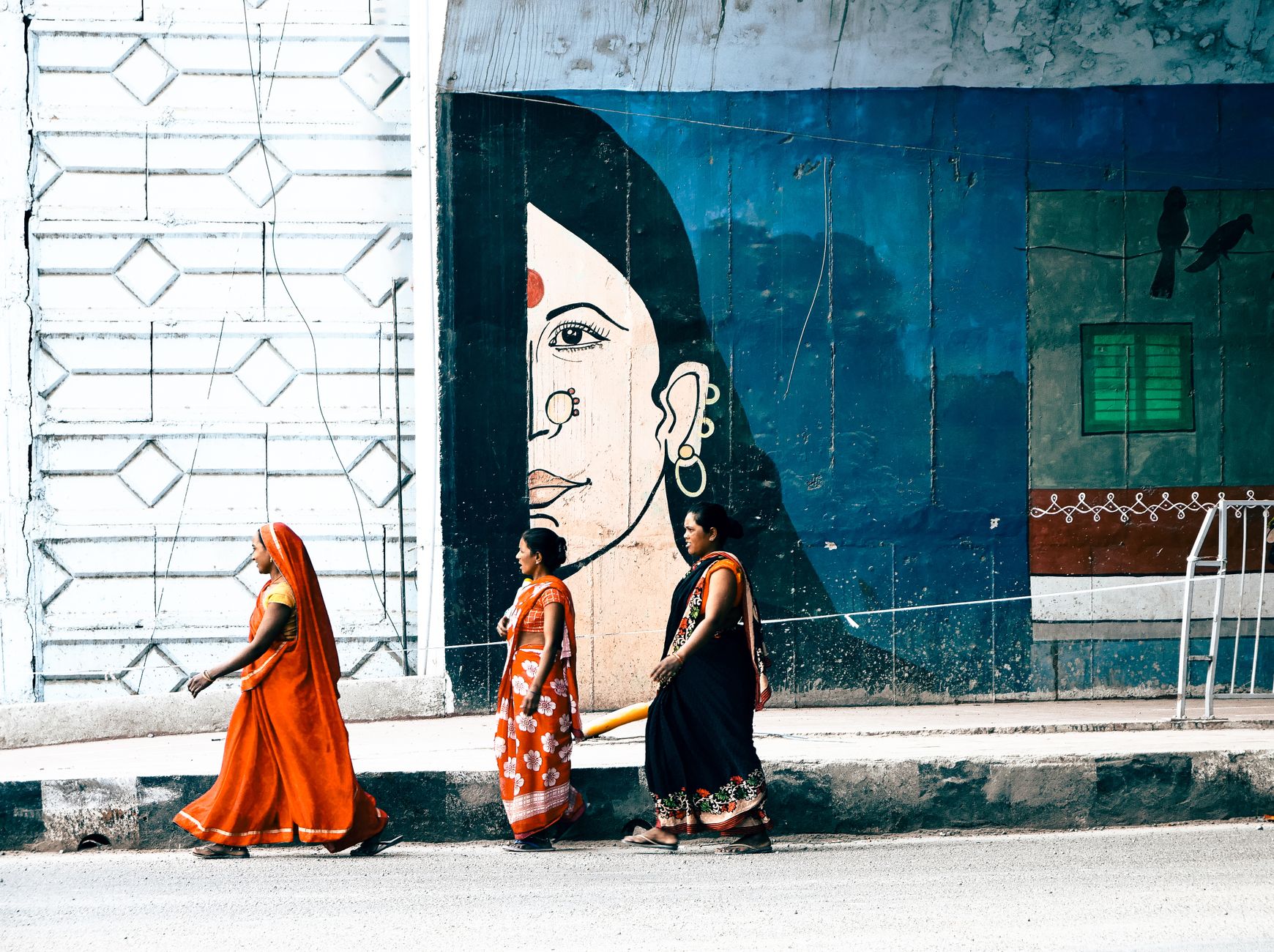
Breaking Taboos, One Bindi at a Time

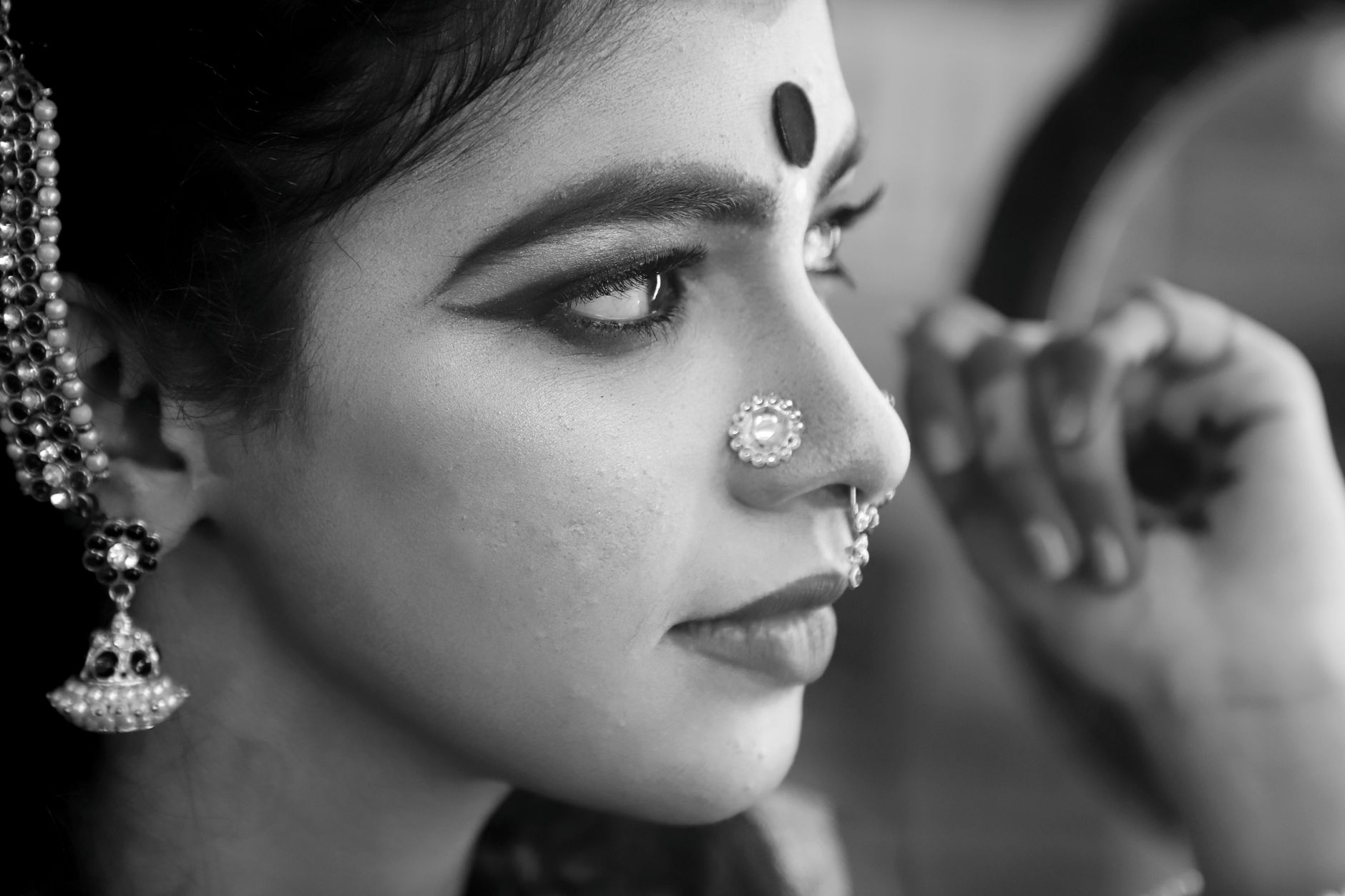
Woman Wearing a Bindi

The other day, a neighbour came over for a chat.

She’s a Muslim and a communist. I mention both because it helps explain the situation. Despite coming from a deeply religious and conservative family, she’s personally quite liberal.

She told me how her daughter landed in trouble for posting a photo on social media wearing a bindi, the small forehead dot traditionally worn by many Indian women, especially Hindus.

Her sister’s daughters, who apparently keep tabs on everyone’s social media, spotted the photo, shared it with the rest of the family, and turned it into a full-blown controversy.

The best part?

The girl refused to delete the photo.

I told my neighbour something I genuinely believe. If someone has an irrational “allergy” to something completely harmless, the solution isn’t to hide it. The solution is to let them see it so often that it eventually becomes normal.

If a harmless bindi causes outrage, keep wearing it until people get used to seeing it.

If colours like saffron, orange, or green trigger unnecessary controversy, keep wearing them until they stop attracting attention. This is related to the incessant mockery that the actress Priya Prakash Varrier faced in Kerala from a journalist for appearing in a Cuticura campaign wearing a Orange coloured outfit (or in his words “Saffron-coloured”). She had chosen the outfit simply to match the brand’s colours. Even something as ordinary as a dress colour became a point of criticism.

Similarly, if being divorced is treated as a stigma, then more divorced people should stop hiding, own the label without shame, and help normalize it.

That’s how irrational taboos lose their power. Not through arguments, but through familiarity. When ordinary people refuse to feel ashamed of harmless personal choices, those choices gradually stop being controversial.

I’m obviously not saying, “Keep using drugs until people get used to it.” I’m talking about harmless personal choices, whether it’s wearing a bindi, choosing a colour, or being divorced, that other people feel entitled to police.

The more these everyday choices are seen in public, the less power stigma and social policing have over people’s lives.

***

Photo by Sharath G.

The Introvert-Extrovert Chat Paradox

Picture of two people looking at each other, depicting introversion and extroversion

Something that has caught my eye often over the years is the difference between how introverts and extroverts communicate in real life and online. I wonder if you’ve noticed it too.

I’m an introvert who loves writing and blogging. But I’m someone with a fairly extroverted chatting personality.

On the other hand, many extroverts I know are surprisingly quiet on chat. Some even come across as shy. Meanwhile, introverts like me can appear far more outgoing and expressive online.

This is where things get interesting.

Imagine a friendship that begins through real-life interactions. Someone gets to know your actual personality, and then later comes across your online personality or chat personality. What if they don’t like that version of you as much? The opposite can happen too. Someone may enjoy your confident, talkative online presence but struggle to connect with the quieter, more reserved version of you in real life.

I think this is where many misunderstandings and personality clashes happen today.

This post is simply an observation. It’s just something I’ve noticed while navigating friendship and online conversations.

As someone in my 40s, I didn’t grow up with this confusion because there was no online personality to manage. The people around you knew only one version of you.

I did start blogging during my college days. Over time, I developed an online personality that was more outgoing and expressive. The internet felt like a safe space where I could communicate freely. As someone who was studious and never benefited from what people call “pretty privilege,” writing online allowed me to share my thoughts without feeling judged.

My appearance may have changed over the years, but my introverted nature never really did. The internet continues to be a comfortable space where I could express my feelings and connect with others in a way that felt natural to me.

Today, we live in a digital age where friendships and even relationships are shaped by multiple versions of ourselves. Real-life conversations, text messages, social media interactions, blogs, and online communities collectively play a role in how others judge us.

Maybe that’s why getting to know someone has become both easier and more complicated than ever before.

***

Photo by cottonbro studio

If You Were Locked in a Room with 10 Men for 10 Days

I came across this post on Reddit recently. It immediately made me think about my own experiences.

At the end of the day, it really comes down to energy, doesn’t it?

When I was in the North East, and it started snowing heavily, I stepped into a small shed with a heater. The shed was full of North Eastern men, including my guide. I was the only woman there at that moment.

And yet, I did not feel unsafe even for a second.

That moment stayed with me because it showed me something important about how we perceive safety while traveling or being around strangers.

Now imagine a similar situation somewhere else in India. There are some men I know personally, even a few colleagues, with whom I would feel uncomfortable being stuck in a small space. Not because they have ever done anything that could be complained about. Nothing like that. But the energy they give off simply does not make me feel comfortable.

Safety often has less to do with whether we know someone and more to do with the vibes they give off and whether we are comfortable with those vibes.

Many women will relate to this. We tend to have strong instincts when it comes to unsafe environments. Research often suggests that these instincts developed over time as part of human evolution. Women had to learn to read subtle cues in order to stay safe.

That is why sometimes we feel calm around complete strangers, while at other times we feel uneasy around people we already know.

If women were allowed to choose the people they would spend those 10 days locked up with, most of us would probably make the right call about who we feel safe around.

The real problem arises when that choice is taken away from us, and the men we are to be locked up with, whether known or unknown, are chosen by someone else. When that happens, the chances of discomfort or even unsafe situations naturally increase.

For me, that snowy day in the North East was a reminder that safety is not always about familiarity. Sometimes it is simply about the energy people carry, and the signals our instincts quietly pick up.

Ithiri Neram: When Old Love Returns Years Later

Ithiri Neram Movie Poster with Roshan Mathew and Zarin Shihab

I picked the Malayalam movie Ithiri Neram randomly last weekend. I usually choose movies based purely on my mood. Because of that, I often ignore films or dramas that are trending or getting a lot of attention. Sometimes I simply may not be in the mood for that genre.

Ithiri Neram had been sitting in my watchlist for quite some time. After my North East trip, I suddenly felt like watching something slow-paced and centered on human interactions. I wanted a quiet Malayalam film that focuses more on emotions than plot twists. Ithiri Neram seemed perfect for that kind of weekend watch.

The story deals with a slightly controversial theme. It follows a married man who reconnects with his college flame. In a way, it reminded me of the Tamil movie 96, but almost in reverse.

Because the story revolves around a married man who still carries unresolved feelings for his ex, the film creates an unusual emotional conflict for the viewer. You enjoy the crackling chemistry (a type of chemistry that conveys a lot through eye contact) between the lead pair, yet at the same time you feel a sense of guilt. You cannot help but think about the wife, who has no idea what her husband really feels about their marriage. According to him, that “special feeling” is missing in the marriage. This aspect of the story also became a point of debate among viewers. Some felt that the movie glorified an extramarital emotional connection. But I don’t think movies always need to function as a vehicle for social messaging. Cinema is also a space to tell stories about human emotions, even the uncomfortable ones.

And the truth is, the idea that someone may still carry feelings for an old love is not unrealistic. It may not be something people openly admit, especially after marriage. But it is a very human experience that exists quietly in many lives.

The chemistry between the two leads is undeniable. Their conversations and silences pull you in emotionally. At times it feels like the film quietly pushes the audience into rooting for something that is not right.

Once you reach your 40s, you also start realizing something uncomfortable. Chemistry is rare. You may settle down with someone you deeply respect and care for. The relationship can be stable and supportive. Yet, like Anish in the film, you might sometimes feel that something extra is missing. That “extra” could be a kind of chemistry you once experienced in the past and have been searching for ever since.

Over time, many people choose stability over chemistry. And in many ways, that decision makes sense. Life cannot run on chemistry alone. Intense chemistry can also bring strong emotions that are hard to manage, and that intensity can sometimes destabilize relationships.

Roshan Mathew and Zarin Shihab deliver beautiful and natural performances. Their screen presence carries the emotional weight of the story very well. The comedy relief also works nicely and matches my kind of humor. I genuinely enjoyed those lighter moments.

The supporting cast adds good balance to the film. Performances by Nandu and Anand Manmadhan help keep the story light so that the emotional tension never becomes overwhelming.

If you enjoy slow movies that focus on relationships, nostalgia, and complicated emotions, Ithiri Neram might be worth adding to your watchlist.

Ithiri Neram is currently streaming on Prime Video.

Sometimes the Best Part of Travel Is the People You Meet

Bhutan Landscape Photo

For me, the best part of travel is rarely just the destination. It is almost always the people I meet along the way. Sometimes they are fellow Indians I happen to run into while traveling abroad. Other times, they are locals who live there. Either way, travel experiences often become more meaningful because of the people you unexpectedly connect with.

It always amazes me how you can visit a completely new place and instantly click with someone. Someone you had almost zero chance of meeting in your life. Someone you may never meet again. There is something both beautiful and bittersweet about that.

For a brief moment, you feel understood. You find a kind of ease in being yourself. It makes you wish there was someone like that back home. A friend with whom conversations flow naturally, and silence is comfortable. But when the trip ends, you leave with the quiet realization that a part of that connection belongs to that place and moment. And you need to regrettably acknowledge and accept that fact and move on.

Now that I am back in India after my trip to the North East, I realize something interesting. What stays with me is not the destination or the sightseeing. It is the people I connected with during my travels. The random conversations, the shared laughter, and the small moments that made the journey special.

Those encounters also reminded me of something important. Even in my 40s, making new friends is still very much possible. Travel has a funny way of proving that meaningful connections can happen at any stage of life.

Of course, we can stay connected online. Social media and messaging apps make it easy to keep in touch with people you meet while traveling. But it is never quite the same as meeting someone face to face. There is a kind of chemistry in real-life interactions that online conversations cannot fully capture. The smiles, the sparkle in someone’s eyes, the playful teasing, the expressions, and the shared energy of the moment.

That is one reason why travel feels both rejuvenating and humbling. It lifts you into a small dreamlike bubble for a while. You feel lighter, freer, and more open to people and experiences.

But eventually, every trip ends. You leave that bubble behind and return to everyday life. Routine, work, responsibilities, and schedules slowly start filling your days again. Your mind may not be fully ready for reality for a few days. Part of you is still wandering through those travel memories.

Life, however, has a gentle way of bringing you back to the familiar. Slowly, day by day, you settle back into your usual rhythm. The memories of the trip remain, but over time they soften. The details blur a little. The feelings become less intense.

Until the next journey begins.

***

Photo by All teams name