One thing I have noticed about Gen-Z in India is that they are unhinged. I am not sure if it is the same case with Gen-Z around the world, but the ones in India truly seem to be. And no, I am not talking about student protests or anything political. I am talking about something much more personal.
As a 40+ unmarried woman, I have found myself being stared at by boys in their 20s while I am simply out and about. And interestingly, it is not the older men who are doing it. It is the younger ones, making their best attempts to lock eyes with me.
Apparently, according to what I keep seeing on social media, this is becoming a thing. There seems to be growing interest among younger men in dating significantly older women. Maybe it is a genuine preference. Maybe it is a fantasy. Maybe it is simply curiosity. From what I have read, many of these relationships don’t necessarily translate into long-term commitments, but the fact that younger men seem increasingly comfortable making their interest obvious is interesting in itself.
This changing scenario has resulted in books and movies exploring age-gap romances where the woman is older, like The Idea of You, as well as One & Only. One thing I’ve realised is that my mind is still not fully adapted to the idea of an age-gap romance. So when the lead characters make out, my first reaction is always, “OMG! But he’s just a kid!” Even when he’s actually a full-blown adult.
Now, getting to personal experiences. Recently, I mentioned my age to a boy in his 20s who simply wouldn’t look away.
His response?
“Age is just a number.”
So, apparently, that’s where we are now. Of course, this does not apply to all, because society at large age-shames women and finds older women unsuitable for relationships. But there is another part of this that I find much more interesting.
There is a very common, and frankly somewhat misogynistic, term for women who date significantly younger men: cougar.
Almost everyone knows the word. It has become so mainstream that you will find it casually used in movies, television, social media and everyday conversations.
But did you know there is a term for older men who pursue much younger women too?
Manther.
It is nowhere near as well known. In fact, I would bet that many people reading this have never heard the word before.
And that, in itself, says something about how we view relationships between older and younger people.
We are generally much more comfortable with men dating women who are 20 or 30 years younger, or even more. We rarely question it. “Love has no age,” we say.
Popular culture has reflected this dynamic for decades, with stories where an older man falls in love with a much younger woman being treated as perfectly normal, romantic or even aspirational.
But reverse the genders and suddenly the conversation changes.
An older woman with a younger man becomes a “cougar.” Her age becomes the focus. Her motives are questioned. She can be ridiculed, sexualized or shamed in a way that the older man in the equivalent relationship often isn’t.
And that brings me to something I genuinely wonder about.
How many people would actually be comfortable watching a mainstream movie where an older woman falls in love with a man 20 or 30 years younger than her, and the story treats their relationship with the same seriousness and romantic legitimacy usually given to an older man and a younger woman?
Would we call it a love story?
Or would we call her a cougar?
Maybe the younger generation really is changing some of these attitudes. Maybe the increased visibility of age-gap dating is slowly making older women dating younger men less unusual.
Or maybe we are simply becoming more comfortable talking about something that has always existed.
Either way, I find it fascinating that a 20-something can look at a woman in her 40s, hear her age, shrug and say, “Age is just a number.”
Perhaps Gen-Z really is unhinged.
Or perhaps they are just less bothered by rules that previous generations took for granted.
Recently, Jacob Coxon, a safety researcher who resigned from Anthropic in September 2026, said that both Anthropic and Open AI were “gambling with our lives” by racing toward self-improving superintelligence. He warned that there is a strong chance unchecked progress in artificial intelligence could lead to human extinction by the end of this decade.
The “self-improving superintelligence” part immediately reminded me of a fictional story I read recently called My Friend Aaron by Rory McMeekin (Google it). It was published in August, and it has all the elements of a Black Mirror short story. After reading Coxon’s recent comments about AI safety and superintelligence, that story feels almost uncomfortably real.
As someone who has been working for 15+ years in IT and now uses AI extensively for research, work, and fun, I can understand why many people aren’t taking these warnings from AI experts too seriously. Millennials have heard similar criticisms before, although about different technologies.
A few years back, AI for me at work basically meant Grammarly. It would automatically detect and correct my grammar mistakes. But there was almost a sense of guilt attached to using it, especially with so many people online shaming those who relied on writing tools. Apparently, if we are writers, we should get everything right on our own.
But I am someone who is much more comfortable thinking quickly and writing as I think than writing slowly, consciously, and perfectly. So I found Grammarly to be the perfect companion. It would catch my mistakes when I was speeding up my writing. Yet I still felt like I was doing something wrong by using the app.
It was only after ChatGPT came along that using Grammarly somehow became the lesser sin.
Now, people say, “Don’t use ChatGPT. Use Grammarly for writing and correcting small mistakes.”
If we look at the history of technology, I think this has always been the norm. A new product or technology arrives, people criticize it, and there are predictions about how it is going to ruin society or even end humanity. We saw it with the internet. We saw it with computers. And now we are seeing it with artificial intelligence.
Then something newer and more powerful comes along, and the technology that was previously considered controversial suddenly becomes normal.
I wonder if online AI bots will eventually achieve the same acceptance when something even more advanced comes along. Maybe that will be robots that look and speak like humans. Maybe it will be something we can’t even imagine yet.
Only time can tell.
Technology is definitely moving at a pace that I couldn’t have imagined a few years ago. Things that seemed like science fiction are becoming part of everyday life, and the conversation around AI is changing almost as quickly as the technology itself.
I don’t think banning AI is the answer. AI tools are helping many people, including me, speed up their work and get things done more efficiently. At the same time, I understand the criticism that AI can also make people lazy.
The problem is not using AI itself. It is how we use it. There is a big difference between using AI as an “add-on” to your work, something that helps you speed up what you already know, and using it as a complete replacement for your own knowledge and thinking.
Where that line should be drawn is something technology experts will have to figure out. And, as ordinary users, it is something we will only understand better as AI continues to evolve.
I came across a news report about thousands of people attending the funeral of the man referred to as the “Butcher of Bosnia.” His name is Ratko Mladić. The report said that he was convicted of genocide for his role in the killing of more than 8000 mostly Muslim Bosniak men and boys in Srebrenica, Bosnia and Herzegovina. He died in prison at the age of 84 in August this year.
I was totally taken aback by this information and I had to look into why such a controversial figure is being considered a hero by many. I found that his supporters remember him as a military commander who defended their community against what they saw as “perceived threats” from Bosniak Muslims during the Bosnian War, which began in 1992.
I can’t help but notice a pattern here: violence is often justified nowadays by this very “perceived threat” – the belief that another community poses a threat to our existence, religion, culture, or way of life. Maybe this pattern has always been there, or maybe social media has simply made these attitudes much more visible.
Let’s take a look at some examples.
Israel’s ongoing conflict with Palestinians is framed by supporters of Israel around threats to its existence, while Palestinians and their supporters describe the consequences in terms of occupation, displacement, and violence against civilians.
Hitler is also being glorified on TikTok today, with his actions being presented through the deeply disturbing logic that he “helped eradicate” a community, Jews, whom they view as a threat to the world.
Afzal Guru and Ajmal Kasab are considered heroes by many because their actions are framed as acts of resistance against perceived threats or justified through a particular political narrative.
Savarkar is hated by many, even more strongly than some historical figures associated with mass violence, but he is also considered a hero by many who believe Hinduism and Hindu identity have been under threat.
I remember feeling absolute dread (a feeling of threat) when thousands attended Yakub Memon’s funeral in Mumbai.
And that is what makes this whole subject so uncomfortable.
Mourning, glorifying, or defending people who have done questionable things simply because they supposedly acted against “perceived threats to our existence” is becoming mainstream.
Closer to home, Hindus have attacked minorities in India because they believe their religion or cultural identity is under threat.
Christians in places like Tamil Nadu have also staged protests when public spaces in their area are used for festivals associated with other religions, with some viewing this as a threat to their own religious identity or traditions.
Then there are Kashmiri Pandits, who are being portrayed as a threat to the “culture” or “religion” of the land even when they are simply celebrating their festivals in a place with which they have a deep historical connection.
The circumstances are obviously different. But the underlying psychology is worth examining.
Once we convince ourselves that another community is an existential threat, almost anything can start being rationalised in the name of protecting our own.
And that leaves me wondering: who is going to do what next in the name of a “perceived threat”?
No community is completely free from this tendency, and no community can automatically claim moral superiority. Across religions, nationalities, ethnic groups, and political movements, people have at different points convinced themselves that their identity, culture, religion, or very existence is under threat.
Once “they are a threat” starts gaining ground, the question is no longer simply who is right or wrong. The question becomes how far people are willing to go to bring down or harm the people they have decided are the threat.
Anupama Parameswaran’s interview on narcissistic abuse has created quite a stir in the one day since it aired on Dhanya Varma’s YouTube channel. One thing she made very clear in the interview was why she chose to talk about her experience. She wanted people to recognize the signs of abuse.
As someone who got divorced several years ago after experiencing both emotional and physical abuse, I knew the comments blaming Anupama would come soon.
Comments like:
“Why is she talking about this in public? She just wants attention.”
“She’s the toxic one in the relationship. Glad her partner left her.”
“Women use the word ‘abuse’ so flippantly nowadays. I’m sure the matter must have been small.”
And sure enough, I soon saw a barrage of similar reactions on Reddit and X.
This reaction is one of the reasons many people hesitate to speak about abusive relationships. They know that once they talk about what happened, they may be questioned, blamed, mocked, or told that they simply did not try hard enough to save the marriage.
“Why talk about it?”
This is such a common question.
But I want to ask the opposite question: Why shouldn’t we talk about it?
It is because people like Anupama chose to talk openly about their pain that people like me were able to heal.
Today, someone going through emotional abuse, physical abuse, narcissistic abuse, or a difficult divorce can find videos, podcasts, interviews, reels, support groups and personal stories online.
When I was going through it, there weren’t nearly as many resources. I had to search for text blogs written by complete strangers who had experienced something similar.
I would read their stories and think, Okay, so I am not the only one who feels this way. Maybe I am not imagining this. Maybe what I am experiencing isn’t normal.
It wasn’t silence that helped me heal. It was people choosing to speak.
In my case, it wasn’t just a “bad marriage”
In my case, there was both physical and emotional abuse involved.
Yet, when you are trying to somehow make your marriage work because of societal pressure, you can find yourself surrounded by people who encourage you to compromise rather than asking whether you are safe or happy.
At one point, I was even advised by someone very close to me not to tell my parents about what was happening because they would get hurt.
Who was I supposed to talk to then?
I was losing a lot of weight at the time because fights would make me lose my appetite. I wasn’t simply dealing with an ordinary marital disagreement. I was struggling emotionally and physically, and yet the advice I received was often about protecting everyone else’s feelings.
When I mentioned the physical abuse, one relative dismissed it by saying:
“It happens in all relationships.”
Another told me to compromise and just keep saying “okay, okay” to everything he said.
This is the kind of advice that can make someone question their own reality.
The comparison game
One of the worst things about talking about abuse is the way people compare your experience with someone else’s.
When I tried to make the marriage work, my ex would taunt me with things along the lines of:
“See? What you faced wasn’t so bad after all. That’s why you’re willing to compromise and return to me. You should see women in actual abusive relationships. They end up in hospitals.”
But abuse doesn’t become acceptable simply because someone else experienced something worse.
You don’t have to wait until you are in a hospital before you are allowed to say that something is wrong.
Society has a strange way of making women feel childish for being unhappy in a relationship. You’re told that you’re not mature enough to deal with “normal” relationship problems. You’re told that marriage requires compromise. You’re told to adjust. You’re told to be patient.
And sometimes, what is really being asked of you is to tolerate things you should never have been expected to tolerate.
Society often cares more about preserving the marriage than the person inside it
This is something I understand much better now.
Society doesn’t necessarily care about your happiness. It often cares about keeping the marriage intact.
A woman who stays in an unhappy marriage can be praised for being patient, mature, understanding and a good homemaker.
A woman who leaves can suddenly become selfish, difficult, immature or incapable of compromise.
I was blamed too. I am sure there are still people who consider the divorce my fault. And honestly, I am fine with that now. I don’t have to prove my version of events to people who gave me terrible advice in the first place. I know what I experienced. I know what I went through. Nobody knows my struggles better than I do.
And I am happy now.
That is enough for me.
The “good guy” problem
There is another complication that I think people don’t talk about enough. Sometimes the person who is abusive also has a very amicable personality.
Anupama mentioned something similar in her interview, and it immediately resonated with me.
Some people are simply very good at being pleasant, charming and agreeable around others. So to the outside world, he is the “good guy.”
Meanwhile, you may be the quieter person. The recluse. The person who isn’t particularly good at maska polish. So when you finally talk about what happened, people find his version easier to believe than yours.
Because they have seen the charming version of him. They haven’t seen what happened behind closed doors.
That is one reason why survivors of emotional abuse can find it so difficult to speak. You are not just recounting what happened. You are also trying to convince people who have already formed an opinion of the person involved.
Sometimes there is one final moment
And just like Anupama said, sometimes there is a flip. A moment that finally makes you take the last step.
For me, it came after another fight. I made him promise in front of God that from then on, we would resolve our problems without abuse.
He broke that promise and then justified it again. That was the moment something clicked in my head.
If this man, who is religious, could make a promise in front of God and then break it and justify what he had done, how was he ever going to listen to me?
I immediately called my parents. I told them that either they picked me up or I was leaving that instant.
And that’s how I left my marriage.
In the dead of night.
In my night clothes.
With nothing but a handbag.
The strange little moments that helped me survive
Looking back, there were also tiny moments that reminded me that I could still make myself happy.
I remember one particular picture I took right after a fight. I had just finished an intense crying session when I basically thought, Aah, fuck this. Let me make myself happy. So I started clicking aesthetic pictures.
I hadn’t eaten all day because, during that period, fights would often make me lose my appetite. So I took myself out and treated myself to some food.
I ordered coffee. And when it arrived, there was this huge heart on it. I actually looked at the other people’s coffee to see whether they had something similar. Nope.
Maybe the guy could make out from my face that I needed it.
But that tiny heart warmed me in a way I had never felt in my marriage.
I eventually understood that we simply weren’t right for each other
These days, when people ask what happened, I usually say that we weren’t right for each other.
And that is, in a way, true.
Maybe with a more docile person, he wouldn’t have felt the need to “discipline” her. And perhaps with a different person, I wouldn’t have become so agitated either.
We had very different ways of thinking. We brought out the worst in each other. But saying that we weren’t right for each other doesn’t mean that abuse was okay.
Incompatibility can explain why a relationship doesn’t work. It does not excuse physical or emotional abuse.
That distinction matters.
Men can be victims too
And before anyone assumes that I think abuse is only something women experience, I don’t.
Men can be victims of emotional and physical abuse too. I have witnessed it myself. In some ways, male victims face an additional barrier because society still doesn’t give men enough room to admit that they are hurting.
They’re expected to be strong. To control their emotions. To “man up.” To deal with relationship problems without admitting that they are being hurt.
That needs to change too.
Abuse is abuse, regardless of the gender of the person experiencing it.
Why talking about abuse matters
This is why I don’t understand the “Why talk about it?” reaction.
People talk because someone else might be going through the same thing and doesn’t yet have the words for it.
People talk because someone may recognize a warning sign.
People talk because someone may finally realize that what they have been told is “normal” isn’t normal.
People talk because sometimes hearing another person’s story is the first thing that makes you feel less alone.
I know this because I was that person.
I healed partly because strangers were willing to write about their experiences when I needed to read them.
Today, people have far more ways to find that kind of support. They can watch an interview, listen to a podcast, find a video, read a personal blog, or come across someone speaking openly about their experience.
That is not attention-seeking.
Sometimes, it is someone putting their pain into words so that another person doesn’t have to feel as alone as they once did.
So when someone asks, “Why talk about it?”
My answer is simple:
Because silence never helped me heal. People speaking about what they went through did.
And if sharing your experience helps even one person recognize emotional abuse, physical abuse, narcissistic abuse, or an unhealthy relationship and find the courage to leave, then talking about it was worth it.
And if you’re currently in a situation like the one I was in, please don’t make my mistake. Don’t let people convince you that you need to endure more before your pain becomes “serious enough.”
You don’t owe anyone a marriage at the cost of your happiness, safety or self-respect.
One last thing
And I want to add one more thing: the emotional manipulation.
Every time an episode of abuse happens, the person knows they have done something wrong. So they cry, apologize, promise it won’t happen again, and you, especially if you’re an empath, fall for it. You want to believe them. You want to believe that this was the last time.
But it doesn’t stop.
Eventually, even the crying and apologizing become less frequent. A sort of “What are you going to do about it?” attitude starts taking over. There is a smugness that comes from knowing you will tolerate it anyway.
That was when I finally told my parents.
My father and mother, God bless them, refused to let me return to that house unless he genuinely changed his ways. But his response was, “My house, my rules.”
And that was the end of that.
I also understand that having supportive parents is a privilege and a blessing. Not every woman has that safety net. Some parents won’t allow their daughters to return home, and that’s when the feeling of being trapped can become unbearable. For some women, that mental pain can become so overwhelming that they see no way out.
I know what that kind of mental pain feels like.
In my case, though, I knew I would never choose death. If my parents hadn’t supported me, I would have simply run away, started from scratch and figured out a way to survive. I had enough confidence in myself because of the little work experience I had already gained.
That’s one of the reasons I stress so much on financial independence for women.
Having your own income isn’t just about money. It gives you options. It gives you confidence. It gives you the knowledge that even if everything falls apart, you can rebuild your life.
I know women who feel completely tied down because they don’t have financial independence. To them, I would say: start small. Take up whatever work you can, in whatever way you can. It doesn’t have to be your dream job or a huge salary.
The first step is knowing that you can earn something on your own.
Because sometimes, that little bit of independence is what gives you the confidence to finally walk away.
She’s a Muslim and a communist. I mention both because it helps explain the situation. Despite coming from a deeply religious and conservative family, she’s personally quite liberal.
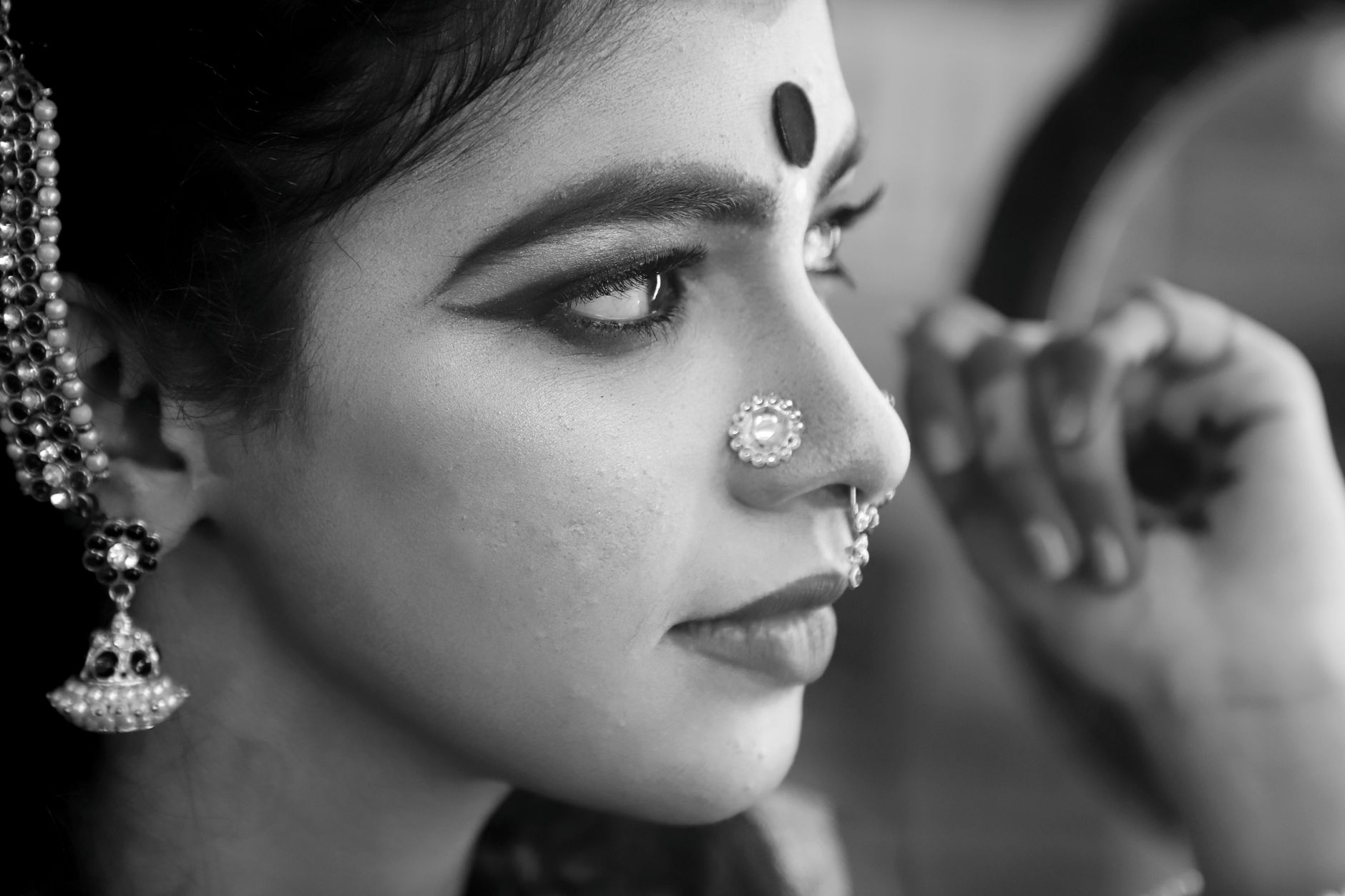
She told me how her daughter landed in trouble for posting a photo on social media wearing a bindi, the small forehead dot traditionally worn by many Indian women, especially Hindus.
Her sister’s daughters, who apparently keep tabs on everyone’s social media, spotted the photo, shared it with the rest of the family, and turned it into a full-blown controversy.
The best part?
The girl refused to delete the photo.
I told my neighbour something I genuinely believe. If someone has an irrational “allergy” to something completely harmless, the solution isn’t to hide it. The solution is to let them see it so often that it eventually becomes normal.
If a harmless bindi causes outrage, keep wearing it until people get used to seeing it.
If colours like saffron, orange, or green trigger unnecessary controversy, keep wearing them until they stop attracting attention. This is related to the incessant mockery that the actress Priya Prakash Varrier faced in Kerala from a journalist for appearing in a Cuticura campaign wearing a Orange coloured outfit (or in his words “Saffron-coloured”). She had chosen the outfit simply to match the brand’s colours. Even something as ordinary as a dress colour became a point of criticism.
Similarly, if being divorced is treated as a stigma, then more divorced people should stop hiding, own the label without shame, and help normalize it.
That’s how irrational taboos lose their power. Not through arguments, but through familiarity. When ordinary people refuse to feel ashamed of harmless personal choices, those choices gradually stop being controversial.
I’m obviously not saying, “Keep using drugs until people get used to it.” I’m talking about harmless personal choices, whether it’s wearing a bindi, choosing a colour, or being divorced, that other people feel entitled to police.
The more these everyday choices are seen in public, the less power stigma and social policing have over people’s lives.
Memory is such a weird thing. Some people remember the tiniest details about me from years ago, while others can’t recall spending time with me ever. They have forgotten entire moments. A day out, the day we talked, the laughs we shared.
I mean, how is that even possible? How can people erase entire days?
It also leaves you with a strange sense of self-doubt. Did you not make enough of an impression to be remembered?
A school friend, whom I reconnected with years later, couldn’t remember that we had spoken over the phone before. He was under the impression we had never talked. Another friend couldn’t recollect attending a wedding with me, which was actually the place where we first met. Even today, he acts as though we’ve never met. A few days ago, another friend, this time a woman, said she doesn’t remember going to a movie with me. It wasn’t just a quick outing. The entire day revolved around that one activity, so it was mind-boggling to realize that the memory had completely disappeared from her mind.
And then there are people like my niece, who can remember things from years ago with surprising clarity. Every time she brings up something I had completely forgotten, I’m both amazed and happy.
I guess this just proves that human memory is a fickle thing. It isn’t the perfect record of our lives that we often assume it is. So how can we depend on memory alone to define our current relationships or friendships and the moments that mattered?
Maybe someone, somewhere, did something incredibly kind for you, but you’ve completely forgotten it. Over time, you start believing they were never there for you because the memory no longer exists. You convince yourself there were no meaningful moments together, when in reality, they simply faded away.
Sometimes, forgotten memories say more about how the mind works than they do about the people involved.
It’s kind of scary, isn’t it? How hard do we have to try to hold on to the good memories? To make sure time doesn’t play the villain and quietly erases them for good.





You must be logged in to post a comment.