After celebrating Onam and engaging in numerous social activities, my introvert battery hit rock bottom. I needed a desperate recharge. So what do I do? Naturally, I retreated to every introvert’s most favourite new-gen comfort zone: scrolling endless Instagram reels. Nothing says “I’ve had enough of people” quite like being a couch potato, locked up in your house, while going through everyone else’s social lives.
As I scrolled through the multiple Onam-related posts, I couldn’t help but appreciate the inclusivity in Kerala. Malayalees across religions, whether they are Hindus, Christians, or Muslims, celebrated Onam with equal enthusiasm. Everyone welcomed Mahabali with open arms. A few voices did try to stop their communities, saying Onam is a “Hindu festival,” but not many paid attention. That’s a good sign. People are choosing to step out of religious bubbles to celebrate together.
Still, Kerala, often praised as a secular state, has been showing sporadic worrying signs of exclusion. Just before Onam, a teacher told students not to participate in the festival because “our religion doesn’t allow it.” The outrage led to her suspension, but this mindset isn’t limited to one person. How widespread is the thought? No one can quantify. It’s impossible to analyze each and every Indian’s thought. However, there is an increasing number of cases that advocate for exclusionary behaviour. You are penalized for celebrating other festivals, or for respecting someone else’s god, or for chanting something as simple as “Bharat Mata ki Jai.”
India guarantees freedom of religion for all communities. But if we use that freedom only to exclude ourselves from others, we risk creating deeper divides. True communal harmony comes from participation: joining in festivals, enjoying each other’s food, and refusing to see other faiths as “untouchable.”
For India to stay secular, this effort has to come from all of us. We’ve come far since independence, but there’s still a long way to go. It’s up to us to ensure religion doesn’t become a wall, but a bridge.
I think a lot about how we as a culture have turned “forever” into the only acceptable definition of success. Like… if you open a coffee shop and run it for a while and it makes you happy but then stuff gets too expensive and stressful and you want to do something else so you close it, it’s a “failed” business. If you write a book or two, then decide that you don’t actually want to keep doing that, you’re a “failed” writer. If you marry someone, and that marriage is good for a while, and then stops working and you get divorced, it’s a “failed” marriage.
The only acceptable “win condition” is “you keep doing that thing forever”. A friendship that lasts for a few years but then its time is done and you move on is considered less valuable or not a “real” friendship. A hobby that you do for a while and then are done with is a “phase” – or, alternatively, a “pity” that you don’t do that thing any more. A fandom is “dying” because people have had a lot of fun with it but are now moving on to other things.
I just think that something can be good, and also end, and that thing was still good. And it’s okay to be sad that it ended, too. But the idea that anything that ends is automatically less than this hypothetical eternal state of success… I don’t think that’s doing us any good at all.
It’s never “the person successfully got out of a bad marriage or bad friendship,” which, in my opinion, is one of the toughest things to do, at least in India. There are always a hundred people telling you to save the marriage or friendship, even if it sucks your soul. They go all out to make you feel guilty. When you do manage to get out of it eventually, it’s labelled a “failed” relationship.
Have we got our definition of success all wrong? The way it stands today, it often makes us cling to things that are no longer healthy, just for the sake of appearances. We try to make them work, even when we know they’re a lost cause, because society’s approval depends on it. We want people to look at us from afar and say, “Yes, they’re doing well in life.” This happened to me when I was trying to get out of my bad marriage. Society did not see my anguish; they simply wanted me to save the marriage.
Over time, I’ve grown less dependent on that kind of validation. Experience teaches you that to find true happiness, you need to first understand what happiness is to you, not others. I no longer feel the need to prove anything to anyone. There’s a calmness that comes with stepping out of the race. But it does not come without effort. In a world that constantly pushes you to do more, choosing to stay still and steady is often misunderstood. Living a life that balances financial independence (not luxury) with peace of mind rarely gets branded as “success.” However, luxury and fame without peace of mind are often labelled as the ultimate life.
Success takes on different meanings, even outside personal or professional life. Take politics, for instance. Many Indians see Modi’s stance against Trump’s tariffs and his refusal to bow down to demands (such as where India should purchase their oil from) as a mark of success. Others, however, view it as a diplomatic setback for India. And then there are those who believe it was actually a diplomatic failure for the U.S., considering India is among the fastest-growing economies in the world.
Of course, success looks different for everyone. We judge others by our own yardsticks. But clarity comes when you start asking yourself:
What do I actually want? Do I want wealth in heaps, or do I want balance?
What are the trade-offs, and am I okay with them?
How long am I willing to sacrifice? Am I truly passionate enough to give up other things I hold dear for this one pursuit?
When you have that honest conversation with yourself, defining success on your own terms rather than society’s, life feels lighter. And you stop depending on others for validation and how you should live your life. This does not apply to kids and young adults, though, who still need guidance on how to navigate life. A child cannot simply say, “Screw studies, it makes me upset,” and get away with it in the name of freedom of choice.
Effort is important, but so is knowing when to hold on and when to let go. True freedom comes only after achieving some level of financial independence. So that should be the first pursuit, regardless of gender.
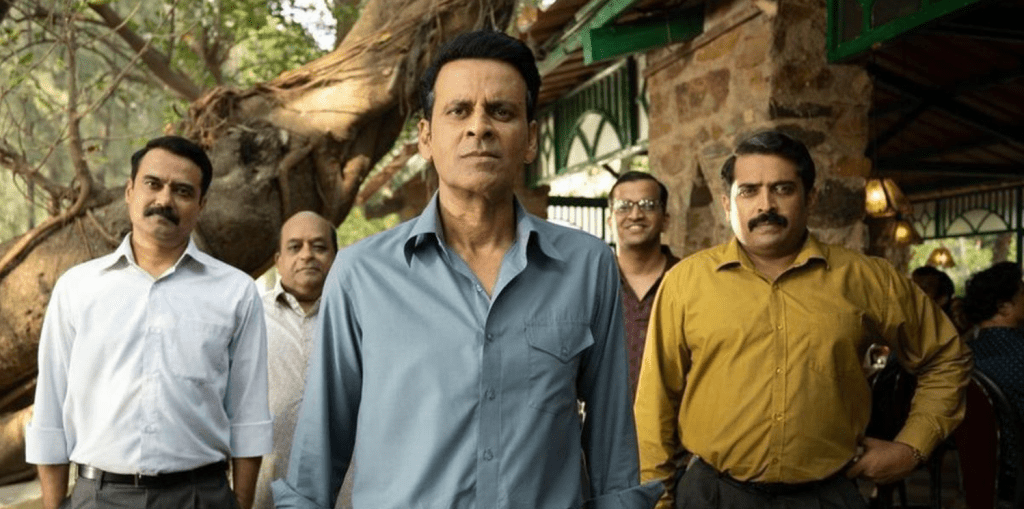
You won’t always find the newest movie or series reviews here. My watchlist is long, and what I finally pick to watch could have been released years ago. That’s how I ended up with Khufiya. In fact, I didn’t even choose it myself, AI did. I simply shared my watchlist because I couldn’t decide what to watch next, and all the options looked interesting. The AI randomly picked Khufiya for me, and I’d say it did a pretty good job.
What’s It About?
An Indian R&AW agent loses a teammate during a failed mission. When the agency discovers there’s a mole in their ranks, they set a trap to catch him, but the plan takes an unexpected turn.
Thoughts
I really enjoyed this movie. It keeps you engaged throughout. Wamiqa Gabbi is the real standout here. Tabu delivers a solid performance, though I wouldn’t call it one of her finest. Wamiqa’s role is the most layered, and she plays it convincingly. There’s also a guruji-like character, seemingly inspired by Sadhguru, who is amusing to watch, though some viewers may find him offensive.
What struck me most was how the film portrays the mindset of traitors. Moles often justify their betrayal by claiming they are “saving the country from conflicts” or “working for peace,” even as they leak sensitive information. In real life, too, Indian spies caught selling secrets often give similar excuses, trying to project themselves as heroes rather than wrongdoers. Khufiya captures this psyche well, showing how enemies exploit such individuals by convincing them they are doing the right thing.
Overall, Khufiya is definitely worth a watch. It is streaming on Netflix.
I came across a review of Dept. Q on Instagram Reels, which is how it ended up on my watchlist. Honestly, before watching, I was doubtful whether I would finish it. Lately, many “thriller” series have failed to truly thrill me. But I’m glad I gave this one a chance and stuck with it.
What’s It About?
An arrogant detective, Carl Morck, returns to work after being injured in a shooting and is assigned to a new department in a dingy basement to investigate unsolved cases. He is soon joined by Akram, a former Syrian policeman now working as a civilian employee, and Rose, a young and spirited constable. Akram ends up selecting a case for Carl to pursue, one involving the sudden disappearance of a lawyer after she is assaulted by her non-verbal brother on a ferry.
Thoughts
Even though the series drags at times, I found myself wanting to know what happens next. This curiosity kept me watching. My rule of thumb for thrillers is simple: Am I interested in finding out the truth? If yes, I continue. If no, I skip. This series made me stay. I genuinely wanted to know what happened. The final episode was the standout of the season, stirring a range of emotions in me: anger, fear, thrill, affection, and warmth.
The performances were strong across the board, but my favourite character was Akram, played by Alexej Manvelov, a mature presence, always in control, in contrast to the more unruly Carl Morck.
I would recommend Dept. Q. It’s streaming on Netflix, with a total of 9 episodes, each roughly an hour long.
I just finished A House Without Windows by Afghan-American writer Nadia Hashimi. These days, I gravitate more toward non-fiction and find it more engaging. Still, I’m not ready to give up fiction entirely. A House Without Windows was my fiction pick of the month.
What’s It About?
The story begins with a murder in an Afghan home. A woman, Zeba, is accused of killing her husband and is detained, with almost no chance of survival under Afghanistan’s strict laws for women in such cases. An Afghan-American lawyer, Yusuf, arrives in the country to connect with his roots, stumbles upon her case, and decides to defend her.
Thoughts
I really enjoyed the storyline, though I found the narration slow and somewhat predictable. What stood out most was how Nadia Hashimi portrayed the Afghan-American lawyer’s struggle to balance two cultures in America. This is a story familiar to many migrants. They want to embrace the new, yet can’t fully let go of their roots.
When Yusuf starts dating, everything boils down to one question: Will she bond well with my mother? That’s such a desi trait: wanting your partner to get along with your parents, and if there’s friction, it’s often the partner who pays the price. I also liked the part where he decides to travel to Afghanistan to reconnect with his roots, eventually making peace with the country’s imperfections, because where there’s love, hate doesn’t stand a chance.
The storyline is unique, with a blend of mystique, magic, and sacrifice. I wouldn’t say I strongly recommend the book, as I personally found it slow. However, what’s slow for me might be perfectly paced for someone else.
Ending this post with some quotable quotes from the book:
Alone and free of angst and sorrow I’ve bled enough for today and tomorrow Now it is time for my bud to bloom I’m a sparrow in love with solitude All my secrets contained within me I sing aloud—I’m alone, finally!
SHE DID NOT REGRET THE CHILDREN, BUT AT TIMES SHE DID resent them. All mothers did, didn’t they? How could they not bear a little resentment toward people who took took took all the time? How could she be expected to feed them all? Where was Kamal when they were sick or tired or unreasonable?
Medicine is what this man calls his liquor Strange is the remedy that only makes him sicker.
“And women?” she asked thoughtfully. “What is the world to us?” Gulnaz offered a meek smile. “Do you not know, my daughter? Our world is the spaces between the rocks and meat. We see the face that should but doesn’t smile, the sliver of sun between dead tree branches. Time passes differently through a woman’s body. We are haunted by all the hours of yesterday and teased by a few moments of tomorrow. That is how we live—torn between what has already happened and what is yet to come.”
People only say nice things about the dead, so you never know what the truth is. You can be a brute in life, but the moment you die, all is forgiven. It used to make me mad, but now that I’m old and know what people say about me, I’m glad for it.
Men were always so frightened by their mortality that they obsessed over ways to live forever: sons to carry on their work, grandsons to carry on their name, their legacies in books, on streets, or in newspapers. Some became more desperate as their black hairs turned silver.
I had put off watching Black Mirror Season 7 for a long time, as Season 6 had failed to impress me. But on a friend’s recommendation, I decided to give it a shot. I’m happy to report that most of the episodes, except the last one, lived up to my expectations.
What’s It About?
Story 1 – Common People: A devoted husband, unwilling to lose his terminally ill wife, uses a high-end new technology to keep her alive. At first, it seems like a miracle. But as with most modern tech, things soon spiral out of control. The couple is forced to confront the harsh reality of love, loss, and the consequences of clinging to the impossible.
Story 2 – Bête Noire: An ambitious professional’s life is thrown into disarray when a former schoolmate unexpectedly joins her workplace. What begins as unease quickly escalates as unusual events unfold around her, sending her mental state into a downward spiral.
Story 3 – Hotel Reverie: A popular actress, bored of dull roles, signs on to a high-tech film project that aims to recreate a classic movie using immersive technology. She steps into a world where she must play out scenes with virtual versions of the original cast. But the line between fiction and reality begins to fade, and the production eventually takes a dark and unexpected turn.
Story 4 – Plaything: A socially isolated man is arrested for murder. During interrogation, he reveals his obsession with a computer game involving digital creatures. The more he cares for these forms, the more they grow. And the more they demand from him.
Story 5 – Eulogy: A man is tasked with writing a eulogy for an old lover with the help of a photo-based immersive memory technology that lets him relive past shared moments with her. Some are joyful, others painful, and some reveal truths he wasn’t prepared to face.
Story 6 – USS Callister: Into Infinity: A stranded crew battles for survival in an endless virtual universe. They are trapped in a multiplayer simulation, and they must outsmart other players to escape the loop and find freedom.
Thoughts
Though I enjoyed every episode in Black Mirror Season 7, my favourite was Plaything. The technology shown in the story is both fascinating and disturbing. The sing-song tune of the little digital forms adds just the right touch of eeriness. The lead actor delivers a convincing performance as the eccentric character ready to go above and beyond for his virtual friends.
The season as a whole highlights how technology can go wrong in unexpected ways. It drives home the point that in the pursuit of something “better,” we often overlook the risks that come with it.
I didn’t find the final episode particularly interesting. Probably because outer space-themed plots don’t usually appeal to me.
Overall, I would say Black Mirror Season 7 is worth a watch. All six episodes, each about an hour long, are streaming on Netflix.
You must be logged in to post a comment.