I Almost Missed This Indonesian Horror Gem

Image of a scene from Wanita Ahli Neraka

I had this Indonesian horror movie on my watchlist for the longest time after seeing people on Reddit recommend it. Like many movie lovers, I often browse popular social media platforms for movie recommendations because that’s how I end up discovering hidden gems that I would probably never come across otherwise.

Wanita Ahli Neraka is an Indonesian horror movie that blends supernatural horror with themes of religion and women’s empowerment. One thing I appreciated was that the film does not disrespect religion in any way. Instead, it highlights how faith can be a source of strength in the fight against evil, while also showing how some people misuse religion as a tool for manipulation and control, which goes against the very values that religion stands for. At its core, the movie encourages women to stand up against injustice rather than silently accept it in the name of religion.

Interestingly, Wanita Ahli Neraka doesn’t have a high IMDb rating. I didn’t read the reviews because I generally avoid doing that before watching a movie. Over the years, I’ve realized that my taste often differs from both critics and general audiences. I’ve enjoyed plenty of movies with low ratings and disliked highly rated ones. Because of that, I prefer to watch a film first and form my own opinion instead of relying solely on reviews or ratings.

The lead performances by Febby Rastanty as Farah and Oka Antara as Wahab are excellent and add emotional depth to the story. The movie also has several effective jump scares along with a few disturbing scenes, so that’s something to keep in mind if you’re sensitive to horror.

If you’re looking for a horror movie with strong performances, nuanced themes, and genuine scares, Wanita Ahli Neraka is worth checking out.

Wanita Ahli Neraka is currently streaming on Netflix.

My Yali Capkini Journey: Rage, Romance and Baklava Cravings

Yali Capkini Poster Image

I started watching the Turkish drama Yali Capkini (Golden Boy) on Amazon Prime (MX Player) for a very simple reason. The lead pair looked good. I honestly assumed I would drop it after a few episodes because good looks alone rarely keep me hooked. Chemistry matters. A solid storyline matters. Surprisingly, Yali Capkini seems to tick every box so far.

This is the first time I am watching a Turkish series, and it gave me a small window into how Turkish Muslims live. It feels very different from what we usually see in Indian society, where things tend to be more conservative. Turkish culture comes across as more liberal, and a lot of that credit goes to Atatürk’s reforms, which pushed women’s rights forward. The show reflects that beautifully. Women face no criticism for dressing modernly, can speak up for themselves, and aren’t afraid to assert their rights. At the same time, the drama also shows conservative families who believe women should stay home and raise children. One scene shows a father accusing his daughter of being a disbeliever just because she drew a Christmas tree. In Pakistani dramas, the word “kafir” gets thrown around easily, but from what I’ve seen here, it isn’t normalised in Turkish shows. In fact, later, you see characters happily celebrating Christmas trees and decor.

If you plan to watch Yali Capkini, keep a box of Baklava ready. There are so many references to the sweet that you will start craving it instantly. I highly recommend trying Swaadesi Baklava, which should be available in most local Indian stores and also online. In the show, coffee and Baklava feel like supporting characters. They show up during happy moments and sad ones. Just like how many of us enjoy a cup of chai on a rainy day, the characters in this drama keep turning to their coffee and Baklava at any time of the day.

Now, coming to the main characters. Ferit, played by Mert Ramazan Demir, has to be one of the most toxic characters I have ever seen in a drama or movie. Since Yali Capkini’s story is written by a psychiatrist, the male character’s behaviour feels layered and too realistic at times. He is the kind of partner who says “So what?” when you tell him he hurt you, yet he reacts strongly if you give him the same treatment. His emotional manipulation, hot and cold behaviour, and constant lying create a type of rage that builds up inside you. His words sting more than any physical act. Anyone who has ever dealt with a toxic partner would relate, and this applies to both women and men who have experienced suffocating or manipulative relationships. The way most female characters in the drama react to disrespect is infuriating, but it is still close to reality. We all know someone who tells women to “adjust” or “compromise” to keep the relationship going.

The female lead, Seyran, played by Afra Saraçoğlu, is stunning, with eyes that instantly remind you of Aishwarya Rai. She is fiery, refuses to accept injustice, and that naturally irritates Ferit and his family, who are used to submissive women. She is easily the best performer in the show and delivers every scene with perfection.

There are very less feel-good scenes here. The series feels like pure rage bait. Still, it keeps you hooked. I haven’t completed it yet because Season 1 alone has more than 100 episodes. Then there is Season 2 and 3. I am not sure I will finish everything if the constant toxicity gets too irritating, but for now, I still have the motivation to continue.

Yali Capkini is available in both Turkish and Hindi on Amazon and MX Player. The English subtitles aren’t perfect, and sometimes don’t make any sense, but I still recommend watching it with subtitles rather than switching to the Hindi dub. The Hindi audio uses overly respectful language even when characters talk to someone younger, and it takes away from the natural flow of the scenes. That was my only issue.

Haq: When a Film About Muslim Women Speaks to All Women

Haq Movie Poster

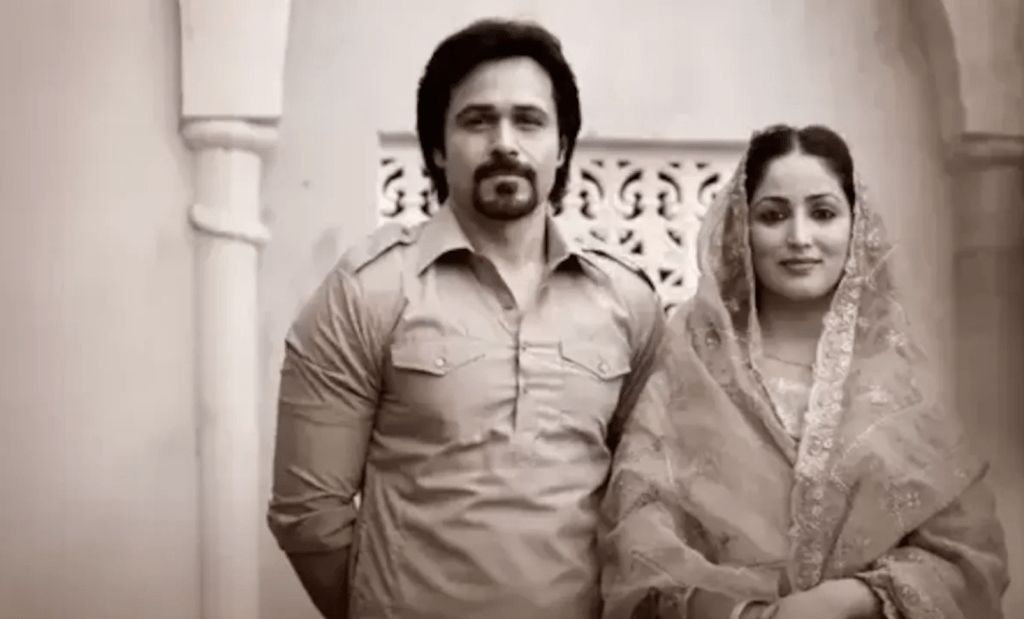
For the most part, Haq is not a story only about Muslim women. It is a story about women in general. Almost all of us know someone, married or unmarried, who has been cheated in love. We have seen that heartbreak up close, and we understand the emotional toll it takes.

When Shazia feels betrayed, we feel it too. When she wants the best for her children, that emotion feels familiar. When she fights for her rights, it resonates deeply. And when her father stands by her without hesitation, it reminds us of our own fathers and the quiet strength that support brings. These are emotions that are universal to women, cutting across religion, culture, and background.

The narrative becomes specifically about Muslim women only when the legal issues come into focus. That is where the real differences emerge, and the film clearly highlights how laws and systems can shape a woman’s fight for justice. It is to be noted that soon after the Triple Talaq ban was implemented in India, many Muslim women began approaching the courts to seek justice. While there was no open praise for the current government for such a ban, there was a quiet acceptance of the relief and protection the law offered them in real life. Many Muslim men, however, continue to view the ban as an insult to their faith rather than as a legal safeguard for women.

Getting back to the movie, Yami’s final monologue is powerful and leaves a strong impact. Emraan feels completely natural throughout and never once seems like he is performing. Sheeba Chaddha is equally convincing and brings depth to her role.

I especially want to credit Emraan for choosing to act in a film that openly talks about Muslim women’s rights. It takes conviction to support a story like this, especially as a Muslim, without dismissing it as Islamophobic. The film is clearly not that. Instead, it focuses on real issues and lived experiences, and his decision to back the narrative adds credibility and strength to the message being told.

Overall, I liked the film. The background music could have been better, and Yami is not fully convincing in a few scenes. Still, she more than makes up for it in the final act, which stays with you long after the film ends.

Haq is now streaming on Netflix.

An Ode to Feminichi Fathima

Feminichi Fathima Movie Poster

Feminichi Fathima is a Malayalam movie I had been waiting to watch for a long time. The film received strong appreciation at several film festivals. Many critics also spoke highly of it in their reviews. Now that it has finally released on OTT, the wait feels worth it. After watching the film, I can say it truly lives up to the praise it received.

The movie is a bold and thoughtful effort by director Fasil Muhammed to explore feminism from the perspective of a Muslim woman. This is a refreshing shift in Indian cinema, where feminist narratives are often shown through a cultural Hindu lens. Films like The Great Indian Kitchen (Mrs. in Hindi) and Thappad shaped much of that earlier conversation. Against that backdrop, this film feels timely and necessary. It adds a new voice to discussions on gender, faith, and everyday patriarchy.

What’s It About?

Fathima is married into a conservative and deeply religious family in the Malappuram district in Kerala. Her husband is a usthad (a religious leader) who expects his household to follow every rule without question. Life in the home is seen only through a strict, conservative lens.

Trouble begins when their young son wets the mattress. Fathima cleans it and leaves it outside to dry, but a dog later urinates on it. Since dogs are viewed as ritually impure, her husband reacts with anger and disgust. What follows is Fathima’s quiet struggle to fix the situation, facing resistance at every step.

The film makes a strong point that a woman in religious clothing can also be a feminichi (a slur often used by Malayalee misogynists to dismiss feminists).

Thoughts

Shamla Hamza and Kumar Sunil deliver standout performances. Shamla Hamza, in particular, is remarkable throughout the movie. It is hard to believe this is only her second project, after 1001 Nunakal, released in 2022. She performs with the ease and control of a seasoned actor. Her expressions carry much of the film’s emotional weight. Shamla winning the Kerala State Film Award for Best Actress feels well deserved. The storyline is fresh and quietly rebellious, which makes her performance even more powerful.

In many ways, the film feels braver than other feminist movies. Dissent is rarely encouraged in conservative Muslim families, which makes this narrative more powerful. The story shows how questioning norms itself becomes an act of courage. That is what sets this Malayalam feminist film apart. It opens space for conversations that are often silenced. Ideally, it will inspire more Feminichi Fathimas to speak up and stand for their rights.

Even though the subject is heavy, the movie never becomes overwhelming. It avoids melodrama and keeps emotions grounded. Light comedy is woven into the narrative. This balance makes the film feel surprisingly breezy. The pacing is tight and engaging throughout. You can easily watch the full 1.5 hours in one sitting without needing a break.

I would call this movie a must-watch for anyone interested in meaningful Malayalam cinema. Feminichi Fathima is now streaming on Manorama Max. You can also watch it via Amazon Prime with a Manorama Max subscription. English subtitles are available.

An Ode to 9 Thought-Provoking Life Quotes from Bonnie Garmus’s Lessons in Chemistry

Chemistry Experiment Image

I recently came to know that there is an Apple TV series based on Bonnie Garmus’s Lessons in Chemistry. Still, like many book lovers who believe the original story is always better than any adaptation, I chose to read the book first. And I am glad I did.

Lessons in Chemistry is warm, quirky, and emotional. It begins at a quick pace and later slows down to let the reader focus on how the characters are feeling. The fictional novel explores women empowerment, career, ambition, love, grief, and self discovery.

The story is about two unconventional scientists who view the world through logic. Their relationship feels unusual to others because their conversations revolve around research, experiments, and what most people would call nerdy banter. But the connection they feel with each other is real. They believe they are soulmates.

The female scientist eventually steps into an unexpected phase of her life and has to leave her career only to soon become the host of a cooking show. The show goes on to gain popularity dude to her unique, scientific approach towards food. She treats every recipe like a science experiment. She explains why each ingredient matters and the chemical composition that affects taste and cooking. This fresh perspective inspires her audience and transforms the way they think about cooking.

If you enjoy fiction that blends romance, feminism, science, and character driven storytelling, Lessons in Chemistry is worth adding to your reading list.

I also want to list some of my favourite thought-provoking quotes from the book. Hope you enjoy them as much as I did.

One thing I’ve learned, Calvin: people will always yearn for a simple solution to their complicated problems.

It’s a lot easier to have faith in something you can’t see, can’t touch, can’t explain, and can’t change, rather than to have faith in something you actually can.

From his own lessons, he knew repetition was important. The key was not to overdo the repetition—not to make it so tiresome that it actually had an inverse result and caused the student to forget. That was called boredom. According to Elizabeth, boredom was what was wrong with education today.

No wonder people didn’t understand animals. They could barely understand each other.

Having a baby, Elizabeth realized, was a little like living with a visitor from a distant planet. There was a certain amount of give and take as the visitor learned your ways and you learned theirs, but gradually their ways faded and your ways stuck. Which she found regrettable. Because unlike adults, her visitor never tired of even the smallest discovery; always saw the magic in the ordinary.

“What I find interesting about rowing,” Dr. Mason was saying, “is that it’s always done backwards. It’s almost as if the sport itself is trying to teach us not to get ahead of ourselves.” He opened his car door. “Actually, when you think about it, rowing is almost exactly like raising kids. Both require patience, endurance, strength, and commitment. And neither allow us to see where we’re going—only where we’ve been. I find that very reassuring, don’t you? Except for the flip-outs—of course. I could really do with fewer flip-outs.”

But as she read, she’d found herself wondering—did the artist ever get distracted? Ink an asp instead of a goat? And if so, did he have to let it stand? Probably. On the other hand, wasn’t that the very definition of life? Constant adaptations brought about by a series of never-ending mistakes?

“I don’t have hopes,” Mad explained, studying the address. “I have faith.”
He looked at her in surprise. “Well, that’s a funny word to hear coming from you.”
“How come?”
“Because,” he said, “well, you know. Religion is based on faith.”
“But you realize,” she said carefully, as if not to embarrass him further, “that faith isn’t based on religion. Right?”

“Whenever you start doubting yourself,” she said, turning back to the audience, “whenever you feel afraid, just remember. Courage is the root of change—and change is what we’re chemically designed to do. So when you wake up tomorrow, make this pledge. No more holding yourself back. No more subscribing to others’ opinions of what you can and cannot achieve. And no more allowing anyone to pigeonhole you into useless categories of sex, race, economic status, and religion. Do not allow your talents to lie dormant, ladies. Design your own future.

When you go home today, ask yourself what you will change. And then get started.”

***

Photo by Ron Lach

Short Film Spotlight: Anuja

Anuja Short Film Poster

I was craving to watch a slice-of-life drama. Something simple, not too heavy or filled with dread. I honestly thought Anuja would be intense, given how the synopsis sounded. Plus, it’s a Hindi short film that was an Academy Award nominee.

Now, why would I mention the Academy Award nomination like it’s a bad thing? I have my reasons.

To be honest, Oscar nominees have rarely worked for me. In Malayalam, we call such films “award padam.” The kind that feels too abstract or complex for ordinary viewers (like yours truly). There was a time in my life, long ago, when I pretended to enjoy such films just to seem intellectual in front of my then-partner. But I couldn’t keep up the act, and that image fell apart the moment that relationship ended. Now, it seems I’m making up for that lost time. All I want to watch are feel-good films.

So when I saw that Anuja was an Oscar nominee, it didn’t excite me enough to hit play right away. It actually made me hesitate. After all, the Oscars have a reputation for picking Indian films that focus on pain and poverty, what many call “poverty porn,” which does not fully represent what India is today.

Still, I decided to give it a chance.

What’s It About?

A 9-year-old girl works with her sister in a garment factory in India. Despite being naturally bright and curious, she doesn’t attend school because of financial struggles. And, truthfully, she doesn’t want to either. Her elder sister, however, recognizes her potential and dreams of giving her the education she deserves.

Thoughts

The film was a pleasant surprise. I loved it. It was just 22 minutes, but packed with emotions.

It tells the story of child labourers. They are presented not as helpless victims, but as resilient children who find joy even in hardship. The truth is, we often see others through our own lens and may view them as “helpless.” But for them, this is simply life. They know no other kind of life, and they’re doing their best with what they have. That’s what the movie captures so beautifully — life as they see it, not as we do.

It’s a social hierarchy. Someone wealthier might be looking at me with pity, thinking I’m suffering. Yet I’m making the most of what I have, because that’s the life I know. We suffer mostly when we lose something we once had, when we can compare the before and after, and we truly miss the before.

I’ve often felt that those not well-off often make the best of what little they have, which is why they find happiness in the smallest things, like a bag of jalebi, for instance. Anuja captures that spirit beautifully: “The present may not be bright, but we can strive for a better tomorrow.

The film avoids moral preaching or lecturing. It’s simply about two sisters supporting each other in a harsh world.

The most moving part of the film is that Sajda Pathan, who plays Anuja, was once a child labourer in Delhi before being rescued by the Salaam Baalak Trust (SBT). She now lives at the NGO’s Day Care Center, founded in 1988 by filmmaker Mira Nair, who, interestingly, is also the mother of New York’s new Mayor, Zohran Mamdani.

Ananya Shanbhag also delivers an excellent performance as the elder sister, Palak.

I would definitely recommend the short film. Anuja is streaming on Netflix.