Gen-Z Men Pursuing Older Women: What Is Going On?

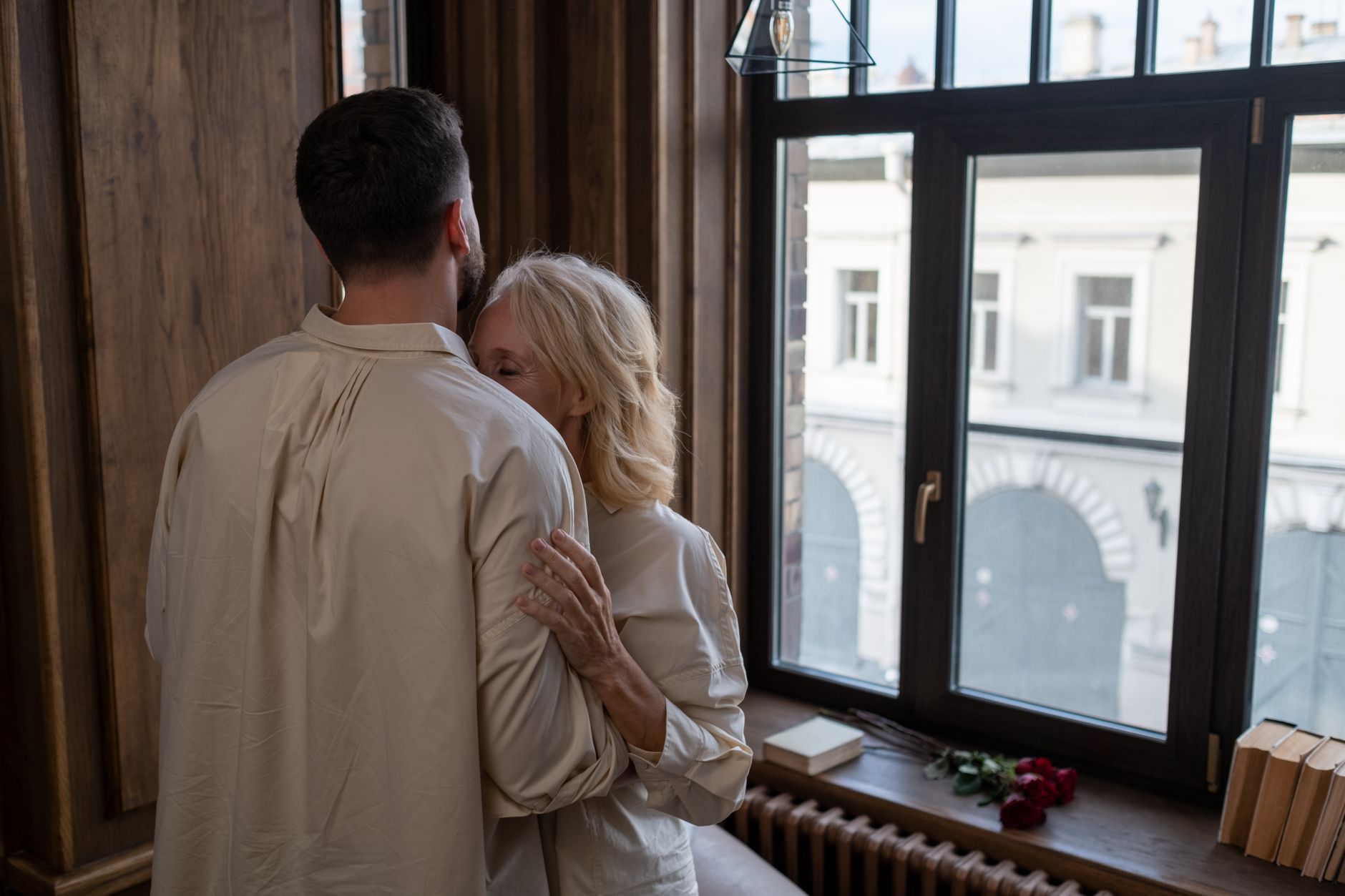
Image of Older Woman and Younger Man

One thing I have noticed about Gen-Z in India is that they are unhinged. I am not sure if it is the same case with Gen-Z around the world, but the ones in India truly seem to be. And no, I am not talking about student protests or anything political. I am talking about something much more personal.

As a 40+ unmarried woman, I have found myself being stared at by boys in their 20s while I am simply out and about. And interestingly, it is not the older men who are doing it. It is the younger ones, making their best attempts to lock eyes with me.

Apparently, according to what I keep seeing on social media, this is becoming a thing. There seems to be growing interest among younger men in dating significantly older women. Maybe it is a genuine preference. Maybe it is a fantasy. Maybe it is simply curiosity. From what I have read, many of these relationships don’t necessarily translate into long-term commitments, but the fact that younger men seem increasingly comfortable making their interest obvious is interesting in itself.

This changing scenario has resulted in books and movies exploring age-gap romances where the woman is older, like The Idea of You, as well as One & Only. One thing I’ve realised is that my mind is still not fully adapted to the idea of an age-gap romance. So when the lead characters make out, my first reaction is always, “OMG! But he’s just a kid!” Even when he’s actually a full-blown adult.

Now, getting to personal experiences. Recently, I mentioned my age to a boy in his 20s who simply wouldn’t look away.

His response?

“Age is just a number.”

So, apparently, that’s where we are now. Of course, this does not apply to all, because society at large age-shames women and finds older women unsuitable for relationships. But there is another part of this that I find much more interesting.

There is a very common, and frankly somewhat misogynistic, term for women who date significantly younger men: cougar.

Almost everyone knows the word. It has become so mainstream that you will find it casually used in movies, television, social media and everyday conversations.

But did you know there is a term for older men who pursue much younger women too?

Manther.

It is nowhere near as well known. In fact, I would bet that many people reading this have never heard the word before.

And that, in itself, says something about how we view relationships between older and younger people.

We are generally much more comfortable with men dating women who are 20 or 30 years younger, or even more. We rarely question it. “Love has no age,” we say.

Popular culture has reflected this dynamic for decades, with stories where an older man falls in love with a much younger woman being treated as perfectly normal, romantic or even aspirational.

But reverse the genders and suddenly the conversation changes.

An older woman with a younger man becomes a “cougar.” Her age becomes the focus. Her motives are questioned. She can be ridiculed, sexualized or shamed in a way that the older man in the equivalent relationship often isn’t.

And that brings me to something I genuinely wonder about.

How many people would actually be comfortable watching a mainstream movie where an older woman falls in love with a man 20 or 30 years younger than her, and the story treats their relationship with the same seriousness and romantic legitimacy usually given to an older man and a younger woman?

Would we call it a love story?

Or would we call her a cougar?

Maybe the younger generation really is changing some of these attitudes. Maybe the increased visibility of age-gap dating is slowly making older women dating younger men less unusual.

Or maybe we are simply becoming more comfortable talking about something that has always existed.

Either way, I find it fascinating that a 20-something can look at a woman in her 40s, hear her age, shrug and say, “Age is just a number.”

Perhaps Gen-Z really is unhinged.

Or perhaps they are just less bothered by rules that previous generations took for granted.

***

Photo by Ron Lach

An Ode to Feminichi Fathima

Feminichi Fathima Movie Poster

Feminichi Fathima is a Malayalam movie I had been waiting to watch for a long time. The film received strong appreciation at several film festivals. Many critics also spoke highly of it in their reviews. Now that it has finally released on OTT, the wait feels worth it. After watching the film, I can say it truly lives up to the praise it received.

The movie is a bold and thoughtful effort by director Fasil Muhammed to explore feminism from the perspective of a Muslim woman. This is a refreshing shift in Indian cinema, where feminist narratives are often shown through a cultural Hindu lens. Films like The Great Indian Kitchen (Mrs. in Hindi) and Thappad shaped much of that earlier conversation. Against that backdrop, this film feels timely and necessary. It adds a new voice to discussions on gender, faith, and everyday patriarchy.

What’s It About?

Fathima is married into a conservative and deeply religious family in the Malappuram district in Kerala. Her husband is a usthad (a religious leader) who expects his household to follow every rule without question. Life in the home is seen only through a strict, conservative lens.

Trouble begins when their young son wets the mattress. Fathima cleans it and leaves it outside to dry, but a dog later urinates on it. Since dogs are viewed as ritually impure, her husband reacts with anger and disgust. What follows is Fathima’s quiet struggle to fix the situation, facing resistance at every step.

The film makes a strong point that a woman in religious clothing can also be a feminichi (a slur often used by Malayalee misogynists to dismiss feminists).

Thoughts

Shamla Hamza and Kumar Sunil deliver standout performances. Shamla Hamza, in particular, is remarkable throughout the movie. It is hard to believe this is only her second project, after 1001 Nunakal, released in 2022. She performs with the ease and control of a seasoned actor. Her expressions carry much of the film’s emotional weight. Shamla winning the Kerala State Film Award for Best Actress feels well deserved. The storyline is fresh and quietly rebellious, which makes her performance even more powerful.

In many ways, the film feels braver than other feminist movies. Dissent is rarely encouraged in conservative Muslim families, which makes this narrative more powerful. The story shows how questioning norms itself becomes an act of courage. That is what sets this Malayalam feminist film apart. It opens space for conversations that are often silenced. Ideally, it will inspire more Feminichi Fathimas to speak up and stand for their rights.

Even though the subject is heavy, the movie never becomes overwhelming. It avoids melodrama and keeps emotions grounded. Light comedy is woven into the narrative. This balance makes the film feel surprisingly breezy. The pacing is tight and engaging throughout. You can easily watch the full 1.5 hours in one sitting without needing a break.

I would call this movie a must-watch for anyone interested in meaningful Malayalam cinema. Feminichi Fathima is now streaming on Manorama Max. You can also watch it via Amazon Prime with a Manorama Max subscription. English subtitles are available.

Even Goddesses Have Their Limits: Learning to Walk Away

I’m a divorcee. I have been for many years now. I’ve never hidden this fact. But I also never imagined my marriage would end the way it did. Then again, who does?

We all grow up believing our marriages will last forever. I also used to think of myself as a tolerant person, so the idea of my marriage failing felt impossible. In my mind, this is something that others might have to go through, the ones with anger issues, those who couldn’t compromise. Not me.

I followed every piece of advice perfectly. The kind you might have seen relationship gurus meting out on social media nowadays, i.e., communicate respectfully, try to understand the other person’s perspective, etc. But over time, I realized communication isn’t a one-way effort; it takes two people to make it work. If only one partner keeps trying while the other sits back, believing they have nothing to change, it slowly chips away at your happiness.

With time, after observing other marriages around me, I understood that maybe I wasn’t as tolerant as I thought — at least not by Indian standards.

Different Levels of Tolerance in Relationships

My regrets in relationships are less about the ex and more about how I handled things. “Why did I let others influence my decisions? Why did I tolerate and compromise more than required?“

Of course, every relationship requires compromises. But each partner also has their own tolerance limits. For me, physical or emotional abuse is unacceptable. Yet, even I, someone who might appear intolerant of everything, tolerated it for a while before deciding I’d had enough. Many women, however, make peace with such situations in their marriages (and relationships in general) for their own reasons (dependency, fear, children, financial pressures, and more).

To cite an example of varying levels of tolerance: When I kept hearing cries of domestic violence in my building, I complained to the building association, even though people advised me not to. “It’s their family, their rules.” But I couldn’t just sit there doing nothing while hearing those cries. It was traumatizing. I took this step because there were times, even in my own relationship, that I wished my neighbors had intervened. Probably, ring the doorbell or knock on the door. It would have provided that much-needed relief.

After my complaint, it hasn’t happened since. But who’s to say the guy didn’t just find quieter ways to hurt his wife? I would’ve run away if such things had happened to me repeatedly, even if it meant begging on the streets for the rest of my life. But his wife might be thinking, “It’s okay. He’s doing it all out of love.” Who’s to know? You can’t save someone who doesn’t want to be saved.

Different levels of tolerance.

People also need to understand that no one files for divorce after just one instance of mistreatment. It happens when the same behavior repeats, even after requests, pleas, and calm conversations. Some choose to walk away, while others make peace with the idea that this is how their life will be. So the common advice of “give it one more chance” is mostly useless, and a bit insensitive, because the ones involved might have already given it multiple chances before deciding to let go.

Power of Faith During Tough Times

Even though I’m not a religious Hindu, having faith in some form has always helped me through tough times. It’s the one thing to hold onto when it feels like your world is falling apart. Even now, I rarely visit temples or follow rituals properly, but in moments of extreme heaviness, I still pray. Not to any specific god. I believe we’re all praying to the same divine force, just using different names and stories. What else could explain miracles happening in every community?

I remember, when I was married, our home had a lone idol of Goddess Kali, a deity I had rarely prayed to before. My parents usually had Lord Krishna at home. I still remember looking at the deity and crying. I asked if this was how it would be for the rest of my life – painful and broken on the inside, faking happiness on the outside (especially for social media).

I sometimes think I might have continued living that way if I hadn’t been pushed by some greater power to take a stand for myself. Probably it was Her. Must have been fed up with me always looking at Her, crying and whining. Even goddesses have their tolerance limits. Also, gods only help those who help themselves, right? Or as we Malayalees say, “Thaan paathi, dhaivam paathi” (you must put in your half of the effort, and God will take care of the rest). Maa Kali might have gone, “Bitch, why don’t you just leave the marriage, instead of troubling me all the bloody time?“

The day I walked out of my marriage was also the day I told my parents, “If you don’t help me, I’ll do it on my own.” Thankfully, they stood by me when I made that decision. I also had the confidence to stand on my own feet. I wasn’t employed then, but my freelance work brought in some income. I knew that if I left the marriage, I wouldn’t be a burden on anyone. That same freelance experience later helped me secure a job. It formed the bulk of my resume, and it convinced my employers that I could handle responsibilities independently, even while working from home, at a time when WFH wasn’t even common.

When I look back, I feel the universe was guiding me in small but meaningful ways toward a life that may be inadequate for someone else, but is absolutely correct for a homebody, introverted feminist like me.

Taking Marriage Advice from Society

But the point is, society will tell you not to take advice from a woman like me. Because I’m a divorcee. What would I know about marriage and relationships, right?

Yet it will encourage you to listen to the woman who keeps enduring it all, at the cost of her well-being, because that’s what a “good wife” does.

Society doesn’t really care about what a woman thinks or feels. It just wants you to stick to the rules.

***

Photo by Monojit Dutta

Why Indian Parents Should Watch Adolescence

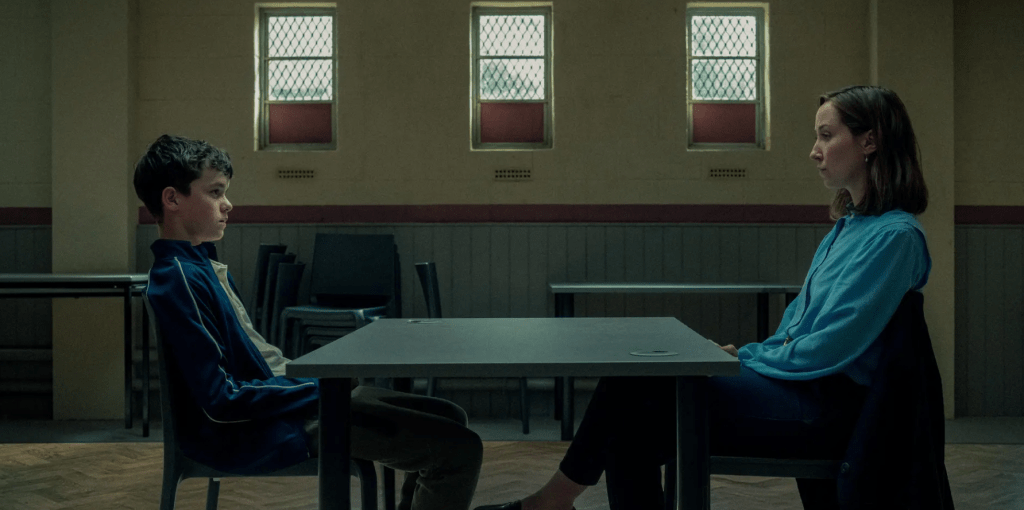
Adolescence Netflix

The Netflix series Adolescence is a wake-up call. It shook me to the core and shed light on the stark realities the new generation faces.

I grew up in a time when online influence was non-existent, and our worldview was shaped by the people around us. Today, that has changed. Algorithms dictate perspectives, feeding you opinions from across the world. Knowledge is no longer derived from just parents, teachers, or elders. This is a positive thing, but it has also resulted in an information overload.

There are several social media accounts trying to dump different perspectives on you. For every argument supporting point A, there’s another endorsing point B. Ultimately, it depends on which perspective you resonate with the most. Once you decide, the algorithm ensures you see more of it, reinforcing your beliefs. Sometimes, without you even realizing it. This can be dangerous. What if a child interacts with harmful content? The algorithm ensures they see more of it, shaping their beliefs in a troubling direction. We risk raising a generation programmed by these echo chambers. It’s a challenge we can’t ignore.

**Spoilers Ahead**

Every plus comes with a downside. Today, we have information at our fingertips, but this convenience comes at a cost. This is a reality that Adolescent portrays with unsettling accuracy. Jamie retreats to his room as soon as he gets home, immersing himself in his online world. His parents remain unaware of what he consumes, assuming, like many modern parents, that giving him complete freedom is the right approach. However, this unchecked digital exposure can shape young minds in ways they don’t anticipate, often with troubling consequences. It’s a new-age problem.

The series also introduced me to terms like Manosphere, Red Pill, and the 80-20 rule, making me realize how rapidly digital ideologies evolve. Figures like Andrew Tate are shaping young men’s perceptions of masculinity, often promoting the idea that being “alpha” means suppressing emotions. He preaches that men are providers and should be respected without being “given a headache.” This mindset isn’t foreign to India. I’ve noticed how men in my household particularly often express fewer emotions. When I was hospitalized recently, only the women in my family directly checked on me, while the men relied on them for updates. The burden of emotions lies on the women, whereas men are expected to be mere providers. Ironically, when men fall ill, women are expected to inquire directly. This emotional divide is ingrained in my household. I am unsure of other households. However, male-to-male interactions may differ. A “bro” might feel more comfortable checking in on a fellow “bro”.

I believe Adolescence should be screened in Indian classrooms with regional language dubbing. Andrew Tate-inspired accounts are emerging in India, pushing narratives that degrade women. If we don’t educate our youth about the dangers of such ideologies, we risk fostering a generation of men who lack empathy for women’s concerns, some of whom may even resort to violence to assert their views. The time to act is now.

The social message aside, this was Owen’s debut performance, yet he delivered with astonishing depth. It made me wonder how much the Indian film industry could thrive if it prioritized raw talent over nepotism, giving opportunities to newcomers who truly have the skill.

One of the most unsettling moments for me was Jamie’s chilling question to Briony with a steely, mocking gaze: “Are you afraid of a 13-year-old?” Owen Cooper’s portrayal was so disturbingly real that it made even a viewer like me uncomfortable. That’s the power of natural acting. His transformation, from an innocent boy insisting he has done nothing wrong, to someone consumed by uncontrollable rage, is nothing short of remarkable. It’s a performance that leaves a lasting impact.