From India-Pakistan to Gaza: Exploring the Duality of War

Fire explosion with smoke

Personal observation: In almost every war, there’s always someone who doesn’t want it to end.

In the India–Pakistan war, many in India didn’t want the fighting to stop because they felt Pakistan hadn’t learned its lesson yet. Some even wanted the government to reclaim PoK (Pakistan-occupied Kashmir) during this time (which I strongly oppose).

When Israel attacked Iran’s nuclear sites, many anti-regime Iranians wanted the war to continue because they hoped the regime would fall.

The Israel–Gaza conflict is even more unusual. Many who kept calling for a ceasefire suddenly went quiet or were openly against it when finally announced. Maybe they had expected Israel to be driven out and a new Palestinian state to rise “from the river to the sea.” But that idea is unrealistic and only calls for more violence. Just like India will never give up Kashmir, Israel will never give up its land. Both countries get a lot of criticism for putting their own interests first. But, over the years, Jews and Indians have learned an important lesson: if they want their interests protected, they can’t rely on anyone else. When Indians get murdered in America, there’s next to no backlash. It’s the same case with Jews. History is also proof that when Hindus face persecution or genocide (Kashmiri Pandits, Sandeshkhali, Bangladeshi, and Pakistani Hindus), the world stays silent. In a world shaped by selective activism, these two communities have gradually learned to shed their passivity and docile nature, standing up for themselves without guilt. Indians, in my view, are still learning. Our tendency to stay silent runs deep. But since 2014, that’s starting to change, much to the annoyance of some. Apparently, a “good” Indian is still largely expected to be a silent one in the face of persecution and bigotry.

Anyway, the point is that in any war, there’s always duality. Those who push for the conflict to continue aren’t always on the “far-right.” Sometimes, they are far-left or far-right figures from other communities, disguised as leftist liberals. Take, for example, the India-Pakistan war. Many leftists in India wanted it to end and for peace to prevail. Yet recently, some of those same voices wanted Hamas to reject the peace deal, even at the cost of many lives.

I’ve often felt that the far-left and far-right are just two sides of the same coin. The recent wars and reactions to them over the years only validate this claim.

***

Photo by Pixabay

Movie Spotlight: Paradha

Paradha Movie Poster

I actually wanted to watch Paradha in the theatre, because I thought the cast was interesting. It had my lovely curly-haired favourites: Anupama Parameshwaran and Darshana Rajendran, who are known faces in the South. But then I got caught up with other priorities and missed booking a ticket that weekend. Later, I came across some reviews that made me second-guess whether it was worth watching on the big screen and decided to skip going to the theatre. Recently, when it was released on Amazon Prime, I finally decided to watch it.

The movie made me realize that not every review online is meant for you. Reviews often reflect the reviewer’s personal taste, but we tend to assume we’ll feel the same way. I’ve had similar experiences with other films, too, where the reviews were harsh, yet I ended up enjoying them. I still don’t get the importance of movie reviews, because whether we like a movie or not is subjective. But here I am, giving my own movie reviews from a highly subjective viewpoint. I think we should treat reviews as such: personal opinions of someone who loves watching movies, and not the absolute truth.

What’s It About?

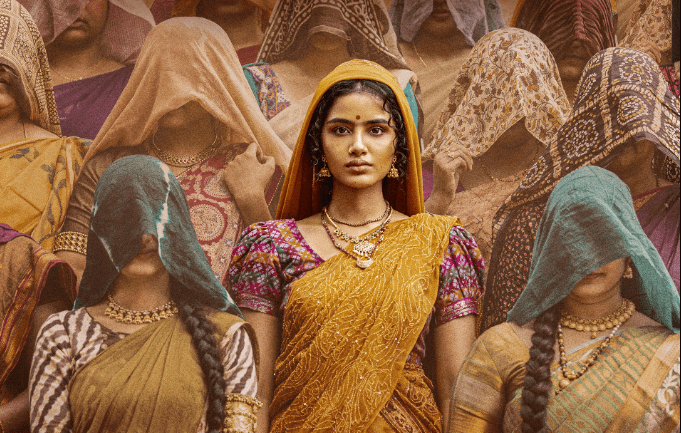
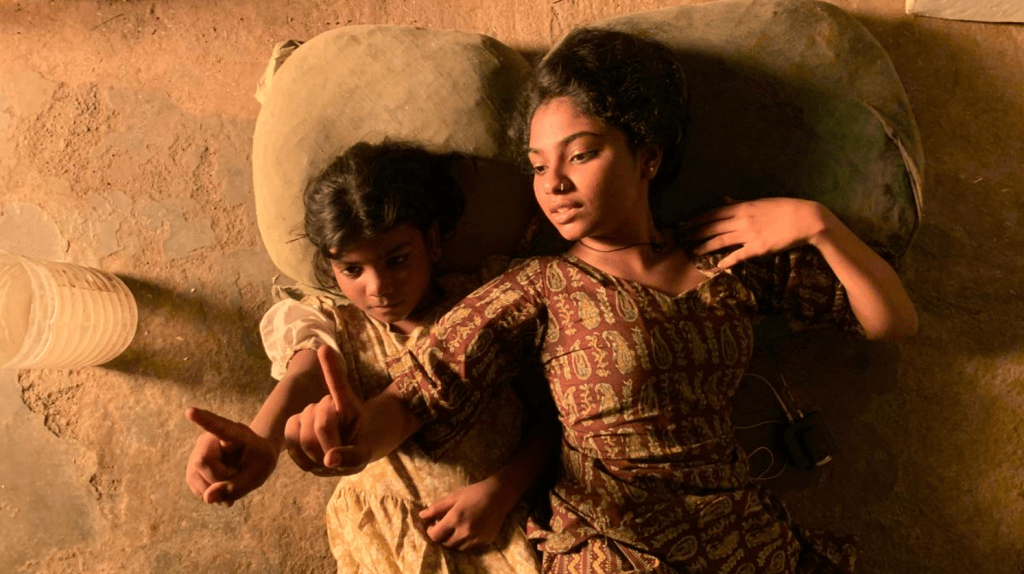
Paradha, true to its name, centers on Subbu (Anupama Parameshwaran), a young Hindu woman from a remote Indian village where the tradition of paradha (dupatta veiling) is strictly practiced. While this custom is largely cultural in many parts of India, the film presents it as a religious mandate. The villagers worship Goddess Jwalamma, who they believe commanded that women remain hidden behind a veil. From puberty onward, every girl is forced to follow this rule, with severe consequences for defiance. Subbu, however, finds herself caught in a controversy that threatens her marriage to the man she loves.

Thoughts

Though the story begins with a devout woman who strictly follows religious practices, Paradha is not just about her. It portrays women from different walks of life, each facing gender discrimination in unique ways.

The first woman is deeply religious, bound by the strict purdah or dupatta system. The second, married outside the village, has left purdah behind but remains traditional in other aspects. The third rejects religious traditions altogether, embraces modern values, and focuses on her career. The fourth is a policewoman who’s happily married, enjoying full freedom, and choosing to follow certain traditions out of personal preference rather than compulsion. The movie keeps the narrative balanced this way.

Paradha is a feminist film centered on women’s empowerment, and it may not appeal to everyone. It highlights how women, even the most progressive, continue to face discrimination, no matter how far they try to escape from it.

I really enjoyed the movie. The climax was chilling, and the performances, especially by Anupama Parameshwaran, Darshana Rajendran, and Sangeetha, were superb. It’s a brave film, because criticizing patriarchy is never easy. Often, women themselves defend restrictive practices by saying, “It’s our choice.” But true choice exists only when opting out doesn’t bring harsh criticism or punishment. Many women follow norms not out of freedom, but because they have no other option. The movie captures this truth powerfully.

Paradha is now streaming on Amazon Prime. I watched it in the original Telugu with English subtitles.

Movie Review: The One I Love

The One I Love Movie Poster

A lot of love stories released lately haven’t worked for me. I tried Saiyaara, but it felt more Gen Z-oriented. While they cried, I yawned. As a 40+ year-old, I am not quite sure if that yawn stemmed from a vitamin deficiency or because I was genuinely bored. It’s a tricky age group.

Then, I gave Metro In Dino a shot, only to find every character cheating on their partner… while singing songs, of course, because that’s how it is in Bollywood. Your loved one could have died, but you still end up singing a romantic song for your partner. Remember Suraj Hua Maddham?

While I was on this quest for a good love story, I realized there’s no chance of my stumbling upon a feel-good romcom that meets my dreamy requirements. So I thought, why not pick an old movie that already matches my soul? That’s how I ended up choosing this dark, unsettling Black Mirror-type romance, The One I Love.

What’s It About?

A couple struggling with marital issues goes on a retreat to a remote resort. This place, recommended by their therapist, is where many of his former patients have found healing. The home is warm and spacious, disconnected from the outside world, seemingly perfect for reconciliation. But soon, strange and unexpected events happen, which draw out very different responses from each partner.

Thoughts

I enjoyed the movie. It was gripping and featured some excellent performances.

I felt that even though the movie was released in 2014, it resonates with today’s AI age, where many people turn to artificial means to fulfill emotional needs their partners can’t always meet. The filmmaker probably foresaw a future where this would take shape in some shape or form.

I especially felt for the female lead, who genuinely seemed happy with the new experience. She was finally getting what she had always craved, even if it couldn’t last. It leaves you wondering what you might have done in her place. If you’re emotionally craving for a deeper bond, and you accidentally stumble upon it after years of acceptance that you would never experience it in your lifetime, how would you react?

You look at the character, see her face light up with a happiness that was missing in the previous scenes, and you can’t help but wish she could experience that bliss a bit longer. Routine has a way of dulling your emotions. You do not wish to take things for granted, but it happens anyway. These relatable human emotions make you empathize as well as get annoyed with Sophie (played by the talented Elisabeth Moss).

I would say The One I Love was a good watch. It’s currently available for free (not on rent in India, thankfully) on Amazon Prime.

An Ode to This American Woman

Zarna Garga's This American Woman Book Cover

As someone living in India, I enjoy hearing the stories of the Indian-American diaspora. In many ways, we are alike, yet also very different. While India itself holds a wide diversity of thoughts, the experiences of Indian-origin people abroad offer something unique – they make you see your own country from a fresh perspective. Zarna Garg’s This American Woman was one such story that offered me a deep dive into that view.

I have to admit, at first, I was put off by Zarna’s description of India in the few Instagram reels I came across. My patriotism made me defensive. But over time, she grew on me, and I realized that everyone sees a country through their own lens. As an ex-NRI myself, my perspective on India is very different from Zarna’s and her family’s. They see the USA as the best, while I believe India is the best – and that’s okay. Different views deserve respect. It was this curiosity about Zarna’s unique journey that ultimately led me to buy her book.

I loved this book. It made me both laugh and cry. Zarna’s life reads like a movie. Born in Mumbai, she ran away to the US as a teenager after her father tried to force her into an arranged marriage following her mother’s death. From there, she stayed with her sister and slowly built her life in America. Her journey has been tough, leaving her with mental blocks about returning to India. Yet she tells it all with such lightness, as if life itself is a comedy not meant to be taken too seriously.

Pain is my destiny and my company and my affinity. Embracing pain and not wasting time wondering “Why me?” will put you on the fast track to success.

What truly brought me to tears was the chapter her daughter dedicated to her. Even now, writing about it makes my eyes well up (though, to be fair, it might also be that time of the month – we women never really know what’s behind the tears). It’s a chapter worth reading. Everyone faces moments of self-doubt, especially women who’ve had to set aside their careers for family. But when that same family becomes your greatest support system, it’s a blessing. Zarna has that blessing in Zoya.

“For many parents, their children’s careers are their greatest accomplishment, but for me my mom’s is mine” – Zoya

The final part with Zarna’s brother was truly heart-warming. The speech she delivers on stage is pure heart.

I would strongly recommend reading This American Woman. It’s inspirational, funny, and heartwarming, capturing life in its own uniquely Indian-American way.

Netflix Movie Review: Saiyaara

Saiyaara poster with Aneet Padda and Ahaan Panday

I’ll start by saying I’m in my 40s, so I’m not exactly the target audience for this film. Still, I enjoyed seeing fresh faces on screen. Actors who look natural, expressive, and free from the usual heavy Botox work.

What’s It About?

Saiyaara opens with the female lead at the registrar’s office, ready to formalize her marriage. She’s a dreamer and a poet, someone who finds inspiration in life’s fleeting moments. Even in the office, she pulls out her diary to capture the beauty of what she believes is the start of a new chapter. But life takes an unexpected turn.

She soon crosses paths with the male lead, an angst-ridden singer determined to make it big. The film traces their love story and the way they navigate the highs and lows of their relationship.

Thoughts

The story felt like a mix of Aashiqui 2 and Rockstar. As I’m not drawn to melancholy, tragic romances, it didn’t resonate with me as much as I’d hoped. That said, it was refreshing to see young, expressive talent on screen.

Director Mohit Suri specifically sought an actress without cosmetic enhancements (a “botox-free beauty”), and I think that was a brilliant choice. As an audience member, I’ve found lip jobs and other obvious procedures very distracting, so the natural look was a welcome change.

The lead actress (Aneet Padda) is adorable, and the actor (Ahaan Panday) is quite charming, too. Their chemistry was lovely. Personally, I would have loved to watch this pair in a light-hearted romcom instead. Hopefully soon. We need more youthful, happy, meet-cute romantic stories in Bollywood.

Communal Harmony in India: Easier Than We Think?

Onam flowers

After celebrating Onam and engaging in numerous social activities, my introvert battery hit rock bottom. I needed a desperate recharge. So what do I do? Naturally, I retreated to every introvert’s most favourite new-gen comfort zone: scrolling endless Instagram reels. Nothing says “I’ve had enough of people” quite like being a couch potato, locked up in your house, while going through everyone else’s social lives.

As I scrolled through the multiple Onam-related posts, I couldn’t help but appreciate the inclusivity in Kerala. Malayalees across religions, whether they are Hindus, Christians, or Muslims, celebrated Onam with equal enthusiasm. Everyone welcomed Mahabali with open arms. A few voices did try to stop their communities, saying Onam is a “Hindu festival,” but not many paid attention. That’s a good sign. People are choosing to step out of religious bubbles to celebrate together.

Still, Kerala, often praised as a secular state, has been showing sporadic worrying signs of exclusion. Just before Onam, a teacher told students not to participate in the festival because “our religion doesn’t allow it.” The outrage led to her suspension, but this mindset isn’t limited to one person. How widespread is the thought? No one can quantify. It’s impossible to analyze each and every Indian’s thought. However, there is an increasing number of cases that advocate for exclusionary behaviour. You are penalized for celebrating other festivals, or for respecting someone else’s god, or for chanting something as simple as “Bharat Mata ki Jai.”

India guarantees freedom of religion for all communities. But if we use that freedom only to exclude ourselves from others, we risk creating deeper divides. True communal harmony comes from participation: joining in festivals, enjoying each other’s food, and refusing to see other faiths as “untouchable.”

For India to stay secular, this effort has to come from all of us. We’ve come far since independence, but there’s still a long way to go. It’s up to us to ensure religion doesn’t become a wall, but a bridge.

***

Photo by Saran Indokera