
Anupama Parameswaran’s Narcissistic Abuse Interview Made Me Revisit My Own Story

Anupama Parameswaran Narcissistic Abuse Interview Image

Anupama Parameswaran’s interview on narcissistic abuse has created quite a stir in the one day since it aired on Dhanya Varma’s YouTube channel. One thing she made very clear in the interview was why she chose to talk about her experience. She wanted people to recognize the signs of abuse.

As someone who got divorced several years ago after experiencing both emotional and physical abuse, I knew the comments blaming Anupama would come soon.

Comments like:

“Why is she talking about this in public? She just wants attention.”

“She’s the toxic one in the relationship. Glad her partner left her.”

“Women use the word ‘abuse’ so flippantly nowadays. I’m sure the matter must have been small.”

And sure enough, I soon saw a barrage of similar reactions on Reddit and X.

This reaction is one of the reasons many people hesitate to speak about abusive relationships. They know that once they talk about what happened, they may be questioned, blamed, mocked, or told that they simply did not try hard enough to save the marriage.

“Why talk about it?”

This is such a common question.

But I want to ask the opposite question: Why shouldn’t we talk about it?

It is because people like Anupama chose to talk openly about their pain that people like me were able to heal.

Today, someone going through emotional abuse, physical abuse, narcissistic abuse, or a difficult divorce can find videos, podcasts, interviews, reels, support groups and personal stories online.

When I was going through it, there weren’t nearly as many resources. I had to search for text blogs written by complete strangers who had experienced something similar.

I would read their stories and think, Okay, so I am not the only one who feels this way. Maybe I am not imagining this. Maybe what I am experiencing isn’t normal.

It wasn’t silence that helped me heal. It was people choosing to speak.

In my case, it wasn’t just a “bad marriage”

In my case, there was both physical and emotional abuse involved.

Yet, when you are trying to somehow make your marriage work because of societal pressure, you can find yourself surrounded by people who encourage you to compromise rather than asking whether you are safe or happy.

At one point, I was even advised by someone very close to me not to tell my parents about what was happening because they would get hurt.

Who was I supposed to talk to then?

I was losing a lot of weight at the time because fights would make me lose my appetite. I wasn’t simply dealing with an ordinary marital disagreement. I was struggling emotionally and physically, and yet the advice I received was often about protecting everyone else’s feelings.

When I mentioned the physical abuse, one relative dismissed it by saying:

“It happens in all relationships.”

Another told me to compromise and just keep saying “okay, okay” to everything he said.

This is the kind of advice that can make someone question their own reality.

The comparison game

One of the worst things about talking about abuse is the way people compare your experience with someone else’s.

When I tried to make the marriage work, my ex would taunt me with things along the lines of:

“See? What you faced wasn’t so bad after all. That’s why you’re willing to compromise and return to me. You should see women in actual abusive relationships. They end up in hospitals.”

But abuse doesn’t become acceptable simply because someone else experienced something worse.

You don’t have to wait until you are in a hospital before you are allowed to say that something is wrong.

Society has a strange way of making women feel childish for being unhappy in a relationship. You’re told that you’re not mature enough to deal with “normal” relationship problems. You’re told that marriage requires compromise. You’re told to adjust. You’re told to be patient.

And sometimes, what is really being asked of you is to tolerate things you should never have been expected to tolerate.

Society often cares more about preserving the marriage than the person inside it

This is something I understand much better now.

Society doesn’t necessarily care about your happiness. It often cares about keeping the marriage intact.

A woman who stays in an unhappy marriage can be praised for being patient, mature, understanding and a good homemaker.

A woman who leaves can suddenly become selfish, difficult, immature or incapable of compromise.

I was blamed too. I am sure there are still people who consider the divorce my fault. And honestly, I am fine with that now. I don’t have to prove my version of events to people who gave me terrible advice in the first place. I know what I experienced. I know what I went through. Nobody knows my struggles better than I do.

And I am happy now.

That is enough for me.

The “good guy” problem

There is another complication that I think people don’t talk about enough. Sometimes the person who is abusive also has a very amicable personality.

Anupama mentioned something similar in her interview, and it immediately resonated with me.

Some people are simply very good at being pleasant, charming and agreeable around others. So to the outside world, he is the “good guy.”

Meanwhile, you may be the quieter person. The recluse. The person who isn’t particularly good at maska polish. So when you finally talk about what happened, people find his version easier to believe than yours.

Because they have seen the charming version of him. They haven’t seen what happened behind closed doors.

That is one reason why survivors of emotional abuse can find it so difficult to speak. You are not just recounting what happened. You are also trying to convince people who have already formed an opinion of the person involved.

Sometimes there is one final moment

And just like Anupama said, sometimes there is a flip. A moment that finally makes you take the last step.

For me, it came after another fight. I made him promise in front of God that from then on, we would resolve our problems without abuse.

He broke that promise and then justified it again. That was the moment something clicked in my head.

If this man, who is religious, could make a promise in front of God and then break it and justify what he had done, how was he ever going to listen to me?

I immediately called my parents. I told them that either they picked me up or I was leaving that instant.

And that’s how I left my marriage.

In the dead of night.

In my night clothes.

With nothing but a handbag.

The strange little moments that helped me survive

Looking back, there were also tiny moments that reminded me that I could still make myself happy.

I remember one particular picture I took right after a fight. I had just finished an intense crying session when I basically thought, Aah, fuck this. Let me make myself happy. So I started clicking aesthetic pictures.

I hadn’t eaten all day because, during that period, fights would often make me lose my appetite. So I took myself out and treated myself to some food.

I ordered coffee. And when it arrived, there was this huge heart on it. I actually looked at the other people’s coffee to see whether they had something similar. Nope.

Maybe the guy could make out from my face that I needed it.

But that tiny heart warmed me in a way I had never felt in my marriage.

I eventually understood that we simply weren’t right for each other

These days, when people ask what happened, I usually say that we weren’t right for each other.

And that is, in a way, true.

Maybe with a more docile person, he wouldn’t have felt the need to “discipline” her. And perhaps with a different person, I wouldn’t have become so agitated either.

We had very different ways of thinking. We brought out the worst in each other. But saying that we weren’t right for each other doesn’t mean that abuse was okay.

Incompatibility can explain why a relationship doesn’t work. It does not excuse physical or emotional abuse.

That distinction matters.

Men can be victims too

And before anyone assumes that I think abuse is only something women experience, I don’t.

Men can be victims of emotional and physical abuse too. I have witnessed it myself. In some ways, male victims face an additional barrier because society still doesn’t give men enough room to admit that they are hurting.

They’re expected to be strong. To control their emotions. To “man up.” To deal with relationship problems without admitting that they are being hurt.

That needs to change too.

Abuse is abuse, regardless of the gender of the person experiencing it.

Why talking about abuse matters

This is why I don’t understand the “Why talk about it?” reaction.

People talk because someone else might be going through the same thing and doesn’t yet have the words for it.

People talk because someone may recognize a warning sign.

People talk because someone may finally realize that what they have been told is “normal” isn’t normal.

People talk because sometimes hearing another person’s story is the first thing that makes you feel less alone.

I know this because I was that person.

I healed partly because strangers were willing to write about their experiences when I needed to read them.

Today, people have far more ways to find that kind of support. They can watch an interview, listen to a podcast, find a video, read a personal blog, or come across someone speaking openly about their experience.

That is not attention-seeking.

Sometimes, it is someone putting their pain into words so that another person doesn’t have to feel as alone as they once did.

So when someone asks, “Why talk about it?”

My answer is simple:

Because silence never helped me heal. People speaking about what they went through did.

And if sharing your experience helps even one person recognize emotional abuse, physical abuse, narcissistic abuse, or an unhealthy relationship and find the courage to leave, then talking about it was worth it.

And if you’re currently in a situation like the one I was in, please don’t make my mistake. Don’t let people convince you that you need to endure more before your pain becomes “serious enough.”

You don’t owe anyone a marriage at the cost of your happiness, safety or self-respect.

One last thing

And I want to add one more thing: the emotional manipulation.

Every time an episode of abuse happens, the person knows they have done something wrong. So they cry, apologize, promise it won’t happen again, and you, especially if you’re an empath, fall for it. You want to believe them. You want to believe that this was the last time.

But it doesn’t stop.

Eventually, even the crying and apologizing become less frequent. A sort of “What are you going to do about it?” attitude starts taking over. There is a smugness that comes from knowing you will tolerate it anyway.

That was when I finally told my parents.

My father and mother, God bless them, refused to let me return to that house unless he genuinely changed his ways. But his response was, “My house, my rules.”

And that was the end of that.

I also understand that having supportive parents is a privilege and a blessing. Not every woman has that safety net. Some parents won’t allow their daughters to return home, and that’s when the feeling of being trapped can become unbearable. For some women, that mental pain can become so overwhelming that they see no way out.

I know what that kind of mental pain feels like.

In my case, though, I knew I would never choose death. If my parents hadn’t supported me, I would have simply run away, started from scratch and figured out a way to survive. I had enough confidence in myself because of the little work experience I had already gained.

That’s one of the reasons I stress so much on financial independence for women.

Having your own income isn’t just about money. It gives you options. It gives you confidence. It gives you the knowledge that even if everything falls apart, you can rebuild your life.

I know women who feel completely tied down because they don’t have financial independence. To them, I would say: start small. Take up whatever work you can, in whatever way you can. It doesn’t have to be your dream job or a huge salary.

The first step is knowing that you can earn something on your own.

Because sometimes, that little bit of independence is what gives you the confidence to finally walk away.


Why ‘The Girlfriend’ Left Me Thinking About Parenting and Love

The Girlfriend Telugu Movie Photo

I started watching the Telugu film The Girlfriend with low expectations. I assumed it would be yet another romantic drama that glorifies toxic relationships and emotional manipulation in the name of love. To my surprise, the movie took a more thoughtful and layered route.

Minor spoilers ahead for context

The Girlfriend doesn’t just explore unhealthy love. It also dives into toxic parenting and how childhood conditioning shapes adult behaviour. The female lead is quiet, agreeable, and used to shrinking herself. The film makes it clear that her personality isn’t random. Her upbringing trained her to feel guilty for wanting space, choices, or independence. So when she picks a controlling partner, it feels strangely familiar to her. She’s not frightened of it at first, but she faces a tinge of uncertainty throughout. She tries to treat her partner’s behaviour towards her as normal because she has spent years adjusting to her father’s controlling behaviour. But deep down, there’s a quiet discomfort she can’t ignore. Something feels off, and her instincts begin to push back. This duality is what makes the character so different. This push and pull that many of us have experienced in our own relations with others who are not right for us.

The male lead, on the other hand, is aggressive, impulsive, and driven by ego. He worships Virat Kohli, maybe because he admires the cricketer’s aggressiveness and his devotion towards his wife, Anushka Sharma. He has a charming personality and enjoys a lot of attention. People around him like him, and he knows it. He’s used to getting what he wants, even in friendships. His behaviour reflects a narcissistic mindset where his needs come first, and empathy barely exists. Yet he remains popular, which feels very realistic. In real life, people like him often get the benefit of the doubt because their confidence and charm make them likable, even when behind closed doors, they’re not. This is why it’s often hard for someone with a narcissistic partner to justify leaving. People around them struggle to believe anything is wrong. The scene where he delivers that long, dramatic monologue in front of everyone when she ends the relationship is unforgettable and true to life. It’s an attempt to stage himself as the victim, even when he himself was the one in the relationship with the problematic dynamic.

When the movie shows the male lead’s mother, the pattern becomes clear. She mirrors the heroine’s personality. Anxious. Passive. Always accommodating. His father dominated the household, and his mother absorbed the behaviour without protest. In his partner, he doesn’t just see love. He sees a repetition of his family dynamic. In his own dysfunctional world, this is the definition of love.

This is what makes the film interesting. Many romantic movies in Indian cinema focus only on the lovers. But The Girlfriend highlights how family culture, parenting style, and generational trauma influence relationships. It reminds you that behaviour has context.

It made me think of my own past. My ex-husband had a similar attitude at home. I remember watching him take all his mother’s freshly washed clothes and throw them outside the house, onto the dirt-filled ground, just because she left them drying near the house’s entrance. She didn’t scold him. She didn’t even react. She simply smiled and picked them up to wash again. She later told me she was once abandoned on the roadside at night by her husband after an argument. She narrated it casually, as if it were normal. That’s when I understood why her son expected unquestioning loyalty and forgiveness from his own partner, me.

Watching the movie felt personal because it portrayed something many Indian families silently live with. Not abuse in the usual cinematic sense, but the subtle cycle of fear, guilt, silence, and acceptance.

I liked The Girlfriend mainly because of how honestly it handled the parenting angle. The performances were solid, especially from Rashmika Mandanna and Dheekshith Shetty. Their chemistry felt natural, and the relationship dynamics never felt exaggerated or forced. The emotional tension, confusion, fear, and hope all felt real. It’s rare to see an Indian movie explore love, trauma, and family influence with this level of subtlety. If you enjoy character-driven cinema with emotionally complex and layered characters, this one is worth watching.

The Girlfriend is streaming on Netflix and runs for 2 hours and 18 minutes.

Dating as a Divorced Woman

I recently watched Jovita George’s “Dating After Divorce” video on YouTube. First of all, kudos to her for creating such a video. This kind of content is still not very common, and many women, especially in the Malayalee community, hesitate to talk openly about their divorce stories. So seeing Jovita share her experience really impressed me. It has also motivated me to talk about my own journey with relationships (and also friendships) after divorce. So here goes.

Lessons and Red Flags

I will start not with relationships, but with the judgments you face as a divorced woman.

This may not be everyone’s experience, but after my divorce, I often sensed a certain judgment from people around me, not always from my male friends, but from the women in their lives.

For example, a male friend’s wife suddenly became suspicious of me, as if divorced women are seen as people who “prey” on married men. No one says it openly, but the distrust in their eyes makes it obvious. This was especially frustrating because I have always been careful around married men, even those who were flirtatious. I never encouraged them as I was always mindful of what their wife would feel. Yet society is quick to judge a woman the moment a man interacts with her.

It also became clear that many men, both married and unmarried, see a divorced woman as “easy.” They approach you often for casual fun. “Friends with Benefits.” Because you are deemed as someone who’s not serious about relationships, because you chose to “throw away” a marriage. It feels sad, but it happens.

This stereotype gets even stronger because of how movies and dramas show divorced women. They’re often portrayed as someone trying to break another woman’s marriage — the evil, overly glamorous vamp who cares only about herself. You hardly ever see a divorced woman on screen who’s just like anyone else, someone who wants warmth, kindness, and love.

So a divorced woman who wants something serious needs to stay alert and filter out these shallow bonds.

Finding Love Again After Divorce

I eventually got into a long, serious relationship. We met through mutual friends, and at first it felt promising. But it soon went downhill. I realised he was never truly serious. And the reason was my divorce status. That hit hard. It felt like he was embarrassed by who I was.

That’s something divorced women should watch out for — a man can say he’s serious, but you only know the truth when his actions match his words.

The gaslighting made it even worse. He made me think I shouldn’t feel the way I did, even when I felt disrespected. It was mentally draining, yet I held on because I wanted the relationship to work. His anger and verbal jabs made me anxious, and over time, they chipped away at my confidence.

When that relationship ended, I was shattered. I had loved him despite all the red flags. But the truth was hard to face — I don’t think he even saw me as a friend. There was no warmth, no respect. It’s tough to process that after all the compromises you make.

That experience changed me. It made me far more cautious about getting into a relationship again.

Slow and Steady

After that, I met someone by chance. A divorced man, part of my school group. He’s someone just as cautious as I am, so we take things slow. Both of us carry scars from our past. Probably why we’re kind to each other. Even when we fight, we stay respectful. That matters a lot to me, considering my past hasn’t been so kind. He feels like home because he is steady and respectful. Still, after what I went through, a part of me wonders how long it will last, even though we’ve been together for years now.

We’re not chasing marriage. We just want respect and companionship. How long this will last, I really don’t know. When you’ve seen bad relationships, there’s always that little voice saying good times don’t last. He could be the one, or maybe not. Time will decide.

So this is what dating after divorce has been like for me.

And here’s a reminder for divorced women — other people’s judgments only hurt when you believe them yourself. Don’t bring yourself down just to fit their expectations.

***

Photo by Rina Mayer

Even Goddesses Have Their Limits: Learning to Walk Away

I’m a divorcee. I have been for many years now. I’ve never hidden this fact. But I also never imagined my marriage would end the way it did. Then again, who does?

We all grow up believing our marriages will last forever. I also used to think of myself as a tolerant person, so the idea of my marriage failing felt impossible. In my mind, this is something that others might have to go through, the ones with anger issues, those who couldn’t compromise. Not me.

I followed every piece of advice perfectly. The kind you might have seen relationship gurus meting out on social media nowadays, i.e., communicate respectfully, try to understand the other person’s perspective, etc. But over time, I realized communication isn’t a one-way effort; it takes two people to make it work. If only one partner keeps trying while the other sits back, believing they have nothing to change, it slowly chips away at your happiness.

With time, after observing other marriages around me, I understood that maybe I wasn’t as tolerant as I thought — at least not by Indian standards.

Different Levels of Tolerance in Relationships

My regrets in relationships are less about the ex and more about how I handled things. “Why did I let others influence my decisions? Why did I tolerate and compromise more than required?

Of course, every relationship requires compromises. But each partner also has their own tolerance limits. For me, physical or emotional abuse is unacceptable. Yet, even I, someone who might appear intolerant of everything, tolerated it for a while before deciding I’d had enough. Many women, however, make peace with such situations in their marriages (and relationships in general) for their own reasons (dependency, fear, children, financial pressures, and more).

To cite an example of varying levels of tolerance: When I kept hearing cries of domestic violence in my building, I complained to the building association, even though people advised me not to. “It’s their family, their rules.” But I couldn’t just sit there doing nothing while hearing those cries. It was traumatizing. I took this step because there were times, even in my own relationship, that I wished my neighbors had intervened. Probably, ring the doorbell or knock on the door. It would have provided that much-needed relief.

After my complaint, it hasn’t happened since. But who’s to say the guy didn’t just find quieter ways to hurt his wife? I would’ve run away if such things had happened to me repeatedly, even if it meant begging on the streets for the rest of my life. But his wife might be thinking, “It’s okay. He’s doing it all out of love.” Who’s to know? You can’t save someone who doesn’t want to be saved.

Different levels of tolerance.

People also need to understand that no one files for divorce after just one instance of mistreatment. It happens when the same behavior repeats, even after requests, pleas, and calm conversations. Some choose to walk away, while others make peace with the idea that this is how their life will be. So the common advice of “give it one more chance” is mostly useless, and a bit insensitive, because the ones involved might have already given it multiple chances before deciding to let go.

Power of Faith During Tough Times

Even though I’m not a religious Hindu, having faith in some form has always helped me through tough times. It’s the one thing to hold onto when it feels like your world is falling apart. Even now, I rarely visit temples or follow rituals properly, but in moments of extreme heaviness, I still pray. Not to any specific god. I believe we’re all praying to the same divine force, just using different names and stories. What else could explain miracles happening in every community?

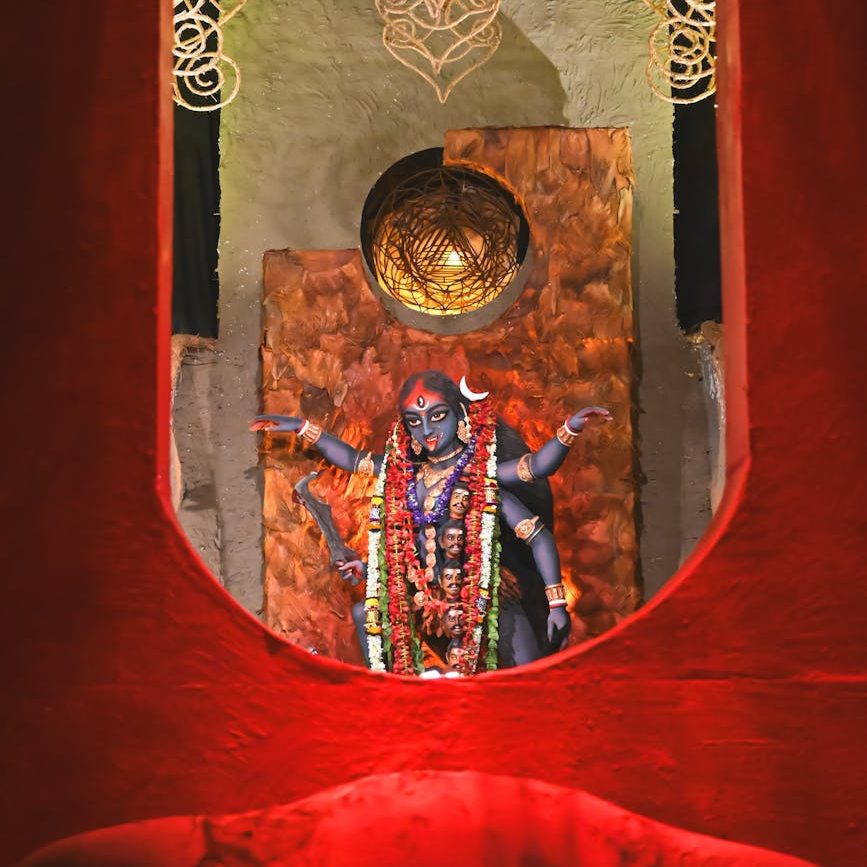
I remember, when I was married, our home had a lone idol of Goddess Kali, a deity I had rarely prayed to before. My parents usually had Lord Krishna at home. I still remember looking at the deity and crying. I asked if this was how it would be for the rest of my life – painful and broken on the inside, faking happiness on the outside (especially for social media).

I sometimes think I might have continued living that way if I hadn’t been pushed by some greater power to take a stand for myself. Probably it was Her. Must have been fed up with me always looking at Her, crying and whining. Even goddesses have their tolerance limits. Also, gods only help those who help themselves, right? Or as we Malayalees say, “Thaan paathi, dhaivam paathi” (you must put in your half of the effort, and God will take care of the rest). Maa Kali might have gone, “Bitch, why don’t you just leave the marriage, instead of troubling me all the bloody time?

The day I walked out of my marriage was also the day I told my parents, “If you don’t help me, I’ll do it on my own.” Thankfully, they stood by me when I made that decision. I also had the confidence to stand on my own feet. I wasn’t employed then, but my freelance work brought in some income. I knew that if I left the marriage, I wouldn’t be a burden on anyone. That same freelance experience later helped me secure a job. It formed the bulk of my resume, and it convinced my employers that I could handle responsibilities independently, even while working from home, at a time when WFH wasn’t even common.

When I look back, I feel the universe was guiding me in small but meaningful ways toward a life that may be inadequate for someone else, but is absolutely correct for a homebody, introverted feminist like me.

Taking Marriage Advice from Society

But the point is, society will tell you not to take advice from a woman like me. Because I’m a divorcee. What would I know about marriage and relationships, right?

Yet it will encourage you to listen to the woman who keeps enduring it all, at the cost of her well-being, because that’s what a “good wife” does.

Society doesn’t really care about what a woman thinks or feels. It just wants you to stick to the rules.

***

Photo by Monojit Dutta

How to Know if the Unmarried Life is Right for You

How to Know if the Unmarried Life is Right for You

As a woman in my 40s, I am living an unconventional life in India, a conservative country that believes a woman’s life is incomplete if unmarried. I have experienced the ups and downs of living this kind of life while exploring new territories and learning from my experiences along the way. None of my family members or friends have chosen to live this way, so I don’t have anyone to look to for guidance. Is it daunting? Of course. But would I have it any different? Definitely not.

It’s amusing that many people who warn about the drawbacks of being single are usually married. They haven’t experienced living alone for a significant amount of time, so they may not be the best advisors on “the other side” of the single life. These wellwishers often point to that one person they know who is feeling lonely in their 40s to push you to get married. Is it a genuine concern for your well-being, or is it a way for them to reaffirm their own choices? It’s hard to say for sure. In my view, only someone who has lived alone for 10+ years is truly qualified to answer whether the single life is as daunting as it’s made out to be.

Some advocates of marriage believe it to be the solution to all problems, especially for women in India. Feeling bored? Get married. Want to travel to foreign countries? Get married. Want to party at a club? Get married. Getting married is an all-in-one solution.

I got married in my 20s due to pressure. It was an arranged marriage. Unfortunately, it did not end well, as we were incompatible. Our culture and beliefs clashed from day one. We knew we were poles apart before we got married, but we fell for the usual narrative that marriage is the solution to all problems, even compatibility issues. No one was sensible enough to advise us that basic compatibility is required for a marriage to work. In fact, both sides of the family were desperate for us to get married as we were quickly crossing the ideal age for marriage.

My marriage eventually ended. It’s been 15+ years since my divorce, and I haven’t still tied the knot. I have no plan to. A year after my divorce, relatives started telling me how marriage is important and that I should consider getting married again. They told me to think of how my life would be in my 40s without a husband. In their eyes, it would be torture. But now that I am in my 40s and still unmarried, I will tell you a little secret. I have never felt freer and happier.

Someone now might say, “Wait till you are in your 50s“. I am ready to accept that challenge too. No one knows me better than I do. And I am sure it’s the case with you too. However, if you are in your early 20s and wondering if marriage is for you, here are some points to consider.

Get married if you are a social butterfly

If you are naturally extroverted and love being around people, chances are you would crave companionship at some point in your life. I am an introvert, bordering on being a loner. For me, solitude is a way of life.

As you age, you will find yourself spending a lot of time by yourself because everyone in your age group will be busy with life. You might get together once in a while, but meeting up every day would be unfeasible. Picture yourself in such a scenario. Would you crave constant companionship? Or would you be fine without it? As per my experience, most extroverts are not comfortable with stillness, silence, and calm. They need some human presence around them to feel energetic.

Find out the actual reason for your disinterest in marriage

I have seen that those who wish to get married but cannot find a partner end up choosing to live alone out of frustration or tiredness that emanates from constant disappointment. There is a chance such people might end up feeling lonely in their 40s. They have that “if only” in the back of their minds. Genuinely ask yourself if you are choosing to stay unmarried because it’s the best lifestyle for you or because you are unable to find a partner. If it’s the latter, you should not give up on the idea of marriage.  

Living alone can be expensive

If you plan to stay single, you will need to save more. A pro of being married is that both of you can contribute to your daily expenses, whereas if you stay single, the onus falls on you alone – to earn well, invest wisely, and save efficiently. Of course, you shouldn’t get married thinking it will be costly to stay alone. Marriage is for companionship. However, this is a point that I found worth mentioning.

Living alone can be frustrating at times

I have been living alone for ages now, but there are times when I feel, “If only I could share this chore with someone.” But wanting a person to delegate my chores to isn’t a good enough reason for me to get married. I know for a fact that this need would be fulfilled if I hired some help. Alas, I am someone who wants to do it all by myself. This often leads to me being overwhelmed. But I take each experience as a lesson. If I were married, I wouldn’t have learned many things I know today. I would have been overly dependent on my husband to handle everything – from finances to decision-making. But yes, be prepared to be overwhelmed while you navigate through stressful times on your own.

Staying unmarried doesn’t mean saying no to love

You can be in love and still choose to remain unmarried. This is not widely understood. Many people assume that being unmarried means rejecting love. I have been in a committed relationship for many years, and I have no plans to marry because the traditional Indian married life is not what either of us wants.

What about the future?

Many people in favor of marriage often pose the question, “What about the future? What will happen when you’re 70 or 80?” It’s a valid question but not a compelling reason to get married. Your spouse may pass away, and if you don’t have children, you may find yourself alone. In Indian culture, parents often view their children as a safety net for their old age. However, many elderly parents in India find themselves alone as their children are settled abroad and only visit occasionally.

I have a few options to consider for my future living arrangements. I could stay in a good retirement home or move in with a friend or relative who is living alone and could use some companionship. It’s important to me that I don’t become a burden to the people I care about because of my health issues. There are many potential paths to choose from, and the decisions I make will depend on the trajectory of my life. I simply want to be financially independent and not rely on anyone else.

Having the confidence that I can thrive regardless of what life brings my way means I don’t have to fear being unmarried.

***
Photo by Mihman Duu011fanlu0131