What surprises me more than the terror attacks in India is the speed with which some Indians dismiss them as “false flag operations.” For instance, a look at the comments under Faye D’Souza’s Instagram post about the Delhi terror blasts shows several users mocking the incident and blaming the Indian government instead of the perpetrators. Many genuinely seem to believe it’s a political ploy to influence votes rather than an act of terror.
The “false flag” narrative isn’t new. It has surfaced after nearly every major terror attack in India. Even the 26/11 Mumbai attacks were, at first, misrepresented by some as an internal operation. The claim gained attention mainly because Ajmal Kasab, one of the attackers, wore a saffron thread on his wrist. Those spreading the theory strangely assumed such a thread could only belong to members of BJP or RSS. They overlooked the possibility that it might have been deliberately used to mislead investigators.
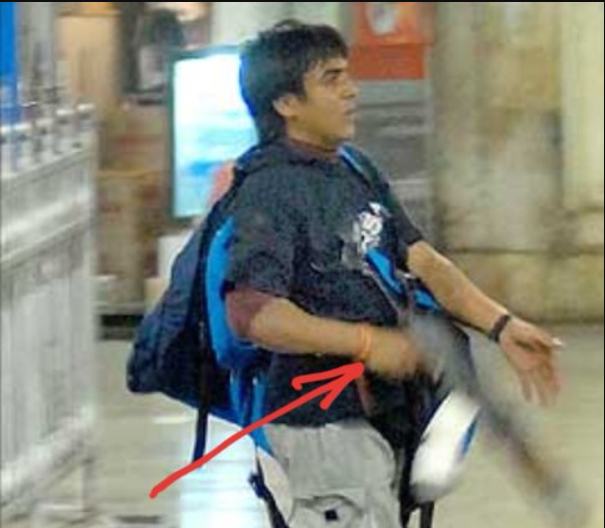
Kasab’s real plan, as later revealed, was to die appearing as a “Hindu” and thus shift suspicion away from Pakistan-based handlers, reinforcing the myth of “saffron terror.” Thankfully, due to the extraordinary courage and sacrifice of Assistant Sub-Inspector Tukaram Omble, Kasab was captured alive and later confessed to being a Pakistani national trained by terrorists.

By then, however, the false-flag theory had already gained widespread circulation. Well-known public figures even released a book titled 26/11: RSS ki Saazish? that promoted the “false flag” theory surrounding the attacks.

The “false flag” narrative resurfaced after the Pulwama terror attack, when a suicide bomber from Jaish-e-Mohammed (JeM) drove an explosive-laden vehicle into a CRPF convoy in Pulwama, Jammu & Kashmir, killing 40 soldiers. Following the attack, some voices in Pakistan, including senior officials, suggested that India might have staged the incident to influence the upcoming 2019 elections. Commentators in India echoed similar theories online, framing the tragedy as politically motivated rather than acknowledging it as an act of cross-border terrorism.
Then came the recent Pahalgam attacks, where Pakistani media outlets and online commentators claimed that India had staged the incident to divert attention from domestic issues and influence elections. They described it as part of an alleged “Indian playbook” of false-flag operations. Soon after, similar talking points appeared in sections of Indian social media and commentary spaces.
In each case, claims of “false flag operations” lacked credible evidence and were primarily rooted in conspiracy theories first circulated in Pakistan and later amplified by certain opinion groups in India.
The Global “False Flag” Obsession
It’s worrying that many people in India tend to believe external narratives about terror attacks rather than trusting verified investigations at home.
This pattern might have been up for serious debate if it only happened locally, but the deflection from religious extremism appears to be a global trend. To cite a few examples:
- The 9/11 attacks are still viewed by some as a “false flag” orchestrated by the U.S. or Israel to malign Muslims. This is a theory long disproved but still used by extremist groups to recruit followers. They thrive on anger, convincing vulnerable minds that violence is the only response to perceived oppression. In India, extremist recruiters have similarly exploited stories like the Babri Masjid while dismissing events like the Godhra train burning as conspiracies, weaving grievance into a tool for radicalization.
- The October 7 attacks in Israel were also met with widespread conspiracy claims, framed as a false flag operation meant to discredit certain groups.
- Likewise, criticism of regimes such as Iran’s leadership, the Taliban, or Hamas is often dismissed as Western propaganda. This is another form of deflection that prevents honest introspection.
Conspiracies Shield Extremists
It’s time to move past the overused “false flag” narrative.
Each time a terror attack is dismissed as a conspiracy, it insults the victims, weakens trust, and blurs the line between truth and propaganda. These baseless claims don’t protect anyone. They only embolden extremists and deepen divisions.
Real courage and national unity will come from confronting facts, condemning violence without bias, and demanding accountability from those who spread hate, no matter where it comes from.
Ending the false flag obsession is the first step toward restoring integrity in how we respond to terrorism.




 The Monkey Dilemma
You must be logged in to post a comment.