There’s so much bad news everywhere. Wars, riots, terror attacks, persecution, and discrimination. I don’t know about you, but I’ve started to feel helpless, knowing I hold no power to fix these problems. As individuals, there’s only so much we can do. What is in our control is how we express our views, calmly and with clarity. But even that becomes difficult when those around us try to silence any perspective that doesn’t match their own. They get aggressive. We get perplexed. It becomes a vicious cycle. One that’s hard to escape. It drains our time, disturbs our emotional balance, and pushes away those who genuinely want to understand us.
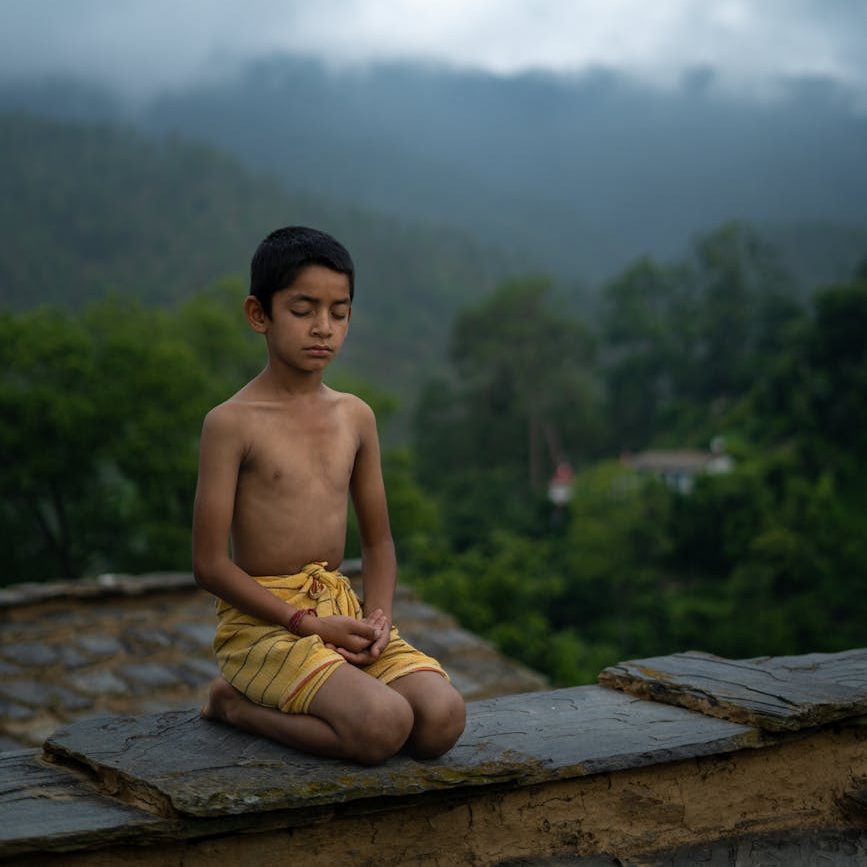
In the midst of all this, I recently attended an online yoga session on International Yoga Day. We meditated together as a group, and it turned out to be one of the most peaceful and calming experiences I’ve had in a while. The meditation lasted only 7 minutes, but it had a noticeable, immediate impact. I felt centred. It helped me go about the rest of my day with a calm focus, even while handling everyday chores or reading the news. This is new for me. For the past few years, my mind has been troubled by witnessing the coldness with which society operates. There was a lingering sense of doom that had become hard to manage. So when meditation helped soften that heaviness, even slightly, it came as a welcome relief. I allowed myself to sit with that emotion and savour it.
The guide assured us that the control over our minds would improve even further with consistent practice. He said that even just 7 minutes of daily meditation can make a noticeable difference over time. I’m still new to the practice, so it’s too early for me to say how lasting the effects are. But one thing I can say for sure: you feel noticeably better after just the first session.
What made those few minutes so calming was the simple act of focusing only on the breath and the space between the eyebrows. In that short span, there were no screens, no distractions. Just stillness. It felt like a small step toward making peace with myself. This is what I experienced in my first few days of meditation. I’m not sure yet if I can commit to doing it every single day, but it’s something I genuinely want to try.
I’m not the body, I’m not the mind
As we meditated, this chant of “I’m not the body, I’m not the mind” by Sadhguru played in the background, accompanied by soothing flute music. It felt like an invitation to disconnect from the body and mind, to simply let yourself be. You don’t have to react to everything. You can observe your experiences as an outsider, from a third-person perspective. Feel your emotions, acknowledge them, but don’t let them consume you beyond control so that you lose sight of logic.
If you’re interested in trying the same meditation, you can do it at home by downloading the “Miracle of Mind by Sadhguru” app on your phone. The session includes the same calming chant and ends with a short 1-minute video from Sadhguru, offering simple insights on daily practice.
Now, I understand some may have reservations about Sadhguru due to political or personal views, or unverified claims. But I’d encourage you to look past that and focus instead on what this practice can offer you personally.
I’ve tried other meditation apps too, but they often felt too Western in their approach. This one, however, feels grounded in Indian sensibilities, with gentle flute music and guided instructions that actually help you stay focused. In a culture where complete silence isn’t always easy to adapt to, this format works well. It’s thoughtfully designed for an Indian audience, making meditation more accessible and less intimidating.
The protagonist of Convenience Store Woman by Sayaka Murata is unlike anyone I’ve encountered in any book. Keiko is quietly charming, yet deeply unconventional. She’s content with her simple routine at a convenience store, a place she has worked for over 18 years. This does not gel well with people around her who expect her to climb the career ladder, or “at least get married”, instead of sticking to this “lowly” job. They are unable to comprehend her happiness or her emotional detachment in situations where strong feelings are typically expected. In her own words, she’s a “foreign object.”
There are parts of Keiko’s personality I could relate to, especially her tendency to operate more from the brain than the heart. I’ve often questioned this trait in myself, particularly in political matters, where I naturally lean toward a calculated, strategic view rather than reacting emotionally. This sometimes makes people see me as cold. But that’s where my similarities with Keiko end.
I tend to get deeply emotional about things that may not always move others in the same way. My responses aren’t absent, like Keiko’s. I cry easily when I see children being affectionate with their parents or when animals are hurt. I feel emotional and distraught when I see small children picking up guns or stones in conflict zones. I want them to study and grow up contributing to society in peaceful ways. I well up seeing warmth in society. For example, when the visually impaired children sang “Happy Birthday” to our Indian President Murmu, she cried, I cried, we all cried. I’m also deeply moved by the struggles of elderly people, perhaps because I’ve spent time with them and seen what many others, especially those living far from their parents, often overlook. I do feel deeply, just not always in ways others expect, a bit like Keiko.
If you are wondering what makes Keiko strange, this snippet from the book gives an idea:
I wouldn’t say I loved Convenience Store Woman, but it was certainly thought-provoking, especially how society treats you as a “foreign object” that needs to be discarded if you don’t follow the rules. Society insists Keiko must adapt to its norms to be seen as “normal.” It does not matter to them how fulfilled or happy she is. Keiko’s struggle to meet societal expectations forms the core of the novel. Many of us might relate to this struggle with conformity. Not everyone is wired to follow every rule or expectation to the letter.
Ending this post with some thought-provoking quotes from the book:
The normal world has no room for exceptions and always quietly eliminates foreign objects. Anyone who is lacking is disposed of.
He seemed to have this odd circuitry in his mind that allowed him to see himself only as the victim and never the perpetrator l thought as I watched him.
It occurred to me that it wasn’t such a stretch to say that contemporary society was still stuck in the Stone Age after all. So the manual for life already existed. It was just that it was already ingrained in everyone’s heads, and there wasn’t any need to put it in writing. The specific form of what is considered an “ordinary person” had been there all along, unchanged since prehistoric times I finally realized.
“Look, anyone who doesn’t fit in with the village loses any right to privacy. They’ll trample all over you as they please. You either get married and have kids or go hunting and earn money, and anyone who doesn’t contribute to the village in one of these forms is a heretic.”
As soon as I finished watching Netflix’s series on Osama Bin Laden, it recommended another American Manhunt documentary by Netflix. This one is about the Boston Marathon bombings. I had read about the attack before, but watching the documentary made a much deeper impact.
What Are the Boston Marathon Bombings?
The Boston Marathon bombings were a terrorist attack that took place on April 15, 2013, during the annual Boston Marathon in the United States. Two homemade bombs exploded near the finish line, killing 3 people and injuring over 260 others.
The attackers were two brothers, Tamerlan and Dzhokhar Tsarnaev, originally from Chechnya. They used pressure cooker bombs placed in backpacks. After the attack, a large manhunt followed. Tamerlan was killed in a shootout with police. Dzhokhar was captured, tried, and sentenced to death.
The Tsarnaev brothers claimed they carried out the Boston Marathon bombings as revenge for U.S. actions in Muslim countries like Iraq and Afghanistan. They believed that killing Americans was justified because of U.S. military involvement in those regions.
Dzhokhar wrote in a note that the attack was meant to defend Islam and punish the U.S. for killing Muslims abroad. However, they were not part of any organized terrorist group. Investigations found they were self-radicalized, influenced by extremist content online.
Their actions were widely condemned by Muslims and non-Muslims alike.
Thoughts
I’m not going to focus on the Tsarnaev brothers themselves, but rather on the general impression the documentary left on me.
You often see people justifying extremism, like the brothers did, whether it’s acts of violence or even celebrating natural disasters or someone’s illness, as payback for a country’s past actions. It’s all framed as if everything is justified. What’s troubling is that this mindset isn’t limited to radical groups. You sometimes see it in people around you: the so-called moderates. Some may appear balanced on the surface, but quietly endorse extremist views in subtle ways.
This exists across communities, not just one. There’s often only a thin line between those who wish for destruction and those who act on it. That line might be common sense, fear, or simply a lack of means. We may never know. The point is, the anger and hate that fuel such extreme actions are far more mainstream than we believe. I see it daily, on social media, and at times, even within my own circles. It’s not always loud or violent, but it’s there, simmering under the surface. The only time you get a glimpse of it is when disaster strikes.
For some, all it takes is a spark to turn toward extremism. For example, Tamerlan was a skilled amateur boxer with hopes of representing the U.S. in international competitions. However, after being denied a visa to compete abroad, he grew increasingly resentful. He reportedly believed the rejection was due to his Muslim identity and refused to accept any other reasons, which deepened his sense of alienation and fed into his radicalization. In a way, an extreme victim mentality played a significant role in his downfall. Tamerlan saw himself as targeted and wronged, interpreting setbacks as part of a broader injustice against Muslims. This mindset not only fueled his resentment but also made him more vulnerable to radical ideologies.
What’s alarming is the sheer scale of such hate. It has become disturbingly normalized. If a disaster strikes the U.S., or even India, I’m 100% sure there would be people to celebrate or justify it. And that, perhaps, is the most disturbing part: the way the line between the humane and the inhumane has begun to blur.
However, the hypocrisy lies in the fact that many of these individuals do not express the same anger toward countries like Iran, known for oppressing women, or Pakistan and Bangladesh, where minorities often face persecution. This selective outrage reveals a duality that many need to recognize and address.
Although Sirens is presented as an American dark comedy, I didn’t find anything particularly funny in it. I’m a new fan of Meghann Fahy, so she was the main reason I chose to watch this series. I wasn’t disappointed.
What’s It About?
Sirens centers on three women, each unique in their own way, yet a common factor connects them all. This factor becomes more apparent as the story progresses. You may love or hate the characters, but our inherent nature compels us to judge them for who they are. It forms a subtle yet significant crux of the story.
Thoughts
Sirens was as gripping as I want a drama to be. I thoroughly enjoyed it. I am drawn to series with well-defined female characters, and this was no exception. Though Meghann Fahy is now being typecast in a specific type of role, she does full justice to it. Julianne Moore is breathtaking; no one else could have played the part of the beautiful yet intimidating persona. Milly Alcock as Simone is brilliant and likely has the most substantial role of the three, as she gets to reveal many layers of her character.
What struck me the most about the series is that no female character is entirely black or white. They are layers of gray, doing their best to survive in a world that has not been kind to them. The final scene might make you uncomfortable, but it represents the very essence of life, where nothing is predictable. You do what you have to do to confront your demons. This may seem selfish, but it is also essential for survival.
Sirens is a feminist movie at its core, and its profound messaging about how women are often blamed is woven in subtly without overt activism. You notice it and feel uncomfortable, but you never get the impression that the message is being forced upon you. This is the kind of messaging that is most effective – one that isn’t obvious but still makes a lasting impact. Human nature is such that we don’t listen when we are shouted or screamed at; we listen when we are subtly guided to notice discriminatory issues on our own.
Sirens is streaming on Netflix. The series has 5 episodes, with each episode lasting roughly an hour.
I’ve watched nearly every series featuring Park Hyung Sik, and Buried Hearts was no exception. His screen presence and charisma are unmatched. There’s something about him that no one else can replicate.
What’s It About?
Buried Hearts follows the journey of an ambitious young man trapped in a web of lies, deceit, and greed. Caught between a shadowy past and a harsh present within the organization he serves, he struggles to find his way. At the heart of this turmoil lies a love so pure and unwavering that no one else can come between.
Thoughts
The series wasn’t as gripping as I had hoped, but I watched it till the end for Park Hyung Sik alone. He looked dashing, as always. His character in Buried Hearts has shades of gray. While I do miss the Park Hyung Sik from Strong Girl Bong-soon, this new version comes with his own unique charm.
I wish the love story had more layers to it. The pacing of the story was also quite slow, and I found my attention drifting after a few episodes. The supporting characters seemed to have more screen time than the main characters. Though this is commendable, I wanted to see more of the main leads.
The female lead’s storyline didn’t feel convincing, making it hard to root for her. Honestly, I just wanted Park Hyung Sik’s character to fall for someone else.
Buried Hearts is streaming on JioHotstar. The series has 16 episodes, with each episode lasting roughly an hour.
Even if India agrees to peace talks with Pakistan, who exactly are we supposed to talk to?
The Pakistan Army? The army chief, Asim Munir, has called Kashmir their “jugular vein” – they aren’t letting go. He raked up anti-Hindu, anti-India sentiments before the Pahalgam attacks. He stated, “Our forefathers believed that we were different from Hindus in every possible aspect of life,” and urged parents to instill this bigoted narrative in their children to preserve Pakistan’s identity.
The Pakistani Prime Minister? Just a puppet with no real power over the military. Funerals of designated Lashkar-e-Taiba (LeT) terrorists have been attended by members of the Pakistani Army, further reinforcing allegations of state complicity. Such actions raise serious concerns about the Pakistan government’s commitment to counterterrorism, especially when these individuals are recognized as terrorists by the international community.
Pakistani celebrities? They won’t even whisper a word against state-backed terrorism. They rarely acknowledge well-documented facts, such as Osama bin Laden having found safe haven within Pakistan’s borders. They speak about “having a voice” in Pakistan. Yet, none have dared to criticize Asim Munir for his communal, anti-Hindu remarks, despite knowing that Hindus are living within their own country as well.
The civilians? The majority views India as the villain and often denies the existence of terrorists within their own borders. This raises an important question: Do they not consider figures like Osama bin Laden, Hafiz Saeed, and Masood Azhar as terrorists? Are they seen merely as ordinary civilians? When they refer to “terrorists,” is it only groups like the Balochistan Liberation Army (BLA) and other factions causing unrest within Pakistan that they have in mind?
So really. Whom should we sit across the table with to discuss peace? There are no viable options.
Attacks Initiated by Pakistan
In all the following attacks initiated by Pakistan, India has demonstrated extreme restraint:
Attack
Year
Fatalities
Bombay Blasts
1993
257
Lajpat Nagar Blast
1996
13
J&K Assembly Blast
2001
38
Parliament Attack
2001
9
Raghunath Temple Attack
2002
12
Kurnool Train Crash
2002
20
Akshardham Attack
2002
33
Mumbai Bombings
2003
52
Delhi Blasts
2005
62
Varanasi Blasts
2006
28
Mumbai Train Blasts
2006
189
Samjhauta Express Blast
2007
68
Hyderabad Blasts
2007
42
Jaipur Blasts
2008
63
Ahmedabad Blasts
2008
56
Mumbai Attacks (26/11)
2008
166
Patna Bombings
2013
6
Pathankot Attack
2016
7
Uri Attack
2016
19
Pulwama Attack
2019
40
Pahalgam Attack
2025
26
India’s restraint in the face of repeated cross-border terrorism is often seen by Pakistan as a weakness. The ongoing attacks have led many Indians to believe that simply maintaining the status quo won’t bring lasting peace.
India’s Efforts Towards Peace Have Gone Unnoticed
India has made several efforts in the past to reach out and promote peace. We have celebrated Pakistani singers, actors, cricketers, and artists, and defended them when the Indian government initiated a ban against them.
Nusrat Fateh Ali Khan was revered, even after singing a controversial song with the line “Muslims should not allow kafirs (non-Muslims) in their homes.” Mahira Khan and Hania Aamir were regulars in Bollywood fashion pages, and Indian women admired Fawad Khan.
Yet, none of these figures had the courage to denounce the terror networks in their own backyard or question Asim Munir’s communal statements.
We extended every olive branch, but it was met with betrayal, silence, and violence. It’s time to stop romanticizing those who wear a false pro-India mask while harboring hatred.
Pakistan’s Blatant Radicalism
In the current war, the Indian Army has focused on precision strikes targeting terrorist camps and military assets, with considerable efforts to avoid civilian harm. The death of any innocent civilians in terrorist camps is deeply unfortunate, but could have been avoided by Pakistan. Why were civilians present in known terrorist camps? Were they placed there deliberately to attract international sympathy and deflect blame?
In contrast, Pakistan’s use of drones in civilian zones has drawn comparisons to Hamas-style tactics against Israel. If not for the advanced air defence systems in both India and Israel, the death toll could have been far higher.
Pakistan has often revealed its radical side openly. To cite a few examples:
In a recent interview with Sky News journalist Yalda Hakim, Pakistan’s Defence Minister Khawaja Asif acknowledged his country’s historical support for terrorist organizations. He stated, “We have been doing this dirty work for the United States for about three decades… and the West, including Britain.”
Khawaja Asif, while addressing a session of the Pakistan National Assembly, said that students in madrassas will serve as the country’s second line of defence in wars, when needed, implying they are disposable.
The former director general of the ISI, Asad Durrani, in an Al Jazeera interview, said the death of 150 APS Peshawar school children was “collateral damage” in pursuit of “broader” national interests.
Mubasher Lucman, founder of the Pakistani television network ARY Digital, during a podcast with journalist Naseem Hanif, stated that if Pakistan were to win a war against India, he would want to claim Indian movie actresses as maal-e-ghanimat—a term historically referring to war spoils, including enslaved women (sex slaves).
During a protest outside the Pakistan High Commission in London on April 25, 2025, following the Pahalgam terrorist attack in Jammu and Kashmir, Colonel Taimur Rahat, Pakistan’s Army and Air Advisor in the UK, made a provocative throat-slitting gesture towards Indian demonstrators. This is perhaps the first time a diplomat of any country has made such a shocking and radical gesture in public. The act not only defies diplomatic conduct but also reflects a deeply irresponsible and provocative mindset, especially in the context of a civilian tragedy.
Former Pakistani cricketer Danish Kaneria, one of the few Hindus to represent Pakistan at the international level, publicly accused former teammate Shahid Afridi of discriminatory behavior during their time together on the national team. Kaneria alleged that Afridi repeatedly pressured him to convert to Islam and excluded him from team activities, including meals.
Shahid Afridi’s cousin, Shaquib Afridi, was a commander of the Islamist terrorist group Harkat-ul-Ansar. He was killed by Indian security forces in Anantnag, Jammu and Kashmir, in 2003. Reports indicate that Shaquib had been active in the region for approximately two years prior to his death.
In an undated video that surfaced online, former Pakistani cricketer Shoaib Akhtar discussed the Islamic prophecy of Ghazwa-e-Hind, which refers to a prophesied battle for the Islamic conquest of India. In the video, Akhtar stated: “Ghazwa-e-Hind is mentioned in our sacred books. We will first capture Kashmir and then invade India from all sides for Ghazwa-e-Hind.“
Pakistani actor Hamza Ali Abbasi has publicly expressed support for Hafiz Saeed, the founder of Lashkar-e-Taiba and the alleged mastermind behind the 2008 Mumbai terror attacks.
In a televised discussion, Waqar Younis praised Pakistani cricketer Mohammad Rizwan for offering Namaz during a match, emphasizing it was done “in front of Hindus,” which he found particularly satisfying.
Zaid Hamid, a Pakistani political commentator, propagated conspiracy theories, claiming that the 2008 Mumbai attacks were orchestrated by “Hindu Zionists.” He has also stated that India will be “trounced and enslaved according to Sharia if Hindus don’t repent and embrace Islam.“
The videos and news articles for each controversy listed above are available online.
If Pakistani diplomats, politicians, cricketers, and celebrities act this way and are left largely uncriticized, what hope do you have from ordinary civilians?
The “Jugular Vein”: Kashmir
Pakistanis and the international community often focus on the “oppression of Kashmiri Muslims” and the call to “free Kashmir,” but they conveniently overlook the genocide of Kashmiri Hindus, a community forcibly displaced from their ancestral land. They are yet to return out of fear.
The genocide of Kashmiri Hindus (whitewashed as an “exodus”) is a tragic chapter in the region’s history. They, as the indigenous people of the land, have every right to return to their homes. Many Kashmiri Muslims are ready to welcome them back, acknowledging the need for healing and reconciliation. However, Pakistani-backed terrorists continue to block this process, instigating violence and creating an atmosphere of fear every time Kashmiri Hindus attempt to settle in Kashmir.
The narrative of “freedom” for Kashmir remains incomplete without acknowledging the rights and voices of the Kashmiri Hindu community. As the original inhabitants of the region, their cultural and historical ties to Kashmir that span thousands of years. Any move to integrate Kashmir into Pakistan would only deepen their marginalization. History bears witness: the Hindu population in Pakistan has sharply declined due to forced conversions, persecution, displacement, and violence. These facts raise serious concerns about the future of Kashmiri Hindus under such a scenario. To safeguard their identity, rights, and survival, it is vital that Kashmir remains an integral part of India.
It is time the international community recognizes this truth and supports the return of Kashmiri Hindus to their land, allowing for genuine reconciliation and the restoration of peace. Until this happens, international human rights activists should shift their focus to the “Free Balochistan” and “Free Iran from Islamic Regime” campaigns. Currently, they are more oppressed than Kashmiris, and their plight requires global attention.
UN Resolution
The United Nations (UN) has addressed the issue of Kashmir through Resolution 47, passed in 1948. The resolution emphasizes the right of the Kashmiri people to self-determination. It proposes that a plebiscite should be held to allow the people of Jammu and Kashmir to decide whether they wish to join India, Pakistan, or remain independent.
However, this resolution also includes conditions for the plebiscite, the most important being the withdrawal of “all Pakistani nationals” and “tribal forces” from the region to create a neutral environment for a fair vote. This is the first requirement in Resolution 47 that needs to be met. However, it does not get stressed enough.
The presence of Pakistani-backed terrorists in the region complicates the situation and directly contradicts the conditions of the UN resolution. Until Pakistan withdraws these forces and halts its support for terrorism, the possibility of implementing the UN resolution’s provisions remains unfulfilled.
I have covered this information in detail in a separate Kashmir Plebiscite blog post.
War or Peace?
Every past peace talk with Pakistan has failed. Not once, but multiple times.
Should India keep repeating the same cycle just to comfort a few people’s idealism? At what cost? More lives, more betrayal, and more denial?
I’m not advocating for war. But let’s be clear. Peace isn’t possible with a neighbour who constantly thirsts for our blood.
In such times, I choose to trust our Indian leaders, intelligence, and armed forces to make the best call for protecting the nation, not some random social media activist who would sell their soul for money.
If my country wants to teach the neighbour a lesson, I would support it. If it says it’s going to withdraw, I would support that too. In other words, the country comes above everything else. Jai Hind.




 The Monkey Dilemma
You must be logged in to post a comment.