
An Indian’s Concern for Bangladeshi Hindus

It is with utter dismay I am reading the news about the attack on Hindus in Bangladesh. Secular Muslims in the country are trying to protect the Hindus. This is positive news, and you can’t help but feel grateful for such people in the community. However, radicals are still deliberately targeting the houses and religious places of Hindus. How can they be stopped?

Often, we have seen that in the struggle between radicals and seculars, the radicals emerge victorious. This has happened previously in Iran. A student uprising in Iran in 1979 played a significant role in the downfall of secularism and the emergence of the Islamic regime.
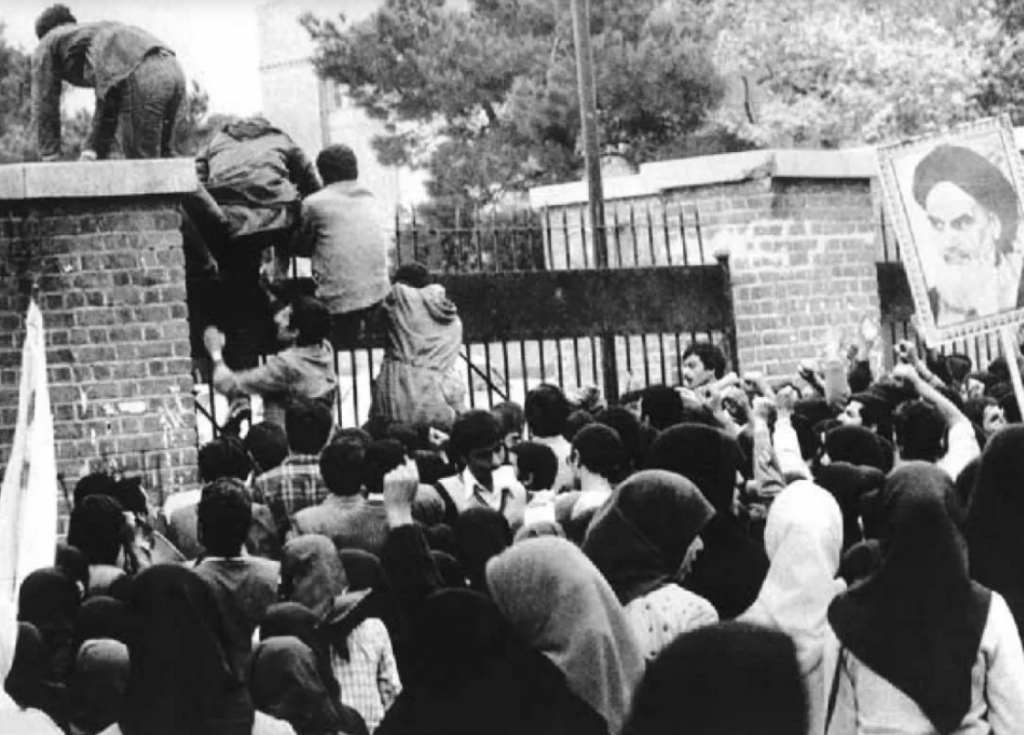
Student Protestors in Iran 1979
Student protestors climbing the gate of the U.S. Embassy in Tehran on November 4, 1979 / Wikimedia Commons

The reasons for the uprising back then were quite similar:

  • Widespread discontent with the Shah’s authoritarian rule, political repression, and economic issues.
  • Iranian students, both domestically and abroad, were active in organizing protests, disseminating anti-Shah literature, and galvanizing public opinion against the regime. They played a crucial role in spreading revolutionary ideas and mobilizing the masses.

A simple act of protesting an “authoritarian” rule in Iran brought in a more religious regime that was dictatorial in its tendencies. So how successful would one consider this student uprising, unless the original intention of the riots was not social justice, but a religious takeover? Shah, considered secular in nature, fled the country never to return, which in all probability will be Sheikh Hasina’s trajectory too. Comparisons are inevitable. Iran is still struggling to bring back its golden days of secularism. Will Bangladesh end up being the same? Only time will tell.

I saw Bangladeshi residents expressing their joy over Sheikh Hasina’s ouster, which is valid, as she was unnecessarily brutal in her approach. But I also saw them in private groups worrying about the future of the country and whether they will fall into the hands of radical Islamists. Some even said they would leave the country if it came to that.

What does this mean for India? Sheikh Hasina was considered pro-India in her approach. She kept the fundamentalists like the Jamaat-e-Islami and anti-India elements under check. This is of significance as India shares a long border with Bangladesh and any sort of instability has the potential to spill over to neighboring regions.

The new leader, Muhammad Yunus, is a Nobel Laureate. He has proven himself an intellectual, but how effective would he be as a politician and a peace-keeper? Will he be pro-India and continue to maintain peaceful relations with our country, promising to secure the borders and protect the minority community in Bangladesh? Or will he be a puppet for the radicals? Questions only time can answer.

As usual, the leftist ecosystem in India is working overtime to convince us that the Hindus in Bangladesh are not in trouble. This is not surprising. It is a standard approach when minorities in Pakistan, Bangladesh, and even within India (Kashmiri Pandits) are attacked. The events are quickly negated or justified and brushed under the carpet. A close observation of their responses provides enough proof of their bias. In my 40+ years, I have never seen them acknowledge attacks against Hindus. There is always a “reason” for it.

If by chance you point out the attacks, you are labeled a right-wing communal Sanghi (a BJP supporter). However, if you support any other community, you are a social justice warrior, an activist, and a secular. This double standard is difficult to fathom, and I have seen many becoming BJP supporters because of this hypocrisy.

In India, I am witnessing more secular Muslims openly supporting Bangladeshi Hindus than the so-called secular Hindus. Due to the indifference of left-leaning Indian Hindus, the community will continue to suffer persecution at the hands of radicals. There is not enough support. For the support to pour in, people need to first acknowledge the fact that there is an issue.

It is with some relief I read that all political parties in India are on the same page regarding the Bangladesh issue. The opposition hasn’t yet negated the Bangladeshi Hindu’s plight. They voiced concern for the minorities in Bangladesh and said they would work in unity with the central government. A nuanced approach their supporters need to learn.

Hopefully, peace will soon be restored in Bangladesh, rendering my concerns unnecessary. Until that day arrives, my worries persist.

An Ode to The Last Girl

Nadia Murad had luck on her side the day she escaped ISIS. The door was unlocked, and no guards surrounded the area. She says their negligence could have stemmed from the assumption that she was too weak, both physically and mentally, to attempt an escape. To add to the luck factor, the family she eventually sought help from while on the move turned out to be empathetic rather than deceitful, a fortunate outcome not experienced by most Yazidi women who tried to escape.

Keeping luck aside, Nadia exhibited a quality that day uncommon for someone in her position – courage. To muster the strength and determination to capitalize on an opportunity, especially when you are exhausted, is heart-wrenchingly admirable.

The Last Girl chronicles the harrowing journey of a woman who had to go through hell on earth as the perpetrators sought heaven on “the other side.”

Nadia’s story serves as a lesson – never take your peace or soldiers of the nation for granted. You are safe because the soldiers of your country are spending countless hours and energy to ensure no harm comes your way. You realize the importance of this only when you read and research extensively, go through history, and pay attention to actions.

The book is heartbreaking. You feel incredible sadness for Yazidis. But you also feel sorry for the people who get radicalized to the extent that they end up thinking violence is the answer. How can we save them? How can we protect our youngsters? How can we extinguish their hate and make them realize we are all, ultimately, children of the same universe?

Reader discretion is advised: The following content may contain sensitive or mature themes that could be distressing to some individuals.

Here are some of the quotes from the book that caught my attention:

People say that Yazidism isn’t a “real” religion because we have no official book like the Bible or the Koran. Because we pray toward the sun, we are called pagans. Our belief in reincarnation, which helps us cope with death and keep our community together, is rejected. Some Yazidis avoid certain foods, like lettuce, and are mocked for their strange habits. Others don’t wear blue because they see it as the color of Tawusi Melek and too holy for a human, and even that choice is ridiculed.

We (Yazidis) would, over generations, get used to a small pain or injustice until it became normal enough to ignore. I imagine this must be why we had come to accept certain insults, like our food being refused, that probably felt like a crime to whoever first noticed it. Even the threat of another firman was something Yazidis had gotten used to, although that adjustment was more like a contortion. It hurt.

I used to pray for my own future—to finish school and open my salon—and the futures of my siblings and my mother. Now I pray for the survival of my religion and my people.

For a young Yazidi girl, life only got better after the Americans and the Kurds took over. Kocho was expanding, I was going to school, and we were gradually lifting ourselves out of poverty. A new constitution gave more power to the Kurds and demanded that minorities be part of the government. I knew that my country was at war, but it didn’t seem like it was our fight.

I still think that being forced to leave your home out of fear is one of the worst injustices a human being can face. Everything you love is stolen, and you risk your life to live in a place that means nothing to you and where, because you come from a country now known for war and terrorism, you are not really wanted. So you spend the rest of your years longing for what you left behind while praying not to be deported.

Rape has been used throughout history as a weapon of war. I never thought I would have something in common with women in Rwanda—before all this, I didn’t know that a country called Rwanda existed—and now I am linked to them in the worst possible way, as a victim of a war crime that is so hard to talk about that no one in the world was prosecuted for committing it until just sixteen years before ISIS came to Sinjar.

Everyone thinks Yazidi women are weak because we are poor and live outside the cities, and I have heard people say female fighters with ISIS are, in their own way, proving their strength among men. But none of them—not Morteja’s mother, not even a suicide bomber—was a fraction as strong as my mother, who overcame so many struggles and who never would have let another woman be sold into slavery, no matter her religion.

Fear was better. With fear, there is the assumption that what is happening isn’t normal. Hopelessness is close to death.

I was quickly learning that my story, which I still thought of as a personal tragedy, could be someone else’s political tool, particularly in a place like Iraq. I would have to be careful what I said, because words mean different things to different people, and your story can easily become a weapon to be turned on you.

Every time I tell my story, I feel that I am taking some power away from the terrorists.

I have begged Sunni leaders to more strongly denounce ISIS publicly; they have so much power to stop the violence. I have worked alongside all the men and women with Yazda to help survivors like me who have to live every day with what we have been through, as well as to convince the world to recognize what happened to the Yazidis as genocide and to bring ISIS to justice.

I told them I wasn’t raised to give speeches. I told them that it was in their power to help protect vulnerable people all over the world. I told them that I wanted to look the men who raped me in the eye and see them brought to justice. More than anything else, I said, I want to be the last girl in the world with a story like mine.

Quick Bytes: The New India

The recent controversy surrounding TM Krishna made me ponder: Is there a rise in intolerance in India, or are Hindus simply becoming more vocal about disrespect toward their culture and religion?

Nirmalyam, a Malayalam movie released in 1973, showed a man spitting on the idol of a goddess. There was no controversy back then. Maybe Hindus took offence but they endured the insult. No one can dare imagine releasing a movie with such a scene now. Some might call it the death of art, but is the survival of art dependent on humiliating Hindu religious beliefs? How often do you see an Indian artist scrutinizing other religions? If we’re going to engage in this game, let’s do so fairly. Selective activism is no longer accepted or praised.

Times have changed. Hindus are no longer silent. They are defending their religion. So does this mean Hindus have become intolerant? Or does this mean they have finally found their voice under the leadership of Modi after decades of suppression? It’s a matter of perspective, but one thing is certain: Criticizing Hinduism in India now comes with greater scrutiny and potential consequences. It’s no longer forgiven as easily as before.

***

Tweet courtesy: @dushyanthsridar / X

An Ode to Dr. Ambedkar’s Thoughts & Speeches

Dr Ambedkar Thoughts and Speeches

In recent years, I’ve shifted towards reading more non-fiction books. I’m not entirely sure why. There was a time when I exclusively indulged in fiction, but maybe as one grows older, there’s a desire for substance over escapism.

Currently, my topic of interest is my own country, India. For 40 years, I was mostly indifferent and satisfied with my understanding of India’s history. However, over the past few years, I’ve developed a strong desire to learn more. I’ve become curious about the psyche of our people, especially those who had to endure several seasons of conflict and unrest. I wish to understand our country’s past. What did our people go through during centuries of colonial rule? How did it mold our perspectives? What were the hurdles we faced before and after independence? As a nation, we have experienced true freedom only since 1947, which is less than a century. Considering this relatively short period, what valuable lessons should we absorb from our recent history as we navigate the present? At any point in history, did we feel a sense of unity? I am seeking hints because the present does not seem to offer any positive answers.

I never felt compelled to delve into books by influential leaders. It was during this quest to know more about India that I started reading Dr Ambedkar’s works. It feels surreal how a simple book could offer a glimpse into how Indians thought in the past, their sentiments, fears, anger, sorrow, etc. Everything feels like déjà vu.

History often repeats itself. By navigating the pages of Ambedkar’s book, you see glimpses of the present reflected in the past.

Some of his thought-provoking quotes include:

I measure the progress of a community by the degree of progress which women have achieved.

Cultivation of mind should be the ultimate aim of human existence.

History shows that where ethics and economics come in conflict, victory is always with economics. Vested interests have never been known to have willingly divested themselves unless there was sufficient force to compel them.

Religion must mainly be a matter of principles only. It cannot be a matter of rules. The moment it degenerates into rules, it ceases to be a religion, as it kills responsibility which is an essence of the true religious act.

I like the religion that teaches liberty, equality, and fraternity.

Law and order are the medicine of the body politic and when the body politic gets sick, medicine must be administered.

Life should be great rather than long.

Unlike a drop of water which loses its identity when it joins the ocean, man does not lose his being in the society in which he lives. Man’s life is independent. He is born not for the development of the society alone, but for the development of his self.

Dr. Ambedkar’s books offer numerous insights. I highly recommend Volume 8 to all Indians for a comprehensive analysis of the thoughts of Hindus and Muslims regarding the Partition of India. It deep-dives into arguments of each. Dr. Ambedkar fearlessly acknowledges and criticizes the cases from both communities while offering candid and constructive feedback. Ultimately, he leaves it up to you, the reader, to derive a conclusion.

For those interested in Dr. Ambedkar’s books, did you know that the MEA website allows you to download all volumes of his “Thoughts & Speeches” for free?

Here’s the link:  Books & Writings of Ambedkar

Enjoy!

To My Dear Indian Brothers and Sisters

Indian Lady Waving Flag - To My Dear Indian Brothers and Sisters

When will we start looking at each other, not as left or right wing, but as Indians again? We lost ourselves somewhere along the way and fell into the muck head-first that political parties and fanatics laid out for us. They wanted to divide us on the basis of religion and politics. We can safely say now that they have succeeded.

We are more divided than ever before. We look at each other as villains, not citizens of the same soil.

Can we go back to the stage where we all felt like one? Did that phase ever exist? We were probably always this polarized, but the lack of social media helped cover it up.  

I have only one dream – that we put our country first, above everything, including religion, caste, ideologies, political leanings, etc. It’s a huge ask. It’s definitely more challenging than spreading hatred. However, it is the need of the hour so our country can progress further.

For India to develop, we should work together. Politicians will not do it, so it’s up to us, the civilians, to make the effort. I hope to see India as a developed and prosperous country before I bid goodbye to this world. One can dream for one’s country, no matter how improbable. However, such dreams can materialize only if we come together as one, forgetting our differences and working towards the common goal, with nothing else to distract us.

When someone tries to separate us, we should look at each other with empathy and understanding. Instead of harboring a victim mentality, we should grow together. We should think, will the country prosper from our hatred and animosity? Is enmity worth it in the long run?

Elections are coming soon. We can expect more divisive politics. Be mindful of the games people play.

Judge not on the basis of what social media algorithms propagate or even what the newspapers or journalists report. Everyone seems biased at the moment. Judge on the basis of your own quality of life, personal experiences, and surroundings. Judge on the basis of your own contributions to the country – did you help in any way? Even maintaining peace and decorum during heights of conflict is a worthy contribution.

Truth be told, there were times I wished there was a law that banned religion-based talks on social media and news channels. If we stopped talking about religion, if we considered each other as humans first, there would undoubtedly be more empathy. But political parties thrive on identity politics. They can win only if religion is mentioned. So, a ban is out of the question. This is true for all major parties in India: BJP (considered pro-Hindu) and Congress (considered pro-Muslim). Everyone has a game to play based on religion, and we foolishly fall for it, fostering hate for one another.

When a religion or caste is constantly criticized, people affiliated with that religion or caste become more polarized. It’s the sad truth of life. Things don’t dramatically reform. It takes understanding, empathy, and kindness to one another to bring about change. Hate, abuse, and shaming do nothing other than deteriorate matters further.

Since childhood, we have been made to recite, “All Indians are our brothers and sisters,” and we have never questioned those words. I hope we return to that state someday, where we can see each other as one, part of the same soil.

Photo by Shakeb Tawheed