
The Butcher of Bosnia and the Illusion of Threat

Butcher of Bosnia Image

I came across a news report about thousands of people attending the funeral of the man referred to as the “Butcher of Bosnia.” His name is Ratko Mladić. The report said that he was convicted of genocide for his role in the killing of more than 8000 mostly Muslim Bosniak men and boys in Srebrenica, Bosnia and Herzegovina. He died in prison at the age of 84 in August this year.

I was totally taken aback by this information and I had to look into why such a controversial figure is being considered a hero by many. I found that his supporters remember him as a military commander who defended their community against what they saw as “perceived threats” from Bosniak Muslims during the Bosnian War, which began in 1992.

I can’t help but notice a pattern here: violence is often justified nowadays by this very “perceived threat” – the belief that another community poses a threat to our existence, religion, culture, or way of life. Maybe this pattern has always been there, or maybe social media has simply made these attitudes much more visible.

Let’s take a look at some examples.

Israel’s ongoing conflict with Palestinians is framed by supporters of Israel around threats to its existence, while Palestinians and their supporters describe the consequences in terms of occupation, displacement, and violence against civilians.

Hitler is also being glorified on TikTok today, with his actions being presented through the deeply disturbing logic that he “helped eradicate” a community, Jews, whom they view as a threat to the world.

Afzal Guru and Ajmal Kasab are considered heroes by many because their actions are framed as acts of resistance against perceived threats or justified through a particular political narrative.

Savarkar is hated by many, even more strongly than some historical figures associated with mass violence, but he is also considered a hero by many who believe Hinduism and Hindu identity have been under threat.

I remember feeling absolute dread (a feeling of threat) when thousands attended Yakub Memon’s funeral in Mumbai.

And that is what makes this whole subject so uncomfortable.

Mourning, glorifying, or defending people who have done questionable things simply because they supposedly acted against “perceived threats to our existence” is becoming mainstream.

Closer to home, Hindus have attacked minorities in India because they believe their religion or cultural identity is under threat.

Christians in places like Tamil Nadu have also staged protests when public spaces in their area are used for festivals associated with other religions, with some viewing this as a threat to their own religious identity or traditions.

Then there are Kashmiri Pandits, who are being portrayed as a threat to the “culture” or “religion” of the land even when they are simply celebrating their festivals in a place with which they have a deep historical connection.

The circumstances are obviously different. But the underlying psychology is worth examining.

Once we convince ourselves that another community is an existential threat, almost anything can start being rationalised in the name of protecting our own.

And that leaves me wondering: who is going to do what next in the name of a “perceived threat”?

No community is completely free from this tendency, and no community can automatically claim moral superiority. Across religions, nationalities, ethnic groups, and political movements, people have at different points convinced themselves that their identity, culture, religion, or very existence is under threat.

Once “they are a threat” starts gaining ground, the question is no longer simply who is right or wrong. The question becomes how far people are willing to go to bring down or harm the people they have decided are the threat.


When Did Millennials Get So Serious?

So I’m in my 40s now, and one thing I’ve noticed lately is just how serious many of my peers have become.

Of course, the reason is obvious – life happened. Careers happened. Marriage, kids, ageing parents, bills, responsibilities… they all have a way of changing you. It’s not like our 20s when many of us had fewer worries and life felt a lot more carefree. Growing up changes everyone.

But even then, the transformation is fascinating.

I’ve seen people who once had the most ridiculous sense of humour become almost unrecognisable. The ones who could turn any conversation into a comedy show are now quiet, serious, and sometimes even a little weighed down by life. It’s sad to see, but I understand it. That’s what life does.

That seriousness has shifted online too. Most of the funny content is by Gen Z.

I’m guilty of it myself. Somewhere along the way, I also started posting only about serious issues rather than silly ones. I look at my old posts on Facebook and don’t recognise myself either.

Surely life isn’t meant to be taken this seriously all the time?

Take the Reposts tab on Instagram, for example.

When I open someone’s reposts, I’m hoping to learn something about them. What kind of humour they enjoy. The movies they love. The random memes that made them laugh. Maybe a dog video that melted their heart. Something that tells me who they are.

Instead, I often find an endless stream of political posts.

By the time I leave their profile, I know exactly which political party they dislike, but nothing else about them.

It’s strange. Politics has become such a huge part of social media that it’s slowly replaced personality. Our online identities now revolve around what we’re against instead of what we enjoy.

I’m trying to disconnect from all of it, but it feels like a lost cause. In India, there’s almost no escaping politics. Even when you’re sitting in a hospital waiting room in Kerala, there’s usually a news channel playing on the TV. It’s as if we’re not allowed to switch off from the constant political noise, even when we’re unwell.

And when did millennials become this serious?

We were genuinely funny. I would even argue we were funnier than Gen Z.

Every now and then, I go back and read old Facebook posts and comments, and it’s like opening a time capsule. People teased each other endlessly. There was harmless banter, ridiculous inside jokes, and conversations that wandered off in every direction.

Nobody was trying to go viral. Nobody cared about engagement or reach. We were just… hanging out online.

Of course, social media algorithms haven’t helped.

Today, a post from your friend with 4 likes gets buried, while a random stranger whom you’re not following ends up at the top of your feed.

Half the time, when I open Facebook, I’m looking at people I’ve never met. If I actually want to see what my friends are posting, I have to switch to the Friends feed. Extra steps, too cumbersome, leading to less engagement.

I really hope someone builds a social media platform that brings back what made the early internet so much fun. A place where the goal isn’t chasing likes, growing followers, or gaming the algorithm.

Just a place where friends share everyday moments. Random thoughts. Terrible jokes. Blurry photos. Half-baked opinions. Embarrassing stories.

You know… life.

I would join that platform in a heartbeat.

***

Photo by MART PRODUCTION

Can Cockroach Janata Party (CJP) Really Challenge BJP?

Cockroach Janata Party (CJP)

Most Indians on social media probably already know about the Cockroach Janata Party (CJP) by now. The online political campaign took shape after Chief Justice of India (CJI) Surya Kant sparked controversy during a Supreme Court hearing on May 15. During the hearing, he made observations comparing certain unemployed youths and social media critics to “cockroaches” and “parasites.” Soon after, sections of the anti-BJP online ecosystem turned the remark into a political campaign and launched the Cockroach Janata Party across X and Instagram. CJP positioned itself as an anti-BJP digital movement and later started campaigns asking people to unfollow BJP accounts on social media platforms.

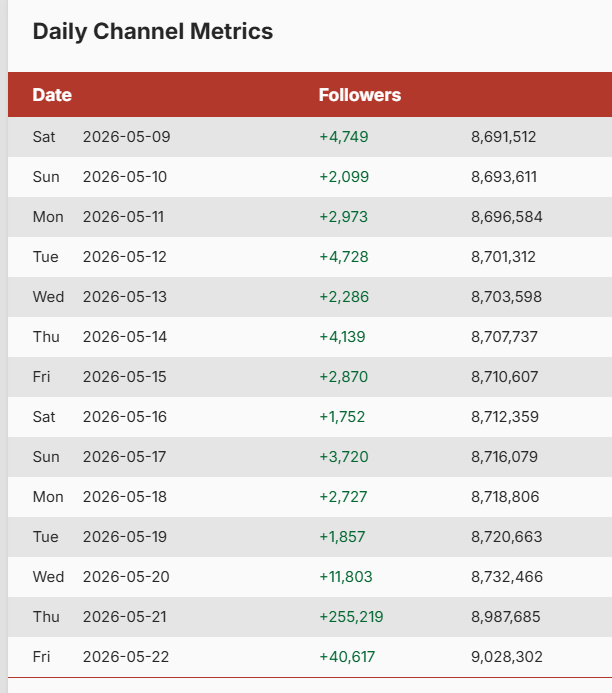
I checked Social Blade after CJP asked its followers to unfollow BJP on social media. Since then, BJP’s follower count has only increased.

Social Blade Metrics for BJP India After CJP Call for Action

People who strongly dislike BJP probably were not following the party in the first place. That is why the whole “unfollow BJP” campaign feels more like online optics than a move with any real impact.

What also feels strange is that the original cockroach comment came from the CJI, yet BJP became the main target of the outrage campaign.

To me, this looks like the same old digital left ecosystem with the same familiar online voices trying to create another social media-driven political movement. I am not particularly impressed. The founder is reportedly an ex-AAP figure based in America who seems eager to build an Indian version of Mamdani-style politics.

Personally, I find both the name and the campaign childish. These kinds of online political revolutions succeed only when there is massive public anger against the government at the ground level. There is definitely strong anti-BJP sentiment in some circles, especially online. At the same time, there are also many people across India who genuinely support BJP, whether others agree with it or not. I saw this very clearly during my visit to North Bengal.

At the end of the day, the only real way to defeat a political party is through votes. South Indian states have shown this clearly. Governments change when opposition parties build strong grassroots support and connect with voters consistently. In many North Indian states, the bigger problem is that opposition parties simply are not strong enough on the ground. BJP and RSS have built an aggressive and disciplined grassroots network over many years. If anyone seriously wants to challenge them politically, they need to match that level of ground work, organization, and outreach. Social media campaigns alone are not enough.

What I Saw in North Bengal Changed My Political Views

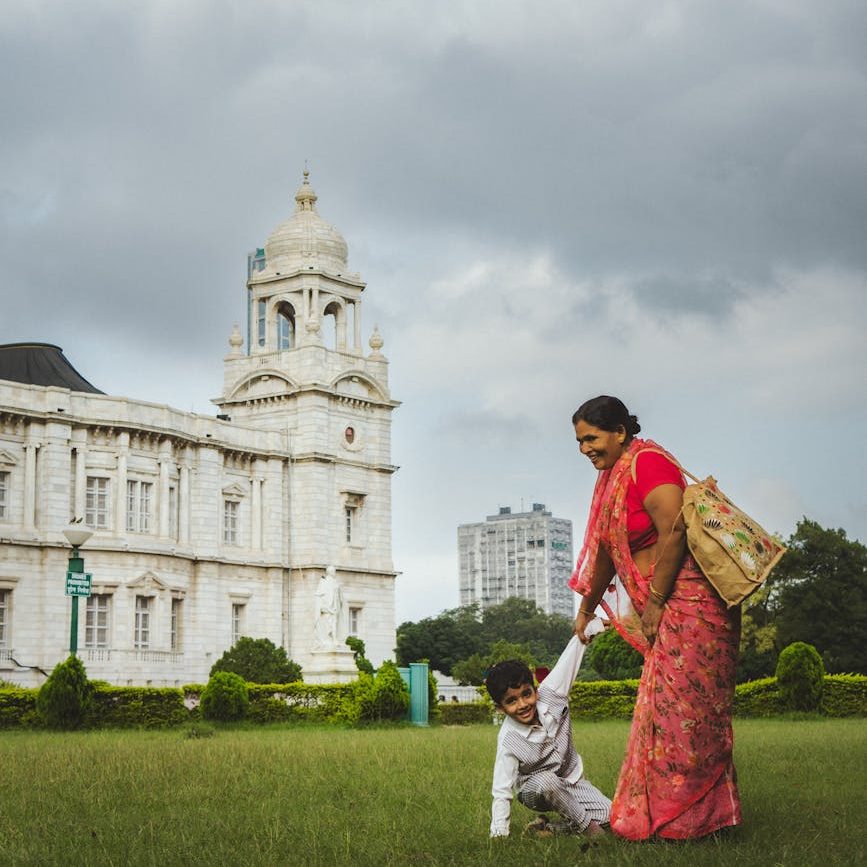
Bengali woman and child picture

The recent election results in West Bengal and Tamil Nadu were genuinely surprising. When it comes to Kerala, like many Keralites, I was almost certain that the UDF, the Congress-led alliance in Kerala, would comfortably win. But what truly shocked most people across the country were the results from West Bengal and Tamil Nadu.

What North Bengal Told Me Before the Election Results Did

A few weeks ago, I travelled through North Bengal, and honestly, the experience changed many of my assumptions about West Bengal politics. Everywhere I looked, there was a sea of saffron flags stretching for kilometres. I barely saw any TMC flags during the journey. Coming from Kerala, the visuals felt surreal.

In Kerala, anti-BJP sentiment is very strong in many places. If such large-scale saffron displays appeared here, there would probably be outrage, protests, or even vandalism. So seeing that level of open BJP support in Bengal genuinely surprised me.

In my mind, I had always viewed TMC in West Bengal somewhat like CPM in Kerala, a left-leaning party with deep-rooted dominance and strong control over the political atmosphere. That is why the strong Hindu nationalist presence confused me initially. But this is exactly why travelling matters. Ground reality is often completely different from what we see through television debates, political influencers, or social media narratives. Sometimes, stepping outside your own state and talking to locals completely breaks your assumptions about the country. This was during my road trip to Bhutan. I would have missed this experience if I had taken a direct flight to Paro.

The saffron wave in Bengal is honestly something I do not think I would have understood without witnessing it personally. During the trip, several Bengali drivers confidently told me that BJP would win West Bengal “100%.” At that time, I dismissed their claims and assumed they were simply politically biased. Looking at the results now, it feels like they were actually reflecting the real mood on the ground.

The reasons they gave for BJP’s rise were many: unemployment, lack of development, safety concerns, the RG Kar case, Sandeshkhali, and the Murshidabad incidents. These issues mattered deeply to voters. They felt Mamata did not understand them.

The development gap especially stood out to me. Walking through parts of Bengal felt very different from being in Kerala. Both Kerala and North Bengal are naturally green and beautiful, but Kerala still has comparatively better infrastructure, roads, and modern facilities in many areas.

The Jaigaon-Bhutan Border Contrast Was Hard to Ignore

One experience that really stayed with me was the Jaigaon border crossing into Bhutan. The path leading to the pedestrian terminal was honestly terrible. Dragging luggage through the unpaved, rocky stretch felt exhausting, and my suitcase wheels practically begged for mercy. But the moment you crossed over into Bhutan, the contrast became impossible to ignore. Cleaner roads, better maintenance, organised surroundings, and a far more hygienic environment immediately stood out. My luggage wheels finally got some relief.

As Indians, we instantly notice the difference when we enter Bhutan. Naturally, it also made me wonder: shouldn’t Bhutanese visitors get a good first impression of India too? That feels like a fair expectation. I genuinely hope the authorities improve the Jaigaon border infrastructure soon, along with addressing the border fencing concerns involving Bangladesh.

Acceptance of People’s Mandate

One thing I absolutely dislike during election season is how quickly people start insulting voters when results do not match their personal expectations. The moment a party loses, some people immediately begin calling voters uneducated, illiterate, communal, casteist, misinformed, or manipulated. Others start blaming EVMs, the electoral system, or democracy itself.

But that completely defeats the point of democracy.

Whether we personally support a political party or not, the reality is that the majority made a choice. Tamil Nadu choosing TVK shocked many people. West Bengal voting strongly for BJP shocked many others. But instead of mocking voters, maybe people should spend more time asking why voters made those decisions in the first place.

Not every election result can simply be reduced to communalism or caste politics. Public frustration, disappointment with existing parties, selective outrage, governance issues, corruption allegations, and the desire for change all play a huge role in elections.

Take Sandeshkhali, for example. Personally, I rarely saw many liberal voices making strong noise about it compared to other issues. Over time, this kind of selective activism creates resentment among ordinary people. Eventually, voters start supporting whoever they feel is at least acknowledging their concerns openly and taking a visible stand. That, in my opinion, is one of the biggest reasons BJP performed strongly in West Bengal. Not because voters are ignorant or hateful, but because many people became frustrated with what they saw as hypocrisy and double standards from other political groups.

Similarly, many voters in Tamil Nadu probably saw actor Vijay as a fresh alternative to the traditional political choices they had for years. Maybe people simply got tired of the same two dominant options and wanted to give someone new a chance.

Election results are also the best time to quietly observe political bias from every side. In Kerala especially, I find it amusing to watch Congress supporters repeatedly celebrate by saying things like “democracy won” or “secularism won,” while the same groups often question EVMs, institutions, voter awareness, or the electoral process itself whenever results go against them in other states.

Accepting the people’s mandate should apply equally everywhere, not only when your favourite party wins.

***

Photo by Soumyojit Sinha on Pexels

Current Affairs, My Way: Iran War, Monalisa’s Marriage, and the Kavya Maran Debate

Representational Image for Iran War, Monalisa Bhosle Interfaith Marriage, Kavya Maran Abrar Ahmed Controversy

So I’m thinking of making this a regular feature on the blog. I usually have slightly contrarian takes on most news stories anyway, so putting them together in a quick post feels like a good idea. Think of this as a simple roundup where I share my thoughts on a few current issues making headlines.

Here’s today’s quick take.

Iran–US/Israel War

The ongoing Iran–US–Israel conflict is dominating global news. From what I am seeing online, most Muslims and leftists appear to be supporting Iran in this war. The primary reason is Iran’s long-standing pro-Palestine position and its support for Palestinian causes and groups.

However, in my opinion, Iran is equally in the wrong for dragging Gulf countries into this conflict.

Iranian officials have said they are only targeting US bases in the region. But the reality seems very different. Civilian infrastructure is being hit, and innocent people have lost their lives. That cannot be justified.

At this point, it is important to acknowledge responsibility on both sides. The US and Israel are certainly to blame for starting the conflict, hitting a girl’s school, and causing massive damage and loss of civilian lives. At the same time, Iran also bears responsibility for expanding the war into countries in the GCC.

Several Gulf countries had already assured Iran that their land would not be used to attack Iran. Yet they are now facing retaliation simply because US bases exist on their soil.

Personally, this issue also feels close to home because I have relatives living in the GCC. It is extremely unsettling to see those countries becoming targets when they are not directly part of the conflict.

At the same time, expecting these countries to suddenly remove US military bases is not practical. Those bases exist largely as a security arrangement, especially considering long-standing tensions with Iran.

Instead of taking sides in this Iran–Israel–US conflict, the best outcome would simply be for all parties involved to step back and find a way to de-escalate the situation before it gets worse.

Monalisa’s Interfaith Marriage in Kerala

Another story that caught attention recently is the marriage of Monalisa Bhosle, the viral Kumbh Mela girl, who married her Muslim partner in Kerala.

On the surface, this is good news. Two people who liked each other decided to get married. Interfaith marriages should not automatically be seen negatively.

At the same time, it is natural to feel a little concerned about the girl’s situation. From what we know publicly, she did not receive much formal education and appears quite naive. The relationship reportedly developed online, and the couple had known each other for only around six months, when the girl was still a minor, before deciding to get married. The guy, as per reports, is 7-8 years older than her. That combination can make anyone a bit worried, regardless of religion.

Kerala already has a controversial reputation in some circles. Because of that, it felt unnecessary for state government officials to publicly participate in what was essentially a private wedding ceremony.

If, unfortunately, the marriage faces problems in the future (I hope not), the same incident could easily be used to criticize Kerala again.

A more mature approach by Kerala’s state government would have been to stay away from the public spotlight while offering quiet support if needed. Not every personal decision needs to be turned into a political or symbolic event.

Kavya Maran and Abrar Ahmed

The next topic is from the cricket world.

Kavya Maran’s decision to include Pakistani cricketer Abrar Ahmed in her Hundred League team, Sunrisers Leeds, has sparked debate among fans. Given the current political climate between India and Pakistan, reactions were bound to be strong.

But there is another angle to this story that people are not discussing enough.

In February 2026, reports suggested that league members were warned of strict action if there was any discrimination against Pakistani players.

So one possible explanation is that Kavya Maran was simply trying to follow league rules.

Other team owners may have quietly avoided selecting Pakistani players, but technically that could still be seen as discrimination if the league had issued such warnings.

I can somewhat relate to this situation on a psychological level. Many of us have experienced moments where we strictly follow rules, while others casually ignore them and face no consequences.

To be clear, this is not meant as a justification for selecting a Pakistani player. As an Indian, I stand with my country. But it may explain the thinking behind the decision.

Sometimes people are simply trying to stay within the rules, even when others around them are not.


That’s my quick roundup for now.

Kerala Story 2 Trailer: My Honest Take on Extremism, Politics, and the Real Kerala

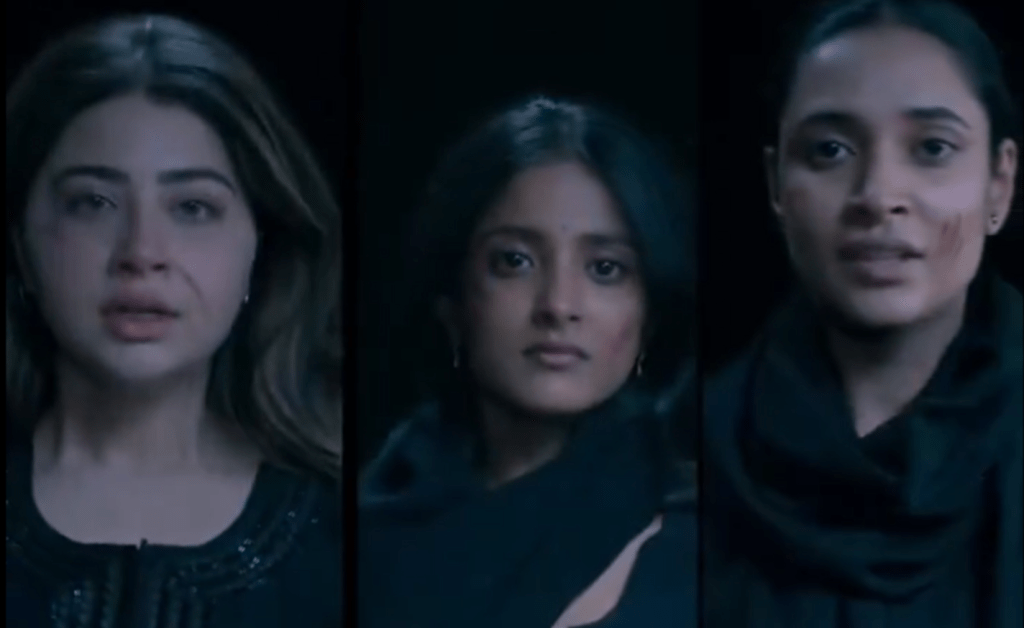
Kerala 2 Story Photo

I finally watched The Kerala Story 2 trailer because the noise around it became impossible to avoid. I had stayed away from watching it till then, hoping we would collectively ignore it.

The trailer begins with a call to “convert India into a Muslim nation.” That kind of rhetoric comes from extremist outfits like PFI, not from everyday Muslims. It’s in PFI’s “India 1947” doctrine, available online. But the moment a film shows Islamist extremists, people immediately react as if the entire Muslim community is being insulted. That jump is what frustrates me. The trailer is clearly about extremists, not ordinary people (also confirmed by the makers).

I keep seeing reels saying, “Where in Kerala is this? This is nothing like Kerala.” Exactly. It is not about the regular Muslims we meet every day. It is about fringe groups.

When the movies, Bombay or Empuraan, showed Hindu extremists attacking Muslims, no one claimed the film insulted all Hindus, and that it was an insult to Bombay and a generalization. When films show fringe Hindutva groups, we do not accuse the filmmakers of attacking every Hindu. So why is criticism of Islamist extremism treated as an attack on Muslims as a whole? This inability to separate ideology from community makes any honest conversation impossible. And political groups thrive on that confusion.

I thought the film would be ignored this time. I watched the trailer only to understand the hype. Otherwise, I would not have bothered. And once again, the makers got free publicity because controversy sells.

The director’s NDTV interview

In an NDTV interview, the director was asked why he named it after Kerala again even though the film covers incidents in multiple states. His answer was very simple. He said he got attention for the first film because of the name “Kerala.” So he used it again to get the same effect. It was a marketing strategy. And we fell for it.

He also mentioned that the film connects certain cases to networks like Chhangur Baba’s. According to him, these networks have a specific goal in mind. Again, he presented this as the reasoning behind the storyline, not as a statement on all Muslims.

The song and the real-life cases

The song O Maayi Ri, sung beautifully by Shreya Ghoshal, reminded me of the emotional interviews with the mothers of victims (some notable victims include Nimisha, Sonia Sebastian, and Merrin Jacob). They begged for their daughters to be brought back from ISIS camps in Afghanistan. The girls, as per officials, were too radicalized to be brought back home. No country easily brings back citizens who have a soft corner for a terror group. Many countries around the world refuse repatriation because of national security concerns.

And Kerala has had some troubling conversion-related cases too.

  • There is the case of Sona Eldhose, who was allegedly forced to go to Ponnani for conversion.
  • There is also the story of Kamala Surayya, discussed in the book The Love Queen of Malabar. According to the book, she was encouraged to convert with the promise of marriage made by a mainstream political figure. Once she converted, he backed away. The book also mentions foreign funding from the Gulf that influenced the situation.

These cases do not define Kerala as a state, but they exist. They cannot be erased from the larger conversation.

Kerala’s habit of defending itself too quickly

What irritates me is how quickly Keralites jump into defensive mode. The moment someone brings up extremist incidents or conversion cases, people post “This is the real Kerala story” along with photos of communal harmony and Onam celebrations. Those moments are beautiful, but they do not cancel out the darker stories. Kerala can be progressive and safe while still having pockets of extremism. That duality is real. Acceptance does not mean defamation. In fact, acceptance is the first step toward accountability.

My issue with the beef discourse

Beef in Kerala has become a political symbol. I eat beef, but I am not here to prove that “I am a Hindu who eats beef. I’m so cool.” I am also not going to claim that Hindus who eat beef are not real Hindus. Those extremes mean nothing to me.

There are actual cases of people being forced to eat beef by partners or relatives. A basic online search shows plenty of such stories. So mocking that scene in the trailer becomes insensitive because coercion is not fictional for some people.

What makes the discourse more insensitive is the constant use of beef as a political prop in Kerala. Historically, beef has been used to hurt Hindu sentiments and harass certain groups. As someone who eats beef, I have never felt proud of it in a political sense. It is food. We can all eat what we like, but weaponising it feels disrespectful.

Even the MSF, the youth wing of the Muslim League, called out the SFI beef fests happening on campuses. They said it is insulting to those Hindus in Kerala who consider beef unholy. They added that they themselves would find it offensive if there were pork fests. Whether political or not, they made a fair point. Sensitivity should work both ways.

The political angle behind the controversy

This is something I have been observing closely. In my opinion, the controversy did not naturally explode. It was amplified politically. The first major reaction came from CM Pinarayi Vijayan on X. Once he reacted, his supporters followed, and the discussion spiralled from there.

I believe his response was a political strategy to position himself as the protector of secularism in Kerala. He had lost support earlier due to his association with Vellapally Natesan and also the Sabarimala gold case. His tweet seemed carefully framed as the Kerala election is near. He even highlighted that Kerala has not seen any communal riots in the last ten years, which also happens to be the period during which he served as Chief Minister.

Whether intentional or not, the film’s visibility multiplied because of this political reaction.

Why the title still annoys me

The title “Kerala Story Goes Beyond” suggests that Kerala is some central hub of Islamist extremism, which is simply not true. Kerala is safe. Hindus are safe. Fringe groups exist, but the narrative of “Hindu genocide” is false.

At the same time, filmmakers have always used region names to provoke reactions.
Movies like Bombay did not lead anyone to generalise the entire city.
Shows like Delhi Crime did not make people say Delhi is entirely unsafe.

But names like Kashmir or Kerala grab attention instantly. Filmmakers know this. It is part of the business. And audiences fall for it every single time.

Final thoughts

Kerala has many stories of harmony, culture, and peaceful coexistence. But Kerala also has some unsettling stories involving extremism, manipulation, and political strategy. Both realities can exist together. Loving a state does not mean denying the uncomfortable parts. Real progress and intellect come from honest acknowledgement.