
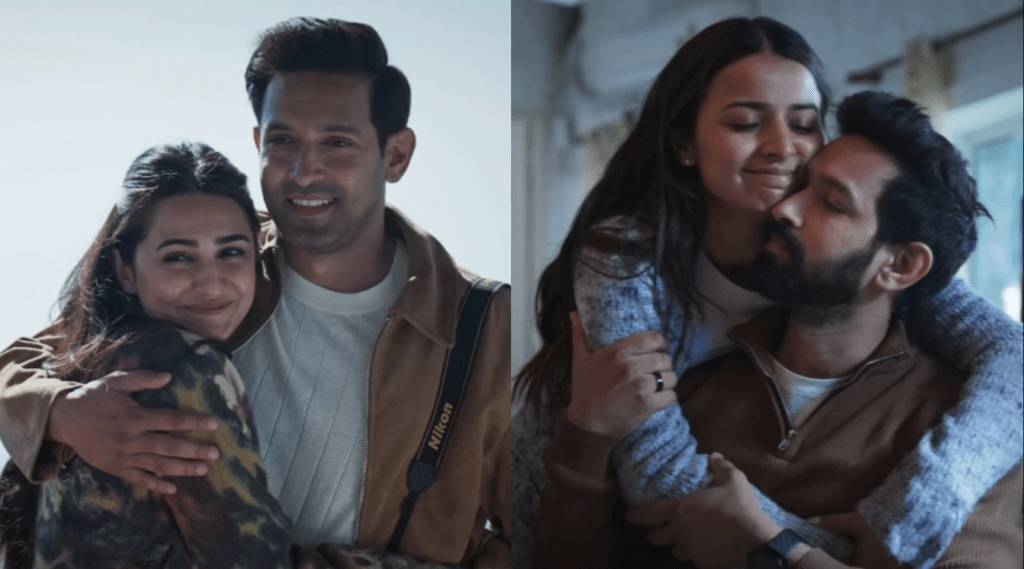
Musafir Cafe: For The Ones We Loved and Lost

Musafir Cafe Poster

If you’ve ever loved and lost, you’ll probably relate to Musafir Cafe.

The yearning, confusion, helplessness, and desperate search for closure all felt incredibly real. It is one of those rare romance dramas that understands that moving on isn’t as simple as people make it seem.

Love is rarely a straight road, yet many Bollywood romance films still portray it that way. Boy meets girl, they fall in love, and the conflicts are usually external, whether it’s parents, caste, or society.

While those issues absolutely continue to exist today, many modern relationships fall apart for entirely different reasons. Ego clashes, incompatibility, poor communication, bad timing, emotional baggage, and countless other factors play a role.

Relationships are layered and complicated, so why are we still confined to the typical boy-meets-girl stories?

That is where Musafir Cafe stands out. Instead of polishing relationships into something easy to consume, it embraces the messiness of love. The emotions feel raw, honest, and deeply human.

Even when the characters move forward with their lives, the past never completely disappears. And that’s exactly how real life works. We all carry pieces of our past relationships with us. They shape who we become. Some people turn them into lessons, while others carry the bitterness into every relationship that follows.

I haven’t read the book that Musafir Cafe is based on, and I actually think that worked in my favor. Once you’ve read the original book, comparisons are almost impossible to avoid. Going into the Netflix series without those expectations allowed me to experience the story exactly as it unfolded, without constantly measuring it against the source material.

The standout performance for me was Vedika Pinto as Sudha. A very close second was Mahima Makwana as Preeti, only because she wasn’t given enough screen time. But the moment she broke down in sheer helplessness, I found myself tearing up too. That fear of losing everything precious to you felt painfully relatable.

What resonated with me even more was her attempt to handle the situation with maturity despite the emotional turmoil. That part felt deeply personal because I’m exactly the same when it comes to matters of love. I don’t create a scene. I create space for the other person to process their emotions, even when it hurts.

Another refreshing aspect of Musafir Cafe was how natural everyone looked on screen. No obvious lip fillers or overly polished appearances. It reminded me of the 90s, when actors looked more relatable and expressive.

It was also nice to see small black bindis, black kajal, long earrings, and flowy Indian outfits take center stage again. These were once iconic Bollywood fashion staples but have become less common with the rise of minimalist beauty trends. Whether you prefer minimalism or not, there’s no denying that these little details add a certain charm and charisma to female characters.

Personally, I’ve always felt that black kajal has a depth that brown kajal simply doesn’t. It frames the eyes in a way that’s hypnotic. It’s probably one of the reasons people on Reddit still bring up Alia Bhatt’s looks in films like 2 States and Badrinath Ki Dulhania. Her bold black kajal became such a defining part of those looks.

If you’re looking for a heartwarming yet emotionally honest Netflix series, I’d definitely recommend giving Musafir Cafe a watch. It has around 8 episodes, making it an easy binge.
Accused (Netflix): A Promising Queer Romance That Loses Steam

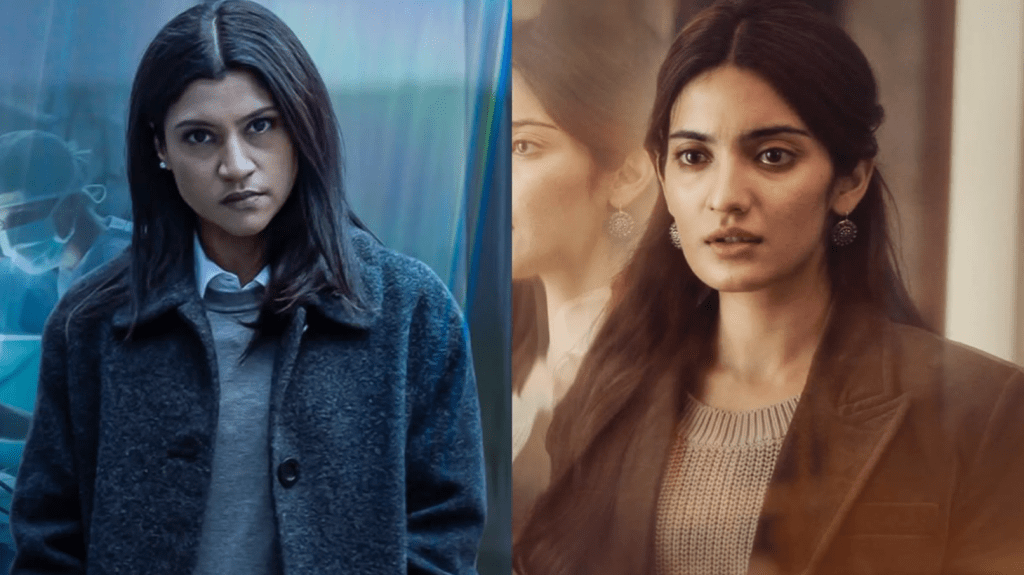
Konkona Sen Sharma and Pratibha Ranta in Accused Image

I knew I would be watching Accused on Netflix the moment I saw the lead pair: Konkona Sen Sharma and Pratibha Ranta. I have always liked both actors, so that alone was reason enough to hit the play button. But what really caught my attention was the theme of queer romance. In Indian cinema, stories about same-sex relationships are still relatively rare, which makes films like this especially interesting.

Over the past few years, India has slowly begun opening up to conversations about LGBTQ+ relationships. What once felt shocking to mainstream audiences is gradually becoming part of everyday discussion. That change did not happen overnight. It is the result of efforts from many sides: legal changes like the decriminalization of homosexuality in India, activists who have spent years spreading awareness, and filmmakers who are willing to tell stories about queer love on screen. Because of that collective push, movies exploring same-sex romance are finding space in Indian cinema.

I still remember when the Malayalam movie Kaathal: The Core was released. It remains one of the Malayalam films I feel proud of. I saw its impact firsthand at a family event we attended around that time. Some of my elderly relatives actually began discussing the theme of the film. It was clear they were still a bit uncomfortable talking about homosexuality, but the conversation itself was a big step. What surprised me most was that a few of them were able to acknowledge that homosexuality is real and not something a person can simply control or change. And the reason they were willing to even consider that perspective was simple: Mammootty was part of the film. Seeing an actor from their own generation portray such a character helped normalize the topic for them.

That moment reminded me of the real impact cinema can have. Movies are not just entertainment. Sometimes, they quietly open the door to conversations that people would otherwise avoid.

Getting back to the movie in question, Accused begins on a fast-paced note. The opening pulls you in immediately, and there is enough intrigue to keep you watching as the story unfolds. For a while, the film manages to hold that tension well. Unfortunately, the narrative loses some of its strength towards the end, and the impact is not quite as powerful as the beginning promised.

That said, the performances are a big highlight. Konkona Sen Sharma and Pratibha Ranta are both wonderful to watch. Pratibha, in particular, looked great throughout the film. I even found myself noticing her earrings more than once. She has mostly been seen in village girl roles so far, so it was refreshing to see her play a modern, city girl in this Netflix film. I am definitely looking forward to seeing more stories featuring her.

Konkona, as expected, delivers a strong performance. Her character is aggressive, ambitious, and very clear about what she wants. She does not soften her words to make others comfortable, and that confidence makes her come across as a true “boss girl” personality. At the same time, the film also shows how women like her often end up being judged or disliked for the same qualities that would be admired in men.

Overall, Accused starts off as a gripping Netflix drama with an interesting queer romance angle and strong performances. Even though the ending feels a bit underwhelming, the film is still worth watching for its lead actors and the way it brings conversations about same-sex relationships in India to a wider audience.

Interracial Romance and the Indian Mindset

Interracial Romance in Indian Families

I recently watched a thoughtful discussion by Zarna Garg on interracial romance, featuring her own family. Based in the US, their candid conversation offers a refreshing glimpse into how Indian-American families are navigating such topics. It was heartening to see everyone, parents and kids, engage so openly. In many Indian households, these conversations either happen too late or not at all, often wrapped in hesitation or silence. But here was a family talking honestly about dating, identity, and interracial relationships. A big shoutout to them for their openness and clarity. It’s these dialogues that make a real difference.

Watch the video below:

Thoughts

I’ve spent most of my life abroad before choosing to return to India. Yet even while living overseas, I always knew my relationships would be with Indian men. Perhaps it’s because I studied in an Indian school and mostly socialized within the Indian community, even outside the country. I look Indian, dress Indian, and speak with an Indian accent. So it was natural to feel more comfortable with Indian men.

However, in today’s globalized world, with increasing interracial mingling, millennials like me must come to terms with the fact that more non-Indians are likely to become part of our families. Someone recently remarked how the world is blending in such a way that you can no longer easily tell someone’s ethnicity. Even appearances are getting “globalized.” It was an eye-opener. I’ve come to realize this holds especially true in the Indian context. Today’s new-generation kids often no longer look or sound traditionally Indian, especially the kids in Indian metros. Their accents, fashion, and even body language reflect a more global identity.

A few months ago, a relative married a Spanish man, the first white partner in our family. Surprisingly, everyone, including the older generation, was welcoming. No drama. No resistance. That in itself feels like progress. Our extended family no longer fusses over caste or religion in love marriages. Marrying someone from a “lower caste” has become normal (though I personally reject terms like “lower” and “upper” caste, which are inherently divisive). Only a few super-senior relatives seem to hold on to rigid views, but even that seems to be fading.

I wonder if this shift is due to the older generation’s growing access to YouTube and social media. Many now watch global discussions on love, identity, and acceptance. One moment really stood out: a senior aunt watched Kaathal, a Malayalam film about same-sex love, and casually remarked, “Being gay or lesbian is fine. It’s not a disease.” That kind of acceptance would’ve been unthinkable even a decade ago. But it’s happening now, and that matters.

More recently, one of my nieces fell in love with a white guy. It’s a bit more delicate because it hits closer to home. While I’m happy she found someone, I can’t help but feel a bit anxious. Our cultures are worlds apart, and it’s not just the couple that has to adjust, but the families too. At this age, do I or her parents have the patience? I’m unsure. On second thought, it doesn’t concern me or her family, as the relationship is hers to navigate. Still, as Zarna Garg wisely said in her family discussion, any relationship can thrive if the core values align: education, family, career, loyalty, and health. Everything else is secondary and can be worked around.

One comment from Zarna’s husband lingered with me. He mentioned that their eldest daughter has only dated white men, and he took it personally. He had read somewhere that girls whose fathers aren’t ideal husbands are more likely to do this. That struck a chord. My niece also has a pattern of dating white men, and to be honest, her father isn’t exactly the perfect partner either. Could there be a subconscious link? I wouldn’t dare bring it up now, especially since she lives abroad, but maybe someday in person.

There’s so much our generation is still figuring out. As millennials in our 40s, we stand between tradition and transition. We want to be open-minded and inclusive, but also grounded. At times, it worries us to see the younger generation drifting away from tradition. There’s a quiet fear: will our culture someday fade into oblivion? But these are changing times, and change demands a degree of acceptance. We may not always agree, but we must learn to adapt. I also see a growing trend among young parents today: trying too hard to be politically correct, often avoiding difficult conversations just to stay in their children’s good books. This might be a measure to ensure they don’t repeat their parents’ mistakes of being too restrictive. But experience teaches us that hard truths, spoken with love, are just as necessary today as it was yesterday.

Some of the advice I dismissed in my 20s now makes perfect sense. You only begin to understand your parents once you reach their age. That’s how life unfolds. You gain clarity with time. Until then, all we can do is trust, adapt, and hope it all works out in the end.

***

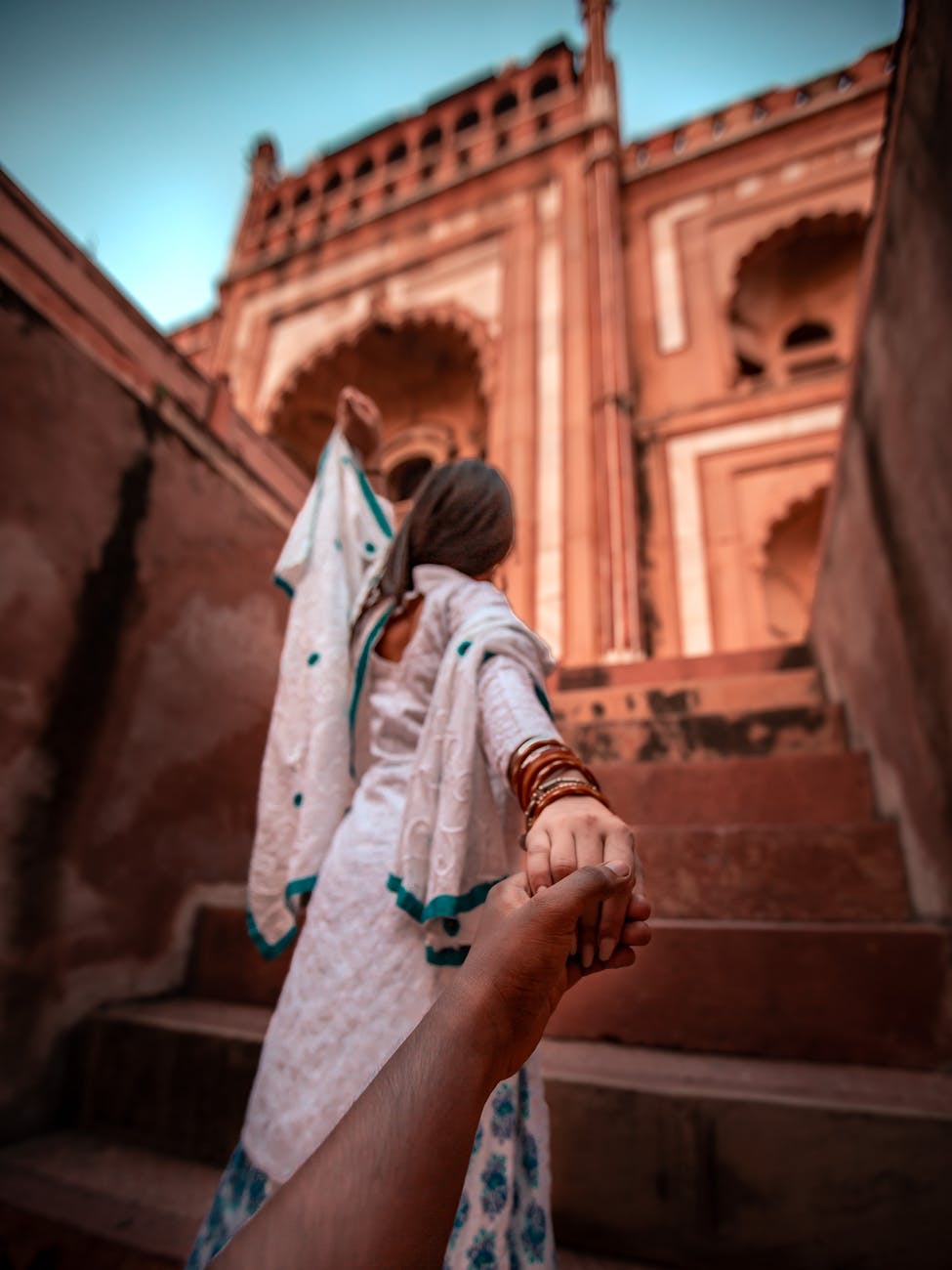
Photo by Bhavitya Indora