I kept delaying watching It’s Okay to Not Be Okay because I have a bit of an aversion to hospital dramas. Several friends had recommended this popular Korean drama to me, but I kept putting it off. I was judging the series by its title, and honestly, I wasn’t in the mood for what I assumed would be an intense emotional rollercoaster.
I finally took the plunge a couple of weeks ago.
It took me some time to finish the series because each episode runs for over an hour, and there are 16 episodes in total. I am also not much of a binge-watcher, especially when a series deals with serious or emotionally heavy topics. So yes, completing It’s Okay to Not Be Okay took me a while.
But the time I took to finish it doesn’t take away from the fact that It’s Okay to Not Be Okay is an entertaining, thoughtful and beautifully layered K-drama.
Let’s talk about the male lead first.
Moon Gang-tae, played by the enigmatic Kim Soo-hyun, is such a major green flag that he might just make pursuing relationships in the real world a tad more difficult for women. Because honestly, who can even compete with this kind of surreal charm, patience and thoughtfulness?
He is calm, sorted, emotionally aware and dependable. He is the person you would want beside you when things get difficult. He handles uncomfortable situations with a level of maturity and emotional intelligence that makes you think, “Yes, this is exactly how my partner should behave.”
Basically, Moon Gang-tae is the ultimate go-to guy.
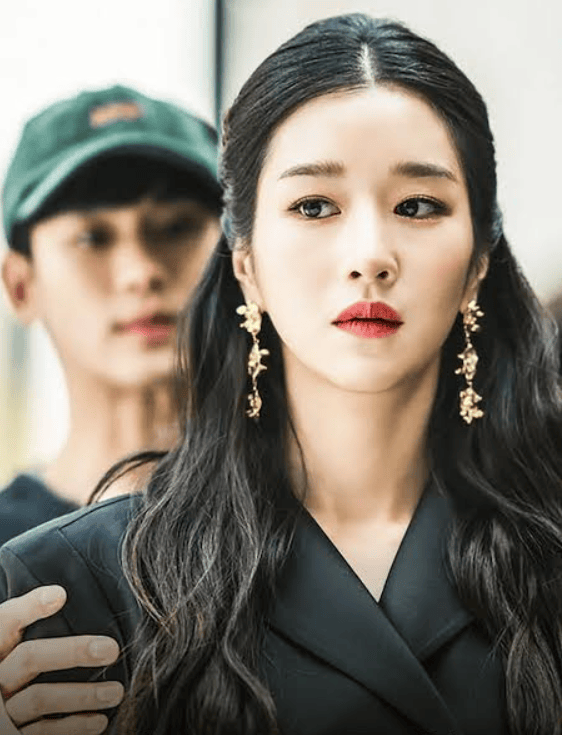
Go Moon-young, played by Seo Yea-ji, is completely different.
She is volatile, unpredictable and unapologetically herself. But beneath all that intensity, she also shows moments of compassion when the situation calls for it. She has a magnetic personality. What makes her even more interesting is that she knows exactly how powerful her presence can be and the effect she has on people.
She is not the easiest character to understand, but she is definitely difficult to ignore.
For me, though, the real star of It’s Okay to Not Be Okay was Oh Jung-se. He plays Moon Sang-tae, the autistic older brother of the male lead, and his performance was so convincing that there were moments when I genuinely wondered whether he was autistic in real life. Yes, I actually Googled him. That, in itself, says a lot about how convincing his portrayal was.
His performance was heartfelt, nuanced and incredibly believable. In my opinion, he absolutely deserved every award and recognition that came his way for this role.
At its core, It’s Okay to Not Be Okay is a serious drama that explores mental well-being, emotional healing, trauma, relationships and the process of learning to accept oneself.
But despite its heavier subjects, the series doesn’t feel emotionally exhausting all the time. I enjoyed the little moments of humour scattered throughout the episodes. They provide some much-needed lightness and make the story feel more balanced.
And the BTS scenes towards the end were absolutely adorable. Seeing the camaraderie between the cast members behind the scenes was a lovely bonus after spending so much time with these characters.
Overall, I found It’s Okay to Not Be Okay to be an entertaining and thoughtful Korean drama. It took me a while to finish, but by the end of it, I was glad I finally gave this much-recommended series a chance.
It’s Okay to Not Be Okay is currently streaming on Netflix.
Anupama Parameswaran’s interview on narcissistic abuse has created quite a stir in the one day since it aired on Dhanya Varma’s YouTube channel. One thing she made very clear in the interview was why she chose to talk about her experience. She wanted people to recognize the signs of abuse.
As someone who got divorced several years ago after experiencing both emotional and physical abuse, I knew the comments blaming Anupama would come soon.
Comments like:
“Why is she talking about this in public? She just wants attention.”
“She’s the toxic one in the relationship. Glad her partner left her.”
“Women use the word ‘abuse’ so flippantly nowadays. I’m sure the matter must have been small.”
And sure enough, I soon saw a barrage of similar reactions on Reddit and X.
This reaction is one of the reasons many people hesitate to speak about abusive relationships. They know that once they talk about what happened, they may be questioned, blamed, mocked, or told that they simply did not try hard enough to save the marriage.
“Why talk about it?”
This is such a common question.
But I want to ask the opposite question: Why shouldn’t we talk about it?
It is because people like Anupama chose to talk openly about their pain that people like me were able to heal.
Today, someone going through emotional abuse, physical abuse, narcissistic abuse, or a difficult divorce can find videos, podcasts, interviews, reels, support groups and personal stories online.
When I was going through it, there weren’t nearly as many resources. I had to search for text blogs written by complete strangers who had experienced something similar.
I would read their stories and think, Okay, so I am not the only one who feels this way. Maybe I am not imagining this. Maybe what I am experiencing isn’t normal.
It wasn’t silence that helped me heal. It was people choosing to speak.
In my case, it wasn’t just a “bad marriage”
In my case, there was both physical and emotional abuse involved.
Yet, when you are trying to somehow make your marriage work because of societal pressure, you can find yourself surrounded by people who encourage you to compromise rather than asking whether you are safe or happy.
At one point, I was even advised by someone very close to me not to tell my parents about what was happening because they would get hurt.
Who was I supposed to talk to then?
I was losing a lot of weight at the time because fights would make me lose my appetite. I wasn’t simply dealing with an ordinary marital disagreement. I was struggling emotionally and physically, and yet the advice I received was often about protecting everyone else’s feelings.
When I mentioned the physical abuse, one relative dismissed it by saying:
“It happens in all relationships.”
Another told me to compromise and just keep saying “okay, okay” to everything he said.
This is the kind of advice that can make someone question their own reality.
The comparison game
One of the worst things about talking about abuse is the way people compare your experience with someone else’s.
When I tried to make the marriage work, my ex would taunt me with things along the lines of:
“See? What you faced wasn’t so bad after all. That’s why you’re willing to compromise and return to me. You should see women in actual abusive relationships. They end up in hospitals.”
But abuse doesn’t become acceptable simply because someone else experienced something worse.
You don’t have to wait until you are in a hospital before you are allowed to say that something is wrong.
Society has a strange way of making women feel childish for being unhappy in a relationship. You’re told that you’re not mature enough to deal with “normal” relationship problems. You’re told that marriage requires compromise. You’re told to adjust. You’re told to be patient.
And sometimes, what is really being asked of you is to tolerate things you should never have been expected to tolerate.
Society often cares more about preserving the marriage than the person inside it
This is something I understand much better now.
Society doesn’t necessarily care about your happiness. It often cares about keeping the marriage intact.
A woman who stays in an unhappy marriage can be praised for being patient, mature, understanding and a good homemaker.
A woman who leaves can suddenly become selfish, difficult, immature or incapable of compromise.
I was blamed too. I am sure there are still people who consider the divorce my fault. And honestly, I am fine with that now. I don’t have to prove my version of events to people who gave me terrible advice in the first place. I know what I experienced. I know what I went through. Nobody knows my struggles better than I do.
And I am happy now.
That is enough for me.
The “good guy” problem
There is another complication that I think people don’t talk about enough. Sometimes the person who is abusive also has a very amicable personality.
Anupama mentioned something similar in her interview, and it immediately resonated with me.
Some people are simply very good at being pleasant, charming and agreeable around others. So to the outside world, he is the “good guy.”
Meanwhile, you may be the quieter person. The recluse. The person who isn’t particularly good at maska polish. So when you finally talk about what happened, people find his version easier to believe than yours.
Because they have seen the charming version of him. They haven’t seen what happened behind closed doors.
That is one reason why survivors of emotional abuse can find it so difficult to speak. You are not just recounting what happened. You are also trying to convince people who have already formed an opinion of the person involved.
Sometimes there is one final moment
And just like Anupama said, sometimes there is a flip. A moment that finally makes you take the last step.
For me, it came after another fight. I made him promise in front of God that from then on, we would resolve our problems without abuse.
He broke that promise and then justified it again. That was the moment something clicked in my head.
If this man, who is religious, could make a promise in front of God and then break it and justify what he had done, how was he ever going to listen to me?
I immediately called my parents. I told them that either they picked me up or I was leaving that instant.
And that’s how I left my marriage.
In the dead of night.
In my night clothes.
With nothing but a handbag.
The strange little moments that helped me survive
Looking back, there were also tiny moments that reminded me that I could still make myself happy.
I remember one particular picture I took right after a fight. I had just finished an intense crying session when I basically thought, Aah, fuck this. Let me make myself happy. So I started clicking aesthetic pictures.
I hadn’t eaten all day because, during that period, fights would often make me lose my appetite. So I took myself out and treated myself to some food.
I ordered coffee. And when it arrived, there was this huge heart on it. I actually looked at the other people’s coffee to see whether they had something similar. Nope.
Maybe the guy could make out from my face that I needed it.
But that tiny heart warmed me in a way I had never felt in my marriage.
I eventually understood that we simply weren’t right for each other
These days, when people ask what happened, I usually say that we weren’t right for each other.
And that is, in a way, true.
Maybe with a more docile person, he wouldn’t have felt the need to “discipline” her. And perhaps with a different person, I wouldn’t have become so agitated either.
We had very different ways of thinking. We brought out the worst in each other. But saying that we weren’t right for each other doesn’t mean that abuse was okay.
Incompatibility can explain why a relationship doesn’t work. It does not excuse physical or emotional abuse.
That distinction matters.
Men can be victims too
And before anyone assumes that I think abuse is only something women experience, I don’t.
Men can be victims of emotional and physical abuse too. I have witnessed it myself. In some ways, male victims face an additional barrier because society still doesn’t give men enough room to admit that they are hurting.
They’re expected to be strong. To control their emotions. To “man up.” To deal with relationship problems without admitting that they are being hurt.
That needs to change too.
Abuse is abuse, regardless of the gender of the person experiencing it.
Why talking about abuse matters
This is why I don’t understand the “Why talk about it?” reaction.
People talk because someone else might be going through the same thing and doesn’t yet have the words for it.
People talk because someone may recognize a warning sign.
People talk because someone may finally realize that what they have been told is “normal” isn’t normal.
People talk because sometimes hearing another person’s story is the first thing that makes you feel less alone.
I know this because I was that person.
I healed partly because strangers were willing to write about their experiences when I needed to read them.
Today, people have far more ways to find that kind of support. They can watch an interview, listen to a podcast, find a video, read a personal blog, or come across someone speaking openly about their experience.
That is not attention-seeking.
Sometimes, it is someone putting their pain into words so that another person doesn’t have to feel as alone as they once did.
So when someone asks, “Why talk about it?”
My answer is simple:
Because silence never helped me heal. People speaking about what they went through did.
And if sharing your experience helps even one person recognize emotional abuse, physical abuse, narcissistic abuse, or an unhealthy relationship and find the courage to leave, then talking about it was worth it.
And if you’re currently in a situation like the one I was in, please don’t make my mistake. Don’t let people convince you that you need to endure more before your pain becomes “serious enough.”
You don’t owe anyone a marriage at the cost of your happiness, safety or self-respect.
One last thing
And I want to add one more thing: the emotional manipulation.
Every time an episode of abuse happens, the person knows they have done something wrong. So they cry, apologize, promise it won’t happen again, and you, especially if you’re an empath, fall for it. You want to believe them. You want to believe that this was the last time.
But it doesn’t stop.
Eventually, even the crying and apologizing become less frequent. A sort of “What are you going to do about it?” attitude starts taking over. There is a smugness that comes from knowing you will tolerate it anyway.
That was when I finally told my parents.
My father and mother, God bless them, refused to let me return to that house unless he genuinely changed his ways. But his response was, “My house, my rules.”
And that was the end of that.
I also understand that having supportive parents is a privilege and a blessing. Not every woman has that safety net. Some parents won’t allow their daughters to return home, and that’s when the feeling of being trapped can become unbearable. For some women, that mental pain can become so overwhelming that they see no way out.
I know what that kind of mental pain feels like.
In my case, though, I knew I would never choose death. If my parents hadn’t supported me, I would have simply run away, started from scratch and figured out a way to survive. I had enough confidence in myself because of the little work experience I had already gained.
That’s one of the reasons I stress so much on financial independence for women.
Having your own income isn’t just about money. It gives you options. It gives you confidence. It gives you the knowledge that even if everything falls apart, you can rebuild your life.
I know women who feel completely tied down because they don’t have financial independence. To them, I would say: start small. Take up whatever work you can, in whatever way you can. It doesn’t have to be your dream job or a huge salary.
The first step is knowing that you can earn something on your own.
Because sometimes, that little bit of independence is what gives you the confidence to finally walk away.
So I’m in my 40s now, and one thing I’ve noticed lately is just how serious many of my peers have become.
Of course, the reason is obvious – life happened. Careers happened. Marriage, kids, ageing parents, bills, responsibilities… they all have a way of changing you. It’s not like our 20s when many of us had fewer worries and life felt a lot more carefree. Growing up changes everyone.
But even then, the transformation is fascinating.
I’ve seen people who once had the most ridiculous sense of humour become almost unrecognisable. The ones who could turn any conversation into a comedy show are now quiet, serious, and sometimes even a little weighed down by life. It’s sad to see, but I understand it. That’s what life does.
That seriousness has shifted online too. Most of the funny content is by Gen Z.
I’m guilty of it myself. Somewhere along the way, I also started posting only about serious issues rather than silly ones. I look at my old posts on Facebook and don’t recognise myself either.
Surely life isn’t meant to be taken this seriously all the time?
Take the Reposts tab on Instagram, for example.
When I open someone’s reposts, I’m hoping to learn something about them. What kind of humour they enjoy. The movies they love. The random memes that made them laugh. Maybe a dog video that melted their heart. Something that tells me who they are.
Instead, I often find an endless stream of political posts.
By the time I leave their profile, I know exactly which political party they dislike, but nothing else about them.
It’s strange. Politics has become such a huge part of social media that it’s slowly replaced personality. Our online identities now revolve around what we’re against instead of what we enjoy.
I’m trying to disconnect from all of it, but it feels like a lost cause. In India, there’s almost no escaping politics. Even when you’re sitting in a hospital waiting room in Kerala, there’s usually a news channel playing on the TV. It’s as if we’re not allowed to switch off from the constant political noise, even when we’re unwell.
And when did millennials become this serious?
We were genuinely funny. I would even argue we were funnier than Gen Z.
Every now and then, I go back and read old Facebook posts and comments, and it’s like opening a time capsule. People teased each other endlessly. There was harmless banter, ridiculous inside jokes, and conversations that wandered off in every direction.
Nobody was trying to go viral. Nobody cared about engagement or reach. We were just… hanging out online.
Of course, social media algorithms haven’t helped.
Today, a post from your friend with 4 likes gets buried, while a random stranger whom you’re not following ends up at the top of your feed.
Half the time, when I open Facebook, I’m looking at people I’ve never met. If I actually want to see what my friends are posting, I have to switch to the Friends feed. Extra steps, too cumbersome, leading to less engagement.
I really hope someone builds a social media platform that brings back what made the early internet so much fun. A place where the goal isn’t chasing likes, growing followers, or gaming the algorithm.
Just a place where friends share everyday moments. Random thoughts. Terrible jokes. Blurry photos. Half-baked opinions. Embarrassing stories.
Memory is such a weird thing. Some people remember the tiniest details about me from years ago, while others can’t recall spending time with me ever. They have forgotten entire moments. A day out, the day we talked, the laughs we shared.
I mean, how is that even possible? How can people erase entire days?
It also leaves you with a strange sense of self-doubt. Did you not make enough of an impression to be remembered?
A school friend, whom I reconnected with years later, couldn’t remember that we had spoken over the phone before. He was under the impression we had never talked. Another friend couldn’t recollect attending a wedding with me, which was actually the place where we first met. Even today, he acts as though we’ve never met. A few days ago, another friend, this time a woman, said she doesn’t remember going to a movie with me. It wasn’t just a quick outing. The entire day revolved around that one activity, so it was mind-boggling to realize that the memory had completely disappeared from her mind.
And then there are people like my niece, who can remember things from years ago with surprising clarity. Every time she brings up something I had completely forgotten, I’m both amazed and happy.
I guess this just proves that human memory is a fickle thing. It isn’t the perfect record of our lives that we often assume it is. So how can we depend on memory alone to define our current relationships or friendships and the moments that mattered?
Maybe someone, somewhere, did something incredibly kind for you, but you’ve completely forgotten it. Over time, you start believing they were never there for you because the memory no longer exists. You convince yourself there were no meaningful moments together, when in reality, they simply faded away.
Sometimes, forgotten memories say more about how the mind works than they do about the people involved.
It’s kind of scary, isn’t it? How hard do we have to try to hold on to the good memories? To make sure time doesn’t play the villain and quietly erases them for good.
One of the most romantic delusions I have ever come across is the idea that when you suddenly feel overwhelmed with emotions because you miss someone, it’s because they are missing you too. Some people even extend this belief to loved ones who have passed away, saying their energy is reaching out because they miss you.
It goes against every scientific explanation I know, yet there is something comforting about believing it. Sometimes, when a wave of grief or longing hits without warning, you are not looking for logic. You are simply looking for a reason that helps your heart make sense of what it is feeling.
Over the past few years, there have been many moments when I have found myself unexpectedly emotional while thinking about my father. It often happens out of nowhere. Sometimes it’s triggered by a quote about a father’s love. Sometimes it’s just a random thought that appears during an ordinary day. The strange thing is that it isn’t consistent. There are days when I can think about him and smile. Then there are days when the emotions become too much, and tears arrive before I can stop them.
In those moments, I find myself wondering: is this his way of letting me know that he misses me too?
I like to believe it is.
I treat dreams about him the same way. Whenever he appears in a dream, I see it as a small sign, a quiet reminder that the bond we shared still exists somewhere beyond memory.
It sometimes happens while thinking about friends who are no longer part of your life as well.
Maybe these are just coping mechanisms. Maybe they are the natural ways our minds process grief and emotional loss. Maybe hormones, memories, and nostalgia are working together to create meaning where none exists. But if a belief brings comfort without harming anyone, why rush to take it apart?
When you are grieving or missing someone you love, facts are not always enough. Science may explain what is happening in your mind, but comfort speaks to the heart. And sometimes, comfort is all you need.
I started watching Off Campus because of all the social media hype surrounding the series. It took me almost two weeks to finish it, but honestly, that is how I watch almost every show these days.
In fact, it is not limited to web series alone. I often break movies into 30-minute sessions and watch them over several days like a series. I used to think it was because my attention span had become shorter. But then I watched both parts of Dhurandhar, which were over three hours each, in the theatre without feeling bored for a second. That made me realize the issue probably is not my attention span. The story simply has to hook me enough.
Anyway, back to Off Campus.
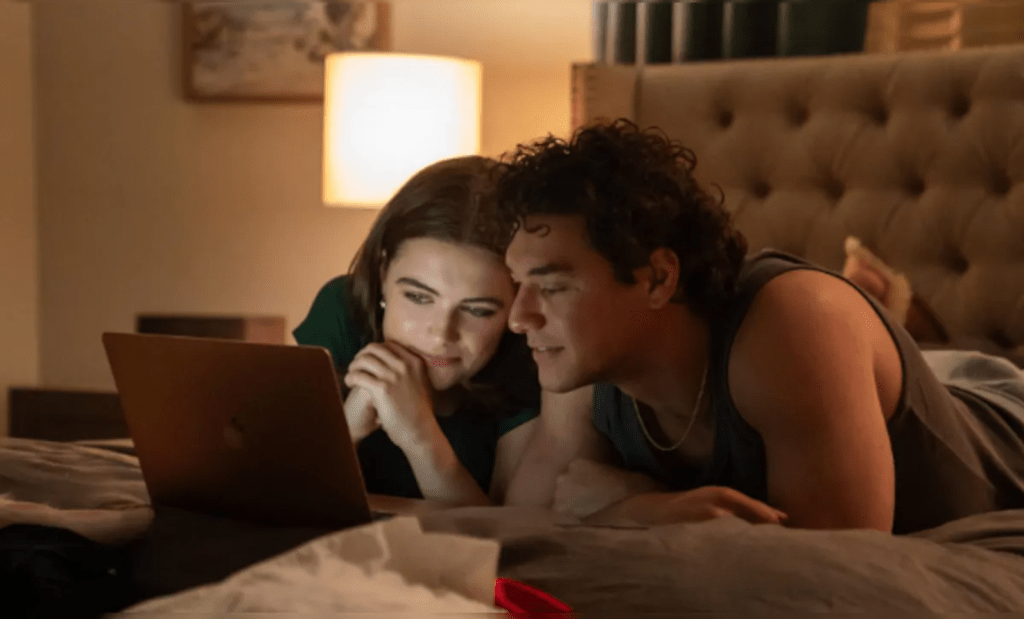
One thing I appreciated about this Amazon Prime series is that it fully embraces the campus drama setting and focuses on the lives of young adults. That said, I found it a little difficult to relate to the “college student” aspect because most of the cast looked quite grown-up and remarkably sorted out for their age.
As someone who belongs firmly to the K-drama enthusiast camp, I also struggled a bit with how physical the relationships felt compared to the emotional depth I am used to seeing in Korean dramas. The show does explore trauma, vulnerability, and personal growth, but it never quite reaches the level of empathy and layered storytelling that many K-dramas excel at. Because of that, the series did not emotionally move me as much as I expected.
At the same time, I completely understand why Off Campus has resonated with younger audiences. Beneath the romance, it talks about important themes like dealing with complicated feelings, open communication, consent, emotional support, and empathy. These may sound basic, but they are often easier said than done.
Personally, I enjoyed the friendship between Hannah and Allie even more than some of the main romantic storylines. The scene where Hannah finally chooses to share her story with Allie was an absolute tearjerker for me. Truly, blessed are those who have a friend like that in their lives.
I also found Allie’s romantic arc far more nuanced and interesting. She desperately wants to prove she can be alone without using relationships as a crutch and, in the process, makes some questionable decisions. Honestly, that felt very relatable because most of us have done our fair share of nonsense while trying to convince ourselves we have everything figured out.
Her confusion is what makes the storyline compelling. She has a partner who is not a bad person by any measure, but he is not quite the right person for her either. That grey area, where nobody is necessarily wrong yet things still do not feel right, makes for a much more engaging relationship story. Mika Abdalla aces the role. Her resemblance to the Indian actress, Mahima Chaudhry, is also uncanny.
For me, the overall vibe of Off Campus felt like a blend of 13 Reasons Why and Beartown. Because of that, it did not feel particularly fresh or groundbreaking. A quick Google search tells me that the Off Campus books were published around the same period as Beartown, and some even earlier. Still, my point is simply that the storyline felt familiar to me.
Overall, I think Off Campus is a decent one-time watch if you enjoy young adult romance. It may not have offered anything entirely new, but it was engaging enough to keep me watching.
Off Campus is currently streaming on Amazon Prime Video.





You must be logged in to post a comment.