My Loveless Indian Marriage

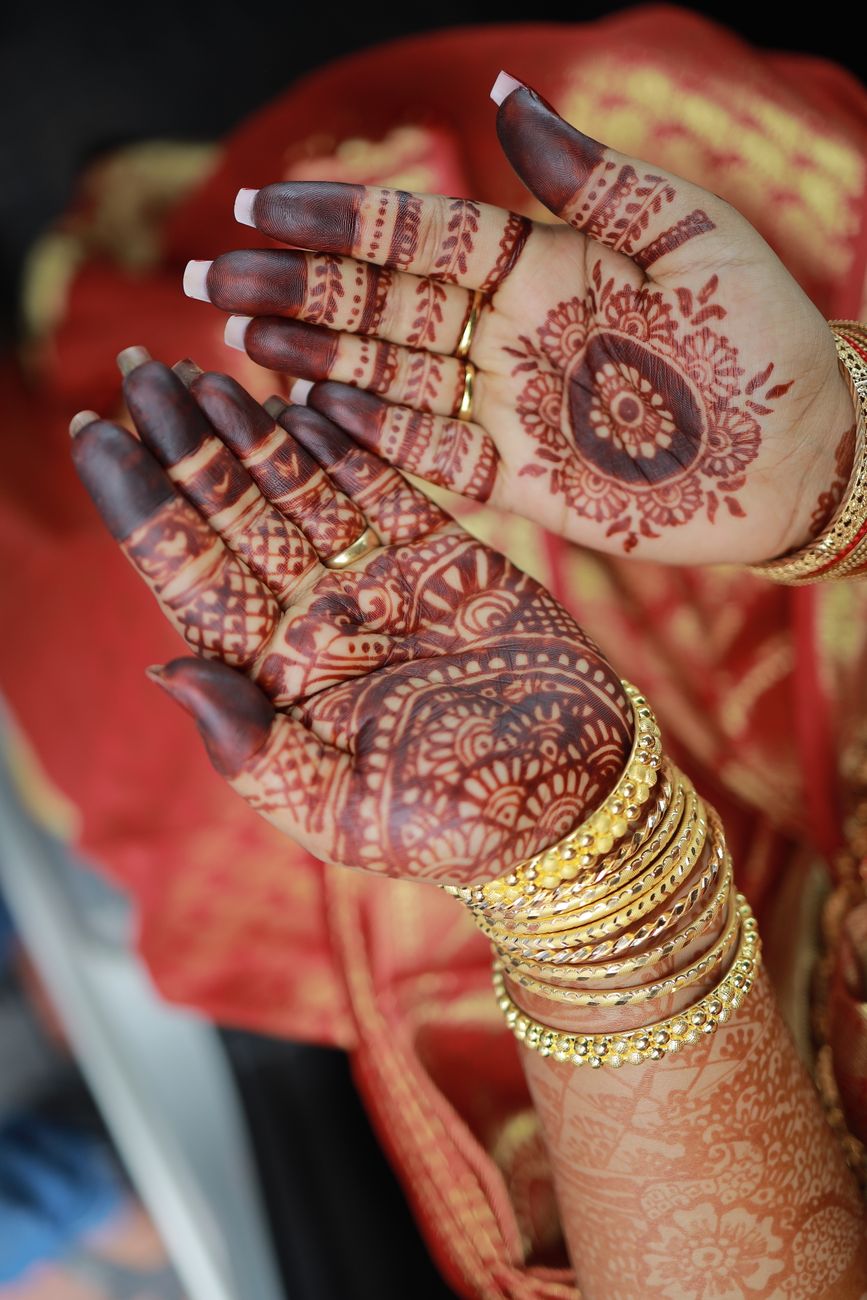
Hands with Henna for Indian Wedding

I’m a divorced woman now in my 40s. Mine was a typical Indian arranged marriage in my 20s. I had said yes to a proposal after saying no to many others, simply to keep my parents happy. They were worried that I didn’t want to get married at all. Back then, moving away from your parents or going against their wishes over something like marriage wasn’t really an option. You just did what they wanted.

Unlike my cousins and my elder siblings, who were eager to get married, I knew the typical Indian marriage scenario wasn’t for me. I realized this when I was still in my teens and early 20s. I’m an introvert who loves her alone time, more than the average introvert. I’m borderline a loner. Anyone who knew me as a kid can vouch for this. I rarely left the house. I still don’t. The activities I enjoyed as a kid remain more or less the same activities I enjoy now – reading, listening to music, watching TV, zoning out.

So, the idea of entering an Indian arranged marriage with a complete stranger, suddenly being expected to feel “love” for this person, giving up most of my free time, and making an effort to stay in touch with his family members and friends on a regular basis? I wasn’t sure I was cut out for any of it.

It’s easier for a man to remain a loner even after getting married. He can keep his distance from his wife’s family, not attend every event, and face little to no criticism for it. I have seen this in my extended family. But an Indian woman is expected to play a much more social role in marriage. She’s supposed to make a conscious effort to bond with her husband’s family, stay in touch with relatives, plan get-togethers, attend all events, and do all the little things that keep everyone connected. For someone like me, who values her personal space, that felt like a lot to take on.

After watching my parents grow increasingly disappointed with my constant rejection of marriage proposals, I finally gave in. I’d even tried a few dramatic ways to get the guys to reject me. Think Roja style, claiming I had a boyfriend! In one case, things almost reached the engagement stage before I told the guy that I had no romantic feelings for him and was starting to develop sisterly feelings for him instead. I’m not proud of any of these stories. I know I hurt those guys, their families, and my own family in the process. Looking back, I wish I’d handled things differently. But I’m also empathetic towards the younger me, knowing that I did such things out of sheer desperation, as there was no other way out.

Until then, I’d been the quintessential “good girl” in my family. I did well in my studies, didn’t party late at night (obviously, due to my loner tendencies), was polite, and didn’t talk back to my parents. So, needless to say, they were quite taken aback when this new, rebellious side of me emerged. Suddenly, I was the daughter who is problematic because she didn’t want to get married.

Then, one day, after seeing my parents get emotional, I decided that I would say yes to the next arranged marriage proposal that came my way, no matter who the guy was.

My parents chose a guy. I thought he was fairly good-looking, and he seemed quite smitten with me at the time. I finally said yes.

And that’s how my arranged marriage happened.

My goal was simple: make it work somehow. I thought love might bloom eventually, just as people kept telling me it would. Maybe I would be one of those people who fell in love after marriage.

Around that time, Rab Ne Bana Di Jodi was released. I remember going to the theatre and feeling a little emotional when the song “Haule Haule Ho Jayega Pyaar” started playing. The line means that love will arrive slowly and steadily. At that point in my life, I genuinely felt as though the song had been written for me. I was sitting there, wondering the same thing over and over again: Will I ever fall in love with this person?

Society had taught me that love wasn’t all that important anyway. What mattered was settling down, getting married, and making the relationship work. So, I settled. But love never made its presence felt. And that frustrated both of us.

Looking back, I don’t think love ever stood much of a chance in our marriage because we were incompatible in so many ways. We weren’t compatible intellectually, emotionally, or physically. We could be two perfectly decent people individually and still bring out the worst in each other as a couple.

We belonged to the same caste, and our horoscopes matched. Everything was right on paper. Yet there was no warmth between us. Instead of feeling like two partners building a life together, our relationship felt like one bound by orthodox rules and expectations. He believed the husband should have the final say in decision-making. I was a feminist. He even told me that I shouldn’t read too many books because they would make me delusional about how the real world works. Apparently, ignorance is bliss. It was the first and last time in my life that someone told me reading was a bad habit.

Naturally, things went downhill.

Could I have said and done all the right things to keep the marriage going? Absolutely. But that would have meant spending a lifetime compromising, suppressing parts of myself, and settling for someone who wasn’t right for me. And honestly, it wouldn’t have been fair to him either. He deserved a partner who was genuinely compatible with him, just as I deserved the same.

This is what I wish more people understood. Being from the same caste and having matching horoscopes might tick the boxes that families consider important. But those things alone cannot guarantee a happy marriage. They don’t tell you whether two people share similar values, respect each other’s opinions, connect emotionally, or want the same things from life.

***

Photo by Anoop VS
Women’s Safety in India Should Be Beyond Politics

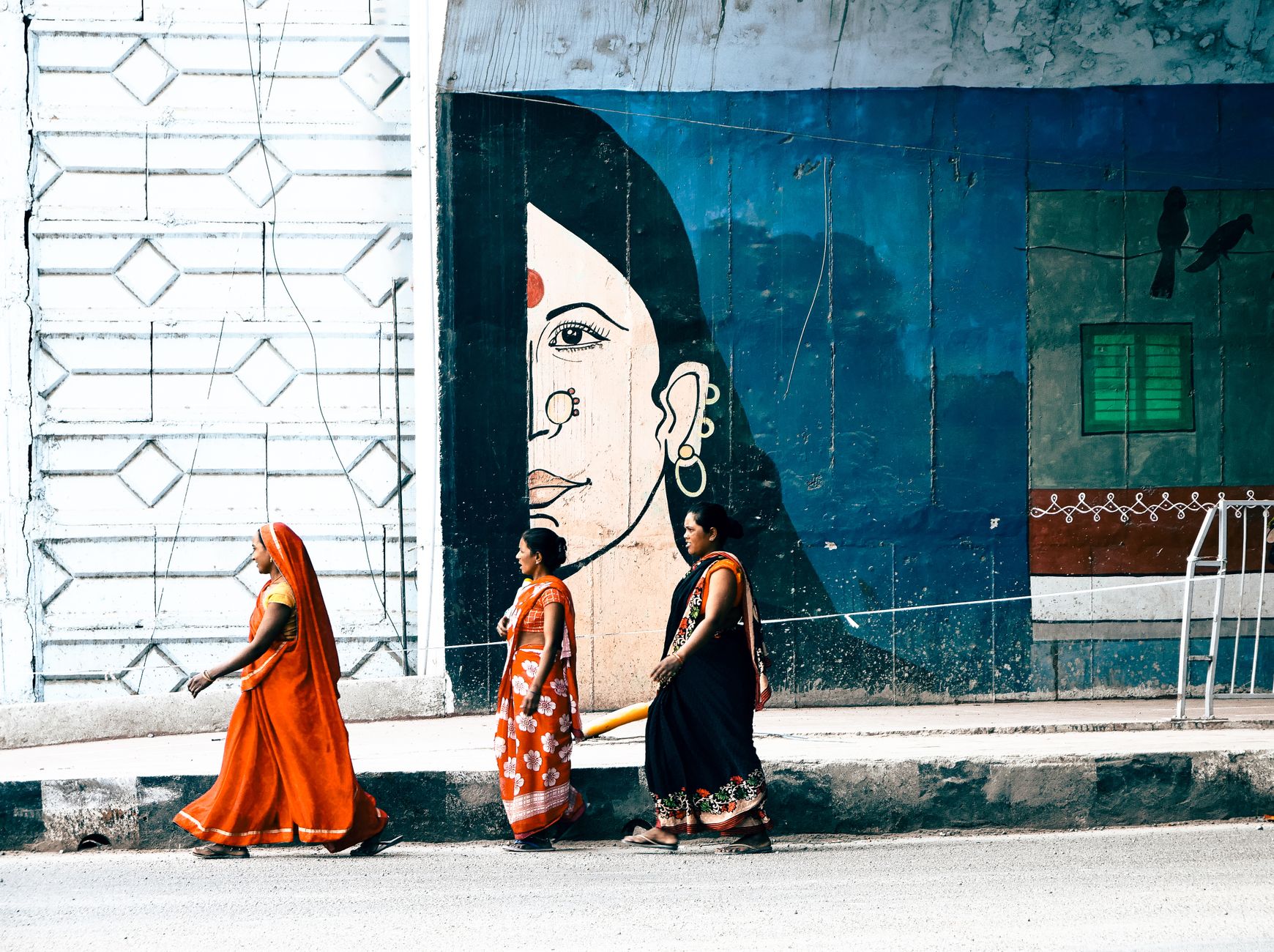
Indian women walking in front of a graffiti image

Recently, a slew of rape cases have emerged in Delhi. It made think – can we, collectively as women, demand better protection for Indian women from governments across the political spectrum?

Rape cases in Keralam (where I am from) are also increasing each year. This year, up to July, Kerala Police had recorded 1538 cases. Even little boys are being sexually assaulted.

But somehow, no one seems to take sexual violence seriously enough.

This is not a political game where we pull out data to show that only women in BJP-ruled states are getting raped, or that only women in Congress-ruled states are getting raped. Rape is a serious issue that needs to be addressed in India, regardless of which state it happens in or which political party is in power.

I’m sure there isn’t a single woman in India, even in Keralam, who hasn’t had some kind of bad experience.

And I’m not saying India is the only place where this happens. I have had bad experiences in other countries too, involving locals.

Change Should Happen Within Families First Before Society Adopts It

I think my most mind-numbing experience happened when I was 16 or 17 because it involved someone I considered my own brother.

I used to be very comfortable around him and quite physical in the innocent way you can be with someone you completely trust. I would hold his arm, playfully hit him and behave as I normally would around someone I considered family.

Until one day, he crossed a line and groped me.

I know the feeling of shock that goes through your mind when something like that happens. You can become completely paralysed for a moment because your brain simply cannot process what is happening.

But I somehow found the strength to push him away and get out of the situation.

After that experience, I became much more conscious about physical contact with men. I only touch someone if I feel completely comfortable around them. Otherwise, I instinctively recoil.

Another experience happened when I was learning to drive.

I remember the man teaching me repeatedly placing his hand on the steering wheel right next to my breast. At the time, I thought he was doing it accidentally. So I would simply place my hand there to prevent it from happening again.

Looking back now, I realise how naive I was. I instinctively believed that people were good and that there had to be an innocent explanation for their behaviour.

And that’s the thing about sexual harassment and sexual assault. Sometimes these experiences don’t happen with strangers. They happen with people we know. People we trust. And sometimes, even people we never imagined we would have to protect ourselves from.

Women’s Safety Cannot Be a Political Game

Ideally, I would love to see women in every state demand better protection from both the central and state governments. This is something I feel very intensely about.

There are already stringent laws against rape in India. But having laws on paper is not enough. Their implementation remains a problem in many places.

The central and state governments need to work together to ensure that existing laws are properly enforced and that survivors have access to justice and protection.

Unfortunately, sexual violence has also become another opportunity for governments and political parties to blame each other in India.

But what does that achieve for women?

How does it make a woman feel safer?

And how do we prevent sexual violence when there are still people who believe that a woman’s body is somehow their property?

Sex Education Is Part of the Conversation

Society also needs to change, and one way to start is through proper sex education.

Yet even parents in my age group sometimes respond with, “Cheee, little kids don’t need to know all that,” whenever sex education is mentioned.

Many people seem to think sex education means teaching children “how to have sex” or something. I’m not joking.

But age-appropriate sex education is also about teaching children about boundaries, consent, inappropriate touching, body safety and the fact that they have the right to say no.

If we struggle to have these conversations among relatively educated urban families, imagine how difficult it must be to introduce them in more conservative or rural communities.

This is exactly why conversations about sexual abuse and women’s safety in India cannot be limited to one political party, one government or one election.

Change is needed from so many different sides if we genuinely want to reduce rape and sexual violence in India.

It’s not easy. But it should be done.

Delhi’s Reputation for Women’s Safety

Delhi also has a very bad reputation when it comes to women’s safety, regardless of which government is in power.

There seems to be a sense of status quo around it, both among some people and within the political system: “It’s unsafe, and it will remain unsafe.” If that attitude didn’t exist, wouldn’t there be a much stronger public reaction every time a rape case occurred?

I was recently watching a YouTube video of a Nepali woman visiting Delhi. The comments were overwhelmingly along the lines of, “Be careful, Delhi is not safe,” instead of simply saying, “Enjoy your trip.”

That is a shame for India as a whole. Shaming one place in India is, in a way, equivalent to shaming the whole country for me. I have never once thought, “Oh, she should visit Keralam instead because it’s safer.” Instead, I feel bad that anyone visiting India might have to worry about their safety in the first place. I want India as a whole to be safe.

Even Justice Becomes Political

There is another problem.

Even when someone is found guilty and strict punishment is imposed, activists and people from Opposition parties often come forward questioning the evidence or saying, “There’s no proof.”

Then the government, whoever is in power, ends up caught in another political battle.

And when everything becomes a political fight, governments become reluctant to act decisively because there is no obvious political “win.”

This is precisely why the Centre and the states should work together on women’s safety and tackling sexual violence.

Let the critics say whatever they want.

Let political parties argue about everything else.

Some things are bigger than politics.

The safety of women and children should be one of them.

***

Photo by Shiva Kumar Reddy

Gen-Z Men Pursuing Older Women: What Is Going On?

Image of Older Woman and Younger Man

One thing I have noticed about Gen-Z in India is that they are unhinged. I am not sure if it is the same case with Gen-Z around the world, but the ones in India truly seem to be. And no, I am not talking about student protests or anything political. I am talking about something much more personal.

As a 40+ unmarried woman, I have found myself being stared at by boys in their 20s while I am simply out and about. And interestingly, it is not the older men who are doing it. It is the younger ones, making their best attempts to lock eyes with me.

Apparently, according to what I keep seeing on social media, this is becoming a thing. There seems to be growing interest among younger men in dating significantly older women. Maybe it is a genuine preference. Maybe it is a fantasy. Maybe it is simply curiosity. From what I have read, many of these relationships don’t necessarily translate into long-term commitments, but the fact that younger men seem increasingly comfortable making their interest obvious is interesting in itself.

This changing scenario has resulted in books and movies exploring age-gap romances where the woman is older, like The Idea of You, as well as One & Only. One thing I’ve realised is that my mind is still not fully adapted to the idea of an age-gap romance. So when the lead characters make out, my first reaction is always, “OMG! But he’s just a kid!” Even when he’s actually a full-blown adult.

Now, getting to personal experiences. Recently, I mentioned my age to a boy in his 20s who simply wouldn’t look away.

His response?

“Age is just a number.”

So, apparently, that’s where we are now. Of course, this does not apply to all, because society at large age-shames women and finds older women unsuitable for relationships. But there is another part of this that I find much more interesting.

There is a very common, and frankly somewhat misogynistic, term for women who date significantly younger men: cougar.

Almost everyone knows the word. It has become so mainstream that you will find it casually used in movies, television, social media and everyday conversations.

But did you know there is a term for older men who pursue much younger women too?

Manther.

It is nowhere near as well known. In fact, I would bet that many people reading this have never heard the word before.

And that, in itself, says something about how we view relationships between older and younger people.

We are generally much more comfortable with men dating women who are 20 or 30 years younger, or even more. We rarely question it. “Love has no age,” we say.

Popular culture has reflected this dynamic for decades, with stories where an older man falls in love with a much younger woman being treated as perfectly normal, romantic or even aspirational.

But reverse the genders and suddenly the conversation changes.

An older woman with a younger man becomes a “cougar.” Her age becomes the focus. Her motives are questioned. She can be ridiculed, sexualized or shamed in a way that the older man in the equivalent relationship often isn’t.

And that brings me to something I genuinely wonder about.

How many people would actually be comfortable watching a mainstream movie where an older woman falls in love with a man 20 or 30 years younger than her, and the story treats their relationship with the same seriousness and romantic legitimacy usually given to an older man and a younger woman?

Would we call it a love story?

Or would we call her a cougar?

Maybe the younger generation really is changing some of these attitudes. Maybe the increased visibility of age-gap dating is slowly making older women dating younger men less unusual.

Or maybe we are simply becoming more comfortable talking about something that has always existed.

Either way, I find it fascinating that a 20-something can look at a woman in her 40s, hear her age, shrug and say, “Age is just a number.”

Perhaps Gen-Z really is unhinged.

Or perhaps they are just less bothered by rules that previous generations took for granted.

***

Photo by Ron Lach

Quick Bytes: Why are Indian Leaders Encouraging Women to Have More Children?

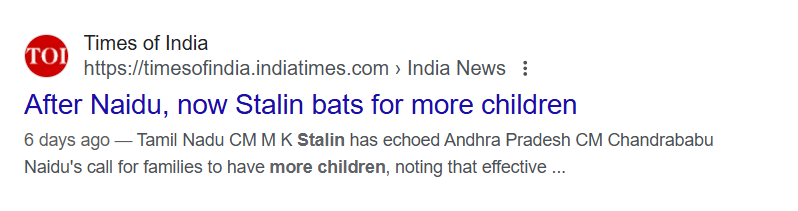
Why are South Indian leaders, like Stalin and Chandrababu Naidu, all of a sudden, pushing women to have more children? It’s not to combat the aging population as they make it seem. It’s all politics!

In India, there’s something called Delimitation. It’s a process of redrawing the boundaries of constituencies based on population. States with more population will get more constituencies, whereas those with low populations, like southern states, will get fewer seats. Basically, the exercise is to ensure each constituency has an equal number of people.

Since South India’s population growth is decreasing, plus migration, it won’t need as many constituencies. The total number of constituencies in Lok Sabha has been frozen since the 70s and is in place until 2026. 2026 is almost here! This is why politicians in South India are worried about women not having enough children. They don’t want to lose their seats.

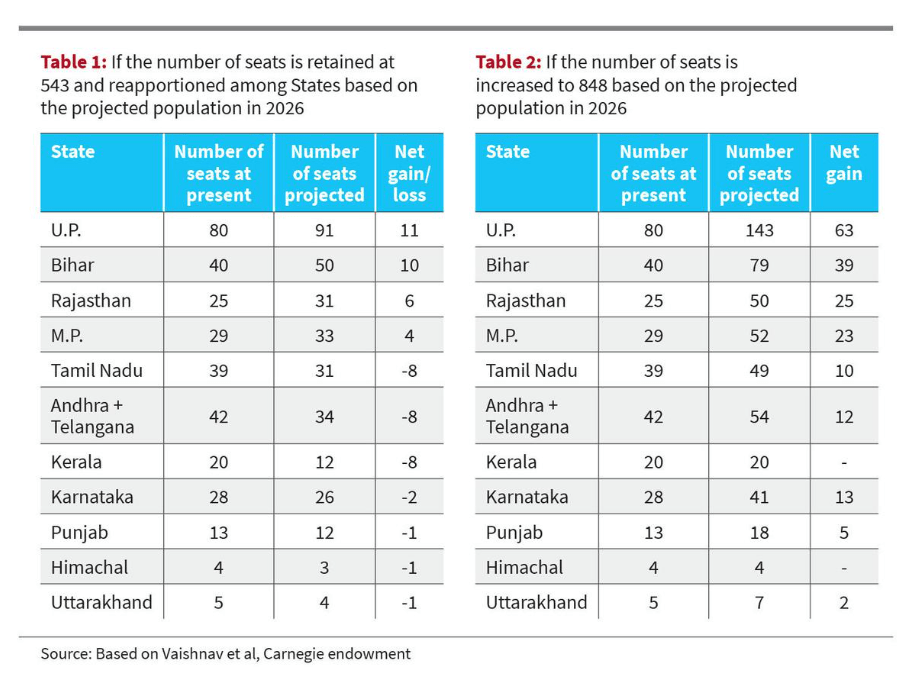
As per The Hindu newspaper, Kerala, Tamil Nadu, Andhra + Telangana, all of which are South Indian states, stand to lose 8 seats each, if the current number of seats in Lok Sabha (543) is maintained.

We can expect Pinarayi Vijayan, the CM of Kerala, to make a similar statement next.