
The Butcher of Bosnia and the Illusion of Threat

Butcher of Bosnia Image

I came across a news report about thousands of people attending the funeral of the man referred to as the “Butcher of Bosnia.” His name is Ratko Mladić. The report said that he was convicted of genocide for his role in the killing of more than 8000 mostly Muslim Bosniak men and boys in Srebrenica, Bosnia and Herzegovina. He died in prison at the age of 84 in August this year.

I was totally taken aback by this information and I had to look into why such a controversial figure is being considered a hero by many. I found that his supporters remember him as a military commander who defended their community against what they saw as “perceived threats” from Bosniak Muslims during the Bosnian War, which began in 1992.

I can’t help but notice a pattern here: violence is often justified nowadays by this very “perceived threat” – the belief that another community poses a threat to our existence, religion, culture, or way of life. Maybe this pattern has always been there, or maybe social media has simply made these attitudes much more visible.

Let’s take a look at some examples.

Israel’s ongoing conflict with Palestinians is framed by supporters of Israel around threats to its existence, while Palestinians and their supporters describe the consequences in terms of occupation, displacement, and violence against civilians.

Hitler is also being glorified on TikTok today, with his actions being presented through the deeply disturbing logic that he “helped eradicate” a community, Jews, whom they view as a threat to the world.

Afzal Guru and Ajmal Kasab are considered heroes by many because their actions are framed as acts of resistance against perceived threats or justified through a particular political narrative.

Savarkar is hated by many, even more strongly than some historical figures associated with mass violence, but he is also considered a hero by many who believe Hinduism and Hindu identity have been under threat.

I remember feeling absolute dread (a feeling of threat) when thousands attended Yakub Memon’s funeral in Mumbai.

And that is what makes this whole subject so uncomfortable.

Mourning, glorifying, or defending people who have done questionable things simply because they supposedly acted against “perceived threats to our existence” is becoming mainstream.

Closer to home, Hindus have attacked minorities in India because they believe their religion or cultural identity is under threat.

Christians in places like Tamil Nadu have also staged protests when public spaces in their area are used for festivals associated with other religions, with some viewing this as a threat to their own religious identity or traditions.

Then there are Kashmiri Pandits, who are being portrayed as a threat to the “culture” or “religion” of the land even when they are simply celebrating their festivals in a place with which they have a deep historical connection.

The circumstances are obviously different. But the underlying psychology is worth examining.

Once we convince ourselves that another community is an existential threat, almost anything can start being rationalised in the name of protecting our own.

And that leaves me wondering: who is going to do what next in the name of a “perceived threat”?

No community is completely free from this tendency, and no community can automatically claim moral superiority. Across religions, nationalities, ethnic groups, and political movements, people have at different points convinced themselves that their identity, culture, religion, or very existence is under threat.

Once “they are a threat” starts gaining ground, the question is no longer simply who is right or wrong. The question becomes how far people are willing to go to bring down or harm the people they have decided are the threat.

When People Forget You

A Scenic Nature Photo

Memory is such a weird thing. Some people remember the tiniest details about me from years ago, while others can’t recall spending time with me ever. They have forgotten entire moments. A day out, the day we talked, the laughs we shared.

I mean, how is that even possible? How can people erase entire days?

It also leaves you with a strange sense of self-doubt. Did you not make enough of an impression to be remembered?

A school friend, whom I reconnected with years later, couldn’t remember that we had spoken over the phone before. He was under the impression we had never talked. Another friend couldn’t recollect attending a wedding with me, which was actually the place where we first met. Even today, he acts as though we’ve never met. A few days ago, another friend, this time a woman, said she doesn’t remember going to a movie with me. It wasn’t just a quick outing. The entire day revolved around that one activity, so it was mind-boggling to realize that the memory had completely disappeared from her mind.

And then there are people like my niece, who can remember things from years ago with surprising clarity. Every time she brings up something I had completely forgotten, I’m both amazed and happy.

I guess this just proves that human memory is a fickle thing. It isn’t the perfect record of our lives that we often assume it is. So how can we depend on memory alone to define our current relationships or friendships and the moments that mattered?

Maybe someone, somewhere, did something incredibly kind for you, but you’ve completely forgotten it. Over time, you start believing they were never there for you because the memory no longer exists. You convince yourself there were no meaningful moments together, when in reality, they simply faded away.

Sometimes, forgotten memories say more about how the mind works than they do about the people involved.

It’s kind of scary, isn’t it? How hard do we have to try to hold on to the good memories? To make sure time doesn’t play the villain and quietly erases them for good.

***

Photo by Baro

The Introvert-Extrovert Chat Paradox

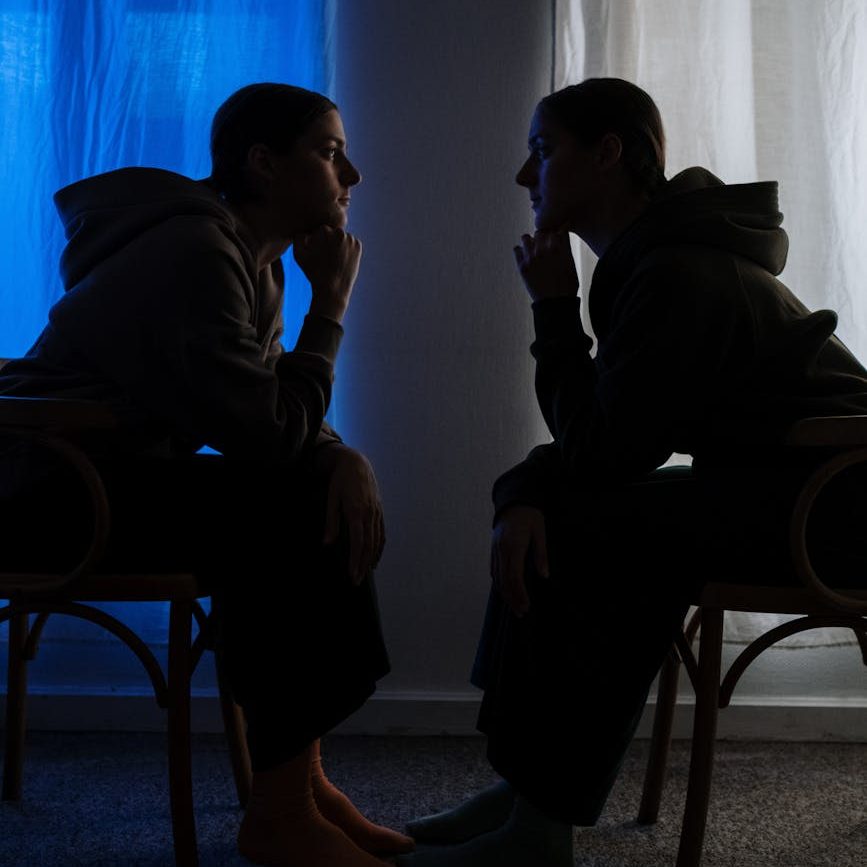
Picture of two people looking at each other, depicting introversion and extroversion

Something that has caught my eye often over the years is the difference between how introverts and extroverts communicate in real life and online. I wonder if you’ve noticed it too.

I’m an introvert who loves writing and blogging. But I’m someone with a fairly extroverted chatting personality.

On the other hand, many extroverts I know are surprisingly quiet on chat. Some even come across as shy. Meanwhile, introverts like me can appear far more outgoing and expressive online.

This is where things get interesting.

Imagine a friendship that begins through real-life interactions. Someone gets to know your actual personality, and then later comes across your online personality or chat personality. What if they don’t like that version of you as much? The opposite can happen too. Someone may enjoy your confident, talkative online presence but struggle to connect with the quieter, more reserved version of you in real life.

I think this is where many misunderstandings and personality clashes happen today.

This post is simply an observation. It’s just something I’ve noticed while navigating friendship and online conversations.

As someone in my 40s, I didn’t grow up with this confusion because there was no online personality to manage. The people around you knew only one version of you.

I did start blogging during my college days. Over time, I developed an online personality that was more outgoing and expressive. The internet felt like a safe space where I could communicate freely. As someone who was studious and never benefited from what people call “pretty privilege,” writing online allowed me to share my thoughts without feeling judged.

My appearance may have changed over the years, but my introverted nature never really did. The internet continues to be a comfortable space where I could express my feelings and connect with others in a way that felt natural to me.

Today, we live in a digital age where friendships and even relationships are shaped by multiple versions of ourselves. Real-life conversations, text messages, social media interactions, blogs, and online communities collectively play a role in how others judge us.

Maybe that’s why getting to know someone has become both easier and more complicated than ever before.

***

Photo by cottonbro studio