Netflix Movie Spotlight: Baramulla

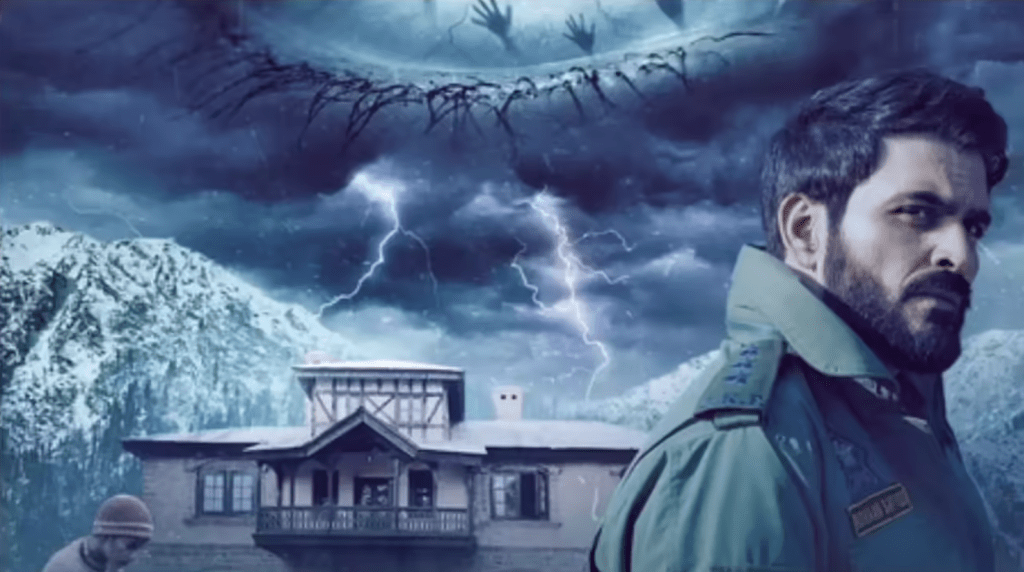
Baramulla Movie Poster

What defines horror? We often think of ghosts, possessed souls, or strange creatures with no clear form. Yet I realized there’s another type of horror that hits harder. The ones that combine these supernatural ideas with the harsh truths of real life. This is a type of blend that creates an impact, which stays with you long after the movie is over. This is where Baramulla is about.

What’s It About?

Baramulla opens with a policeman who moves to Kashmir and stays in an old house filled with secrets. He is there to investigate the disappearance of children in the area. Strange events start to unfold at once. The elder daughter senses a foul, “dog-like” smell in the house, even if there are no dogs. The caretaker carries a plate of food every day to a locked room. What lies behind these mysteries? Why are children vanishing? These questions drive the heart of the story.

Thoughts

I can’t, unfortunately, share everything I felt without giving away the main plot. Since I wanted to share my thoughts in full, I placed them in a separate “Spoilers Ahead” block after this section. You can skip it if you prefer to avoid spoilers.

Baramulla left me with many emotions. I was genuinely amazed by how the team crafted it.

The movie tries something that Indian cinema, to my knowledge, hasn’t attempted before in a horror movie. That is, blending the past and the present into a story that’s rooted in historical events. It reminds you that horror has layers. It’s not only about the unknown, but also the known. The horror of trust turning into betrayal. The horror of being dismissed or gaslit. The horror of violence, both mental and physical. Baramulla captures all of this with sharp clarity.

The performances are strong across the board. Personally, I would say it’s a must-watch.

Baramulla is now streaming on Netflix.

**Spoilers Ahead**

I felt emotional through many scenes. The acting was powerful and honest. The pain never felt exaggerated.

By now, you probably know that the film draws from the suffering Kashmiri Hindus faced in the late ’80s and ’90s. Many cast members are Kashmiri Hindus who had to flee their homes. Manav Kaul is one of them. He left Kashmir when he was in grade 4. He moved on to become a competitive swimmer in his late teenage years and participated in state and national-level championships. He has more than 14 national medals in swimming to his credit.

The end scenes also show Sanjay Suri, which is befitting, since his father was killed by terrorists in Srinagar when Suri was just 19. He moved to Delhi after that and became a known face in the film industry.

The producer and writer, Aditya Dhar, who is also Yami Gautam’s husband, is a Kashmiri Pandit. He has been using his craft to share Kashmir’s story with care and technical prowess.

Some Kashmiri Pandit celebrities, like Kunal Khemu, have chosen not to explore their past, and that is their personal choice. In an interview with Smita Prakash, he said he doesn’t know much about that period, even though his own family lived through it.

I feel it’s important for us to understand our history so we don’t repeat old mistakes. Stories like these should be passed from one generation to the next. My only regret is not asking my grandfather about his experiences—how Kerala felt during the Indian freedom struggle, and what life was like then. Those anecdotes have been lost forever, as he did not pass on the stories to his children as well.

It’s remarkable that so many Kashmiri Hindus who had to flee the valley are using art to express their experiences instead of resorting to violence. Their goal is empathy and understanding, something they were denied for a long time, not provocation. Choosing storytelling over violence is admirable, especially in a world where violence is often justified in the name of resistance.

There are also a few Kashmiri Hindus with left-leaning views who defend problematic groups and take part in “Free Kashmir” sloganeering, similar to how a very small number of non-Zionist Israelis speak in ways that don’t reflect the wider population.

Most Kashmiri Hindus (and some Kashmiri Muslims) have appreciated the movie. However, left-leaning Hindus are also criticizing the movie for “propaganda,” even though the events have been well documented. Films that depict and educate the viewers on crimes against Muslims in India are welcomed, while films showing crimes against Hindus are often dismissed as Islamophobic, nationalist, or propaganda. This imbalance is where many activists struggle. They accept one truth but not the other.

People like me have slowly stepped out of that mindset to face the whole truth.

It may take a while, but I really believe the truth will eventually reach wider acceptance sooner or later. And the stories can’t stop until the pain is finally acknowledged. They need to be told, retold, and carried forward. Only then will they finally find the place they deserve.
Even Goddesses Have Their Limits: Learning to Walk Away

I’m a divorcee. I have been for many years now. I’ve never hidden this fact. But I also never imagined my marriage would end the way it did. Then again, who does?

We all grow up believing our marriages will last forever. I also used to think of myself as a tolerant person, so the idea of my marriage failing felt impossible. In my mind, this is something that others might have to go through, the ones with anger issues, those who couldn’t compromise. Not me.

I followed every piece of advice perfectly. The kind you might have seen relationship gurus meting out on social media nowadays, i.e., communicate respectfully, try to understand the other person’s perspective, etc. But over time, I realized communication isn’t a one-way effort; it takes two people to make it work. If only one partner keeps trying while the other sits back, believing they have nothing to change, it slowly chips away at your happiness.

With time, after observing other marriages around me, I understood that maybe I wasn’t as tolerant as I thought — at least not by Indian standards.

Different Levels of Tolerance in Relationships

My regrets in relationships are less about the ex and more about how I handled things. “Why did I let others influence my decisions? Why did I tolerate and compromise more than required?

Of course, every relationship requires compromises. But each partner also has their own tolerance limits. For me, physical or emotional abuse is unacceptable. Yet, even I, someone who might appear intolerant of everything, tolerated it for a while before deciding I’d had enough. Many women, however, make peace with such situations in their marriages (and relationships in general) for their own reasons (dependency, fear, children, financial pressures, and more).

To cite an example of varying levels of tolerance: When I kept hearing cries of domestic violence in my building, I complained to the building association, even though people advised me not to. “It’s their family, their rules.” But I couldn’t just sit there doing nothing while hearing those cries. It was traumatizing. I took this step because there were times, even in my own relationship, that I wished my neighbors had intervened. Probably, ring the doorbell or knock on the door. It would have provided that much-needed relief.

After my complaint, it hasn’t happened since. But who’s to say the guy didn’t just find quieter ways to hurt his wife? I would’ve run away if such things had happened to me repeatedly, even if it meant begging on the streets for the rest of my life. But his wife might be thinking, “It’s okay. He’s doing it all out of love.” Who’s to know? You can’t save someone who doesn’t want to be saved.

Different levels of tolerance.

People also need to understand that no one files for divorce after just one instance of mistreatment. It happens when the same behavior repeats, even after requests, pleas, and calm conversations. Some choose to walk away, while others make peace with the idea that this is how their life will be. So the common advice of “give it one more chance” is mostly useless, and a bit insensitive, because the ones involved might have already given it multiple chances before deciding to let go.

Power of Faith During Tough Times

Even though I’m not a religious Hindu, having faith in some form has always helped me through tough times. It’s the one thing to hold onto when it feels like your world is falling apart. Even now, I rarely visit temples or follow rituals properly, but in moments of extreme heaviness, I still pray. Not to any specific god. I believe we’re all praying to the same divine force, just using different names and stories. What else could explain miracles happening in every community?

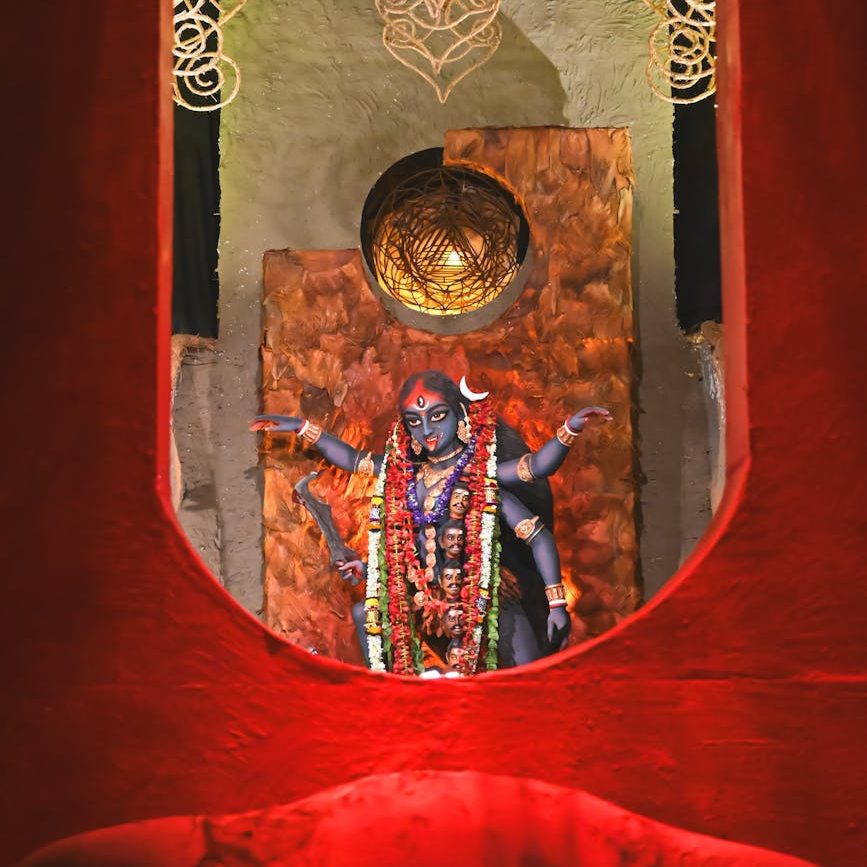
I remember, when I was married, our home had a lone idol of Goddess Kali, a deity I had rarely prayed to before. My parents usually had Lord Krishna at home. I still remember looking at the deity and crying. I asked if this was how it would be for the rest of my life – painful and broken on the inside, faking happiness on the outside (especially for social media).

I sometimes think I might have continued living that way if I hadn’t been pushed by some greater power to take a stand for myself. Probably it was Her. Must have been fed up with me always looking at Her, crying and whining. Even goddesses have their tolerance limits. Also, gods only help those who help themselves, right? Or as we Malayalees say, “Thaan paathi, dhaivam paathi” (you must put in your half of the effort, and God will take care of the rest). Maa Kali might have gone, “Bitch, why don’t you just leave the marriage, instead of troubling me all the bloody time?

The day I walked out of my marriage was also the day I told my parents, “If you don’t help me, I’ll do it on my own.” Thankfully, they stood by me when I made that decision. I also had the confidence to stand on my own feet. I wasn’t employed then, but my freelance work brought in some income. I knew that if I left the marriage, I wouldn’t be a burden on anyone. That same freelance experience later helped me secure a job. It formed the bulk of my resume, and it convinced my employers that I could handle responsibilities independently, even while working from home, at a time when WFH wasn’t even common.

When I look back, I feel the universe was guiding me in small but meaningful ways toward a life that may be inadequate for someone else, but is absolutely correct for a homebody, introverted feminist like me.

Taking Marriage Advice from Society

But the point is, society will tell you not to take advice from a woman like me. Because I’m a divorcee. What would I know about marriage and relationships, right?

Yet it will encourage you to listen to the woman who keeps enduring it all, at the cost of her well-being, because that’s what a “good wife” does.

Society doesn’t really care about what a woman thinks or feels. It just wants you to stick to the rules.

***

Photo by Monojit Dutta

From India-Pakistan to Gaza: Exploring the Duality of War

Fire explosion with smoke

Personal observation: In almost every war, there’s always someone who doesn’t want it to end.

In the India–Pakistan war, many in India didn’t want the fighting to stop because they felt Pakistan hadn’t learned its lesson yet. Some even wanted the government to reclaim PoK (Pakistan-occupied Kashmir) during this time (which I strongly oppose).

When Israel attacked Iran’s nuclear sites, many anti-regime Iranians wanted the war to continue because they hoped the regime would fall.

The Israel–Gaza conflict is even more unusual. Many who kept calling for a ceasefire suddenly went quiet or were openly against it when finally announced. Maybe they had expected Israel to be driven out and a new Palestinian state to rise “from the river to the sea.” But that idea is unrealistic and only calls for more violence. Just like India will never give up Kashmir, Israel will never give up its land. Both countries get a lot of criticism for putting their own interests first. But, over the years, Jews and Indians have learned an important lesson: if they want their interests protected, they can’t rely on anyone else. When Indians get murdered in America, there’s next to no backlash. It’s the same case with Jews. History is also proof that when Hindus face persecution or genocide (Kashmiri Pandits, Sandeshkhali, Bangladeshi, and Pakistani Hindus), the world stays silent. In a world shaped by selective activism, these two communities have gradually learned to shed their passivity and docile nature, standing up for themselves without guilt. Indians, in my view, are still learning. Our tendency to stay silent runs deep. But since 2014, that’s starting to change, much to the annoyance of some. Apparently, a “good” Indian is still largely expected to be a silent one in the face of persecution and bigotry.

Anyway, the point is that in any war, there’s always duality. Those who push for the conflict to continue aren’t always on the “far-right.” Sometimes, they are far-left or far-right figures from other communities, disguised as leftist liberals. Take, for example, the India-Pakistan war. Many leftists in India wanted it to end and for peace to prevail. Yet recently, some of those same voices wanted Hamas to reject the peace deal, even at the cost of many lives.

I’ve often felt that the far-left and far-right are just two sides of the same coin. The recent wars and reactions to them over the years only validate this claim.

***

Photo by Pixabay

Why Do Hindus Vote for BJP?

BJP Supporters Waving Flag

I’m a Palakkad native, and I had travelled home just to vote during the Lok Sabha elections. To make it clear, I have no loyalty to any political party and have voted for different parties over the years based on their performance and activism. I believe pledging unwavering support to any single party prevents us from critically examining their flaws. However, this time, voting for the CPI(M) was not an option, as I am well aware of its shortcomings during its second term in power.

I decided I would vote for Congress in the Lok Sabha elections. But then October 7 happened, and I saw Congress’s response to it, especially how they tried to silence Shashi Tharoor in Kerala for criticizing Hamas. It came as a shock and played a key role in changing my decision. That’s when I realized, unfortunately, this party is no different from those it criticizes. The Opposition parties in India excel at criticizing far-right Hindu groups, but avoid condemning far-right Islamist groups in society, fearing backlash from supporters.

People call out the BJP and RSS for sheltering far-right Hindus. But how is Congress different if it shelters far-right Islamists? Both cater to extremes. BJP voters are criticized for supporting a party that allegedly wants to turn India into a Hindu nation. Congress voters should ask themselves the same question: why support a party that mollycoddles groups that have once openly called for turning India into an Islamic nation? How would it make the majority of Hindus feel?

So, when people ask why Hindus vote for the BJP, the answer is simple. If the choice is between far-right Hindus and far-right Islamists, many Hindus will pick what feels safer. Left-leaning Hindus may sympathize with Islamist groups, seeing them as victims. But most in the community, just like any other community, vote on the basis of safety.

Congress and Islamist Ties

In the upcoming Nilambur by-election in Kerala, the Welfare Party has now openly declared its support for the Congress candidate.

To the uninitiated, the Welfare Party is the political arm of Jamaat-e-Islami Hind, a group known for its fundamentalist views. This group shares roots with the Jamaat movements in Pakistan and Bangladesh, which are often accused of anti-Hindu activities.

As per the New Indian Express report, “It’s learned that the Welfare Party, backed by Jamaat-e-Islami, has put forward various demands, including making it an associate party of the UDF. However, no assurance has been received in this regard so far.” This is a common far-right Islamist tactic in democracies across the world: try to join mainstream parties to gain power, resources, and reach. Once these groups gain enough strength, their true agenda emerges, often centered around enforcing religious doctrine. We see this happening in Bangladesh today. A similar pattern unfolded in Iran in 1979, when leftists and Islamists joined forces to establish an Islamic regime. This led to widespread persecution and the exodus of many Persians, some of whom sought refuge in India.

Many leftists, in both India and abroad, often align with Islamist groups unknowingly, driven by a genuine desire to support the persecuted and uphold justice. However, this well-meaning approach is frequently exploited by far-right Islamist groups for their own agenda. It’s fair to say that many on the left still operate with this same mindset, unaware of the long-term consequences.

Such Islamist groups remind me of the Persian movie “The Seed of the Sacred Fig” (playing on Amazon Prime), a 2024 crime drama film directed by Mohammad Rasoulof. The movie starts with an explanation of strangler figs, a type of parasite that grows on a host tree’s branches. As they grow, their roots reach the ground and thicken. Eventually, they wrap around the host tree, in a way “suffocating” it. Over time, the host tree dies from lack of light and nutrients, while the fig survives independently. I hope Congress and other left-leaning parties realize that they are the “hosts” in this equation.

Both the Welfare Party and SDPI have been trying to win Congress’s favour in Kerala. Their open support was clearly visible in places like Palakkad (my hometown). The fact that Congress is not distancing itself from these groups is a matter of concern. The party appears to seek the support and votes of such groups to win, which may explain its consistent silence or hesitation in condemning Islamist acts. But how far are they willing to go? Will there come a time when they finally strike deals with the devil because they can’t win anymore without their support or votes?

Valid Concerns

Can you really blame Hindus for refusing to vote for parties that associate with groups that seem more likely to drag India down a path similar to Pakistan or Afghanistan?

Let’s not forget the current state of Bangladesh. JEI has played a significant role in steering Bangladesh toward radical Islam. If India were ever to become an Islamic nation, it wouldn’t resemble the UAE or Bahrain. It would more likely mirror Pakistan or Bangladesh, where radical Islamist groups wield substantial influence. Unlike the Gulf nations, which strictly ban and suppress such groups, India still hesitates to even name them. The moment any criticism is raised, it’s quickly dismissed as Islamophobia by human rights activists.

No One’s Truly Secular

In the end, no one is truly secular. Most people vote thinking, “Which party is best for my community?” — not for the nation. That’s why, in Kerala, Congress is the preferred party for many Christians, and a large section of Muslims support the Muslim League. So why is the burden of voting on the basis of secularism placed only on Hindus?

***

Feature Representative Image Source: Shutterstock

Hindus Least Likely to Migrate, India Is Top Source and Destination Country: Pew Survey

Did you know that around 3.6% of the world’s population lives outside their country of origin? The Pew Research Center has come up with some interesting insights on the religious composition of the world’s migrants in their latest survey. Who migrates more? What are the top three origin and destination countries for each community? Which country hosts the most number of immigrants? The survey answers all these pertinent questions and more with detailed insights.

This post includes infographics created by the CNN-News18 creative team.

Reasons for migration

Why do people migrate? The survey reveals several reasons, such as the need to find jobs, to live with other family members, or for better education. However, religion also plays a part in migration. Migrants have often moved to escape persecution. There is also the need to live with people with similar religious beliefs.

Migrant Groups by Religion

To quote the survey, “Many migrants have moved to escape religious persecution or to live among people who hold similar religious beliefs. Often people move and take their religion with them, contributing to gradual changes in their new country’s religious makeup.

Worldwide migrant counts have increased for all major religious groups

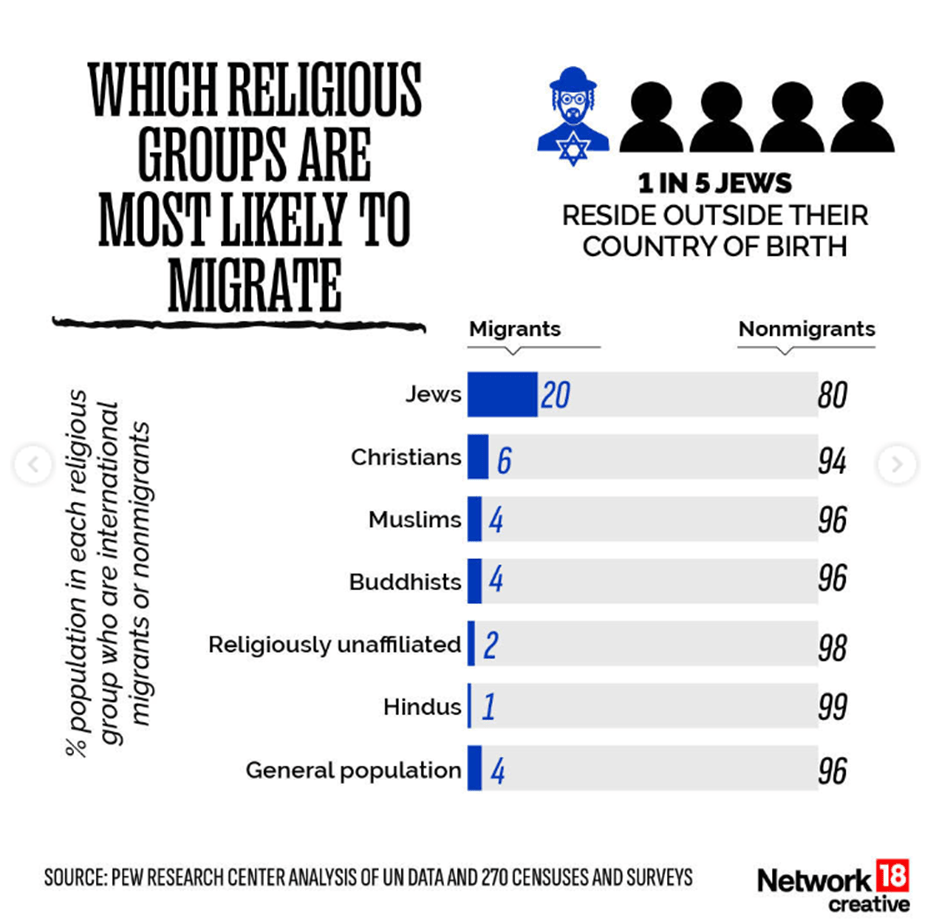
Religious groups most and least likely to migrate

Hindus tend to migrate less as compared to other religious groups and Christians are most likely to migrate from their place of origin.  

Hindus are less likely to migrate

As per the survey, “Christians are the largest migrant group, but Jews are most likely to have migrated.”

Jews are most likely to migrate

The top source and destination country for Christian migrants

To quote the survey, Christians make up a much larger share of migrants (47%) than they do of the world’s population (30%). Mexico is the most common origin country for Christian migrants, and the United States is their most common destination.

Top source and destination countries for Christian migrants

The top source and destination country for Muslim migrants

In relation to Muslim migrants, the survey says, “Muslims account for a slightly larger share of migrants (29%) than of the world’s population (25%). Syria is the most common origin country for Muslim migrants, and Muslims often move to places in the Middle East-North Africa region, like Saudi Arabia.” Interestingly, Muslims tend to prefer migrating to “richer” regions that follow their religion. The top destinations for the community are Muslim-majority nations, such as Turkey, Saudi Arabia, and UAE.

Top source and destination countries for Muslim migrants

The top source and destination country for Hindu migrants

As per the survey, “Hindus are starkly underrepresented among international migrants (5%) compared with their share of the global population (15%). India is both the most common country of origin and the top destination for Hindu migrants.” Hindu migrants to India are most likely to originate from neighboring regions like Afghanistan, Pakistan, and Bangladesh, where minorities face severe persecution. This is evident from statistics indicating a drastic decrease in minority numbers within these regions over the years.

Top source and destination countries for Hindu migrants

The Pew Survey offers a lot more detailed insights, so I would highly recommend going through it.

An Indian’s Concern for Bangladeshi Hindus

It is with utter dismay I am reading the news about the attack on Hindus in Bangladesh. Secular Muslims in the country are trying to protect the Hindus. This is positive news, and you can’t help but feel grateful for such people in the community. However, radicals are still deliberately targeting the houses and religious places of Hindus. How can they be stopped?

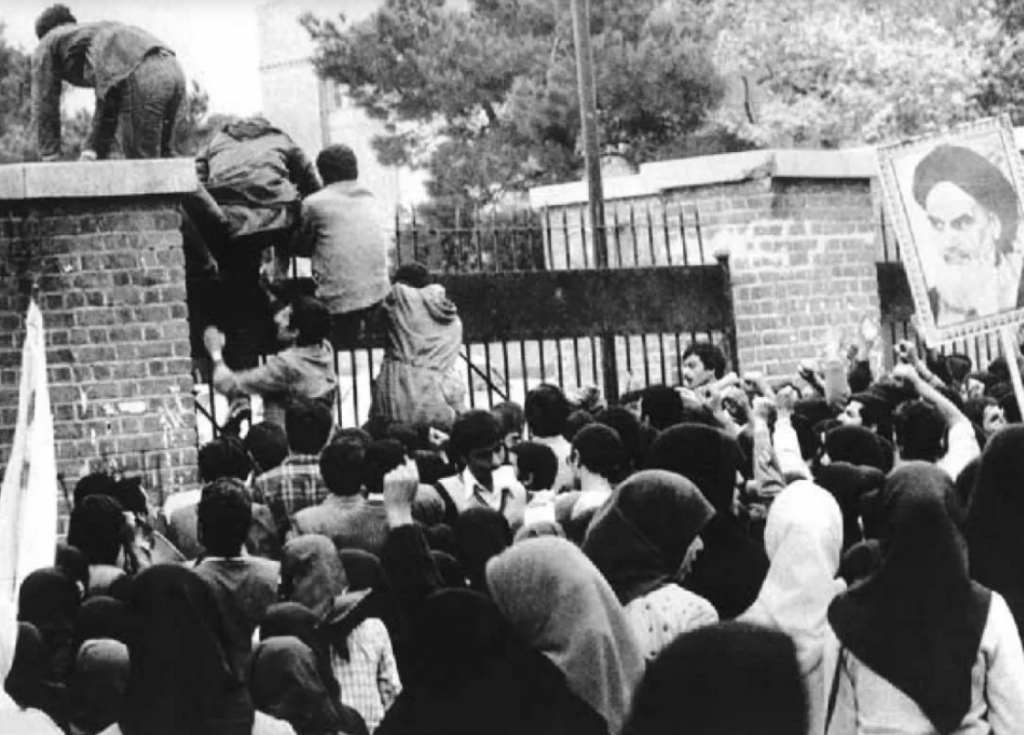
Often, we have seen that in the struggle between radicals and seculars, the radicals emerge victorious. This has happened previously in Iran. A student uprising in Iran in 1979 played a significant role in the downfall of secularism and the emergence of the Islamic regime.

Student Protestors in Iran 1979
Student protestors climbing the gate of the U.S. Embassy in Tehran on November 4, 1979 / Wikimedia Commons

The reasons for the uprising back then were quite similar:

  • Widespread discontent with the Shah’s authoritarian rule, political repression, and economic issues.
  • Iranian students, both domestically and abroad, were active in organizing protests, disseminating anti-Shah literature, and galvanizing public opinion against the regime. They played a crucial role in spreading revolutionary ideas and mobilizing the masses.

A simple act of protesting an “authoritarian” rule in Iran brought in a more religious regime that was dictatorial in its tendencies. So how successful would one consider this student uprising, unless the original intention of the riots was not social justice, but a religious takeover? Shah, considered secular in nature, fled the country never to return, which in all probability will be Sheikh Hasina’s trajectory too. Comparisons are inevitable. Iran is still struggling to bring back its golden days of secularism. Will Bangladesh end up being the same? Only time will tell.

I saw Bangladeshi residents expressing their joy over Sheikh Hasina’s ouster, which is valid, as she was unnecessarily brutal in her approach. But I also saw them in private groups worrying about the future of the country and whether they will fall into the hands of radical Islamists. Some even said they would leave the country if it came to that.

What does this mean for India? Sheikh Hasina was considered pro-India in her approach. She kept the fundamentalists like the Jamaat-e-Islami and anti-India elements under check. This is of significance as India shares a long border with Bangladesh and any sort of instability has the potential to spill over to neighboring regions.

The new leader, Muhammad Yunus, is a Nobel Laureate. He has proven himself an intellectual, but how effective would he be as a politician and a peace-keeper? Will he be pro-India and continue to maintain peaceful relations with our country, promising to secure the borders and protect the minority community in Bangladesh? Or will he be a puppet for the radicals? Questions only time can answer.

As usual, the leftist ecosystem in India is working overtime to convince us that the Hindus in Bangladesh are not in trouble. This is not surprising. It is a standard approach when minorities in Pakistan, Bangladesh, and even within India (Kashmiri Pandits) are attacked. The events are quickly negated or justified and brushed under the carpet. A close observation of their responses provides enough proof of their bias. In my 40+ years, I have never seen them acknowledge attacks against Hindus. There is always a “reason” for it.

If by chance you point out the attacks, you are labeled a right-wing communal Sanghi (a BJP supporter). However, if you support any other community, you are a social justice warrior, an activist, and a secular. This double standard is difficult to fathom, and I have seen many becoming BJP supporters because of this hypocrisy.

In India, I am witnessing more secular Muslims openly supporting Bangladeshi Hindus than the so-called secular Hindus. Due to the indifference of left-leaning Indian Hindus, the community will continue to suffer persecution at the hands of radicals. There is not enough support. For the support to pour in, people need to first acknowledge the fact that there is an issue.

It is with some relief I read that all political parties in India are on the same page regarding the Bangladesh issue. The opposition hasn’t yet negated the Bangladeshi Hindu’s plight. They voiced concern for the minorities in Bangladesh and said they would work in unity with the central government. A nuanced approach their supporters need to learn.

Hopefully, peace will soon be restored in Bangladesh, rendering my concerns unnecessary. Until that day arrives, my worries persist.