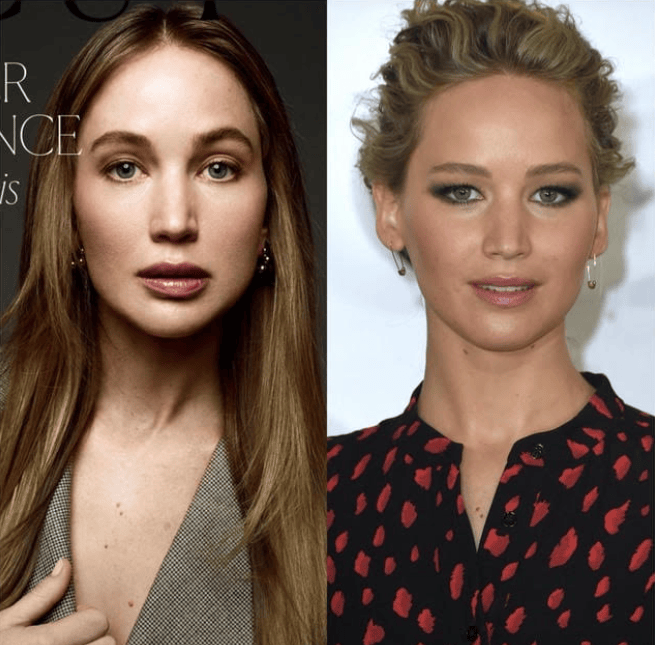
Recently, I came across a magazine cover shoot featuring Jennifer Lawrence. Looking at the photographs, I noticed how different her facial features appeared. I felt a little sad that she seemed to have changed some of the features that made her unique, especially her partially hooded eyes. As someone who has hooded eyes myself, I have never really felt the need to change them.
Growing up, I was the “ugly” child. I had thick glasses and a stick-thin figure. I never really grew up receiving much attention or hearing compliments about my appearance. What I did experience, though, was plenty of comparisons with my mother and sister, both of whom were much better-looking than me.
I still remember an aunt telling my mother, “How did you get a daughter like her?” The implication was quite clear. I wasn’t particularly good-looking. I remember silently crying. But thanks to my thick glasses, nobody noticed.
I also remember my sister’s college friends looking at me and judging my appearance, almost as if they couldn’t believe that she had such a dorky-looking sister.
I would have loved for someone to defend me back then, even if it was just to say, “Nah, she’s the cutest!” (even when I clearly wasn’t). Instead, such comments were usually brushed aside, as though nothing had happened. A very Indian trait!
But even through all of this, I never once thought about getting plastic surgery or changing my facial features.
Looking back, I realise that many of our insecurities about our physical appearance actually stem from other people. You might look at yourself in the mirror or at a photograph and see absolutely nothing wrong. Then someone comes along and offers their two cents about your appearance, something you never even asked for. And suddenly, you start noticing things you had never considered flaws before.
Even now, I occasionally hear comments about how big my nose is or how crooked my smile looks. But the funny thing is, I don’t see myself that way. I actually like what I see in the mirror. My so-called imperfections are part of what makes me unique.
My experiences have also taught me that pretty privilege is very real. I received next to no attention when I was considered unattractive, but as I started looking more conventionally decent, I noticed people treating me with more warmth. It was an interesting thing to experience. It explains why I no longer let either compliments or insults about my appearance get to my head. Beauty and physical appearance are, after all, superficial things.
What concerns me more these days is seeing children who are far prettier than I ever was at their age talking about getting cosmetic procedures and changing their appearance. I honestly don’t know what to say.
I suspect a lot of it has to do with social media and the unrealistic beauty standards it sets. There seems to be an unspoken pressure to look perfect all the time, whether it’s having flawless skin, a perfectly proportioned nose, a particular eye shape or an Instagram-worthy appearance.
When even youngsters start thinking about changing their features, it makes me wonder what kind of message we are sending nowadays about beauty and self-acceptance.


You must be logged in to post a comment.