AI and Its Impending Doom (?)

Recently, Jacob Coxon, a safety researcher who resigned from Anthropic in September 2026, said that both Anthropic and Open AI were “gambling with our lives” by racing toward self-improving superintelligence. He warned that there is a strong chance unchecked progress in artificial intelligence could lead to human extinction by the end of this decade.

The “self-improving superintelligence” part immediately reminded me of a fictional story I read recently called My Friend Aaron by Rory McMeekin (Google it). It was published in August, and it has all the elements of a Black Mirror short story. After reading Coxon’s recent comments about AI safety and superintelligence, that story feels almost uncomfortably real.

As someone who has been working for 15+ years in IT and now uses AI extensively for research, work, and fun, I can understand why many people aren’t taking these warnings from AI experts too seriously. Millennials have heard similar criticisms before, although about different technologies.

A few years back, AI for me at work basically meant Grammarly. It would automatically detect and correct my grammar mistakes. But there was almost a sense of guilt attached to using it, especially with so many people online shaming those who relied on writing tools. Apparently, if we are writers, we should get everything right on our own.

But I am someone who is much more comfortable thinking quickly and writing as I think than writing slowly, consciously, and perfectly. So I found Grammarly to be the perfect companion. It would catch my mistakes when I was speeding up my writing. Yet I still felt like I was doing something wrong by using the app.

It was only after ChatGPT came along that using Grammarly somehow became the lesser sin.

Now, people say, “Don’t use ChatGPT. Use Grammarly for writing and correcting small mistakes.”

If we look at the history of technology, I think this has always been the norm. A new product or technology arrives, people criticize it, and there are predictions about how it is going to ruin society or even end humanity. We saw it with the internet. We saw it with computers. And now we are seeing it with artificial intelligence.

Then something newer and more powerful comes along, and the technology that was previously considered controversial suddenly becomes normal.

I wonder if online AI bots will eventually achieve the same acceptance when something even more advanced comes along. Maybe that will be robots that look and speak like humans. Maybe it will be something we can’t even imagine yet.

Only time can tell.

Technology is definitely moving at a pace that I couldn’t have imagined a few years ago. Things that seemed like science fiction are becoming part of everyday life, and the conversation around AI is changing almost as quickly as the technology itself.

I don’t think banning AI is the answer. AI tools are helping many people, including me, speed up their work and get things done more efficiently. At the same time, I understand the criticism that AI can also make people lazy.

The problem is not using AI itself. It is how we use it. There is a big difference between using AI as an “add-on” to your work, something that helps you speed up what you already know, and using it as a complete replacement for your own knowledge and thinking.

Where that line should be drawn is something technology experts will have to figure out. And, as ordinary users, it is something we will only understand better as AI continues to evolve.

***

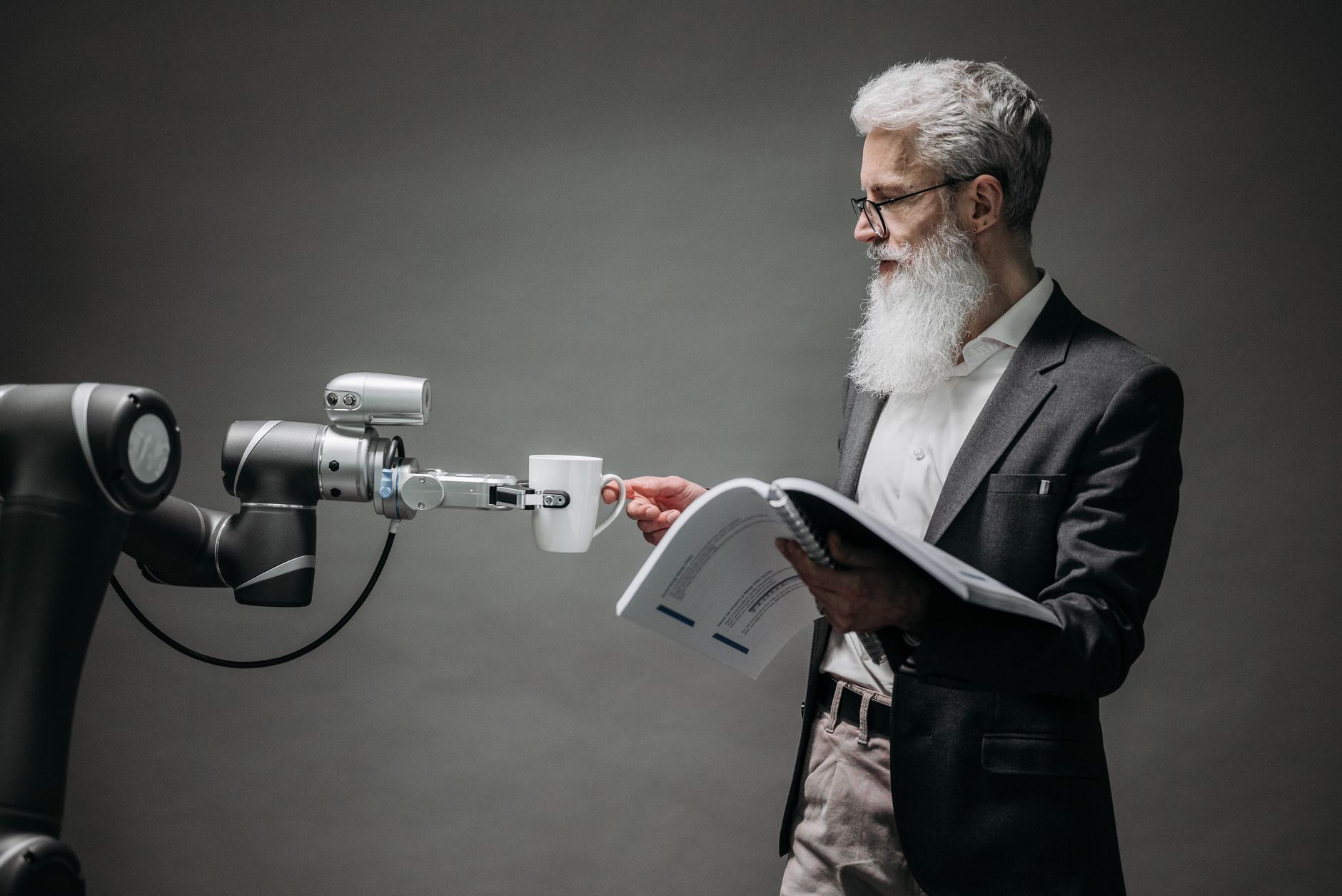
Photo by Pavel Danilyuk
Dating as a Divorced Woman

I recently watched Jovita George’s “Dating After Divorce” video on YouTube. First of all, kudos to her for creating such a video. This kind of content is still not very common, and many women, especially in the Malayalee community, hesitate to talk openly about their divorce stories. So seeing Jovita share her experience really impressed me. It has also motivated me to talk about my own journey with relationships (and also friendships) after divorce. So here goes.

Lessons and Red Flags

I will start not with relationships, but with the judgments you face as a divorced woman.

This may not be everyone’s experience, but after my divorce, I often sensed a certain judgment from people around me, not always from my male friends, but from the women in their lives.

For example, a male friend’s wife suddenly became suspicious of me, as if divorced women are seen as people who “prey” on married men. No one says it openly, but the distrust in their eyes makes it obvious. This was especially frustrating because I have always been careful around married men, even those who were flirtatious. I never encouraged them as I was always mindful of what their wife would feel. Yet society is quick to judge a woman the moment a man interacts with her.

It also became clear that many men, both married and unmarried, see a divorced woman as “easy.” They approach you often for casual fun. “Friends with Benefits.” Because you are deemed as someone who’s not serious about relationships, because you chose to “throw away” a marriage. It feels sad, but it happens.

This stereotype gets even stronger because of how movies and dramas show divorced women. They’re often portrayed as someone trying to break another woman’s marriage — the evil, overly glamorous vamp who cares only about herself. You hardly ever see a divorced woman on screen who’s just like anyone else, someone who wants warmth, kindness, and love.

So a divorced woman who wants something serious needs to stay alert and filter out these shallow bonds.

Finding Love Again After Divorce

I eventually got into a long, serious relationship. We met through mutual friends, and at first it felt promising. But it soon went downhill. I realised he was never truly serious. And the reason was my divorce status. That hit hard. It felt like he was embarrassed by who I was.

That’s something divorced women should watch out for — a man can say he’s serious, but you only know the truth when his actions match his words.

The gaslighting made it even worse. He made me think I shouldn’t feel the way I did, even when I felt disrespected. It was mentally draining, yet I held on because I wanted the relationship to work. His anger and verbal jabs made me anxious, and over time, they chipped away at my confidence.

When that relationship ended, I was shattered. I had loved him despite all the red flags. But the truth was hard to face — I don’t think he even saw me as a friend. There was no warmth, no respect. It’s tough to process that after all the compromises you make.

That experience changed me. It made me far more cautious about getting into a relationship again.

Slow and Steady

After that, I met someone by chance. A divorced man, part of my school group. He’s someone just as cautious as I am, so we take things slow. Both of us carry scars from our past. Probably why we’re kind to each other. Even when we fight, we stay respectful. That matters a lot to me, considering my past hasn’t been so kind. He feels like home because he is steady and respectful. Still, after what I went through, a part of me wonders how long it will last, even though we’ve been together for years now.

We’re not chasing marriage. We just want respect and companionship. How long this will last, I really don’t know. When you’ve seen bad relationships, there’s always that little voice saying good times don’t last. He could be the one, or maybe not. Time will decide.

So this is what dating after divorce has been like for me.

And here’s a reminder for divorced women — other people’s judgments only hurt when you believe them yourself. Don’t bring yourself down just to fit their expectations.

***

Photo by Rina Mayer