An Ode to Dopamine Detoxes

I’m at that stage now where I can discern the reason behind my restlessness. The symptoms that previously used to confound me can finally be attributed to a source and countered with practical solutions. I say this with pride because discovering the cause of any turmoil is always the first step to recovery.

The reason for my dopamine going out of whack and my feeling a flurry of erratic emotion? Social media.

I have a love-hate relationship with social media. Because of social media, I found my voice. Because of social media, my introverted self learned to be a tad more expressive. I could post online, and there would always be someone to listen to my endless thoughts, view my never-ending selfies, and validate my existence. As much as I enjoy the platforms, I often find myself getting lost in engaging with the myriad of interesting content while also feeling bad about someone close not liking my photos or reels or videos, wondering if everyone had a life far superior to mine, wanting to go on the same expensive trips that others do even if it’s not what I want. Social media can be draining. It takes away your mental resources and leaves you with very little to deal with the everyday complexities of life.

When you feel like a puppet in a system with no say over your actions, you know it’s time to take back control. It’s time for a dopamine detox. I turn off my notifications, log out from social media, and take a break from doomscrolling. What I get in return is an incredible sense of relief and calm.

My dopamine detoxes help me connect with myself, reflect and refocus my energy. I enjoy the stillness and the ability to engage with my work, family, and thoughts without being bombarded with external distractions.

I find such dopamine detoxes more valuable at work. When you’re neck-deep immersed in tasks, the last thing you need is a distracting WhatsApp chat demanding your attention. Turning the wi-fi off helps me in cutting down on unwanted noise. To combat my Fear of Missing Out (FOMO), I remind myself that I’m just a phone call away from those who need me. Sometimes, when I need 100% me-time, I enable the flight mode on my phone. It has been a life-changer.

Enough people don’t realize what staying connected 24×7 does to your brain. If they did, everyone, including myself, would have attempted to disconnect more regularly. I know what social media does to me, and I try to step away, but it’s not long before I turn delusional again and turn a blind eye to the side effects. I relapse and restart doomscrolling.

The irony is that I have to experience the dreaded symptoms again for my brain to knock some sense into my dopamine-hungry system. The symptoms being — feeling angry about nothing, annoyed over everything, and mentally and physically empty. These symptoms are my wake-up calls to step back. The moment I do, I feel refreshed. It always astonishes me how forgiving our bodies tend to be. They are quick to spring back to life if you give them a chance. A few hours of downtime is often all it takes.

I wonder how many people must have mistaken mental overstimulation for depression and continued using social media without understanding its negative impact on them. Overstimulation is not depression, but it may lead to depression. Prolonged use of social media can result in your body crying SOS in the form of a nervous breakdown, loneliness, and anxiety. If you feel irritated when your internet is down, even though you have nothing important to finish online, you are addicted – no second thoughts about it.

Correlation between social media and depression (courtesy: system.com)

If you are interested in the studies shown in the above image, here are the links:

We can see the symptoms but somehow fail to attribute them to social media. Even if we understand the negatives, it doesn’t stop most of us from endlessly scrolling through our feeds. It might be similar to how drug addicts feel. They know the side effects of the drugs they consume and how it physically and mentally affects them, but it doesn’t stop consumption.

I was at that stage again recently, ignoring the fact that it’s time for a digital detox, when I stumbled upon the book Dopamine Detox by Thibaut Meurisse on Prime Reading. The book is available for free if you are an Amazon Prime user in India. After exhausting my monthly budget for books, I decided to give it a go. It’s a quick read. It takes about 30 minutes or less to finish but is jam-packed with information.

The book helped as a reality check. Somehow I had conveniently forgotten what social media could do to my mental health and had started overusing it. I even attributed my increased irritability and lack of energy to sleep deprivation, vitamin deficiency, or lack of exercise. I fixed all these issues but turned a blind eye to my social media usage. Eventually, from a state of surrender, I accepted that disconnecting from social media was the best way to resolve my problem. So, dear readers, if everything fails to lift up your mood, try logging out from your social media accounts.

I have cut down my usage, but I have no idea when things will go down south again. For now, I enjoy being wide awake, in the present, and the temporary freedom from negativity. I have set up social media time restrictions on my phone to prevent doomscrolling, but how long before I disable them and return to my old ways? Only time can tell.
An Ode to the Things I Am Scared Of

An ode to the things I am scared of
Photo by Taryn Elliott

I feel being scared is good. It makes me feel human and relieved over the fact that none of the new-age technologies has successfully managed to kill the entirety of my emotions and turn me into a robot.

Two of the sweet somethings that technology did rob me of, though, include:

  • that feeling of missing people – when we are connected 24×7, where’s the time to miss?
  • connection (ironically) – everyone around me, young and old, is so immersed in their phones that I find it hard to reach out to them or get their undivided attention. Meaningful conversations have dwindled. One line of dialogue is followed by a quick glance at the phone. Eventually, you are distracted by some meme, TikTok, or reel that takes the magic away from the present.

Currently, in my mid-30s, I feel less scared compared to my early formative years. This might be because of added experiences or because of the dullness that adulthood brings with it. You learn to grow an invisible shield that protects you from uncomfortable experiences. But in between all that, you lose some of your vulnerability, a part of your personality that was quick to embrace things without second-guessing them. It had a charm of its own.

So here’s an ode to the things I am scared of in my mid-30s, the things that make my heart race and the hair on the back of my head stand (well, that’s a stretch, but they do make my emotional wires wonky).

  • losing near and dear ones – the end is inevitable. It is something we cannot control. As I age, it is frightening to know we are that much closer to the end. How painful will it be? Can’t all deaths be peaceful? Questions no one can answer.
  • not being able to take care of myself – by seeing the seniors around me who are heavily reliant on their kids for the slightest of things, I worry if I will ever reach a stage where I won’t be able to take care of myself, be it physically, financially, or emotionally.
  • running out of time – I worry if I will ever be able to do all the things I want to in this limited lifespan. Will I find time to do it all? Will I be able to go on all my bucket list travels and explore the world? Will I have the health and abundance to provide for myself and my family’s needs?
  • working my life away – here, I am typing all this out in between work because what if I never get enough time to write, the one thing I love doing? Imagine spending more than half of your life at your workplace, not getting to do any of the stuff you want to do to your heart’s desire because you have a home to run, tummies to fill, and many obligations and responsibilities. You are expected to work till you can’t anymore. Unfortunately, most will only get time for leisure in their old age. And by that time, it might be too late to deep-dive into everything we used to enjoy before.

It is a coincidence that most of the things I noted here concern time. But what else is more precious? Without time, we cease to function. All we crave is more time – to spend with our loved ones, to do the things we love. Only time can correctly predict your destiny. You need to live through life to see what will happen and what you will feel. Till then, it’s all talk.

Sometimes you have to let go of these thoughts. Because there are no answers. But on other occasions, I hold these thoughts dear. When I get older, these fears will probably be replaced by new ones. Till then, these emotions will work to keep me human. They will keep me sane.

An Ode to the Non-Nepo Actors in Class (Netflix) and What Bollywood Should Learn From the Show’s Success

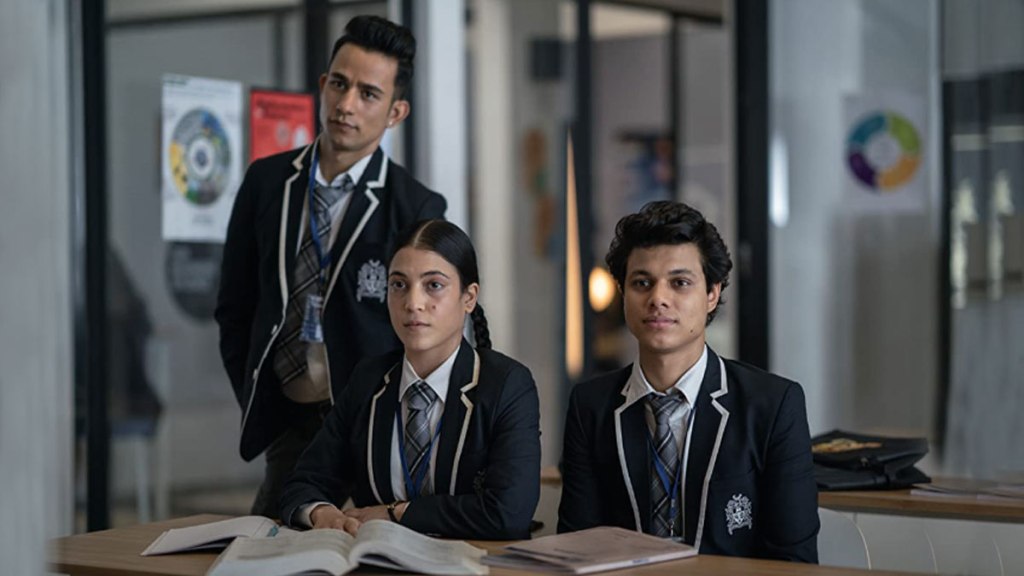
Netflix Series Class

Class is the official Indian adaptation of the popular Netflix series Elite. But I am not here to talk about how good the show is or how different it is from the original. There are enough online reviews for that. I am here to stress the impact the actors had on me.

I was totally involved and immersed in the entire universe of Hampton International School. A big credit for that goes to the actors in the show. How often do you get to experience this engagement in Hindi movies nowadays? There are many reasons why it is not happening as much as you would like, but the predominant one is: most lead actors in Bollywood tend to look like they are acting. You see the actor, not their performance, which stops you from entirely immersing in their world, being one with them, feeling what they are feeling, and making you react to their scenes. You only observe them and see them as a part of the story. It’s difficult to connect with them because their star power often tends to overshadow their acting prowess.

This is where Class and its cast of actors come in. I see them as the torchbearers of hope in the industry and an example of how you could make a show or movie with non-famous faces and still have a successful project. These actors do not have a mainstream Bollywood filmy background and had to work hard to get where they were. And that effort is reflected in their performances. There is so much conviction and a feeling of realism so strong that you can relate to them.

When you see a show like Class with a talented set of actors, you immediately tag along with them on their journey without any effort. You become fully involved and feel intense hatred for some characters and love and sympathy for others. This is what good acting does. This is what immersive cinema is. You want more of these.

I was taken aback by how the young actors and actresses in Class had to wait years (some even 7-8 years) to get their first big break. By their age, star kids like Alia Bhatt had already become superstars. Celeb kids get a head start in their teens or early 20s, obtain enough time to star in good movies, and make a mark. By the time they are in the Class actors’ age group, they are financially stable enough to move to the next phase (marriage, parenthood, etc.). This is okay if you are a male actor. Still, in the case of a female actor, this can prove detrimental in a male-dominated movie industry like Bollywood. It is astonishing to see how middle-aged Indian actors are often paired with young women while their female counterparts of the same age are cast to play their mothers.

There’s nothing we can do about the nepotism prevalent in the Hindi movie industry except contemplate the unfairness of it all. It happens in all sectors and is not just restricted to Bollywood. But, in other industries, there are people to help the new kids in case they are not adept at their job. In movies, you can’t really make anyone perform for you. You have to do it yourself. So to compare it to other industries is not fair because such biases in the movie industry directly affect the experience you and I have, the actual consumers of entertainment. All viewers covet an immersive experience. It’s what we watch movies for. To escape reality for a while and to merge with another world cut off from your own. We have nothing to do with where the actors come from. But it is infuriating when the filmmakers take on celeb kids who have failed to impress even after a couple of chances, as it stops us, the viewers, from an immersive cinematic experience. There are exceptions, like Abhay Deol, who fit into any type of role you give him and make you connect with him.

I would love to see the cast of Class in more projects. I would love more casting directors to be like Sanjeev Maurya, who take actual effort to dig out talent, instead of going the lazy-ass way of trying the already-tested, the already-famous, who contribute nothing extra to the project, except maybe popularity and glamour. But we don’t need cinema that’s only about glamour, celebs with the perfect body and model-like features, or famous celebrities. People like me would love more relatability, good stories, and acting.

Until Bollywood learns its lessons, most of its movies will continue bombing at the box office, and people will continue to prefer OTT entertainment. OTTs have ensured all talented people get a platform to perform, which might be one reason why more people prefer to skip the theatres to watch content at home. Why pay to watch mediocre content when you can get quality entertainment at home?

An Ode to 9 Thought-Provoking Life Quotes from Hermann Hesse’s Siddhartha

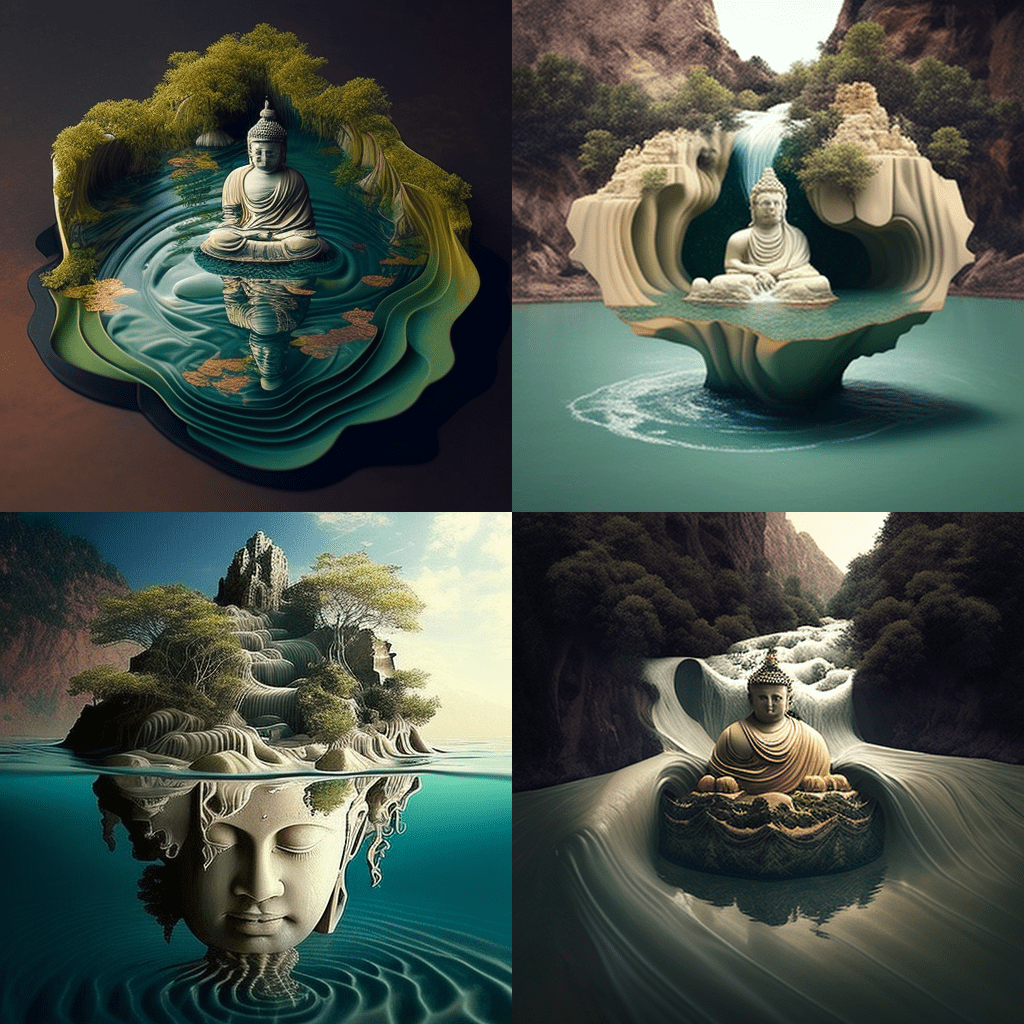
Gautama Buddha 3D Art

I recently finished Hermann Hesse’s Siddhartha. The book takes you through the life of the fictional protagonist, Siddhartha, who comes from an affluent family. He is restless and dissatisfied with life and feels the need to search for enlightenment and spiritual fulfillment. He eventually finds it on his own, though the path he took to attain enlightenment is rocky and full of challenges. This story is entirely fictional and not be confused with Gautama Buddha’s story.

Personally, I found the book a bit difficult to read as the topics discussed were quite deep and complex. The language was wordy, and it interfered with my focus somewhat. However, I still found many meaningful and beautiful quotes throughout the novel. Quotes that make you think, quotes that beautifully capture the very essence of life.

Here are some of the best:

Wisdom cannot be imparted. Wisdom that a wise man attempts to impart always sounds like foolishness to someone else. Knowledge can be communicated, but not wisdom. One can find it, live it, be fortified by it, do wonders through it, but one cannot communicate and teach it.

I have always believed, and I still believe, that whatever good or bad fortune may come our way we can always give it meaning and transform it into something of value.

The world is not imperfect or slowly evolving along a path to perfection. No, it is perfect at every moment; every sin already carries grace in it.

The river is everywhere at the same time, at the source and at the mouth, at the waterfall, at the ferry, at the current, in the ocean and in the mountains, everywhere, and that the present only exists for it, not the shadow of the past nor the shadow of the future.

The only way to live is to accept each minute as an unrepeatable miracle.

Wherever you are, when you can sense something of the eternal in yourself and in the world, you are close to the source of all being and all knowing.

When someone is seeking, it happens quite easily that he only sees the thing that he is seeking; that he is unable to find anything, unable to absorb anything, because he is only thinking of the thing he is seeking, because he has a goal, because he is obsessed with his goal.

Everyone can perform magic, everyone can reach his goals, if he is able to think, wait, and fast.

The opposite of every truth is just as true! Any truth can only be expressed and put into words when it is one-sided. Everything is one-sided which can be thought with thoughts and said with words. It is all one-sided, all just one half, all lacks completeness, roundness, oneness.

An Ode to the Witches of Yore

An ode to the witches of yore

I stumbled upon this cartoon by Tim Hamilton recently. It was an eye-opener of sorts.

Society has habitually portrayed witches as these socially ostracized, spooky characters who are out to do no good. You are expected to eye witches suspiciously and doubt their every motive and move. In the past, women who were declared witches were tortured, shunned, or killed. It still occurs in remote areas. This is in contrast to the new-age magic practitioners, who are vocal about their practice and comparatively more accepted.

Makes you think – what if the term “witch” was originally coined to insult powerful, independent women? Those women who knew how to fly on their own, did not need others, and had an irresistible charm that was hard to ignore but perceived as “evil” by the orthodox out of spite or jealousy. Society is scared of her because she is not following tradition; she has to deal with leery eyes and face many a taunting word.

Sometimes, witches are portrayed as someone with deformed feet, probably a reference to the fact that these women were adept at walking a path opposite the norm. In the modern era, if a witch were to roam around in the same manner, exerting her freedom and rights, she would be called a feminist in a disdainful tone by misogynists. Feminists are often mocked, their ideologies questioned, their intentions slammed, and considered problematic if they decide to take the road less travelled. Maybe witches were the first feminists the world has ever seen; maybe they were the first set of women the world couldn’t control.

The cartoon raises the question: was the conventional image of a witch as a frightening female figure riding a broomstick used as a metaphor for female independence in the past? It might be why to be called a “witch” is considered derogatory, but not a “wizard.” Was this someone’s attempt to chain and deface an autonomous, free, self-governing woman?

How many powerful characters have been disparaged and labeled in the past solely due to their failure to adhere to societal norms? We might never know.

Why Blaming Modi Won’t Make India a Better Place for Indian Muslims

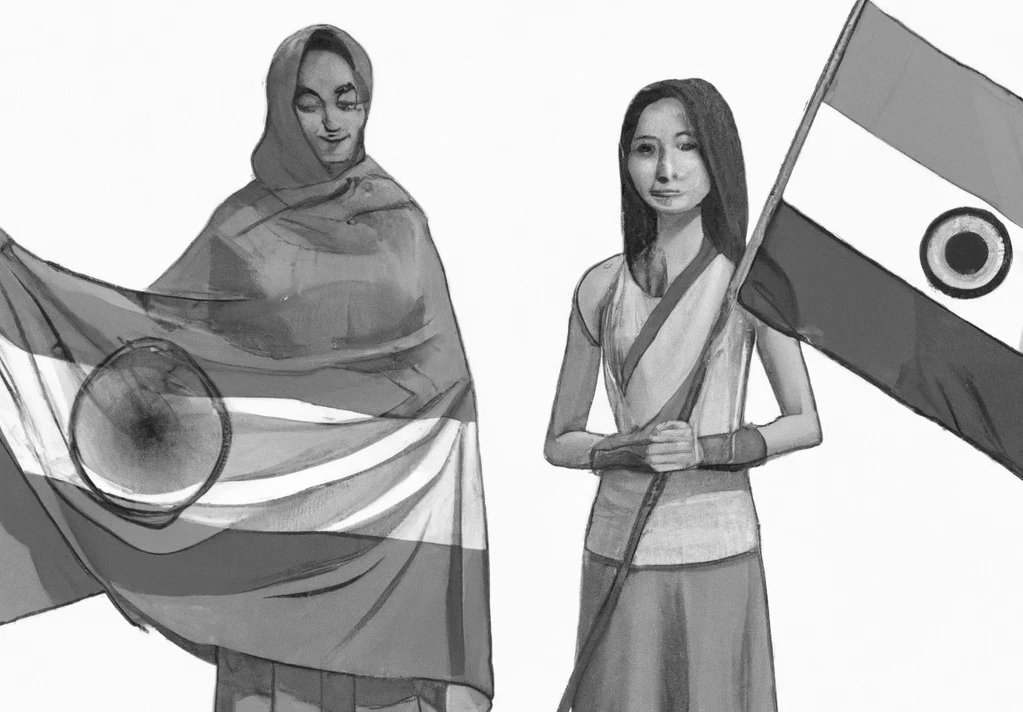
Hindu Muslim Unity in India

It’s a trend seen worldwide – to blame the Indian Prime Minister and the country for its alleged mistreatment of Indian Muslims. I say “alleged” because certain journalists present the scenario as such – that all Muslims are being targeted and attacked. This is absurd for someone like me, who stays in the country. I have had NRIs ask me if there are attacks happening 24/7. I had to explain that, no, you won’t see bodies strewn around like in actual war-torn places.

The journalists should stop portraying the situation as such and misleading our diaspora worldwide into believing we are a nation that is constantly rioting.

Yes, some Hindu extremists are attacking Muslims, but then some Muslim extremists are attacking Hindus as well. There is bound to be some form of extremism and violence where there is religion. This is true for all countries. Not everything is Islamophobia. Not everything is Hinduphobia. We should stop flashing our victim cards and start focusing on finding practical solutions to the actual problem India is facing – our disunity.

In India, we have seen religious polarization increasing over the years. Blaming Modi has not made the situation better for Indian Muslims. In fact, the divide has increased. A major culprit is social media. It is now for everyone to see that pointing fingers is not improving the situation. In fact, it ends up agitating the ones who are big supporters of the Prime Minister and may even lead them to become more hostile toward Indian Muslims. These are the people you need to pacify and not agitate further. Similarly, viewing controversial content like the BBC documentary can upset the ones who are not Modi supporters. They will most likely feel more bitterness towards Modi, even if they have never faced discrimination. This, in turn, would make them feel more polarized, distancing themselves further away from fellow citizens who support him. Totally counterproductive. So why are channels like the BBC working so hard to increase this polarization?

Follow Peace, Not Hatred

Modi has been reaching out to Muslim communities to bridge the divide. This is what the country currently needs. All communities should work towards creating a better India. We should hold talks, discussions, and campaigns and use social media to propagate peace, not hatred. We are one, and we should start behaving as one.

Hatemongers on social media are not looking for resolutions, only drama. They use language that is provocative, unfriendly, angry, and violent. Such people are rarely peaceful or solution-oriented. The first thing citizens need to do is unfollow such accounts on social media. Do not share their accusatory content on your feed, either, even if they support your own community. The more hatred you see on your feed and the more you engage with such posts, the more polarized you will feel over time.

Using Nonviolent Communication (NVC)

In my previous post, I talked about Nonviolent Communication (NVC). Wouldn’t the world be better if countries and communities just sat together, lay down their resources, focused on needs, and came to an amicable resolution? But in real life, we resort to violent and judgmental communication like blaming and pointing fingers. No one has become better with violent, critical language. In fact, people become more defensive and non-receptive to what you are saying when you use an accusatory tone.

Focusing on Needs

So, what “needs” should people focus on during conflict resolution? The main thing to understand here is that people who conflict are operating from a place of fear and not anger. People attached to their religion are afraid their community will face discrimination or violence from “others.” When we think about it this way, things make more sense. Fear evokes empathy as opposed to anger. So why not concentrate on talking about that fear and request ways to make each other feel safe? What does the other party want to hear? Listen and give them that assurance. This assurance should be given by authoritative figures. Someone their community will listen to and follow.

How better would the situation be if each warring nation and community acknowledged each other’s fears, empathized, and comforted each other? “You have nothing to fear from us. We treat you as our own.” This phrase can calm the agitated and anxious, provided all communities sincerely work towards it, finding ways to gain each other’s trust.

Avoiding “Us” Vs. “Others” Mentality

It is always “us” vs. “others” instead of “Indians.” This is where the problem lies. To shift our focus outside of the community and to focus on nationality is proving difficult.

If we continue to have this “us” vs. “others” mentality, we will not be able to address our disparities efficiently. For any kind of conflict to be resolved, that feeling of “one” should be inculcated first. Maybe the communities in India should go through counseling sessions like how couples do when they face marital issues. Therapy is the need of the hour. But here, each individual will need to take on the therapist’s role and advise their near and dear ones.

Am I glad the BBC documentary is banned in India? Absolutely. We do not need more agitations or religion-based violence here. We need our people to unite and make India a peaceful place. This cannot be done with hurtful words and allegations from ourselves or the (actual) “others.” We require our communities to actively connect as one. Only then can we work towards building a better India.