Why You Should Read Non-Fiction

Why You Should Read Non-Fiction

Recently, I came across a proficient Bollywood actress saying, “I don’t read non-fiction. My mind is fine as it is. I don’t need to learn anything more.” I was a bit taken aback by her statement. Not because she said she didn’t like non-fiction, which is entirely her personal choice, but by the fact that she thinks there’s nothing more to learn.

When we stop learning, we stop growing. I don’t think we ever reach a saturation point when it comes to knowledge. There’s always something new to study – be it from our own experiences or others. It’s impossible to learn everything by ourselves, which is where non-fiction comes in. Such books expand your horizons, even if they demand a certain amount of mental effort from us.

Not many enjoy non-fiction. It makes you feel like you are studying in contrast to a fictional book that offers a more relaxed, entertaining vibe. We have always associated non-fiction with our school textbooks. So it’s no surprise why many detest reading the genre. Personally, I find myself having to work my grey cells more when I am reading an autobiography or a self-help book. They require you to think and retrospect, which does not qualify for “easy reading.”

But to never read non-fiction, in my opinion, is a sin. You have some of the world’s best documenting their experiences and learnings on a subject of interest in the most compact form possible to help others who would otherwise have spent countless hours trying to learn the same. Why miss that golden opportunity?

Here are some reasons why you should consider reading non-fiction:

It allows you to learn from other people’s mistakes. The people who have written the books have more experience than us regarding certain subjects, so why not trust them? When you read through their mistakes, you get to learn what to avoid.

Some points stick. When you read non-fiction, you can be assured some valuable points will stick. You will end up discarding a lot of info that doesn’t align with your thought process. Still, you will unknowingly absorb valuable insights for future use. When the time comes, these tidbits will hover over in the background, helping you make the right decision. You might not remember which book you got the idea from, but the important thing is you retained the information for personal use. This can be very useful, be it at work, studies, or even personal day-to-day interactions.

They give you a new perspective. When I go through self-help books, I am almost always gifted with a new way of perceiving things, which I wouldn’t have if left to my own devices. The people around me are echo chambers, and we often hear the same viewpoints repeatedly. This is why people tell you to travel – so you get to experience different cultures, values, and insights. A more accessible, affordable option is to read non-fiction. It broadens your horizons, making you understand that yours is not the only way to live. There are many different kinds of people with different stories, unique experiences, and beliefs. Non-fiction helps you explore all of it in the comfort of your home.

I agree you can do all three by watching YouTube videos or listening to podcasts, but there’s only so much you can include in video and audio formats. In comparison, books are able to contain a lot more information. Plus, scanning or searching for info in a book is easier, especially if you own a Kindle.

So, do give non-fiction a chance by picking a topic of interest. You do not have to finish everything in one go. Try five pages, a chapter, or even one page instead. Each page you finish takes you that much closer to developing a new mindset.

***
Photo by Gu00fcl Iu015fu0131k

An Ode to Playful Adults

Playful Adult

I am a new k-entertainment fan. I have started bingeing kdramas, kpop, kceleb interviews, and variety shows. I adore BTS and absolutely love all the members. As someone in her 40s, I am not ashamed to be a fan, though many people think k-entertainment is primarily for young adults. I feel art and music transcend all generations, and everyone, irrespective of age, should be able to enjoy creativity in all forms.

One thing that strikes me, especially in BTS, is how playful even the eldest member (Jin) is. That got me thinking – why don’t we see more adults being playful? Almost every adult you see has a serious, practically poker-faced sense of humor. They express their happiness less and worry more. I find it true in India, where I live, but I am sure it’s a practice across the globe. Probably because we relate seriousness with maturity. The more serious you look, the more mature you are considered to be.

Why can’t we be playful as we age instead of becoming no-nonsense adults?

Why do we have to lose our childlike qualities when we grow up?

Why can’t we look at the world with the same curiosity and wide-eyed wonder?

Most of these questions have one answer: life experiences. What we go through in life tends to sober us down and take some of that effervescent energy away. I look at my posts and realize how I have become more serious over the years. I kind of miss the younger, quirkier me. Friends who had the most incredible sense of humor have mellowed due to the pressure that age brings with it. When older people say that school and college offer the best days of your life, they mean it – you get to enjoy things with abandon when you are young. “Maturity” is a sham that can drain that enthusiasm away – we smile less, joke even less, and constantly worry about what the future will behold.

Another reason is society. People expect you to be serious and leave your childlike qualities behind when you turn older; otherwise, you’re deemed immature. It does not matter if you do your duties meticulously and perform all your responsibilities. If you project any playful traits, you are looked at with judgment.

Blessed are those, in my opinion, who get to retain their childlike playfulness in this world that tends to be a spoilsport. The ability to joke around, laugh wholeheartedly many times a day, and find happiness in the smallest things is a skill that many of us would do better to possess. Such qualities make the world a happier place to live in, for our own selves and the people around us.

So, to people who bring joy to those around them with their playful antics, instead of preaching, “Be more mature. This is not the age for such things,” I would like to say, “Please stay the same! You bring joy just the way you are.”

***

Photo by Godisable Jacob

An Ode to Love in the Times of Ageing

An Ode to Love in the Times of Ageing

“What does love feel like?” asked a member of a community I am a part of. She had never experienced romantic love before and was genuinely curious about what to expect when she eventually falls in love – Is love easy? Is it kind? Is it everything movies and books make it out to be?

In my 20s, my answer would have been, “Love means you are willing to do anything for the person.” It meant no inhibitions, forgiving all mistakes, and smiling positively through the storms. There is no sense of self. You are engulfed by passion and intimacy to the point your brain cells cease to function.

The way we look at love in our 20s might be derived from various sources – movies, shows, books, music videos, social media, interviews, etc. The love depicted in public is often dreamy, romantic, and glossy. The type that makes our hearts sing. We expect our partners to follow the same route – always say and do the right things at the right time. However, it is not as simple. One must undergo real experiences to truly understand and form our own definition of love.

My perception of love changed considerably in my 40s.

Love no longer means giving up everything to make a relationship work, especially your self-respect. Love means being at ease with your partner, not walking on your toes, and being anxious about their reaction. Love is comfort, like a tight hug after a tiring day, like a cup of coffee embracing you with its warmth. An emotion that is balanced, not agitating and swinging back and forth between extremes of love and hate.

I have experienced bad relationships and am thankful I overcame them unscathed. Back then, blinded by love, I would find excuses to justify any form of disrespect I got. I would tell myself, “They must have had a bad day.” “Maybe they didn’t mean what they said.” But over time, you learn not everything is done unintentionally. If a mistake happens more than once, it is not a mistake, it’s a habit, a conscious decision. But the young me did not understand all this. I was under the impression that the harder I worked in my relationship, the easier it would be for my partner to love me.

Love requires some amount of compromise, for sure. But how much is too much? Only you can answer that yourself. Different people have different levels of tolerance. What might sound disrespectful to me might not be for the other person. However, a general rule of thumb is that I should feel at ease with my partner and be able to communicate freely without fear.

I am curious how my definition of love will change over the next 20 years. Will love be more balanced than it is now, or would it sway? Only time can tell.

***

Photo by cottonbro studio

An Ode to Not Being Kind

An Ode to Not Being Kind

We are often told to be kind and help people whenever possible. This is advice that is good on paper. In the real world, we often must exercise caution.

Experience has been my best teacher of how kindness is not always necessary. I have learned to tread cautiously with anyone other than my immediate family, no matter how dependable and sincere they might appear.

Two minor incidents this year left me disappointed.

A next-door neighbor landed at my door with his laptop to finish some urgent work. He did not have a WiFi connection at home as he was an NRI. He requested my internet password, and I shared it with him without any second thoughts. He sent a few emails and left soon afterward. One year later, by chance, I came to know my WiFi was accessible at his apartment as well, and he and his entire family were using it without my permission. This incident left a bitter taste in my mouth. I wondered why anyone would use items owned by someone else on the sly, thinking they would never get caught. Internet in India is dirt cheap compared to many countries, which further increased my annoyance, as it is not a commodity out of reach for the common man. It blew my mind how people are ever-willing to mooch off others, even those who are probably earning less than them, instead of paying for the necessities themselves.

Lesson learned: Never share your WiFi password with neighbors.

My second experience involves sharing my OTT (streaming) account. I shared it with an NRI friend so he could watch this one show he was highly interested in. I thought after he was done with the show, he would venture out to get an account of his own. But that did not happen. He stayed on and started using it regularly. Since it was a single-device account, I found myself locked out whenever he watched something. If I asked for access, he would request an additional thirty minutes. This went on for two years. I suggested that he create an account for himself, but he would always come up with excuses, claiming that he didn’t need a full account. I got the impression that he wanted to stay on without paying for it. I finally took a stand and changed my password recently, and that was the end of the issue.

Lesson learned: People are always on the lookout for freebies, irrespective of their financial status. Before you give away something for free out of kindness, contemplate whether you will be okay with giving it away for an extended period of time. You have to take into consideration that the person might not stop using what they are getting for free. Worse, they might even share it with others.

Why is kindness mistaken for weakness? The nicest people we know are often taken for granted because they struggle to vocalize their frustrations and annoyance. If you ask, “Are you okay with it?” they will probably say it’s okay, fearing the consequences that a negative answer might evoke. When such situations happen, and a saturation point is reached, the nice person ends up not being so nice anymore, leading to dialogues from others such as, “You have changed.”

The courteous thing to do is to use other people’s possessions only for a short while. If you like the product, purchase it for personal use. If this is not feasible, the least a person can do is offer to share the rental rate or costs.

So yes, my advice to naïve, soft-hearted people is to not blindly trust others to always take the right step. Sometimes, boundaries need to be spelled out. Offer kindness with precaution – in optimal doses only.

***

Photo by Jou00e3o

How Online Interactions Improved My Social Behavior

I was a timid youngster. Shy and introverted. You can say even socially anxious. When guests arrived, I would run and lock myself up in my bedroom. I was not interested in common courtesy or formalities. Many mistook it for arrogance or rudeness. Looking back at it, I feel this behavior stemmed from insecurity. I was not confident with the way I looked.

Till my pre-adolescent days, I was a cute kid. I was pampered, received compliments, and always got attention. This changed once I became a teenager. I had the thickest prescription glasses, and my complexion changed from white (coveted by most Indians) to a dusky brown. I also lost my cute chubbiness along the way because my appetite had died, making me a lanky young woman. Not the kind that got attention or compliments, but the kind who was frequently mocked.

The people around me also ensured I knew I wasn’t as eye-pleasing as before. I got comments like, “She was so cute as a kid,” making it evident that they were dissatisfied with my current imagery. I was given medications to increase my appetite, so I could restore some of my lost glory. I despised the medicines and eventually stopped taking them.

I was continuously told to become more outgoing like my sibling, a far more attractive personality. How could I when I did not have the confidence? From a bubbly kid, I became more withdrawn, lost in my own world, finding solace in books and songs. I thought if I stayed away from people, I wouldn’t disappoint them, and they wouldn’t hurt me either.

It was during my late teenage years that I stumbled upon the online world. I had just gotten access to the internet at home. I was mesmerized by the sea of opportunities that opened up to me. The plus being I could hide behind a screen and avoid being judged for my looks or my introversion. It felt like a less judgemental world. Back then, it was. Social media platforms did not exist, and people were not spewing hatred at each other.

One fine day, I happened to chance upon a public chat platform for youngsters. Word was going around in school that it was a fun group. I jumped on the bandwagon, curious to know what it was like. It was where I finally found my voice.

I am not sure if it was the comfort of facelessness or the fact that there was no pretty privilege involved that did the trick of helping me get out of my shell. In the online world, only your persona is seen. Your thoughts, your emotions become the highlights. That’s what I put forth in my chats with random strangers. All messages were posted publicly, and people could tag you and respond to them. It was safe and secure since it was a closed group where creeps were promptly banned or blocked. Due vigilance is required when you chat with strangers, and the group moderators ensured it was a safe space for everyone.

Talking in the group was like having a big group discussion. And for the first time in my life, I felt I was a part of something. People were engaging with my words. They found me interesting. They laughed at my jokes. I was the center of attention. Something I thought I would never be again.

The interactions were a stepping stone in my life and contributed to my change in attitude. It gave me confidence that even if my looks are against me, I have what it takes to engage someone. It was a slow but sure climb from then on.

The universe works in a funny way. As soon as I gained confidence, I started making friends. I even started to look better. I was and will always be introverted and never be the party starter or the energetic go-getter, but I learned how to deal with people. I am at my most confident at the moment, but it has been a long, steady ride to get there.

The impact of online interactions has been anything but inconsequential in my life. It helped me realize I was much more than what people offline gave me credit for.

An Ode to Staying Still in a Fast-Paced World

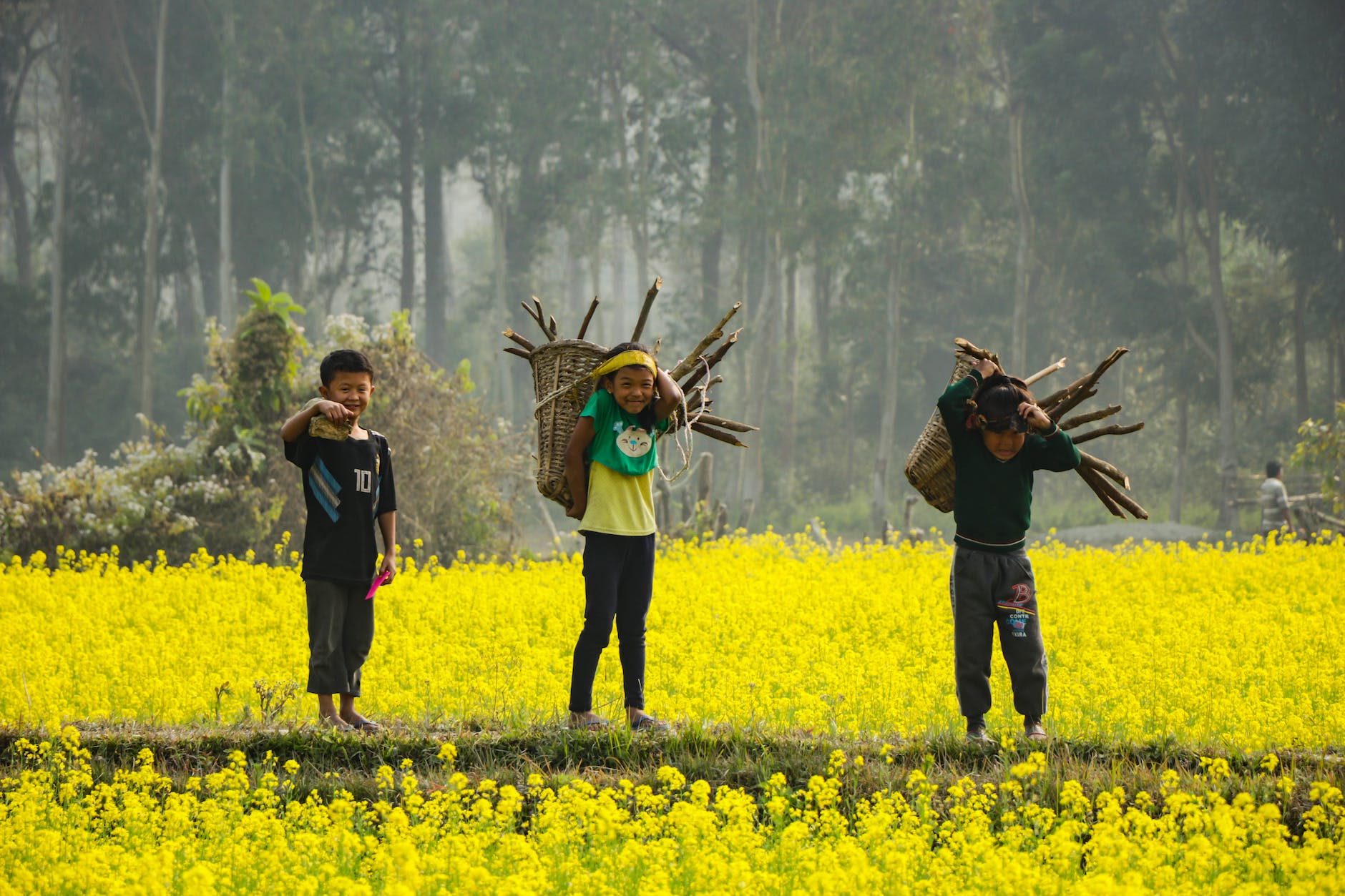
Children enjoying a leisurely stroll in the sprawling fields, basking in the simple joys of nature's embrace

I have been working the same job, staying at the same place, with the same people around me for ages – an anomaly in this fast-paced world where people are constantly on the move. Yet, I feel at ease, holding no grudges, feeling no pain or regret.

Most people around me are competitive, having quantifiable goals. Everyone seems to be in a rush, in a hurry to move continents and prove their value to the world. Occasionally, I feel insecure looking at them. Not because I want what they have but because I am expected to dream the same dreams. It would have made life easier to conform to the unwritten rules set by society. There would be less friction. If you get joy from a lifestyle that, per society, shouldn’t bring you joy, you start questioning your likes and dislikes.

Still, here I am, my dreams centered around the place I am in currently, with its familiar faces and landscapes. I enjoy the serenity of my non-happening town, surrounded by greenery instead of skyscrapers, with more aging people than youngsters who require my help in some form or the other. I am their in-house technician, IT support, problem solver, fraud protector, teacher, confidante, and more.

I enjoy the comfort that my people bring. I want to sing in the same language, embrace the same festivals, eat familiar food, and walk through the same lanes. I want to be in a place where I have the same rights as anyone else because it’s my country as much as anyone else’s. I feel like I belong here. My roots have nestled way too deep to be uprooted now. I like the familiarity, the dreaded “comfort zone,” so to speak. I want to stay still, even if it means giving up on urban luxuries.

There aren’t any motivational or romanticized posts for people like me. Sometimes, a film like Little Forest (Korean Movie) or a K-drama like Hometown Cha-Cha-Cha comes along, and you are swept by a wave of emotions, a kind of happiness that at least some people get your feelings. In the real world, you are expected to be money-minded and earn more than the next person. You should have an endless abyss of wants. It makes someone like me flawed and imperfect in the eyes of the world. We get less respect than the ones who constantly want more. But the thing with reaching your 40s is you subconsciously stop letting others dictate how you feel about living your life. It doesn’t matter anymore. Aging is a beautiful thing for this very reason.

We often take the road built by others hoping it will lead us to happiness. If that were the case, everyone who followed norms perfectly would have been happy. What if happiness is in the place you are? The fact that I am happy is a lesson to myself that I need not trail everything the world celebrates. Sometimes you end up paving your own unique path in the process of living a life that feels the most authentic to you. When you acknowledge that it’s okay to define your own version of joy, what others say ceases to make an impression.

***

Photo by Drift Shutterbug