We are often told to be kind and help people whenever possible. This is advice that is good on paper. In the real world, we often must exercise caution.
Experience has been my best teacher of how kindness is not always necessary. I have learned to tread cautiously with anyone other than my immediate family, no matter how dependable and sincere they might appear.
Two minor incidents this year left me disappointed.
A next-door neighbor landed at my door with his laptop to finish some urgent work. He did not have a WiFi connection at home as he was an NRI. He requested my internet password, and I shared it with him without any second thoughts. He sent a few emails and left soon afterward. One year later, by chance, I came to know my WiFi was accessible at his apartment as well, and he and his entire family were using it without my permission. This incident left a bitter taste in my mouth. I wondered why anyone would use items owned by someone else on the sly, thinking they would never get caught. Internet in India is dirt cheap compared to many countries, which further increased my annoyance, as it is not a commodity out of reach for the common man. It blew my mind how people are ever-willing to mooch off others, even those who are probably earning less than them, instead of paying for the necessities themselves.
Lesson learned: Never share your WiFi password with neighbors.
My second experience involves sharing my OTT (streaming) account. I shared it with an NRI friend so he could watch this one show he was highly interested in. I thought after he was done with the show, he would venture out to get an account of his own. But that did not happen. He stayed on and started using it regularly. Since it was a single-device account, I found myself locked out whenever he watched something. If I asked for access, he would request an additional thirty minutes. This went on for two years. I suggested that he create an account for himself, but he would always come up with excuses, claiming that he didn’t need a full account. I got the impression that he wanted to stay on without paying for it. I finally took a stand and changed my password recently, and that was the end of the issue.
Lesson learned: People are always on the lookout for freebies, irrespective of their financial status. Before you give away something for free out of kindness, contemplate whether you will be okay with giving it away for an extended period of time. You have to take into consideration that the person might not stop using what they are getting for free. Worse, they might even share it with others.
Why is kindness mistaken for weakness? The nicest people we know are often taken for granted because they struggle to vocalize their frustrations and annoyance. If you ask, “Are you okay with it?” they will probably say it’s okay, fearing the consequences that a negative answer might evoke. When such situations happen, and a saturation point is reached, the nice person ends up not being so nice anymore, leading to dialogues from others such as, “You have changed.”
The courteous thing to do is to use other people’s possessions only for a short while. If you like the product, purchase it for personal use. If this is not feasible, the least a person can do is offer to share the rental rate or costs.
So yes, my advice to naïve, soft-hearted people is to not blindly trust others to always take the right step. Sometimes, boundaries need to be spelled out. Offer kindness with precaution – in optimal doses only.
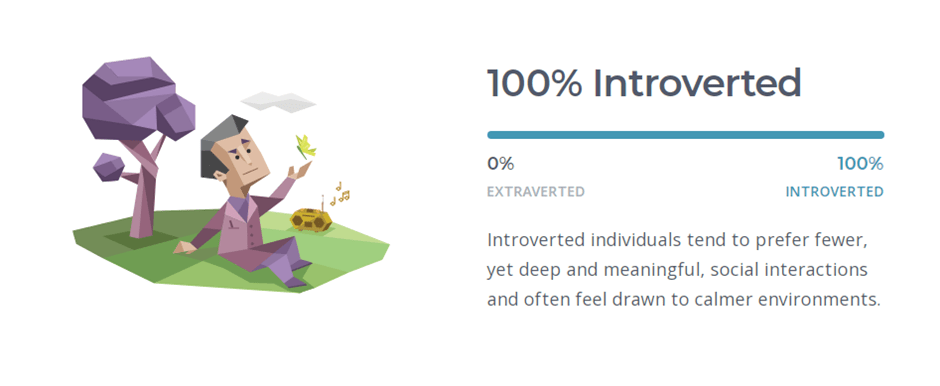
I was a timid youngster. Shy and introverted. You can say even socially anxious. When guests arrived, I would run and lock myself up in my bedroom. I was not interested in common courtesy or formalities. Many mistook it for arrogance or rudeness. Looking back at it, I feel this behavior stemmed from insecurity. I was not confident with the way I looked.
Till my pre-adolescent days, I was a cute kid. I was pampered, received compliments, and always got attention. This changed once I became a teenager. I had the thickest prescription glasses, and my complexion changed from white (coveted by most Indians) to a dusky brown. I also lost my cute chubbiness along the way because my appetite had died, making me a lanky young woman. Not the kind that got attention or compliments, but the kind who was frequently mocked.
The people around me also ensured I knew I wasn’t as eye-pleasing as before. I got comments like, “She was so cute as a kid,” making it evident that they were dissatisfied with my current imagery. I was given medications to increase my appetite, so I could restore some of my lost glory. I despised the medicines and eventually stopped taking them.
I was continuously told to become more outgoing like my sibling, a far more attractive personality. How could I when I did not have the confidence? From a bubbly kid, I became more withdrawn, lost in my own world, finding solace in books and songs. I thought if I stayed away from people, I wouldn’t disappoint them, and they wouldn’t hurt me either.
It was during my late teenage years that I stumbled upon the online world. I had just gotten access to the internet at home. I was mesmerized by the sea of opportunities that opened up to me. The plus being I could hide behind a screen and avoid being judged for my looks or my introversion. It felt like a less judgemental world. Back then, it was. Social media platforms did not exist, and people were not spewing hatred at each other.
One fine day, I happened to chance upon a public chat platform for youngsters. Word was going around in school that it was a fun group. I jumped on the bandwagon, curious to know what it was like. It was where I finally found my voice.
I am not sure if it was the comfort of facelessness or the fact that there was no pretty privilege involved that did the trick of helping me get out of my shell. In the online world, only your persona is seen. Your thoughts, your emotions become the highlights. That’s what I put forth in my chats with random strangers. All messages were posted publicly, and people could tag you and respond to them. It was safe and secure since it was a closed group where creeps were promptly banned or blocked. Due vigilance is required when you chat with strangers, and the group moderators ensured it was a safe space for everyone.
Talking in the group was like having a big group discussion. And for the first time in my life, I felt I was a part of something. People were engaging with my words. They found me interesting. They laughed at my jokes. I was the center of attention. Something I thought I would never be again.
The interactions were a stepping stone in my life and contributed to my change in attitude. It gave me confidence that even if my looks are against me, I have what it takes to engage someone. It was a slow but sure climb from then on.
The universe works in a funny way. As soon as I gained confidence, I started making friends. I even started to look better. I was and will always be introverted and never be the party starter or the energetic go-getter, but I learned how to deal with people. I am at my most confident at the moment, but it has been a long, steady ride to get there.
The impact of online interactions has been anything but inconsequential in my life. It helped me realize I was much more than what people offline gave me credit for.
I have been working the same job, staying at the same place, with the same people around me for ages – an anomaly in this fast-paced world where people are constantly on the move. Yet, I feel at ease, holding no grudges, feeling no pain or regret.
Most people around me are competitive, having quantifiable goals. Everyone seems to be in a rush, in a hurry to move continents and prove their value to the world. Occasionally, I feel insecure looking at them. Not because I want what they have but because I am expected to dream the same dreams. It would have made life easier to conform to the unwritten rules set by society. There would be less friction. If you get joy from a lifestyle that, per society, shouldn’t bring you joy, you start questioning your likes and dislikes.
Still, here I am, my dreams centered around the place I am in currently, with its familiar faces and landscapes. I enjoy the serenity of my non-happening town, surrounded by greenery instead of skyscrapers, with more aging people than youngsters who require my help in some form or the other. I am their in-house technician, IT support, problem solver, fraud protector, teacher, confidante, and more.
I enjoy the comfort that my people bring. I want to sing in the same language, embrace the same festivals, eat familiar food, and walk through the same lanes. I want to be in a place where I have the same rights as anyone else because it’s my country as much as anyone else’s. I feel like I belong here. My roots have nestled way too deep to be uprooted now. I like the familiarity, the dreaded “comfort zone,” so to speak. I want to stay still, even if it means giving up on urban luxuries.
There aren’t any motivational or romanticized posts for people like me. Sometimes, a film like Little Forest (Korean Movie) or a K-drama like Hometown Cha-Cha-Cha comes along, and you are swept by a wave of emotions, a kind of happiness that at least some people get your feelings. In the real world, you are expected to be money-minded and earn more than the next person. You should have an endless abyss of wants. It makes someone like me flawed and imperfect in the eyes of the world. We get less respect than the ones who constantly want more. But the thing with reaching your 40s is you subconsciously stop letting others dictate how you feel about living your life. It doesn’t matter anymore. Aging is a beautiful thing for this very reason.
We often take the road built by others hoping it will lead us to happiness. If that were the case, everyone who followed norms perfectly would have been happy. What if happiness is in the place you are? The fact that I am happy is a lesson to myself that I need not trail everything the world celebrates. Sometimes you end up paving your own unique path in the process of living a life that feels the most authentic to you. When you acknowledge that it’s okay to define your own version of joy, what others say ceases to make an impression.
Recently, I came across an article that said Japan has forgotten how to smile. The culprit being COVID-19 masking. When you wear a mask, you can forego formalities and skip smiling. Apparently, the Japanese continued this habit even after masking rules were relaxed.
As Japan gradually lifts its mask mandate, the nation grapples with the aftermath of prolonged mask usage. In response, “smile practice seminars” have surfaced nationwide to address the reported loss of smiles among the population.
indiatimes.com
While reading this article, something struck me out of the blue. I opened my phone gallery and scrolled through the pictures. I realized my recent photos did not show me smiling. I kept staring at them, livid that I had overlooked this obvious change. I had a poker-faced expression in almost all images, which wasn’t the case pre-covid.
I now have to consciously make it a point to smile for photos. It takes effort.
However, some things seem to instantly light my soul up, irrespective of whether it shows up on my face:
When someone remembers something I said ages ago
Warm smiles from strangers while shopping
Words with the power to tug heartstrings
Watching an uplifting movie on Friday night after a long, tiring week
Enjoying a good book in my bed on a Sunday afternoon
Immersing in music at night, lights off, with no distractions
Wandering outdoors aimlessly with an ice cream in hand
Comfortable silences
Peace
Warm bubble baths
Being around animals
Conversations that flow
Showing and receiving gratitude
Warm hugs and forehead kisses
Empathy and kindness
I am sure there are more.
It’s when you note down the small joys in life do you realize most of life’s prized gifts are things that cannot be bought with money. Things that rejuvenate and keep you sane. When I am down, I know I can rely on these items on my feel-good list to bring my mood back up.
Life happens, with all its challenges and unpredictability. Still, we should never let go or overlook things that light our souls up. Those bytes of sunshine might just be our medicine, the sure-shot solution that can help us regain a smile lost in the rubble of uncertainty that life often throws our way.
Most people are scared of ending up alone. The single ones want to get married, thinking it’s the answer to their loneliness. The married ones do not even want to think of a life where they would be without their partner. Both are justified.
But my problem lies with this – the single life is made the villain here. It has unnecessarily got a bad reputation, something that you need to steer clear of at all costs.
People tend to forget that being alone cannot be avoided. You will be alone at some point in your life, if not now, then later – when a partner passes away, or your children migrate, or due to other unforeseen circumstances.
Rather than being afraid of being alone, learn to embrace it.
Humans cannot do without love or some form of social interaction, but we shouldn’t be left flustered or lost if left on our own.
Picture your kids and your partner on an extended vacation. Maybe a year or more. Are you confident that you can manage things comfortably? I am not talking about emotional dependence. We all are emotionally dependent on the ones we love. But are you relying on others to manage your life for you?
One thing I learned when my father passed away was how dependent my mother was on him. She was left clueless on how to deal with life, financial responsibilities, and day-to-day chores that my father used to handle till then. So I had to take on my dad’s role when he passed away, even though I was just as clueless as my mother was. It was then I realized I wasted many years not learning enough from him, especially crucial matters related to finance.
Also, as someone who was once married and has lived alone for the past 15 years, I would like to say there are things in relationships that I certainly find scarier than being alone.
Being clueless about finance
We all must know how to handle our finances, irrespective of whether we have a partner or not. God forbid, if something happens to our partner, we should learn to navigate the situation.
Times are such that we cannot depend on outsiders to handle our money. We should take small steps to be financially literate.
The first step to awareness is to start learning from the member managing your family’s finances. Have conversations with them, understand what kind of investments they have made and why, and what your responsibilities would be in the future when it comes to managing any assets or liabilities in the future.
Being stuck with someone who can’t understand me
I find this scary because no matter what I do or how deeply I express myself, a partner whose emotional wavelength does not match mine might never be able to understand me.
It’s not the partner’s fault. It’s not yours either.
You both are just wired differently.
So to expect your partner to “get you” when they cannot is scary and unfair.
Wanting different things in life
There is a reason you “fall” in love. You are literally freefalling without any second thought. You ignore all the red flags because you have been blinded by love and are ready to forgive even toxic traits. You miss the blatant differences because they appear tolerable when new to love.
I did not understand this when I was young. However, I later realized that the more commonalities you share, the less turbulent your relationship will be.
Your core values should align, if not anything else, so communicating what is important to you (the dealbreakers) is a must.
Not being able to connect once the honeymoon phase is over
You never get to know someone’s love language unless you spend significant quantifiable time with them.
When you fall in love, your hormones are on overdrive.
You get to know how right you are for each other when things settle down.
Feeling alone in a relationship
This stems from point 2 – being with someone who can’t understand you. The second phase of this issue is usually loneliness, which creeps in when you try to make your partner understand you, but they are unable to.
All our lives, we are looking for someone to fill that void, but when that person themselves is responsible for the void, it is the most dreadful feeling.
Sometimes couples drift apart, and the only thing that remains is the relationship tag. This change cannot be predicted, but when it happens, it is more scary than being alone.
Not having complete control over my life
We fall in love, and we succumb entirely to the other person.
We lose some of our individuality and control over ourselves in the process.
Some amount of compromising is required for any relationship to survive. But how much is too much?
When I was married, I realized I had to let go of many things I enjoyed while I was single – my solitude, freedom to spend and invest my money the way I like, etc. This sudden loss of control was a scary thing for me. It is also a reason why I never remarried.
Conclusion
There are a lot more things that are scarier than being alone.
The purpose of this post is to educate young ones not to make rash decisions based on societal pressure or your own insecurities.
A partnership is to be pursued with full awareness. If you are afraid of being alone, you will never be able to view a relationship in a practical light. Worse, you might end up compromising on all the negatives or the red flags your partner throws at you just so you won’t end up alone.
Embrace solitude; it’s not all bad as society paints it to be.
Lately, I have ventured into watching Korean dramas. I have to admit I am completely hooked. I tried to stay away from K-dramas for the longest time, assuming it would be too cheesy for my liking. And honestly, the titles did not help.
But after watching just a few K-dramas over the past few months, I can confidently say – don’t judge a series by its name!
K-drama is anything but corny, cheesy, or cringe. It has well-crafted plots with impeccable, high quality writing. It’s admirable how much importance they place on everyday emotions. I now find it so wholesome, engaging, and fulfilling that I would advise anyone to watch at least one episode every day, especially if you’ve had a particularly draining day. A K-drama episode a day might just keep the doctor away.
The Korean dramas I tend to choose are solely focused on relationships because that is what I am craving at the moment. Over the past decade, I binge-watched several serious, abstract, intellectual, gory, and violent movies. The types that movie critics couldn’t stop raving about. And now I’ve had enough. I have reached a saturation point when it comes to reality-based cinema. Bring on the whimsical, captivating, addictive world of romance! I want to leave my troubles behind, I want to dream of a better world and romanticize about it.
As an Indian, I can’t help but wonder what happened to the quintessential feel-good romantic Yash Raj-esque movies? Why have we stopped making them? They used to perform incredibly well at the box office and are still cherished. DDLJ has been on a running spree for decades in Mumbai, with no end in sight. Which other genre can boast of having a similar impact on the audience? We can’t get enough of the charming Raj or the dreamy-eyed Simran. My friends reminisce about the etherealness of Chandni and the intoxicating love of Veer Zara. Forget Yash Chopra movies. Even a dark project like Dil Se had its share of aesthetically pleasing love-packed moments. Not to forget the playful mischief enacted by the lead actors with full gusto. A quirky Preeti (played by Preity Zinta) asks Amar (portrayed by the king of romance Shah Rukh Khan), “Are you a virgin?” which catches him off-guard, like the rest of us. We loved the dialogue, the crackling chemistry, and the freshness of it all.
Personally, my favorite Bollywood pair is Konkona and Ranbir in Wake Up Sid. The romantic angle was offbeat – a young guy in his 20s falling for an older working woman. You might think this unconventional pairing might not work, but they proved their detractors wrong. The chemistry was bang-on, scenes were memorable, dialogues were fun and thoughtful, and it boasted of the right mix of profoundness and escapism. You fell in love with the characters. It was difficult not to.
Romantic stories used to sell big in Bollywood. So this sudden shift from romance to violence and trauma-inducing reality cinema is unreasonable. The ones that Bollywood does end up making nowadays have no soul and are almost, for the lack of a better word – “cringe.” They lack emotional intensity and nuance. It is difficult to connect with the characters and delve into their world. A sign of a compelling romantic story is when you find yourself developing an emotional connection with the characters. Their love feels like your love. You want to hug them when they are sad, cheer for them when their passion gets reciprocated, or blush when romance is in the air. This holds true whether you are reading a book or watching a movie. If this feeling is missing, the story fails to make a mark.
It is not that India has stopped indulging in romantic stories entirely. We get to witness some well-made series on OTT, such as Mismatched and Little Things. They have done well, proving that there is an audience out there for authentic Hindi romantic sagas.
I thought I would have to resort to books for my kind of romance. Still, lo and behold, I was introduced to the world of K-drama, where everything is just as mushy and glossy as it used to be in Bollywood.
What makes K-drama so different from regular Bollywood movies released nowadays?
Focus is on emotions and feelings
Hometown Cha-Cha-Cha
Those stolen glances, broad smiles, and yearning looks are what makes K-drama so swoon-worthy. While Bollywood has moved to a more lusty “fast food” kind of romance, Korean drama still hangs on to the original slow-cooked YRF magic with a tight leash. Why stop making something that is doing well?
Stories for the soul
Crash Landing On You
We all know romantic movies are a world of make-believe, and we can’t possibly expect all of that sweet idealism to seamlessly transfer into our everyday lives. It’s not practical. But that’s what movies should do, if not regularly, then at least occasionally, offer a form of escapism to its audience from real-life issues.
The cute playfulness, heart-warming dialogues, gestures, and scenes that revolve around emotions are what make K-drama so sinfully good and make anyone forget their worries.
Family-oriented
Twenty Five Twenty One
One thing I dread nowadays is watching a movie or a TV series with family. You never know what kind of provocative scene will jump out of nowhere, leaving you and your family overwhelmed with embarrassment and a sense of existential crisis.
Most of the K-dramas I have seen are family-oriented. You can sit and watch the shows in the open, reassured that nothing awkward will unexpectedly appear on your screen.
Binge-worthy
What’s Wrong with Secretary Kim
Each episode in Korean dramas tends to be lengthy! It can be over an hour long. But since the focus is on everyday relationships, you don’t end up getting bored.
The right amount of playfulness and romance
Love To Hate You
The couples in K-dramas tease each other, have healthy banter, crack jokes, and are playful. Contrary to the common belief held by those who haven’t yet watched K-dramas, the shows are not all about soppy dialogues. The noteworthy part is that it all looks organic, not forced, adding to the authenticity of the experience.
Catchy music
Business Proposal
The music and background score in K-drama blends in with the situations, and in no time, you find yourself humming the tunes while doing your everyday chores. It exudes a gentle yet addictive vibe.
More relatability for 30+-year-olds
While many romantic movies in India cater to a younger audience, I have noticed that most of the K-dramas I have watched feature older and more mature characters. This offers more relatability for people in my age group who want to see people their age romance on-screen as well.
It’s Your Turn Bollywood
In the 80s and 90s, Bollywood films incorporated many of these points I listed above, except maybe featuring characters in their 30s and older. However, the current landscape of Bollywood movies doesn’t provide the same enjoyment as those classic films.
A look into the popularity of K-drama proves that romantic stories still sell. It is well-liked world-over across all nationalities. In India, I am surrounded by K-drama enthusiasts. It’s safe to say there is still a broad audience for the romantic genre in India, but they are forced to venture beyond the confines of the Indian movie industry as there’s a scarcity of feel-good, wholesome cinema here.
Hindi filmmakers should seriously consider creating good ol’ romantic movies again infused with emotions, aesthetics, endearing chemistry, and romantic dialogues. Maybe then, they may witness the box office numbers soar, finally putting an end to complaints about the underperformance of Hindi movies in recent times.
You must be logged in to post a comment.