Dating as a Divorced Woman

I recently watched Jovita George’s “Dating After Divorce” video on YouTube. First of all, kudos to her for creating such a video. This kind of content is still not very common, and many women, especially in the Malayalee community, hesitate to talk openly about their divorce stories. So seeing Jovita share her experience really impressed me. It has also motivated me to talk about my own journey with relationships (and also friendships) after divorce. So here goes.

Lessons and Red Flags

I will start not with relationships, but with the judgments you face as a divorced woman.

This may not be everyone’s experience, but after my divorce, I often sensed a certain judgment from people around me, not always from my male friends, but from the women in their lives.

For example, a male friend’s wife suddenly became suspicious of me, as if divorced women are seen as people who “prey” on married men. No one says it openly, but the distrust in their eyes makes it obvious. This was especially frustrating because I have always been careful around married men, even those who were flirtatious. I never encouraged them as I was always mindful of what their wife would feel. Yet society is quick to judge a woman the moment a man interacts with her.

It also became clear that many men, both married and unmarried, see a divorced woman as “easy.” They approach you often for casual fun. “Friends with Benefits.” Because you are deemed as someone who’s not serious about relationships, because you chose to “throw away” a marriage. It feels sad, but it happens.

This stereotype gets even stronger because of how movies and dramas show divorced women. They’re often portrayed as someone trying to break another woman’s marriage — the evil, overly glamorous vamp who cares only about herself. You hardly ever see a divorced woman on screen who’s just like anyone else, someone who wants warmth, kindness, and love.

So a divorced woman who wants something serious needs to stay alert and filter out these shallow bonds.

Finding Love Again After Divorce

I eventually got into a long, serious relationship. We met through mutual friends, and at first it felt promising. But it soon went downhill. I realised he was never truly serious. And the reason was my divorce status. That hit hard. It felt like he was embarrassed by who I was.

That’s something divorced women should watch out for — a man can say he’s serious, but you only know the truth when his actions match his words.

The gaslighting made it even worse. He made me think I shouldn’t feel the way I did, even when I felt disrespected. It was mentally draining, yet I held on because I wanted the relationship to work. His anger and verbal jabs made me anxious, and over time, they chipped away at my confidence.

When that relationship ended, I was shattered. I had loved him despite all the red flags. But the truth was hard to face — I don’t think he even saw me as a friend. There was no warmth, no respect. It’s tough to process that after all the compromises you make.

That experience changed me. It made me far more cautious about getting into a relationship again.

Slow and Steady

After that, I met someone by chance. A divorced man, part of my school group. He’s someone just as cautious as I am, so we take things slow. Both of us carry scars from our past. Probably why we’re kind to each other. Even when we fight, we stay respectful. That matters a lot to me, considering my past hasn’t been so kind. He feels like home because he is steady and respectful. Still, after what I went through, a part of me wonders how long it will last, even though we’ve been together for years now.

We’re not chasing marriage. We just want respect and companionship. How long this will last, I really don’t know. When you’ve seen bad relationships, there’s always that little voice saying good times don’t last. He could be the one, or maybe not. Time will decide.

So this is what dating after divorce has been like for me.

And here’s a reminder for divorced women — other people’s judgments only hurt when you believe them yourself. Don’t bring yourself down just to fit their expectations.

***

Photo by Rina Mayer
Even Goddesses Have Their Limits: Learning to Walk Away

I’m a divorcee. I have been for many years now. I’ve never hidden this fact. But I also never imagined my marriage would end the way it did. Then again, who does?

We all grow up believing our marriages will last forever. I also used to think of myself as a tolerant person, so the idea of my marriage failing felt impossible. In my mind, this is something that others might have to go through, the ones with anger issues, those who couldn’t compromise. Not me.

I followed every piece of advice perfectly. The kind you might have seen relationship gurus meting out on social media nowadays, i.e., communicate respectfully, try to understand the other person’s perspective, etc. But over time, I realized communication isn’t a one-way effort; it takes two people to make it work. If only one partner keeps trying while the other sits back, believing they have nothing to change, it slowly chips away at your happiness.

With time, after observing other marriages around me, I understood that maybe I wasn’t as tolerant as I thought — at least not by Indian standards.

Different Levels of Tolerance in Relationships

My regrets in relationships are less about the ex and more about how I handled things. “Why did I let others influence my decisions? Why did I tolerate and compromise more than required?

Of course, every relationship requires compromises. But each partner also has their own tolerance limits. For me, physical or emotional abuse is unacceptable. Yet, even I, someone who might appear intolerant of everything, tolerated it for a while before deciding I’d had enough. Many women, however, make peace with such situations in their marriages (and relationships in general) for their own reasons (dependency, fear, children, financial pressures, and more).

To cite an example of varying levels of tolerance: When I kept hearing cries of domestic violence in my building, I complained to the building association, even though people advised me not to. “It’s their family, their rules.” But I couldn’t just sit there doing nothing while hearing those cries. It was traumatizing. I took this step because there were times, even in my own relationship, that I wished my neighbors had intervened. Probably, ring the doorbell or knock on the door. It would have provided that much-needed relief.

After my complaint, it hasn’t happened since. But who’s to say the guy didn’t just find quieter ways to hurt his wife? I would’ve run away if such things had happened to me repeatedly, even if it meant begging on the streets for the rest of my life. But his wife might be thinking, “It’s okay. He’s doing it all out of love.” Who’s to know? You can’t save someone who doesn’t want to be saved.

Different levels of tolerance.

People also need to understand that no one files for divorce after just one instance of mistreatment. It happens when the same behavior repeats, even after requests, pleas, and calm conversations. Some choose to walk away, while others make peace with the idea that this is how their life will be. So the common advice of “give it one more chance” is mostly useless, and a bit insensitive, because the ones involved might have already given it multiple chances before deciding to let go.

Power of Faith During Tough Times

Even though I’m not a religious Hindu, having faith in some form has always helped me through tough times. It’s the one thing to hold onto when it feels like your world is falling apart. Even now, I rarely visit temples or follow rituals properly, but in moments of extreme heaviness, I still pray. Not to any specific god. I believe we’re all praying to the same divine force, just using different names and stories. What else could explain miracles happening in every community?

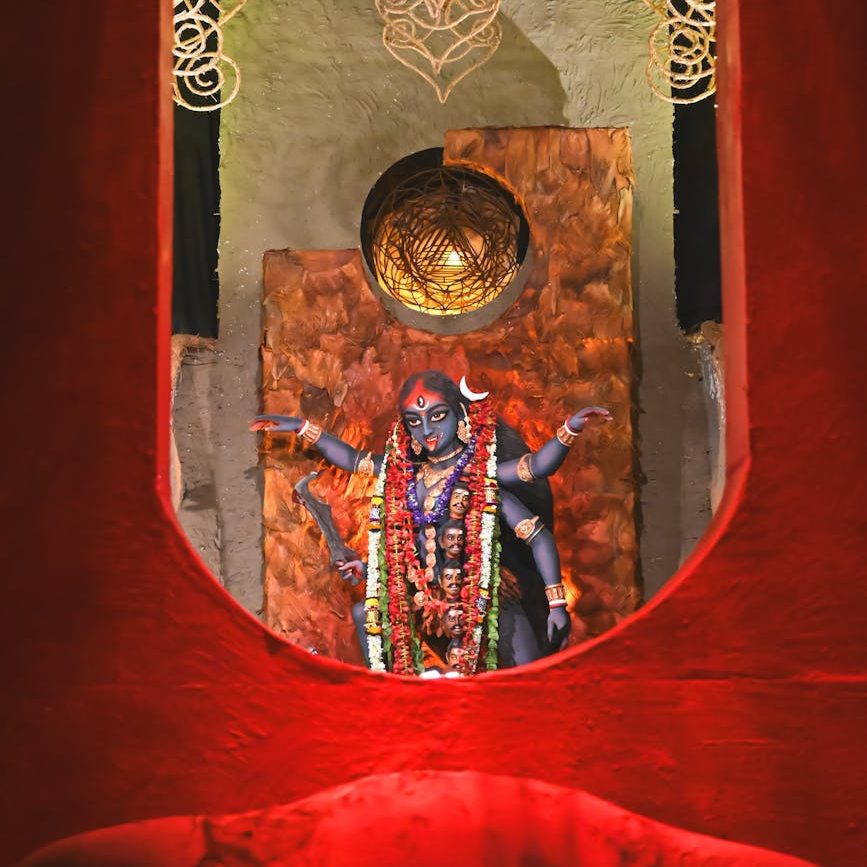
I remember, when I was married, our home had a lone idol of Goddess Kali, a deity I had rarely prayed to before. My parents usually had Lord Krishna at home. I still remember looking at the deity and crying. I asked if this was how it would be for the rest of my life – painful and broken on the inside, faking happiness on the outside (especially for social media).

I sometimes think I might have continued living that way if I hadn’t been pushed by some greater power to take a stand for myself. Probably it was Her. Must have been fed up with me always looking at Her, crying and whining. Even goddesses have their tolerance limits. Also, gods only help those who help themselves, right? Or as we Malayalees say, “Thaan paathi, dhaivam paathi” (you must put in your half of the effort, and God will take care of the rest). Maa Kali might have gone, “Bitch, why don’t you just leave the marriage, instead of troubling me all the bloody time?

The day I walked out of my marriage was also the day I told my parents, “If you don’t help me, I’ll do it on my own.” Thankfully, they stood by me when I made that decision. I also had the confidence to stand on my own feet. I wasn’t employed then, but my freelance work brought in some income. I knew that if I left the marriage, I wouldn’t be a burden on anyone. That same freelance experience later helped me secure a job. It formed the bulk of my resume, and it convinced my employers that I could handle responsibilities independently, even while working from home, at a time when WFH wasn’t even common.

When I look back, I feel the universe was guiding me in small but meaningful ways toward a life that may be inadequate for someone else, but is absolutely correct for a homebody, introverted feminist like me.

Taking Marriage Advice from Society

But the point is, society will tell you not to take advice from a woman like me. Because I’m a divorcee. What would I know about marriage and relationships, right?

Yet it will encourage you to listen to the woman who keeps enduring it all, at the cost of her well-being, because that’s what a “good wife” does.

Society doesn’t really care about what a woman thinks or feels. It just wants you to stick to the rules.

***

Photo by Monojit Dutta

Interracial Romance and the Indian Mindset

Interracial Romance in Indian Families

I recently watched a thoughtful discussion by Zarna Garg on interracial romance, featuring her own family. Based in the US, their candid conversation offers a refreshing glimpse into how Indian-American families are navigating such topics. It was heartening to see everyone, parents and kids, engage so openly. In many Indian households, these conversations either happen too late or not at all, often wrapped in hesitation or silence. But here was a family talking honestly about dating, identity, and interracial relationships. A big shoutout to them for their openness and clarity. It’s these dialogues that make a real difference.

Watch the video below:

Thoughts

I’ve spent most of my life abroad before choosing to return to India. Yet even while living overseas, I always knew my relationships would be with Indian men. Perhaps it’s because I studied in an Indian school and mostly socialized within the Indian community, even outside the country. I look Indian, dress Indian, and speak with an Indian accent. So it was natural to feel more comfortable with Indian men.

However, in today’s globalized world, with increasing interracial mingling, millennials like me must come to terms with the fact that more non-Indians are likely to become part of our families. Someone recently remarked how the world is blending in such a way that you can no longer easily tell someone’s ethnicity. Even appearances are getting “globalized.” It was an eye-opener. I’ve come to realize this holds especially true in the Indian context. Today’s new-generation kids often no longer look or sound traditionally Indian, especially the kids in Indian metros. Their accents, fashion, and even body language reflect a more global identity.

A few months ago, a relative married a Spanish man, the first white partner in our family. Surprisingly, everyone, including the older generation, was welcoming. No drama. No resistance. That in itself feels like progress. Our extended family no longer fusses over caste or religion in love marriages. Marrying someone from a “lower caste” has become normal (though I personally reject terms like “lower” and “upper” caste, which are inherently divisive). Only a few super-senior relatives seem to hold on to rigid views, but even that seems to be fading.

I wonder if this shift is due to the older generation’s growing access to YouTube and social media. Many now watch global discussions on love, identity, and acceptance. One moment really stood out: a senior aunt watched Kaathal, a Malayalam film about same-sex love, and casually remarked, “Being gay or lesbian is fine. It’s not a disease.” That kind of acceptance would’ve been unthinkable even a decade ago. But it’s happening now, and that matters.

More recently, one of my nieces fell in love with a white guy. It’s a bit more delicate because it hits closer to home. While I’m happy she found someone, I can’t help but feel a bit anxious. Our cultures are worlds apart, and it’s not just the couple that has to adjust, but the families too. At this age, do I or her parents have the patience? I’m unsure. On second thought, it doesn’t concern me or her family, as the relationship is hers to navigate. Still, as Zarna Garg wisely said in her family discussion, any relationship can thrive if the core values align: education, family, career, loyalty, and health. Everything else is secondary and can be worked around.

One comment from Zarna’s husband lingered with me. He mentioned that their eldest daughter has only dated white men, and he took it personally. He had read somewhere that girls whose fathers aren’t ideal husbands are more likely to do this. That struck a chord. My niece also has a pattern of dating white men, and to be honest, her father isn’t exactly the perfect partner either. Could there be a subconscious link? I wouldn’t dare bring it up now, especially since she lives abroad, but maybe someday in person.

There’s so much our generation is still figuring out. As millennials in our 40s, we stand between tradition and transition. We want to be open-minded and inclusive, but also grounded. At times, it worries us to see the younger generation drifting away from tradition. There’s a quiet fear: will our culture someday fade into oblivion? But these are changing times, and change demands a degree of acceptance. We may not always agree, but we must learn to adapt. I also see a growing trend among young parents today: trying too hard to be politically correct, often avoiding difficult conversations just to stay in their children’s good books. This might be a measure to ensure they don’t repeat their parents’ mistakes of being too restrictive. But experience teaches us that hard truths, spoken with love, are just as necessary today as it was yesterday.

Some of the advice I dismissed in my 20s now makes perfect sense. You only begin to understand your parents once you reach their age. That’s how life unfolds. You gain clarity with time. Until then, all we can do is trust, adapt, and hope it all works out in the end.

***

Photo by Bhavitya Indora

An Ode to Calming My Monkey Mind Through Meditation

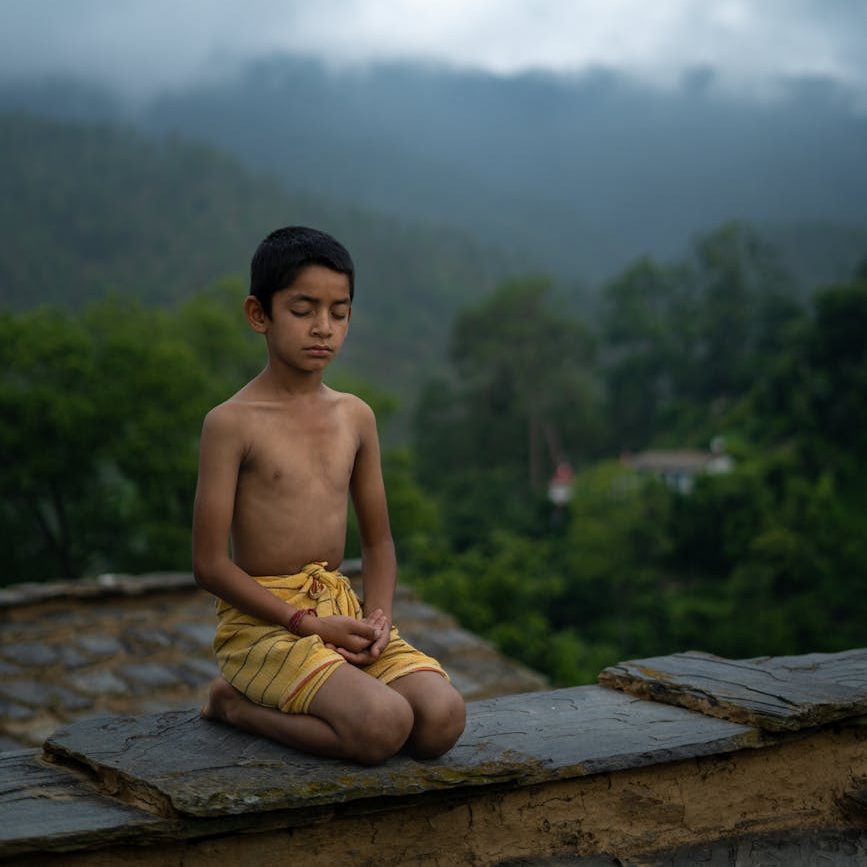
Indian Boy Meditating

There’s so much bad news everywhere. Wars, riots, terror attacks, persecution, and discrimination. I don’t know about you, but I’ve started to feel helpless, knowing I hold no power to fix these problems. As individuals, there’s only so much we can do. What is in our control is how we express our views, calmly and with clarity. But even that becomes difficult when those around us try to silence any perspective that doesn’t match their own. They get aggressive. We get perplexed. It becomes a vicious cycle. One that’s hard to escape. It drains our time, disturbs our emotional balance, and pushes away those who genuinely want to understand us.

In the midst of all this, I recently attended an online yoga session on International Yoga Day. We meditated together as a group, and it turned out to be one of the most peaceful and calming experiences I’ve had in a while. The meditation lasted only 7 minutes, but it had a noticeable, immediate impact. I felt centred. It helped me go about the rest of my day with a calm focus, even while handling everyday chores or reading the news. This is new for me. For the past few years, my mind has been troubled by witnessing the coldness with which society operates. There was a lingering sense of doom that had become hard to manage. So when meditation helped soften that heaviness, even slightly, it came as a welcome relief. I allowed myself to sit with that emotion and savour it.

The guide assured us that the control over our minds would improve even further with consistent practice. He said that even just 7 minutes of daily meditation can make a noticeable difference over time. I’m still new to the practice, so it’s too early for me to say how lasting the effects are. But one thing I can say for sure: you feel noticeably better after just the first session.

What made those few minutes so calming was the simple act of focusing only on the breath and the space between the eyebrows. In that short span, there were no screens, no distractions. Just stillness. It felt like a small step toward making peace with myself. This is what I experienced in my first few days of meditation. I’m not sure yet if I can commit to doing it every single day, but it’s something I genuinely want to try.

I’m not the body, I’m not the mind

As we meditated, this chant of “I’m not the body, I’m not the mind” by Sadhguru played in the background, accompanied by soothing flute music. It felt like an invitation to disconnect from the body and mind, to simply let yourself be. You don’t have to react to everything. You can observe your experiences as an outsider, from a third-person perspective. Feel your emotions, acknowledge them, but don’t let them consume you beyond control so that you lose sight of logic.

If you’re interested in trying the same meditation, you can do it at home by downloading the “Miracle of Mind by Sadhguru” app on your phone. The session includes the same calming chant and ends with a short 1-minute video from Sadhguru, offering simple insights on daily practice.

Now, I understand some may have reservations about Sadhguru due to political or personal views, or unverified claims. But I’d encourage you to look past that and focus instead on what this practice can offer you personally.

I’ve tried other meditation apps too, but they often felt too Western in their approach. This one, however, feels grounded in Indian sensibilities, with gentle flute music and guided instructions that actually help you stay focused. In a culture where complete silence isn’t always easy to adapt to, this format works well. It’s thoughtfully designed for an Indian audience, making meditation more accessible and less intimidating.

***

Photo by Yogendra Singh

How It Feels To Be a 100% Introvert

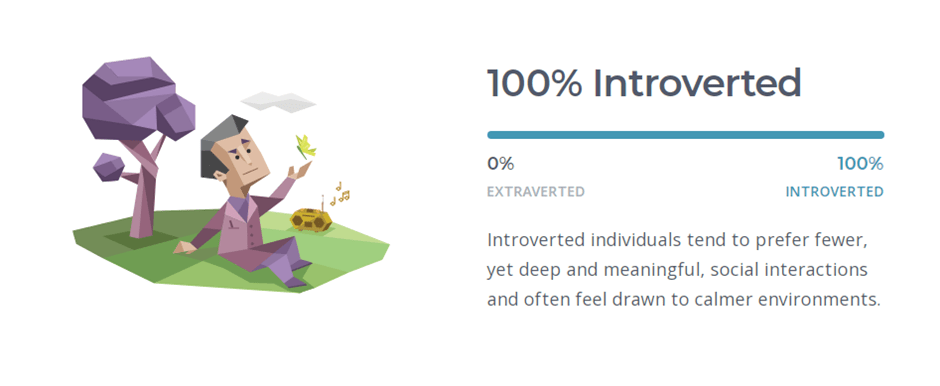
I recently retook the MBTI test after a few years to see if my personality had changed. I noticed that some of my friends went from being introverted to extroverted, or the other way around, due to their life experiences. This made me curious about my own metamorphosis.

The test didn’t have anything new to offer for me. I am still as introverted as ever. Even though these results are not to be taken to heart, I agree with my assessment of being a 100% introvert. I am yet to see someone who is as introverted (not shy) as I am. Or maybe I have not met one because they are as reclusive as me.

So, what does it mean to be a 100% introvert? I can only talk from personal experience. Here’s what makes me one:

  • Social interactions tend to drain me, even with my close ones. If I put on a fake extroverted persona for an extended period, I feel exhausted by the end of the day, and I have to overcome that fatigue by sleeping a lot. This phony outgoing persona is a survival mechanism that introverts often adopt to function in this society that only rewards extroversion.
  • I can survive without talking to anyone for hours. But that doesn’t stop my monkey mind from blabbering non-stop. Hence, this blog.
  • I absolutely detest phone calls. But I am slowly making peace with it because many things are better discussed through calls. It’s faster, but that doesn’t stop me from trying to get an answer through text first.
  • I explain things better through text. I get more clarity while I write.
  • I used to be a chat person, but not any longer. In short, I am not much of a phone person!
  • I prefer one-on-one interactions because I find them more insightful. A group setting is the best for fun conversations, though.
  • I get absolute joy from canceled plans. I have big-time JOMO.
  • I can stay indoors for days without feeling bored, sad, or lonely.
  • I’m a single woman in my 40s. I prefer not to get married because I crave too much personal space.
  • New situations disorient me. I take time to adjust to them.
  • I tend to have an emotional meltdown if I have several new things bombarding me simultaneously. To avoid any sensory overload, I consciously focus on one new thing at a time. Of course, this is not always possible. However, if given a choice, I go step-by-step and sort of soothe myself into the new scenario.
  • I am hypersensitive to sound, so I like to avoid “happening” places. Yes, I am boring.

If you want to try the test, you can do it for free at 16Personalities. However, this is not a professionally accredited test.

***Note: As I write this, my thoughts are scattered. I’m thinking of those facing unsettling times, displaced and disoriented in volatile regions, many of whom have lost loved ones. If you’ve read this far, I’d like to request a moment of contemplation. Let’s hope for peace to prevail. Let’s control our anger and emotions during these testing times and treat each other with empathy and respect. There’s enough hate in this world. Let us be mindful not to add to it.

My Heart Feels Heavy

My heart feels heavy

I have been grieving over what happened in the last few weeks.

Sometimes, I wish I could be blissfully ignorant of global affairs, so I could avoid the tyranny of empathy. It would have done me a lot of good if my line of thinking was, “There are enough issues in India. Why should I focus on other countries?

However, that’s not the case.

I am witnessing an ugly side of humanity, something I never observed in close quarters before. Innocent civilian deaths are being condemned based on race, community, history, and other factors. A lot of analysis is done before deciding whether to mourn the departed.

No one seems to see the civilians as people with their own set of traumas and fears. Each one is trying to prove why the deaths of “others” are justified. I saw similar arguments happening between friends. It just broke my heart.

I can feel something in me shifting. I think it’s grief from broken expectations. Pain changes you. It molds you into someone who is more prepared to deal with similar mind-numbing events in the future. Your mount of delusions slowly starts cracking, the same ones that had previously shielded you from the truth and kept you blissfully happy. I feel vulnerable in this new revelation. Everything feels like a daze, and my sleep is disturbed. It feels like a raw wound that will take time to recover from. At the same time, I am grieving the departure of my older version. The one that was relatively more optimistic about the goodness in people.

I am at a stage where I have to repeatedly comfort myself, saying it’s okay to let go of things I cannot control. I hope I find it in myself to forgive people who participated in selective empathy.

I want a peaceful tomorrow. But it looks like a distant dream now.

I am craving more than ever for a rational group that condemns the cruelty of innocent civilians, regardless of religion, race, or political affiliations. A group where humanity is the sole focus.

***

Photo by paul voie