Even Goddesses Have Their Limits: Learning to Walk Away

I’m a divorcee. I have been for many years now. I’ve never hidden this fact. But I also never imagined my marriage would end the way it did. Then again, who does?

We all grow up believing our marriages will last forever. I also used to think of myself as a tolerant person, so the idea of my marriage failing felt impossible. In my mind, this is something that others might have to go through, the ones with anger issues, those who couldn’t compromise. Not me.

I followed every piece of advice perfectly. The kind you might have seen relationship gurus meting out on social media nowadays, i.e., communicate respectfully, try to understand the other person’s perspective, etc. But over time, I realized communication isn’t a one-way effort; it takes two people to make it work. If only one partner keeps trying while the other sits back, believing they have nothing to change, it slowly chips away at your happiness.

With time, after observing other marriages around me, I understood that maybe I wasn’t as tolerant as I thought — at least not by Indian standards.

Different Levels of Tolerance in Relationships

My regrets in relationships are less about the ex and more about how I handled things. “Why did I let others influence my decisions? Why did I tolerate and compromise more than required?

Of course, every relationship requires compromises. But each partner also has their own tolerance limits. For me, physical or emotional abuse is unacceptable. Yet, even I, someone who might appear intolerant of everything, tolerated it for a while before deciding I’d had enough. Many women, however, make peace with such situations in their marriages (and relationships in general) for their own reasons (dependency, fear, children, financial pressures, and more).

To cite an example of varying levels of tolerance: When I kept hearing cries of domestic violence in my building, I complained to the building association, even though people advised me not to. “It’s their family, their rules.” But I couldn’t just sit there doing nothing while hearing those cries. It was traumatizing. I took this step because there were times, even in my own relationship, that I wished my neighbors had intervened. Probably, ring the doorbell or knock on the door. It would have provided that much-needed relief.

After my complaint, it hasn’t happened since. But who’s to say the guy didn’t just find quieter ways to hurt his wife? I would’ve run away if such things had happened to me repeatedly, even if it meant begging on the streets for the rest of my life. But his wife might be thinking, “It’s okay. He’s doing it all out of love.” Who’s to know? You can’t save someone who doesn’t want to be saved.

Different levels of tolerance.

People also need to understand that no one files for divorce after just one instance of mistreatment. It happens when the same behavior repeats, even after requests, pleas, and calm conversations. Some choose to walk away, while others make peace with the idea that this is how their life will be. So the common advice of “give it one more chance” is mostly useless, and a bit insensitive, because the ones involved might have already given it multiple chances before deciding to let go.

Power of Faith During Tough Times

Even though I’m not a religious Hindu, having faith in some form has always helped me through tough times. It’s the one thing to hold onto when it feels like your world is falling apart. Even now, I rarely visit temples or follow rituals properly, but in moments of extreme heaviness, I still pray. Not to any specific god. I believe we’re all praying to the same divine force, just using different names and stories. What else could explain miracles happening in every community?

I remember, when I was married, our home had a lone idol of Goddess Kali, a deity I had rarely prayed to before. My parents usually had Lord Krishna at home. I still remember looking at the deity and crying. I asked if this was how it would be for the rest of my life – painful and broken on the inside, faking happiness on the outside (especially for social media).

I sometimes think I might have continued living that way if I hadn’t been pushed by some greater power to take a stand for myself. Probably it was Her. Must have been fed up with me always looking at Her, crying and whining. Even goddesses have their tolerance limits. Also, gods only help those who help themselves, right? Or as we Malayalees say, “Thaan paathi, dhaivam paathi” (you must put in your half of the effort, and God will take care of the rest). Maa Kali might have gone, “Bitch, why don’t you just leave the marriage, instead of troubling me all the bloody time?

The day I walked out of my marriage was also the day I told my parents, “If you don’t help me, I’ll do it on my own.” Thankfully, they stood by me when I made that decision. I also had the confidence to stand on my own feet. I wasn’t employed then, but my freelance work brought in some income. I knew that if I left the marriage, I wouldn’t be a burden on anyone. That same freelance experience later helped me secure a job. It formed the bulk of my resume, and it convinced my employers that I could handle responsibilities independently, even while working from home, at a time when WFH wasn’t even common.

When I look back, I feel the universe was guiding me in small but meaningful ways toward a life that may be inadequate for someone else, but is absolutely correct for a homebody, introverted feminist like me.

Taking Marriage Advice from Society

But the point is, society will tell you not to take advice from a woman like me. Because I’m a divorcee. What would I know about marriage and relationships, right?

Yet it will encourage you to listen to the woman who keeps enduring it all, at the cost of her well-being, because that’s what a “good wife” does.

Society doesn’t really care about what a woman thinks or feels. It just wants you to stick to the rules.

***

Photo by Monojit Dutta
Netflix Movie Spotlight: Odum Kuthira Chaadum Kuthira

Odum Kuthira Chaadum Kuthira Movie Poster

Odum Kuthira Chaadum Kuthira is a Malayalam movie that didn’t get glowing reviews. Still, I decided to give it a shot, because over time, I’ve learned that my taste rarely matches what others say. I’ve liked movies that everyone else trashed, and I’ve dropped shows that got rave reviews.

Take Bads of Bollywood, for instance. I quit after three episodes. The humor just didn’t click with me. The Emmy winner, Severance, on Apple TV? I made it to five episodes before giving up. It was too slow for my liking, and yes, I shamelessly looked up the spoilers for both because I couldn’t sit through the rest.

Serious movie fans and critics might think my choices are questionable. And that’s fine. I’m not trying to be anyone’s go-to person for movie recommendations. I watch movies for one simple reason: to be entertained. If a film or show keeps me hooked, that’s all that matters. I’ve also noticed how people often get shamed for liking a movie that others dislike, or for disliking one that everyone praises. This makes many stay silent about their opinions. My attempt at being open is simply to break away from that.

So, with that mindset, I started watching Odum Kuthira Chaadum Kuthira. I didn’t expect much, but I ended up being pleasantly surprised.

What’s It About?

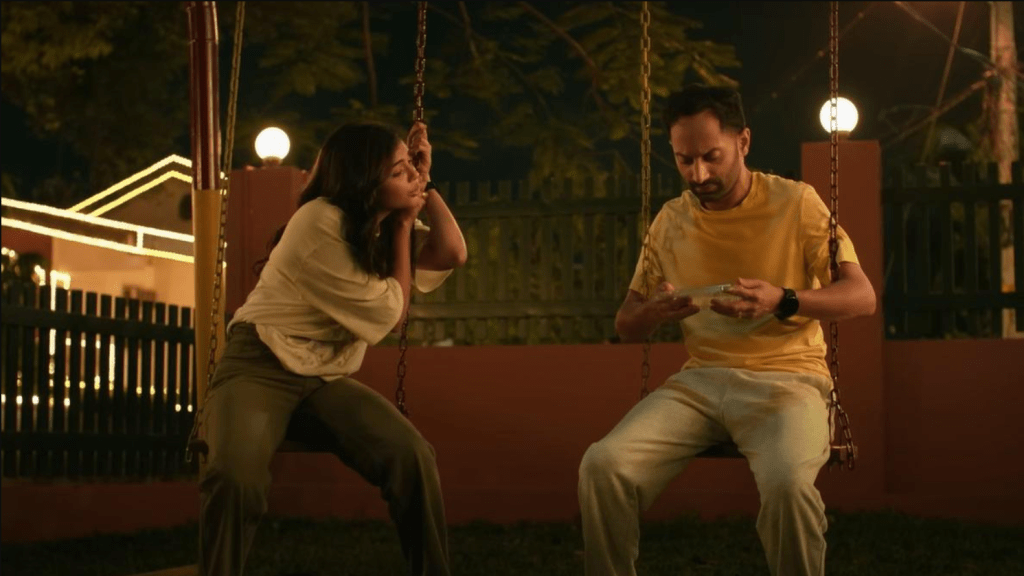
Odum Kuthira Chaadum Kuthira opens with the wedding preparations of a quirky couple. On the night before the wedding, the bride visits the groom with an unusual request: she wants him to arrive at the venue on a horse. It’s her dream, she says. Or rather, it’s something that keeps recurring in her dreams. She believes the dream will stop only if he makes that grand entry for real. The ever-romantic groom agrees without hesitation. But what follows is a chain of chaotic events that quickly spiral out of control.

Thoughts

Unlike most recent Malayalam movies, Odum Kuthira Chaadum Kuthira is not dark, intellectual, or overly smart. The type critics will rave about. And it’s not meant to be. It’s a crackpot of a film filled with quirky, eccentric characters, and that’s exactly why I liked it. I enjoy seeing wacky personalities on screen, the kind you’d find in Andaz Apna Apna. This kind of comedy works for me. It’s not vulgar, it doesn’t demean women, and it’s genuinely funny.

The movie feels like a group of friends coming together to create something chaotic just for fun. More like a personal, experimental project than a polished production. Kudos to Fahadh Faasil and the team for taking that risk. I especially liked Lal’s character as Fahadh’s father, and I thought Revathi Pillai shared better chemistry with Fahadh than Kalyani Priyadarshan did.

I wish the ending were better. It was underwhelming, but that did not take away the fact that I enjoyed the majority of the movie.

Watch it if you’re in the mood for something silly, unserious, and refreshingly offbeat. Don’t expect a masterpiece: just expect a fun, wacky ride to unwind after a long day at work. Odum Kuthira Chaadum Kuthira is now streaming on Netflix.

Netflix Movie Spotlight: Greater Kalesh

Greater Kalesh Poster

It’s Diwali season. This time of year always puts me in the mood for something cozy and family-friendly to watch. But honestly, we just don’t get those kinds of movies anymore. The ones you can enjoy with everyone at home.

Remember the golden ’90s? We’d all sit together and watch Jo Jeeta Wohi Sikandar, Hum Hain Rahi Pyar Ke, or Dilwale Dulhania Le Jayenge without a single dull moment. Okay, not exactly in my family, as I was the only one truly into Bollywood, while the rest were more drawn to Malayalam movies. But I imagine these were the kind of movies that one would typically watch with their families. Nowadays, to relax, I tune into psychological thrillers because family movies do not feel family-oriented anymore.

That’s why I was keen to watch Greater Kalesh when it dropped on Netflix. It’s perfect for people like me who just want to unwind with something light and heartwarming. At under an hour, it’s an easy, breezy watch before jumping right back into Diwali celebrations.

What’s It About?

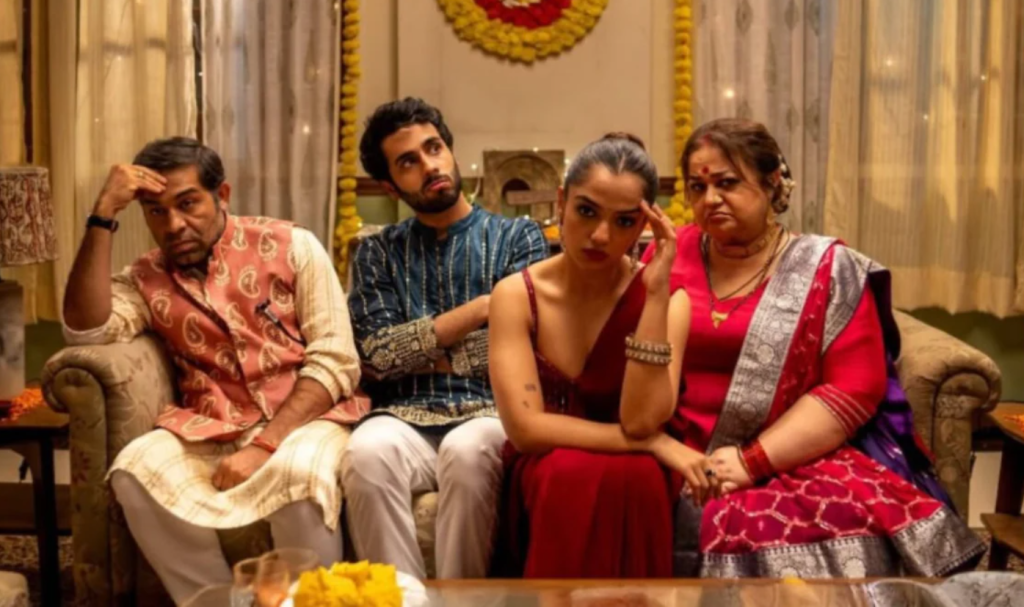
A young career woman returns home after a long time to celebrate Diwali with her family. She’s excited for a warm, cheerful reunion, but the moment she steps inside, she’s greeted not by laughter, but by chaos. Her family members are in the middle of a heated argument, and she can’t quite figure out what started it.

Thoughts

Greater Kalesh is short, simple, and surprisingly sweet. It doesn’t have high-stakes drama or a strong, twisting storyline. But that’s exactly what makes it refreshing for me. Sometimes you just want something light, easy, and comforting, and this little film delivers that perfectly. It might not be everyone’s cup of tea, especially if you seek something more cerebral or non-woke, but to me it felt like peeking into the everyday life of a next-door family and watching them sort things out in their own warm, relatable way.

Ahsaas Channa and Supriya Shukla truly shine here. Their mother-daughter bond feels real and layered. The kind that might make you think of your own mom with a smile.

It’s definitely worth a quick watch. Greater Kalesh is now streaming on Netflix.

Kerala Christians and Politics: Which Parties Really Stand With Them?

A picture of a church in India for an article on Kerala Christians and politics

As someone who’s chronically online and keeps up with news from all kinds of sources, mainstream, regional, left, and right, I’ve noticed something important: Christians in Kerala don’t really have a go-to political party anymore.

For a long time, people assumed the Indian National Congress (INC) was the party in Kerala that understood what every community wanted. But that idea seems to be changing fast on the ground.

Communal Conflicts in Kerala: Who Supports Whom?

If you’re new to Kerala politics, here’s a simple way to understand how parties respond to communal issues here:

  • Hindu vs Minority: CPM and Congress usually back the minority community.
  • Upper Caste Hindu vs Lower Caste Hindu: CPM and Congress generally side with the lower caste.
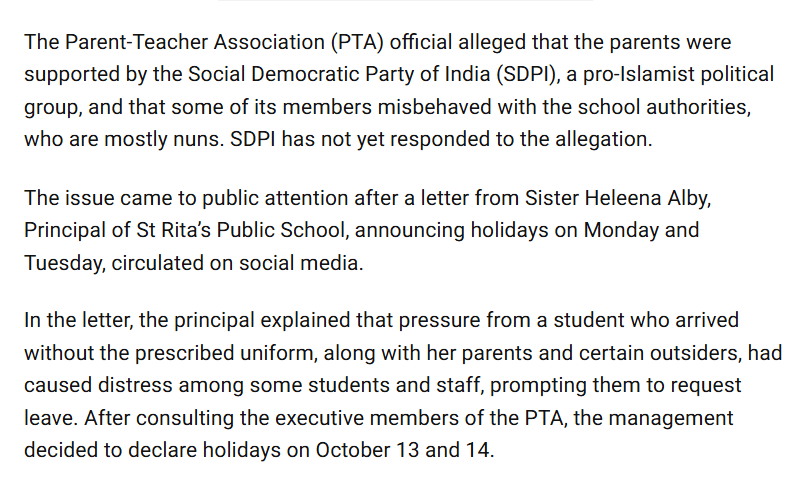
  • Christian vs Muslim: CPM and Congress often stay neutral at first, saying things like “we’ll look into it,” but in the end, they tend to side with Muslims. Examples include the Munambam Waqf issue, Professor Joseph’s case, Sona Eldhose’s conversion, and incidents involving SDPI bullying, such as the hijab case at the Christian-run St Rita’s school in Kochi (details in the image below).
Hijab controversy in Kochi school
News Source: “Hijab controversy forces school in Kochi to close temporarily after parents’ protest” (Mathrubhumi.com)

If you look at any case in Kerala, the pattern more or less stays the same. I’m not sure about regional politics in other states, but I suspect it’s similar elsewhere.

While BJP clearly positions itself as a Hindu party, there’s a growing sense in Kerala that Congress and CPM lean pro-Muslim. Why? It’s not really about religion. It’s about vote-bank politics. Christians are a minority among minorities in Kerala, so pandering to them doesn’t win many votes and can even cost support from other minority groups.

Growth of Chrisanghis in Kerala

Now, in Kerala, there’s a growing group called “Chrisanghis,” a term left-leaning voices like Arundhati Roy have used. These are Christians who support the BJP. Arundhati recently warned Christians in Kerala not to become Chrisanghis, citing conversion attacks in the North as a concern.

So why do some Christians support the BJP? It’s because they view Islamist groups like SDPI and Jamaat-e-Islami as a bigger threat than BJP. Many point to the persecution of Christians in countries like Nigeria by Islamist groups and feel that, compared to such threats, the BJP’s Hindutva agenda poses a lesser danger. At the same time, parties like Congress and CPM often downplay or ignore the activities of these Islamist groups in India, mostly for political gain, leading some Christians to see BJP as a safer option.

Congress support for Jamaat-e-Islami
News Source: “Congress in a fix as Jamaat arm readies to back theocratic state” (NewIndianExpress.com)

Notably, Jamaat-e-Islami has frequently been in the news, even recently, for persecuting minorities in Pakistan and Bangladesh. In India, its branch presents a secular image, likely to gain acceptance and influence within mainstream politics, using it as a pathway to gain power.

It’s also true that Kerala’s two mainstream parties have largely ignored such concerns from the Christian community. Their typical response is often, “Don’t fall for RSS/BJP propaganda,” even when the issues have nothing to do with RSS or BJP.

Thoughts

So what can the Christian population in India do in this situation? On one side, there’s a pro-Hindu or “Hindutva” party that will never fully accept conversions under “freedom of religion,” and on the other, there are parties that haven’t supported Christians when they faced threats from Islamist groups.

From my perspective, Christians should keep all parties guessing about where their votes will go. They shouldn’t strongly back any party, since none fully meets their needs. Take the Munambam Waqf issue, for example: the removal of Section 40 in the Waqf Bill allowed the Kerala High Court to rule the Waqf claim over Munambam land as illegal, protecting Christian landowners. Congress leaders like Hibi Eden tried to persuade residents to drop their case, saying nothing would come of it, while the only BJP MP from Kerala, Suresh Gopi, stood by the people, largely comprising Christian fisherfolk, and supported the amendment that ensured their land rights.

When missionaries face attacks by far-right Hindus in the North, that’s when Opposition parties step in. But in cases like the Chhattisgarh nuns’ arrests over alleged conversions, the local Congress in Chhattisgarh hardly protested, as taking a stand would have cost them votes. On the other hand, in Kerala, protesting the arrest of the nuns would have earned them support, which is why several Opposition leaders from Kerala traveled to Chhattisgarh to show solidarity.

This shows that Christians can’t rely fully on any party and should strategically make their political influence felt.

This is how politics works: there are no fixed principles for political parties. They act based on the local political context. Christians in India should remember this and avoid fully backing or rejecting any party. Instead, they can use this knowledge strategically and wisely, since different parties support them in different situations.

***

Photo by Pratheesh S

From India-Pakistan to Gaza: Exploring the Duality of War

Fire explosion with smoke

Personal observation: In almost every war, there’s always someone who doesn’t want it to end.

In the India–Pakistan war, many in India didn’t want the fighting to stop because they felt Pakistan hadn’t learned its lesson yet. Some even wanted the government to reclaim PoK (Pakistan-occupied Kashmir) during this time (which I strongly oppose).

When Israel attacked Iran’s nuclear sites, many anti-regime Iranians wanted the war to continue because they hoped the regime would fall.

The Israel–Gaza conflict is even more unusual. Many who kept calling for a ceasefire suddenly went quiet or were openly against it when finally announced. Maybe they had expected Israel to be driven out and a new Palestinian state to rise “from the river to the sea.” But that idea is unrealistic and only calls for more violence. Just like India will never give up Kashmir, Israel will never give up its land. Both countries get a lot of criticism for putting their own interests first. But, over the years, Jews and Indians have learned an important lesson: if they want their interests protected, they can’t rely on anyone else. When Indians get murdered in America, there’s next to no backlash. It’s the same case with Jews. History is also proof that when Hindus face persecution or genocide (Kashmiri Pandits, Sandeshkhali, Bangladeshi, and Pakistani Hindus), the world stays silent. In a world shaped by selective activism, these two communities have gradually learned to shed their passivity and docile nature, standing up for themselves without guilt. Indians, in my view, are still learning. Our tendency to stay silent runs deep. But since 2014, that’s starting to change, much to the annoyance of some. Apparently, a “good” Indian is still largely expected to be a silent one in the face of persecution and bigotry.

Anyway, the point is that in any war, there’s always duality. Those who push for the conflict to continue aren’t always on the “far-right.” Sometimes, they are far-left or far-right figures from other communities, disguised as leftist liberals. Take, for example, the India-Pakistan war. Many leftists in India wanted it to end and for peace to prevail. Yet recently, some of those same voices wanted Hamas to reject the peace deal, even at the cost of many lives.

I’ve often felt that the far-left and far-right are just two sides of the same coin. The recent wars and reactions to them over the years only validate this claim.

***

Photo by Pixabay

Netflix Thriller Spotlight: Wayward

Wayward Netflix Poster

Do you ever pick a series solely based on its synopsis? That’s exactly how I do it. I tend to avoid Netflix teasers and trailers as they are way too detailed, giving away too much, and ruining the element of surprise for me. I prefer diving straight into a story with minimal hints, letting the plot unfold organically. It keeps the narrative fresh and exciting. This could also be because I prefer reading over visuals.

That’s how I ended up choosing Wayward. Just a quick read of the synopsis (which felt interesting), and I was in.

What’s It About?

Wayward is set in a school called Tall Pines. It looks like a regular school at first (just kidding!). But trust me, you’d never want your kid saying their school is anything like this one. It’s an academy where parents send troubled, rebellious teens hoping they’ll be “fixed.” But beneath the surface, something darker seems to be going on. There’s a creepy, almost sinister vibe that makes you question what’s really happening behind those closed doors.

Thoughts

I really enjoyed Wayward. Normally, I take ages to finish a series. Not because I’m swamped with work, but because my attention span has been wrecked by endless Instagram reel scrolling. I just can’t deal with shows that drag on forever. And let’s be honest, a lot of series tend to do exactly that. One-hour episodes stuffed with fillers that barely move the story forward.

But Wayward was refreshingly different. Just 8 episodes, and not once did I feel the urge to check my phone or zone out. I also have a soft spot for women-led storylines, so that probably helped keep me hooked.

The rebellious best friends were a bit much for someone like me. I’m naturally more disciplined. But aside from their chaotic energy, nothing really irked my nerves.

The acting was top-notch. Mae Martin as Alex, the transgender young police officer, and Toni Collette as Evelyn, the head teacher of Tall Pines academy, were perfect in their respective roles. The most layered character, I felt, was that of Laura, played by Sarah Gadon. Alyvia Alyn Lind and Sydney Topliffe as Leila and Abbie were convincing as the troubled teens. The ending could’ve been stronger, sure, but I’m not complaining.

Wayward is streaming on Netflix, with each episode running for about 45 minutes.