The duality of India is striking.
Some Indian Muslims like Arfa, Rana, Zubair, and Naseeruddin Shah feel India is intolerant and unsafe for Muslims.
Yet, Muslims like Taslima Nasreen and Sheikh Hasina feel safer in India than in their own Muslim-majority countries. They have escaped their countries to avoid getting persecuted and can openly criticize extremists in India.
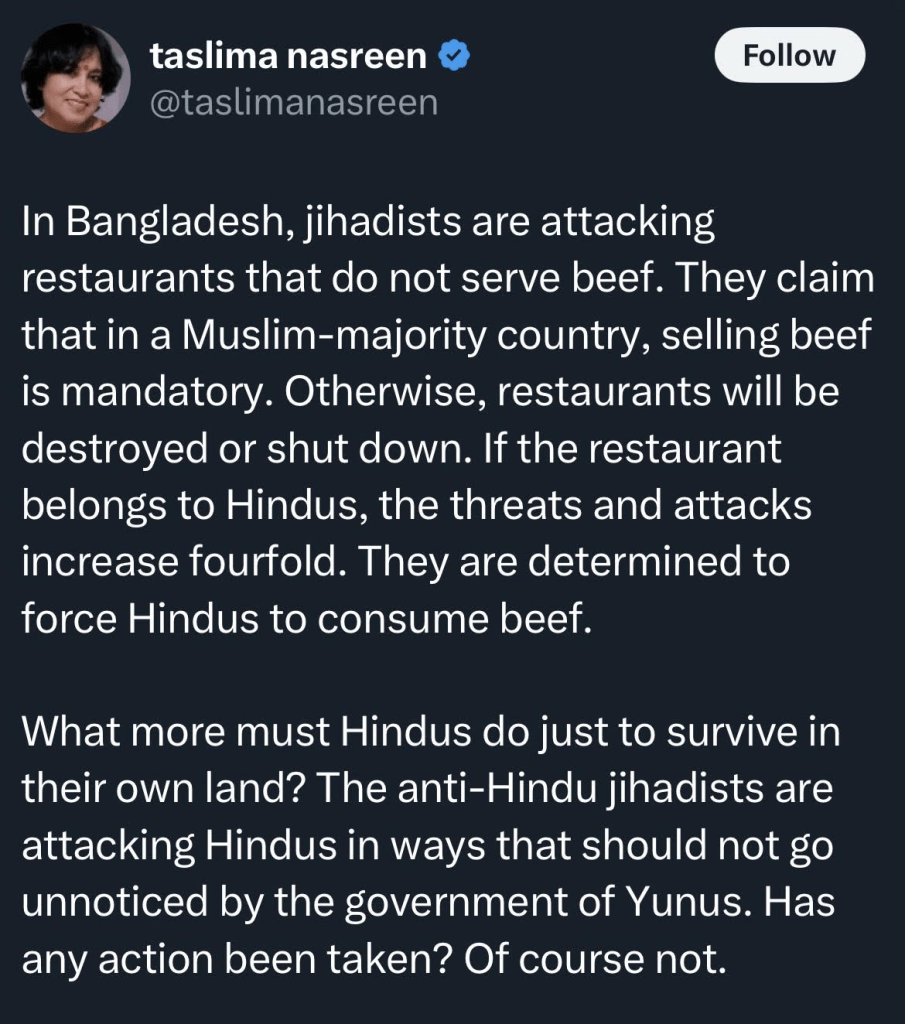
In India, you can criticize any religion freely, like PC George in Kerala targeting Islam, or Stalin in Tamil Nadu attacking Sanatana Dharma.

But at the same time, mocking/disrespecting Hinduism or Islam can also lead to lynching or beheading.
This shows the complicated nature of India’s religious tolerance. It’s not fully black or white; there are many layers of grey.
A country, accused of religious intolerance, is also a country where seers like Swamy Premanand Ji openly advocate for LGBTQ issues. He advises young members of the LGBTQ community not to succumb to parental pressure to marry according to societal norms, as it could harm both their own life and that of their partner.
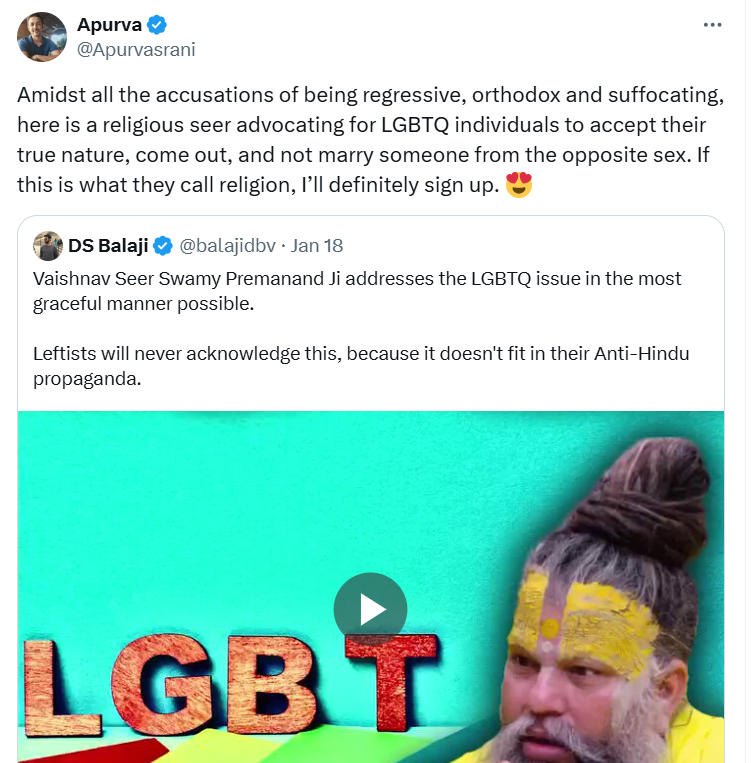
From these examples, it is quite clear that India is a nation with diverse perspectives. Yet international media often portrays it as a regressive and intolerant society, probably because they rely heavily on left-leaning biased sources for their information. This depiction is unfair to the country’s social fabric, which embraces various ideologies.
It is important to note that much of the left-leaning media in India tends to present only one side of the story, resulting in incomplete or biased information. In an era where media bias is prevalent, it is strongly recommended to read news from both left- and right-leaning sources to gain a comprehensive understanding of the issue. Without this balanced approach, people may remain unaware of where genuine reforms are needed and could be misled by those with specific agendas.
The downside of one-sided stories is that they can foster an extreme victim mentality, making people believe that any violence or attack is justified due to past suffering. For instance, some celebrated the LA fires, posting that the USA deserved it for funding weapons for Israel, without considering that pro-Palestinians could have lost their homes too. If a tragedy strikes India, similar comments might surface. This is partly due to media narratives that fuel such sentiments and intensify hatred.
In an increasingly polarized world, it is crucial to report news with accountability. Both extremes are harmful—religious extremism that forces others to conform through coercion and an extreme victim mentality that blinds individuals to any positive aspects, making them focus solely on negative narratives. Currently, in India, I am seeing more of the latter than the former. Media is partly responsible for this.

 The Monkey Dilemma
You must be logged in to post a comment.