Can Cockroach Janata Party (CJP) Really Challenge BJP?

Cockroach Janata Party (CJP)

Most Indians on social media probably already know about the Cockroach Janata Party (CJP) by now. The online political campaign took shape after Chief Justice of India (CJI) Surya Kant sparked controversy during a Supreme Court hearing on May 15. During the hearing, he made observations comparing certain unemployed youths and social media critics to “cockroaches” and “parasites.” Soon after, sections of the anti-BJP online ecosystem turned the remark into a political campaign and launched the Cockroach Janata Party across X and Instagram. CJP positioned itself as an anti-BJP digital movement and later started campaigns asking people to unfollow BJP accounts on social media platforms.

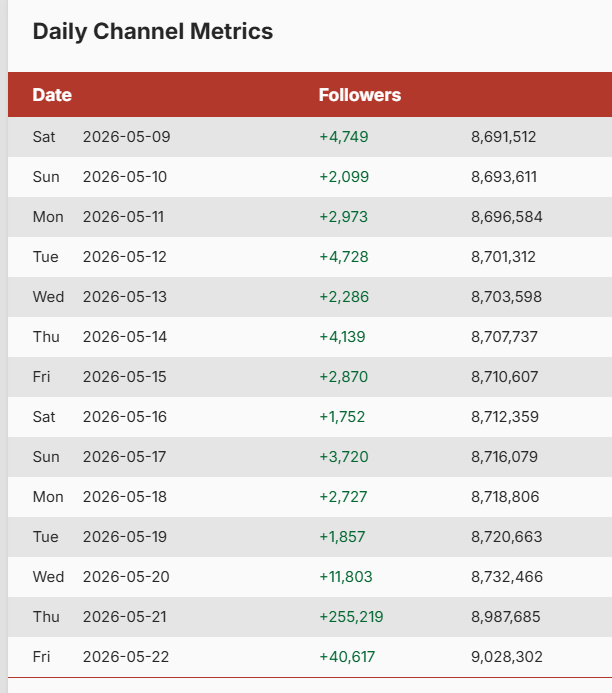
I checked Social Blade after CJP asked its followers to unfollow BJP on social media. Since then, BJP’s follower count has only increased.

Social Blade Metrics for BJP India After CJP Call for Action

People who strongly dislike BJP probably were not following the party in the first place. That is why the whole “unfollow BJP” campaign feels more like online optics than a move with any real impact.

What also feels strange is that the original cockroach comment came from the CJI, yet BJP became the main target of the outrage campaign.

To me, this looks like the same old digital left ecosystem with the same familiar online voices trying to create another social media-driven political movement. I am not particularly impressed. The founder is reportedly an ex-AAP figure based in America who seems eager to build an Indian version of Mamdani-style politics.

Personally, I find both the name and the campaign childish. These kinds of online political revolutions succeed only when there is massive public anger against the government at the ground level. There is definitely strong anti-BJP sentiment in some circles, especially online. At the same time, there are also many people across India who genuinely support BJP, whether others agree with it or not. I saw this very clearly during my visit to North Bengal.

At the end of the day, the only real way to defeat a political party is through votes. South Indian states have shown this clearly. Governments change when opposition parties build strong grassroots support and connect with voters consistently. In many North Indian states, the bigger problem is that opposition parties simply are not strong enough on the ground. BJP and RSS have built an aggressive and disciplined grassroots network over many years. If anyone seriously wants to challenge them politically, they need to match that level of ground work, organization, and outreach. Social media campaigns alone are not enough.

What I Saw in North Bengal Changed My Political Views

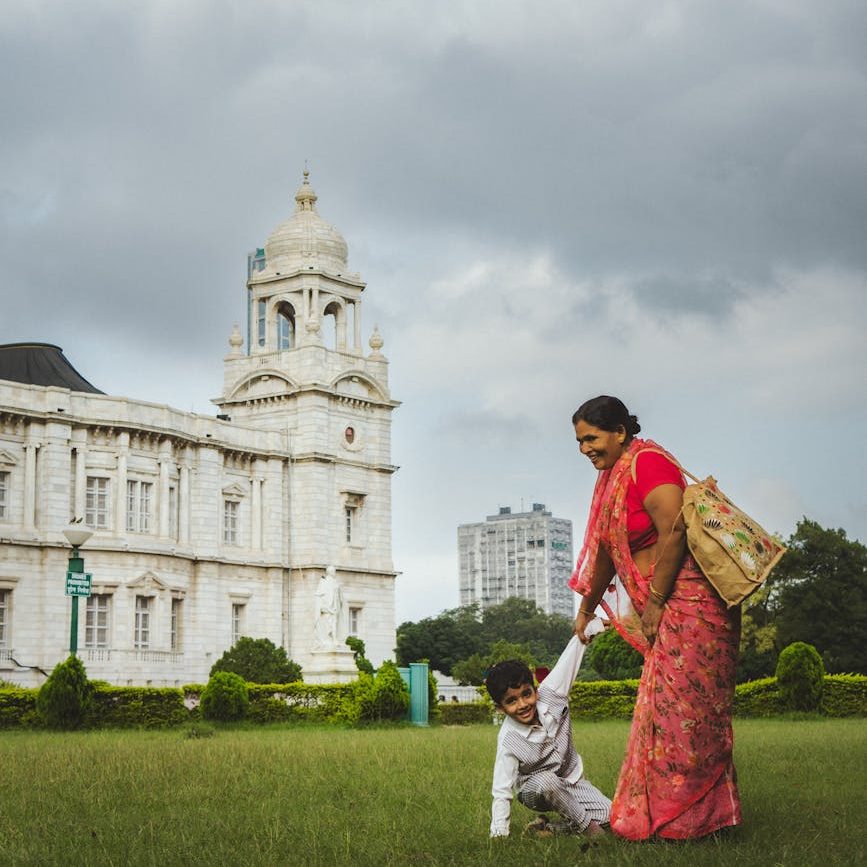
Bengali woman and child picture

The recent election results in West Bengal and Tamil Nadu were genuinely surprising. When it comes to Kerala, like many Keralites, I was almost certain that the UDF, the Congress-led alliance in Kerala, would comfortably win. But what truly shocked most people across the country were the results from West Bengal and Tamil Nadu.

What North Bengal Told Me Before the Election Results Did

A few weeks ago, I travelled through North Bengal, and honestly, the experience changed many of my assumptions about West Bengal politics. Everywhere I looked, there was a sea of saffron flags stretching for kilometres. I barely saw any TMC flags during the journey. Coming from Kerala, the visuals felt surreal.

In Kerala, anti-BJP sentiment is very strong in many places. If such large-scale saffron displays appeared here, there would probably be outrage, protests, or even vandalism. So seeing that level of open BJP support in Bengal genuinely surprised me.

In my mind, I had always viewed TMC in West Bengal somewhat like CPM in Kerala, a left-leaning party with deep-rooted dominance and strong control over the political atmosphere. That is why the strong Hindu nationalist presence confused me initially. But this is exactly why travelling matters. Ground reality is often completely different from what we see through television debates, political influencers, or social media narratives. Sometimes, stepping outside your own state and talking to locals completely breaks your assumptions about the country. This was during my road trip to Bhutan. I would have missed this experience if I had taken a direct flight to Paro.

The saffron wave in Bengal is honestly something I do not think I would have understood without witnessing it personally. During the trip, several Bengali drivers confidently told me that BJP would win West Bengal “100%.” At that time, I dismissed their claims and assumed they were simply politically biased. Looking at the results now, it feels like they were actually reflecting the real mood on the ground.

The reasons they gave for BJP’s rise were many: unemployment, lack of development, safety concerns, the RG Kar case, Sandeshkhali, and the Murshidabad incidents. These issues mattered deeply to voters. They felt Mamata did not understand them.

The development gap especially stood out to me. Walking through parts of Bengal felt very different from being in Kerala. Both Kerala and North Bengal are naturally green and beautiful, but Kerala still has comparatively better infrastructure, roads, and modern facilities in many areas.

The Jaigaon-Bhutan Border Contrast Was Hard to Ignore

One experience that really stayed with me was the Jaigaon border crossing into Bhutan. The path leading to the pedestrian terminal was honestly terrible. Dragging luggage through the unpaved, rocky stretch felt exhausting, and my suitcase wheels practically begged for mercy. But the moment you crossed over into Bhutan, the contrast became impossible to ignore. Cleaner roads, better maintenance, organised surroundings, and a far more hygienic environment immediately stood out. My luggage wheels finally got some relief.

As Indians, we instantly notice the difference when we enter Bhutan. Naturally, it also made me wonder: shouldn’t Bhutanese visitors get a good first impression of India too? That feels like a fair expectation. I genuinely hope the authorities improve the Jaigaon border infrastructure soon, along with addressing the border fencing concerns involving Bangladesh.

Acceptance of People’s Mandate

One thing I absolutely dislike during election season is how quickly people start insulting voters when results do not match their personal expectations. The moment a party loses, some people immediately begin calling voters uneducated, illiterate, communal, casteist, misinformed, or manipulated. Others start blaming EVMs, the electoral system, or democracy itself.

But that completely defeats the point of democracy.

Whether we personally support a political party or not, the reality is that the majority made a choice. Tamil Nadu choosing TVK shocked many people. West Bengal voting strongly for BJP shocked many others. But instead of mocking voters, maybe people should spend more time asking why voters made those decisions in the first place.

Not every election result can simply be reduced to communalism or caste politics. Public frustration, disappointment with existing parties, selective outrage, governance issues, corruption allegations, and the desire for change all play a huge role in elections.

Take Sandeshkhali, for example. Personally, I rarely saw many liberal voices making strong noise about it compared to other issues. Over time, this kind of selective activism creates resentment among ordinary people. Eventually, voters start supporting whoever they feel is at least acknowledging their concerns openly and taking a visible stand. That, in my opinion, is one of the biggest reasons BJP performed strongly in West Bengal. Not because voters are ignorant or hateful, but because many people became frustrated with what they saw as hypocrisy and double standards from other political groups.

Similarly, many voters in Tamil Nadu probably saw actor Vijay as a fresh alternative to the traditional political choices they had for years. Maybe people simply got tired of the same two dominant options and wanted to give someone new a chance.

Election results are also the best time to quietly observe political bias from every side. In Kerala especially, I find it amusing to watch Congress supporters repeatedly celebrate by saying things like “democracy won” or “secularism won,” while the same groups often question EVMs, institutions, voter awareness, or the electoral process itself whenever results go against them in other states.

Accepting the people’s mandate should apply equally everywhere, not only when your favourite party wins.

***

Photo by Soumyojit Sinha on Pexels

Kerala Story 2 Trailer: My Honest Take on Extremism, Politics, and the Real Kerala

Kerala 2 Story Photo

I finally watched The Kerala Story 2 trailer because the noise around it became impossible to avoid. I had stayed away from watching it till then, hoping we would collectively ignore it.

The trailer begins with a call to “convert India into a Muslim nation.” That kind of rhetoric comes from extremist outfits like PFI, not from everyday Muslims. It’s in PFI’s “India 1947” doctrine, available online. But the moment a film shows Islamist extremists, people immediately react as if the entire Muslim community is being insulted. That jump is what frustrates me. The trailer is clearly about extremists, not ordinary people (also confirmed by the makers).

I keep seeing reels saying, “Where in Kerala is this? This is nothing like Kerala.” Exactly. It is not about the regular Muslims we meet every day. It is about fringe groups.

When the movies, Bombay or Empuraan, showed Hindu extremists attacking Muslims, no one claimed the film insulted all Hindus, and that it was an insult to Bombay and a generalization. When films show fringe Hindutva groups, we do not accuse the filmmakers of attacking every Hindu. So why is criticism of Islamist extremism treated as an attack on Muslims as a whole? This inability to separate ideology from community makes any honest conversation impossible. And political groups thrive on that confusion.

I thought the film would be ignored this time. I watched the trailer only to understand the hype. Otherwise, I would not have bothered. And once again, the makers got free publicity because controversy sells.

The director’s NDTV interview

In an NDTV interview, the director was asked why he named it after Kerala again even though the film covers incidents in multiple states. His answer was very simple. He said he got attention for the first film because of the name “Kerala.” So he used it again to get the same effect. It was a marketing strategy. And we fell for it.

He also mentioned that the film connects certain cases to networks like Chhangur Baba’s. According to him, these networks have a specific goal in mind. Again, he presented this as the reasoning behind the storyline, not as a statement on all Muslims.

The song and the real-life cases

The song O Maayi Ri, sung beautifully by Shreya Ghoshal, reminded me of the emotional interviews with the mothers of victims (some notable victims include Nimisha, Sonia Sebastian, and Merrin Jacob). They begged for their daughters to be brought back from ISIS camps in Afghanistan. The girls, as per officials, were too radicalized to be brought back home. No country easily brings back citizens who have a soft corner for a terror group. Many countries around the world refuse repatriation because of national security concerns.

And Kerala has had some troubling conversion-related cases too.

  • There is the case of Sona Eldhose, who was allegedly forced to go to Ponnani for conversion.
  • There is also the story of Kamala Surayya, discussed in the book The Love Queen of Malabar. According to the book, she was encouraged to convert with the promise of marriage made by a mainstream political figure. Once she converted, he backed away. The book also mentions foreign funding from the Gulf that influenced the situation.

These cases do not define Kerala as a state, but they exist. They cannot be erased from the larger conversation.

Kerala’s habit of defending itself too quickly

What irritates me is how quickly Keralites jump into defensive mode. The moment someone brings up extremist incidents or conversion cases, people post “This is the real Kerala story” along with photos of communal harmony and Onam celebrations. Those moments are beautiful, but they do not cancel out the darker stories. Kerala can be progressive and safe while still having pockets of extremism. That duality is real. Acceptance does not mean defamation. In fact, acceptance is the first step toward accountability.

My issue with the beef discourse

Beef in Kerala has become a political symbol. I eat beef, but I am not here to prove that “I am a Hindu who eats beef. I’m so cool.” I am also not going to claim that Hindus who eat beef are not real Hindus. Those extremes mean nothing to me.

There are actual cases of people being forced to eat beef by partners or relatives. A basic online search shows plenty of such stories. So mocking that scene in the trailer becomes insensitive because coercion is not fictional for some people.

What makes the discourse more insensitive is the constant use of beef as a political prop in Kerala. Historically, beef has been used to hurt Hindu sentiments and harass certain groups. As someone who eats beef, I have never felt proud of it in a political sense. It is food. We can all eat what we like, but weaponising it feels disrespectful.

Even the MSF, the youth wing of the Muslim League, called out the SFI beef fests happening on campuses. They said it is insulting to those Hindus in Kerala who consider beef unholy. They added that they themselves would find it offensive if there were pork fests. Whether political or not, they made a fair point. Sensitivity should work both ways.

The political angle behind the controversy

This is something I have been observing closely. In my opinion, the controversy did not naturally explode. It was amplified politically. The first major reaction came from CM Pinarayi Vijayan on X. Once he reacted, his supporters followed, and the discussion spiralled from there.

I believe his response was a political strategy to position himself as the protector of secularism in Kerala. He had lost support earlier due to his association with Vellapally Natesan and also the Sabarimala gold case. His tweet seemed carefully framed as the Kerala election is near. He even highlighted that Kerala has not seen any communal riots in the last ten years, which also happens to be the period during which he served as Chief Minister.

Whether intentional or not, the film’s visibility multiplied because of this political reaction.

Why the title still annoys me

The title “Kerala Story Goes Beyond” suggests that Kerala is some central hub of Islamist extremism, which is simply not true. Kerala is safe. Hindus are safe. Fringe groups exist, but the narrative of “Hindu genocide” is false.

At the same time, filmmakers have always used region names to provoke reactions.
Movies like Bombay did not lead anyone to generalise the entire city.
Shows like Delhi Crime did not make people say Delhi is entirely unsafe.

But names like Kashmir or Kerala grab attention instantly. Filmmakers know this. It is part of the business. And audiences fall for it every single time.

Final thoughts

Kerala has many stories of harmony, culture, and peaceful coexistence. But Kerala also has some unsettling stories involving extremism, manipulation, and political strategy. Both realities can exist together. Loving a state does not mean denying the uncomfortable parts. Real progress and intellect come from honest acknowledgement.

Munambam Waqf Fight: Will BJP Finally Crack Christian Vote? (Legal Delays Inside)

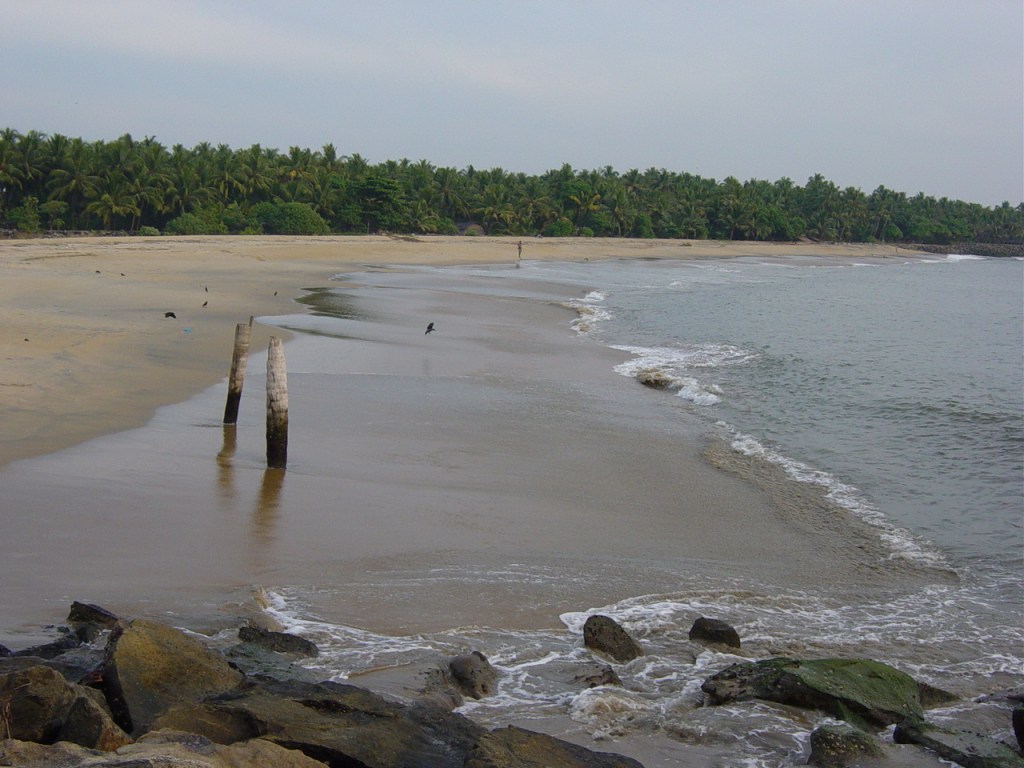
Munambam Beach

I recently came across a video featuring an interview with Stalin Devan, the activist managing the legal research and paperwork for Munambam. In this interview with Shajan Skariah, Stalin shares that Father Joshy added him to a WhatsApp group with the Munambam residents and said, “Explain one point from the Act every day in simple words.” Over time, Stalin became their legal guide, and his efforts are one of the main reasons the community now understands the law so well.

The interview was informative in many ways. At a time when there is still no clear update from politicians or the media on what is actually delaying the resolution for Munambam, even after the Waqf Amendment Bill was passed, Stalin explains the situation with complete clarity.

Stalin Devan Exclusive on Marunadan
A screenshot of the video

The Three Possible Legal Outcomes for Munambam

According to Stalin, there are three possible solutions for Munambam:

  • The government restores revenue rights immediately.
    This can be done at any time if the Chief Minister approves an administrative order restoring those rights.
  • If the Supreme Court upholds the High Court order declaring the land not Waqf, all cases, tribunal, revenue, and others will automatically end.
  • If the Supreme Court rules otherwise, the next legal step will rely on the amended law using Section 2A.

Why Section 2A Cannot Be Used Yet

Earlier, I assumed that recent positive court developments were on the basis of Section 2A. I later realised that was incorrect. Stalin’s interview clarified it. He said:

“We must wait for the rules to be notified. Only after the rules come into force can we use the amendment. As soon as the rules are published, we will file a new petition before the Waqf Tribunal. Once the new rules take effect, the Waqf Board’s order cannot survive.”

It was only through him that I learned the rules tied to the amendment have not yet been fully implemented (central rules were notified in July 2025, but further steps, such as central and state compliance and the ongoing Supreme Court matter, are still pending). Once implementation of the rules is complete, Munambam will be able to use the amendment (Section 2A) fully to establish its rights.

This is where politics begins to overlap with law.

Where Politics Meets Law

Stalin said:

“When everything is resolved, people should celebrate and then withdraw the protest with dignity. But politics entered the issue, and some withdrew support — not because the problem is unresolved, but because they feared the BJP might gain political mileage.”

This is why I feel that even though BJP is the party that helped Munambam with the establishment of new Waqf amendments that can prove favourable to Munambam residents, the Congress-led alliance (UDF) may still win the election there.

Strategically, it makes sense. Now that they’ve pushed the BJP to change the Waqf rules, Christian voters can continue supporting the party they feel protects their religious interests, especially one that does not interfere with missionary activity.

UDF has traditionally been the preferred choice of many Christian voters in Kerala. However, their position on the Waqf Amendment has not aligned with what Munambam residents expected or hoped for. Even so, Christian voters may still continue supporting UDF, largely because they align with the coalition’s lack of anti-conversion sentiment.

Why Timing Matters to BJP and CPM

Here’s where it gets interesting. What follows is only my analysis, not a confirmed claim:

As mentioned earlier, the amendment becomes fully usable only after the remaining implementation steps (central and state action, portal uploads, surveys, and Supreme Court clarity). That process can take months, sometimes more than a year.

Because of that, the timing is now in the hands of both the Central Government (BJP) and the Kerala Government (CPM). Residents say Rijiju has not been active recently. It is possible that the central leadership is waiting to see how the political situation evolves before re-engaging. The BJP may already understand that, even with the support they are offering, they might still not gain full trust or support from the Munambam Christian community. Religious identity often influences decisions more than political assistance. BJP may choose to wait and see whether their support translates into goodwill before offering more help or speeding up the process. In short, they might be waiting for election results to analyze public sentiment.

Meanwhile, CPM has not yet updated or published Waqf lists in the state gazette or uploaded them to the central portal. This is of utmost importance to implement the waqf amendment. CPM has not given explicit technical reasons for the delay.

Current Status of the Waqf Amendment Process (December 5, 2025)

Central Government (BJP)

The Act itself was published and came into force in April 2025. Rules were notified in July 2025. But implementation is still pending: WAMSI portal digitization is incomplete, nationwide surveys and audits have not been done, and the Supreme Court stay since September blocks key provisions.

The central government’s delay primarily reflects implementation challenges. However, political considerations may also play a role, as governments often pace sensitive rollouts based on election outcomes and political advantage.

Kerala Government (CPM)

CPM has not published Waqf lists in the Kerala state gazette. Nor have they uploaded lists to the central portal (90-day deadline under Section 2A). Waqf Tribunal and Board procedures are not aligned yet.

The Kerala government’s delay appears more political in nature. They seem to be officially resisting the amendment.

My view is that the full rollout (central setup, state compliance, and Supreme Court resolution) will now unfold at a pace influenced by political timing. Legally, the delay should not be indefinite, but in practice, regulations and execution can remain pending for a long time if the government chooses.

Why Munambam’s Leadership Is Remaining Neutral

Politics has made the situation complicated.

Many in the Munambam Land Protection Council do not want the BJP to gain politically, but they appear to be trying to remain neutral as the process is still unfinished. The ball is still in the court of both CPM and BJP. This may also explain why Church leaders reportedly asked Joseph Benny, the head of the Munambam Land Protection Council, to withdraw from the election as a UDF candidate. Any outright political affiliation may prove disadvantageous to Munambam residents at this stage.

***

Photo By നിരക്ഷരൻ at ml.wikipedia, CC BY-SA 3.0

From 26/11 to Delhi Blasts: Why the “False Flag” Narrative Must End in India

What surprises me more than the terror attacks in India is the speed with which some Indians dismiss them as “false flag operations.” For instance, a look at the comments under Faye D’Souza’s Instagram post about the Delhi terror blasts shows several users mocking the incident and blaming the Indian government instead of the perpetrators. Many genuinely seem to believe it’s a political ploy to influence votes rather than an act of terror.

The “false flag” narrative isn’t new. It has surfaced after nearly every major terror attack in India. Even the 26/11 Mumbai attacks were, at first, misrepresented by some as an internal operation. The claim gained attention mainly because Ajmal Kasab, one of the attackers, wore a saffron thread on his wrist. Those spreading the theory strangely assumed such a thread could only belong to members of BJP or RSS. They overlooked the possibility that it might have been deliberately used to mislead investigators.

Ajmal Kasab with Saffron Thread on His Wrist

Kasab’s real plan, as later revealed, was to die appearing as a “Hindu” and thus shift suspicion away from Pakistan-based handlers, reinforcing the myth of “saffron terror.” Thankfully, due to the extraordinary courage and sacrifice of Assistant Sub-Inspector Tukaram Omble, Kasab was captured alive and later confessed to being a Pakistani national trained by terrorists.

Tukaram Omble and Mumbai 26/11 Attacks
Tukaram Omble

By then, however, the false-flag theory had already gained widespread circulation. Well-known public figures even released a book titled 26/11: RSS ki Saazish? that promoted the “false flag” theory surrounding the attacks.

Influential Figures Promoting RSS ki Saazish Book
Influential Indian Figures Promoting “26/11: RSS ki Saazish?” Book

The “false flag” narrative resurfaced after the Pulwama terror attack, when a suicide bomber from Jaish-e-Mohammed (JeM) drove an explosive-laden vehicle into a CRPF convoy in Pulwama, Jammu & Kashmir, killing 40 soldiers. Following the attack, some voices in Pakistan, including senior officials, suggested that India might have staged the incident to influence the upcoming 2019 elections. Commentators in India echoed similar theories online, framing the tragedy as politically motivated rather than acknowledging it as an act of cross-border terrorism.

Then came the recent Pahalgam attacks, where Pakistani media outlets and online commentators claimed that India had staged the incident to divert attention from domestic issues and influence elections. They described it as part of an alleged “Indian playbook” of false-flag operations. Soon after, similar talking points appeared in sections of Indian social media and commentary spaces.

In each case, claims of “false flag operations” lacked credible evidence and were primarily rooted in conspiracy theories first circulated in Pakistan and later amplified by certain opinion groups in India.

The Global “False Flag” Obsession

It’s worrying that many people in India tend to believe external narratives about terror attacks rather than trusting verified investigations at home.

This pattern might have been up for serious debate if it only happened locally, but the deflection from religious extremism appears to be a global trend. To cite a few examples:

  • The 9/11 attacks are still viewed by some as a “false flag” orchestrated by the U.S. or Israel to malign Muslims. This is a theory long disproved but still used by extremist groups to recruit followers. They thrive on anger, convincing vulnerable minds that violence is the only response to perceived oppression. In India, extremist recruiters have similarly exploited stories like the Babri Masjid while dismissing events like the Godhra train burning as conspiracies, weaving grievance into a tool for radicalization.
  • The October 7 attacks in Israel were also met with widespread conspiracy claims, framed as a false flag operation meant to discredit certain groups.
  • Likewise, criticism of regimes such as Iran’s leadership, the Taliban, or Hamas is often dismissed as Western propaganda. This is another form of deflection that prevents honest introspection.

Conspiracies Shield Extremists

It’s time to move past the overused “false flag” narrative.

Each time a terror attack is dismissed as a conspiracy, it insults the victims, weakens trust, and blurs the line between truth and propaganda. These baseless claims don’t protect anyone. They only embolden extremists and deepen divisions.

Real courage and national unity will come from confronting facts, condemning violence without bias, and demanding accountability from those who spread hate, no matter where it comes from.

Ending the false flag obsession is the first step toward restoring integrity in how we respond to terrorism.

Kerala Christians and Politics: Which Parties Really Stand With Them?

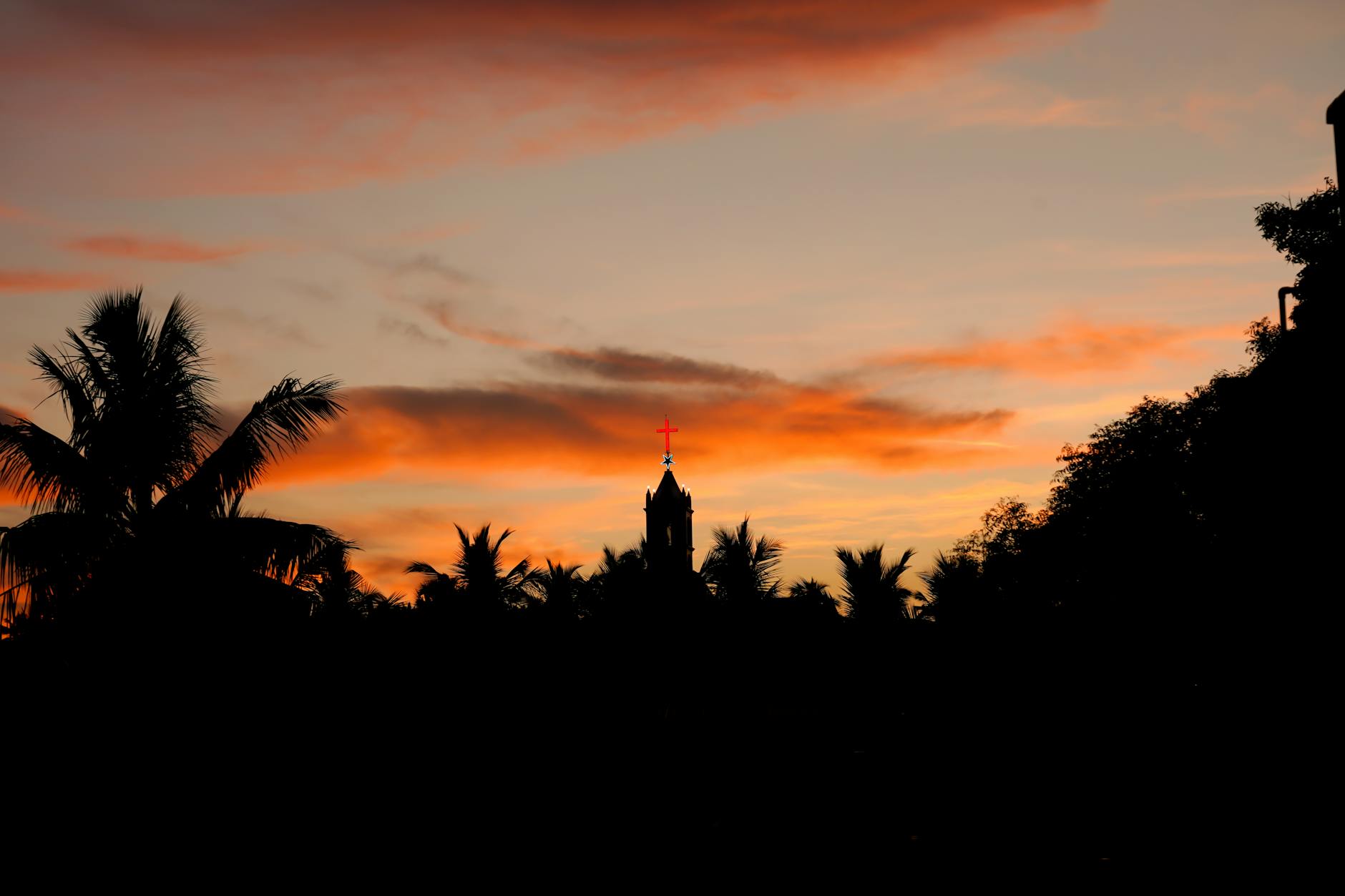
A picture of a church in India for an article on Kerala Christians and politics

As someone who’s chronically online and keeps up with news from all kinds of sources, mainstream, regional, left, and right, I’ve noticed something important: Christians in Kerala don’t really have a go-to political party anymore.

For a long time, people assumed the Indian National Congress (INC) was the party in Kerala that understood what every community wanted. But that idea seems to be changing fast on the ground.

Communal Conflicts in Kerala: Who Supports Whom?

If you’re new to Kerala politics, here’s a simple way to understand how parties respond to communal issues here:

  • Hindu vs Minority: CPM and Congress usually back the minority community.
  • Upper Caste Hindu vs Lower Caste Hindu: CPM and Congress generally side with the lower caste.
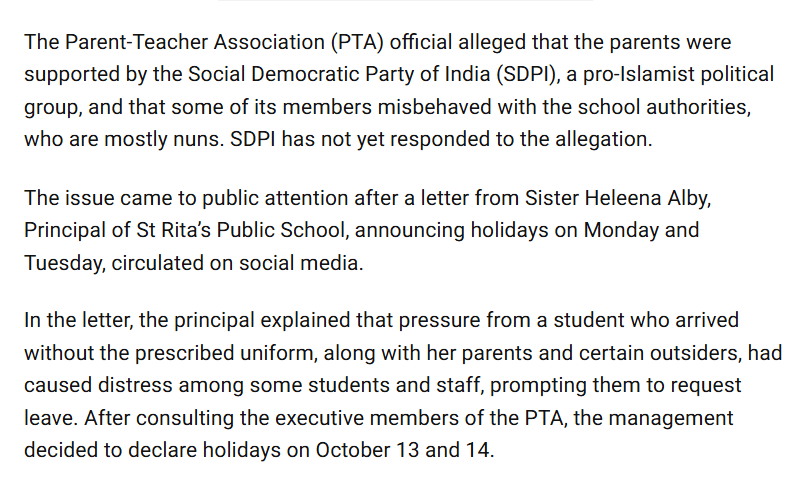
  • Christian vs Muslim: CPM and Congress often stay neutral at first, saying things like “we’ll look into it,” but in the end, they tend to side with Muslims. Examples include the Munambam Waqf issue, Professor Joseph’s case, Sona Eldhose’s conversion, and incidents involving SDPI bullying, such as the hijab case at the Christian-run St Rita’s school in Kochi (details in the image below).
Hijab controversy in Kochi school
News Source: “Hijab controversy forces school in Kochi to close temporarily after parents’ protest” (Mathrubhumi.com)

If you look at any case in Kerala, the pattern more or less stays the same. I’m not sure about regional politics in other states, but I suspect it’s similar elsewhere.

While BJP clearly positions itself as a Hindu party, there’s a growing sense in Kerala that Congress and CPM lean pro-Muslim. Why? It’s not really about religion. It’s about vote-bank politics. Christians are a minority among minorities in Kerala, so pandering to them doesn’t win many votes and can even cost support from other minority groups.

Growth of Chrisanghis in Kerala

Now, in Kerala, there’s a growing group called “Chrisanghis,” a term left-leaning voices like Arundhati Roy have used. These are Christians who support the BJP. Arundhati recently warned Christians in Kerala not to become Chrisanghis, citing conversion attacks in the North as a concern.

So why do some Christians support the BJP? It’s because they view Islamist groups like SDPI and Jamaat-e-Islami as a bigger threat than BJP. Many point to the persecution of Christians in countries like Nigeria by Islamist groups and feel that, compared to such threats, the BJP’s Hindutva agenda poses a lesser danger. At the same time, parties like Congress and CPM often downplay or ignore the activities of these Islamist groups in India, mostly for political gain, leading some Christians to see BJP as a safer option.

Congress support for Jamaat-e-Islami
News Source: “Congress in a fix as Jamaat arm readies to back theocratic state” (NewIndianExpress.com)

Notably, Jamaat-e-Islami has frequently been in the news, even recently, for persecuting minorities in Pakistan and Bangladesh. In India, its branch presents a secular image, likely to gain acceptance and influence within mainstream politics, using it as a pathway to gain power.

It’s also true that Kerala’s two mainstream parties have largely ignored such concerns from the Christian community. Their typical response is often, “Don’t fall for RSS/BJP propaganda,” even when the issues have nothing to do with RSS or BJP.

Thoughts

So what can the Christian population in India do in this situation? On one side, there’s a pro-Hindu or “Hindutva” party that will never fully accept conversions under “freedom of religion,” and on the other, there are parties that haven’t supported Christians when they faced threats from Islamist groups.

From my perspective, Christians should keep all parties guessing about where their votes will go. They shouldn’t strongly back any party, since none fully meets their needs. Take the Munambam Waqf issue, for example: the removal of Section 40 in the Waqf Bill allowed the Kerala High Court to rule the Waqf claim over Munambam land as illegal, protecting Christian landowners. Congress leaders like Hibi Eden tried to persuade residents to drop their case, saying nothing would come of it, while the only BJP MP from Kerala, Suresh Gopi, stood by the people, largely comprising Christian fisherfolk, and supported the amendment that ensured their land rights.

When missionaries face attacks by far-right Hindus in the North, that’s when Opposition parties step in. But in cases like the Chhattisgarh nuns’ arrests over alleged conversions, the local Congress in Chhattisgarh hardly protested, as taking a stand would have cost them votes. On the other hand, in Kerala, protesting the arrest of the nuns would have earned them support, which is why several Opposition leaders from Kerala traveled to Chhattisgarh to show solidarity.

This shows that Christians can’t rely fully on any party and should strategically make their political influence felt.

This is how politics works: there are no fixed principles for political parties. They act based on the local political context. Christians in India should remember this and avoid fully backing or rejecting any party. Instead, they can use this knowledge strategically and wisely, since different parties support them in different situations.

***

Photo by Pratheesh S