Yesterday, a Muslim friend visited, and we ended up discussing religion. She’s a practicing Muslim but not overly devout; for instance, she only wears a hijab when her mother-in-law visits.
During our conversation, she shared something beautiful:
People do things in the hope of reaching paradise. There’s so much fear surrounding it. But no one has ever returned from death to confirm if paradise truly exists. What we have now is paradise, isn’t it? You and I, of different faiths, sitting here together, conversing, laughing, and enjoying each other’s company—what better paradise could there be?
I asked her how she developed this perspective when everyone around her follows religious rules so strictly. She said it might be because she attended a non-religious school instead of an Islamic one. She emphasized how important it is to interact with other communities rather than only associating with people from our own. Her husband shares the same outlook. While he offers Namaz five times a day, he hasn’t imposed any religious restrictions on his wife or children. They are the only ones in their family who approach religion this way.
This principle is applicable to all communities. The more we engage with people from different backgrounds, the more open-minded and accepting we become of diverse ideas and perspectives. Conversely, isolating ourselves can lead to more rigid and extreme viewpoints.
I believe this may be why Indians tend to integrate more easily in foreign countries. Growing up in a society where different faiths coexist has shaped our ability to adapt. This is why I feel we should be sharing our culture with the world rather than adopting foreign ones. India’s inclusive culture, which embraces all faiths, is truly beautiful. I hope we continue to honor and preserve it.
It’s the fifth anniversary of the Abrogation of Section 370. I couldn’t help but reflect on differing opinions about this watershed moment in the nation’s history. There are politicians like Omar Abdullah and Mehbooba Mufti who consider it a disaster. Then, there are BJP supporters who think it’s the best thing that happened to Kashmir.
How do you know who is right?
It’s a given that our biases influence the sides we choose. When we believe something is unjust, we tend to seek out information that aligns with that perspective. Conversely, when we aim to be more optimistic, we focus on positive news.
In the context of Kashmir, you see different types of YouTube videos. If a vlogger or YouTuber seeks to demonstrate that the Abrogation of Article 370 was misguided, they will seek out discontented Kashmiri locals who share that viewpoint. On the other hand, those looking to justify the decision would seek out locals who support it. No matter one’s perspective, there will always be individuals who support each side of the story. Both sides are also convinced that only their version is the correct one.
However, it’s important to consider the facts.
As per Firstpost’s new article, “The incidents of organized stone pelting, connected with terrorist-separatist agendas, went from a staggering 1,767 in 2018 to zero in 2023“. More facts are provided in the article, which is worth a read.
The writer poses a valid question to Omar Abdullah, who keeps talking about how nothing has changed in Kashmir:
The question arises now that, for the first time in two decades, since four years, which is 1460 days and counting, not one youth has died, but you are saying that the situation overall is terrible. Are we then to assume that normalcy is stone-pelting and youngsters dying every week? The end of stone-pelting and no civilians dying is actually a terrible development for your politics.
Ultimately, your perception of a situation is influenced by your bias. But I can’t help but wonder with all the discontent over the Abrogation of 370: Is the prevention of youth fatalities from stone-pelting incidents of less importance than advocating a political agenda?
The Kerala Story is back in the limelight. The right wing insists the movie is a must-watch, while the left wing is actively discouraging viewership. However, both sides could not have foreseen unexpected support emerging from unlikely sources – church factions in Kerala.
On Sunday, the Idukki Diocese of Syro-Malabar Catholic Church screened the movie for Class 10-12 children. Other factions are considering similar actions, although this remains unconfirmed at present.
Many seem to have taken offense to this move by the Church and are calling it “Islamophobic.” This opinion is indeed subjective. Personally, I do not think openly talking about extremist groups and their nefarious intentions is Islamophobic. It should not be eyed as such. When someone criticizes the RSS, it is not considered Hinduphobic. In the same way, openness to constructive criticism should be encouraged within all communities. Labeling discussions with terms like “phobia” can hinder healthy discourse about important issues. It’s essential to acknowledge and address problems, even if some individuals attempt to deny them.
Common Takes and Counter-Arguments
Here are a few common retaliations against The Kerala Story and my counter-arguments.
Take #1: The Kerala Story is all lies and propaganda
People who say this probably haven’t watched the movie or made an effort to fact-check the claims individually. Granted, the extrapolated count shown in the trailer was unnecessary. The makers have removed the count in the final cut. The acting and storytelling felt amateurish. There are other misleading claims in the movie. For instance, the movie makes it seem CM Achuthanthan predicted Kerala would become an Islamic state in 20 years. On the contrary, he was talking about PFI’s plan. He said, “They (PFI) want to turn Kerala into a Muslim-majority state in 20 years. They are using money and other inducements to convert people to Islam. They even marry women from outside their community in order to increase the Muslim population.“
That said, to dismiss the entire movie as a lie and propaganda is dangerous, considering there is evidence to show there are indeed some anti-national elements in the state who are actively working to convert and recruit members for not-so-peaceful intentions.
The Shahan Sha case file includes many of the atrocities portrayed in the movie. The following details are mentioned in the PDF, “The inquiry by the Special Branch reveals that fundamental outfits like NDF, PFI, and Campus Front have roots in the college campuses in the City referred to therein. Referring to Campus Front, it is stated in the report thus: As per the available information, the plan of this organization is to trap brilliant upper caste Hindu and Christian girls from well to do family, especially those who are studying for professional courses and employed in IT sectors.”
So, to say the entire story is a lie and propaganda is lazy reporting at its best.
As Ambedkar said, we cannot hide our heads in the sand just because the thought of it hurts our sentiments. The first step to resolving an issue is acknowledgment. Only then can there be proactive steps to prevent cases like Nimisha’s and Sonia’s from happening again. By outright denial, we risk leaving more people vulnerable to similar incidents, as they may not fully grasp the seriousness of the situation.
Take #2: The movie is Islamophobic
Is criticizing terrorists Islamophobic? Why is it that whenever a movie comes out that talks of terrorists, the left wing immediately calls it Islamophobic?
Terrorism has no religion. We should stop equating the two. I would say it’s Islamophobic to correlate the two – terrorism and religion – which is what the left often does with movies like The Kerala Story and Kashmir Files. Kashmir Files, in fact, starts with a Muslim child helping a Hindu child escape terrorists. The Kerala Story predominantly focuses on a radicalized group, not all Muslims. So, to claim the story as Islamophobic is unfair to the Muslims who have no part to play in all of this.
I would even go on to say that even Muslims should watch the movie as they are the most vulnerable. It’s crucial for individuals to recognize that there are extremist groups within the community who are determined to radicalize them. As per the PFI document, “Popular Front of India (PFI) is confident that even if 10% of the total Muslim population rally behind it, PFI would subjugate the coward majority community to their knees.”
TP Sulfath, the BJP member from Malappuram, bravely talked about such groups in Kerala in a video. Alas, the original Marunadan video was blocked or removed. The clip can now only be watched from a Reddit group.
Take #3: Only 2 or 3 cases have been recorded in Kerala
No one has an actual count. The existing ISIS cases in Kerala came to the limelight only when parents filed police cases. Many family members do not openly reveal such things out of shame and prestige issues. However, if you actively google for cases, you will find many. There are sufficient YouTube videos of Malayalee victims, not just two or three. Parents of radicalized children do not go to the police; instead, they seek help from centers like Arshya Vidya Samajam, as they wish to keep their concerns out of the limelight.
The official count of converts is taken from authorized conversion centers in Malappuram and Kozhikode in Kerala. These are state-approved centers. However, conversions happen outside such registered centers, so it is impossible to give an accurate number.
Take #4: We are too educated to fall for such traps, so we don’t need the guidance
I see the new generation saying this. However, love can make us, including the most educated, do illogical things. Anyone who has fallen in love madly and profoundly knows what it is like. We stop becoming rational. I often tell youngsters, “Follow your heart, but take your mind with you.” Love is at its most intense when we are teenagers. This is what radical groups look to exploit. They want you to fall so deep in love that you are ready to do anything, including convert, to be with them.
Maturity involves being open to advice from all sources, even those you may not initially consider necessary, as it equips you with the knowledge to handle similar situations that may arise in the future. The Kerala Story gives away the advice that in love you do not need to convert. If it does, it ceases to become love and more of a “You will get this, only if you do that” kind of transaction deal.
Take #5: The movie is vulgar and has adult scenes
I recently saw a politician saying this. The scenes are sourced from reality. The extremist group is known to enslave and rape women as they think it’s their right. It is a horrifying reality depicted in accounts like Nadia Murad’s The Last Girl. Further reading can offer more profound insight into the atrocities committed by ISIS.
Take #6: The Kerala Story has been released to make Kerala look bad
As a proud Keralite, I didn’t feel offended by the movie; instead, it made me more cautious.
We should reach a stage where not even one Keralite gets radicalized and joins ISIS. Then, we can claim victory as ours. Till then, we should be open to criticism and look for ways to rectify such problems, not hide them. What can we do to stop radicalization? How can we stop terrorist modules from cropping up in our state now and then (even as early as this year, 2024)? How can we stop Malayalee women like Nimisha and Sonia from joining such groups? Should we talk to our youngsters and spread awareness, or would we rather they find it out themselves (if at all they do)?
It’s like teaching kids the difference between good touch and bad touch. You cannot force anyone to follow your rulebook, but you can definitely advise them on what is good and bad. The decision on which route to take ultimately falls on them, but by encouraging active discussions, you are helping them to see through things that they would otherwise have failed to do on their own. At the same time, care should be taken not to generalize an entire community for the sins of a few. A nuanced approach is the need of the hour.
As the year comes to a close, it’s time for introspection on goals achieved, comfort zones demolished, and new skills acquired. I don’t have much to report, except that I survived.
It was not an easy year. Most of my holidays were spent doing something I intensely dislike – hospital visits. They induce a great deal of stress in me, more mental than physical. For the uninitiated, my parent was diagnosed with a heart condition, which took several days of hospitalization, tests, and treatments. It is difficult for a child to see their parent falter as age catches up on them. This year was that kind of year for me, riddled with lessons.
What doesn’t break you makes you stronger
Time keeps on proving the legibility of this quote. I am a divorcee in India, so I am no stranger to struggles. However, 2023 went a tad extra by making my loved one suffer. Initially, I didn’t know how to deal with the situation, cried helpless tears, and dramatically kept asking, “Why me?” But then the universe kindly shows you a way.
At first, you feel a sort of resistance. You are not ready to accept this new phase in life. You’re breaking out of the comfort zone of all the struggles you have known till now. This is a new struggle, one that you need time to adapt. It becomes easier over time. You get stronger. Not because the concern is any less but because your system learns to handle it better.
I survived a difficult phase this year.
Not everyone will be by your side when you need them
I am grateful for everyone who graced me with their love and support. Their kindness knows no bounds. Some supported me by being present, some through their words, and some with quiet perseverance.
But sometimes, the people you expect the most support from fail to meet your expectations. This could be friends, family, or relatives. It comes as a bolt out of the blue because you realize you probably don’t mean as much to them. It’s a difficult pill to digest. However, I am taking it in my stride, marking it as a lesson that may come in handy in the future.
I survived the absence of (a few) loved ones.
Different ideologies shouldn’t spoil your friendship
I may not have a mainstream view on many issues, but that has never motivated me to lash out at someone with opposing views. This year, I learned to be more accommodating of contradictory views, both religious and political. Sometimes, it is difficult, especially when people use accusatory tones. Still, for the most part, I have been cordial, respectful, and unintimidating.
I survived the danger of fostering a different ideology.
Conclusion
If all you did this year was survive, I want to tell you from personal experience that it’s not something that should be casually dismissed with the notion that it is of less importance. It is a life-changing struggle, dealing with every fiber of your being not working as per protocol and finally making peace with it at some level. It takes courage and patience.
During this holiday season, feeling a sense of failure is natural when you see people around you list all their accomplishments. However, know that dealing with issues that life throws your way, no matter how big or small, is a significant accomplishment in itself. Survival is a beautiful thing. We should celebrate it more.
Recently, I came across a proficient Bollywood actress saying, “I don’t read non-fiction. My mind is fine as it is. I don’t need to learn anything more.” I was a bit taken aback by her statement. Not because she said she didn’t like non-fiction, which is entirely her personal choice, but by the fact that she thinks there’s nothing more to learn.
When we stop learning, we stop growing. I don’t think we ever reach a saturation point when it comes to knowledge. There’s always something new to study – be it from our own experiences or others. It’s impossible to learn everything by ourselves, which is where non-fiction comes in. Such books expand your horizons, even if they demand a certain amount of mental effort from us.
Not many enjoy non-fiction. It makes you feel like you are studying in contrast to a fictional book that offers a more relaxed, entertaining vibe. We have always associated non-fiction with our school textbooks. So it’s no surprise why many detest reading the genre. Personally, I find myself having to work my grey cells more when I am reading an autobiography or a self-help book. They require you to think and retrospect, which does not qualify for “easy reading.”
But to never read non-fiction, in my opinion, is a sin. You have some of the world’s best documenting their experiences and learnings on a subject of interest in the most compact form possible to help others who would otherwise have spent countless hours trying to learn the same. Why miss that golden opportunity?
Here are some reasons why you should consider reading non-fiction:
It allows you to learn from other people’s mistakes. The people who have written the books have more experience than us regarding certain subjects, so why not trust them? When you read through their mistakes, you get to learn what to avoid.
Some points stick. When you read non-fiction, you can be assured some valuable points will stick. You will end up discarding a lot of info that doesn’t align with your thought process. Still, you will unknowingly absorb valuable insights for future use. When the time comes, these tidbits will hover over in the background, helping you make the right decision. You might not remember which book you got the idea from, but the important thing is you retained the information for personal use. This can be very useful, be it at work, studies, or even personal day-to-day interactions.
They give you a new perspective. When I go through self-help books, I am almost always gifted with a new way of perceiving things, which I wouldn’t have if left to my own devices. The people around me are echo chambers, and we often hear the same viewpoints repeatedly. This is why people tell you to travel – so you get to experience different cultures, values, and insights. A more accessible, affordable option is to read non-fiction. It broadens your horizons, making you understand that yours is not the only way to live. There are many different kinds of people with different stories, unique experiences, and beliefs. Non-fiction helps you explore all of it in the comfort of your home.
I agree you can do all three by watching YouTube videos or listening to podcasts, but there’s only so much you can include in video and audio formats. In comparison, books are able to contain a lot more information. Plus, scanning or searching for info in a book is easier, especially if you own a Kindle.
So, do give non-fiction a chance by picking a topic of interest. You do not have to finish everything in one go. Try five pages, a chapter, or even one page instead. Each page you finish takes you that much closer to developing a new mindset.
“What does love feel like?” asked a member of a community I am a part of. She had never experienced romantic love before and was genuinely curious about what to expect when she eventually falls in love – Is love easy? Is it kind? Is it everything movies and books make it out to be?
In my 20s, my answer would have been, “Love means you are willing to do anything for the person.” It meant no inhibitions, forgiving all mistakes, and smiling positively through the storms. There is no sense of self. You are engulfed by passion and intimacy to the point your brain cells cease to function.
The way we look at love in our 20s might be derived from various sources – movies, shows, books, music videos, social media, interviews, etc. The love depicted in public is often dreamy, romantic, and glossy. The type that makes our hearts sing. We expect our partners to follow the same route – always say and do the right things at the right time. However, it is not as simple. One must undergo real experiences to truly understand and form our own definition of love.
My perception of love changed considerably in my 40s.
Love no longer means giving up everything to make a relationship work, especially your self-respect. Love means being at ease with your partner, not walking on your toes, and being anxious about their reaction. Love is comfort, like a tight hug after a tiring day, like a cup of coffee embracing you with its warmth. An emotion that is balanced, not agitating and swinging back and forth between extremes of love and hate.
I have experienced bad relationships and am thankful I overcame them unscathed. Back then, blinded by love, I would find excuses to justify any form of disrespect I got. I would tell myself, “They must have had a bad day.” “Maybe they didn’t mean what they said.” But over time, you learn not everything is done unintentionally. If a mistake happens more than once, it is not a mistake, it’s a habit, a conscious decision. But the young me did not understand all this. I was under the impression that the harder I worked in my relationship, the easier it would be for my partner to love me.
Love requires some amount of compromise, for sure. But how much is too much? Only you can answer that yourself. Different people have different levels of tolerance. What might sound disrespectful to me might not be for the other person. However, a general rule of thumb is that I should feel at ease with my partner and be able to communicate freely without fear.
I am curious how my definition of love will change over the next 20 years. Will love be more balanced than it is now, or would it sway? Only time can tell.
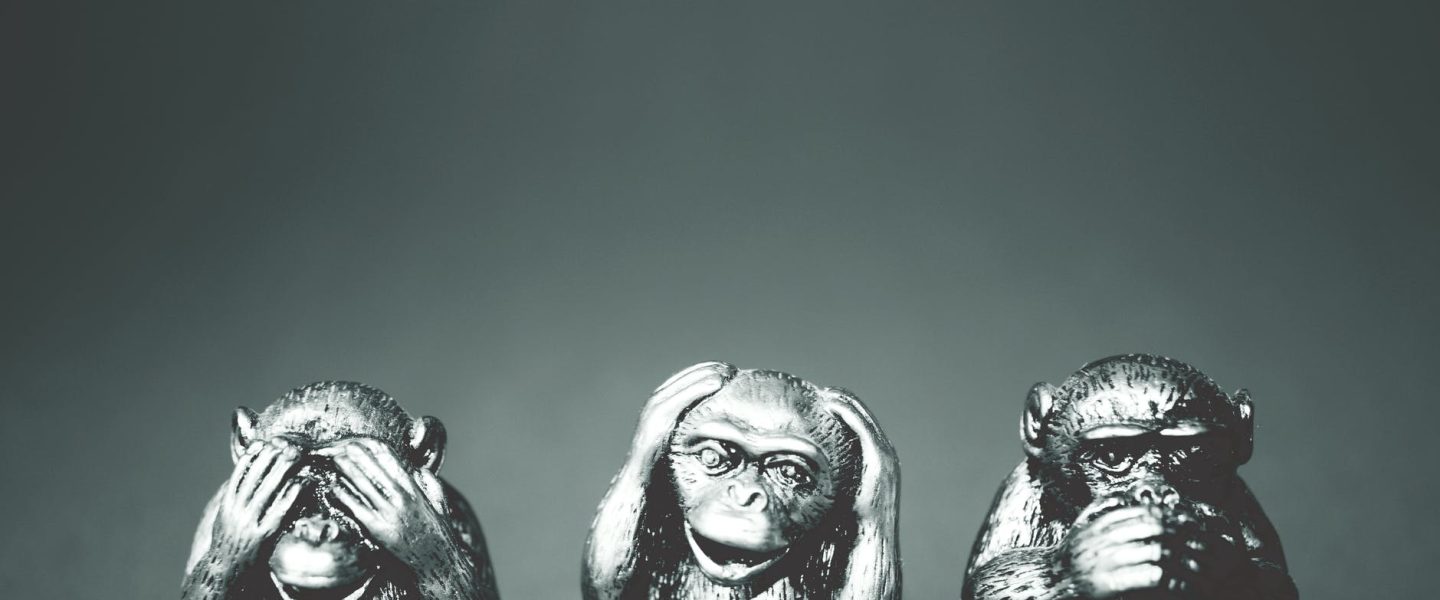





 The Monkey Dilemma
You must be logged in to post a comment.