Being an introvert, I often find it challenging to make friends easily. By the time I become comfortable with someone, I’m branded an arrogant snob. There is no win-win here. This was true as a youngster and even more so as an adult. The only difference is that new friendships are more challenging for grown-up introverts. As we socialize less than before, our social circles become negligible. By our 30s or 40s, we are too busy with work to care about anything else.
It also hurts when a friendship is falling apart.
Sometimes, after a period of time, you realize you and some of your friends are no longer compatible. You laugh at different jokes; you start taking an interest in different topics and don’t like talking about the same things anymore.
We move on, evolve, and so does our friendship with the people around us.
I remember making bitchy friends when I was in a gossiping phase.
I remember making sweet friends when I was in a vulnerable state.
Some of us bond over the uplifting, enriching positives, whereas some share a fun camaraderie maliciously giggling over the sinful negatives.
The universe gifts us with different kinds of friends during different seasons. The caveat being these seasons are exclusively yours. Each season can be as long or short as your destiny allows them to be. And it is rare that a friend sticks through it all. When you are in summer and in need of light, love, and passion, your friend might be in winter, in need of subtlety, distance, and introspection. There might come a point in the future when you both are summers, or you both are winters. But life is too short to wait for that perfect harmonious season because it might never even arrive.
Over time, I realized I was just not comfortable gossiping and backbiting just for the sake of maintaining a friendship. I was a part of a group (let’s call it The Umbridges) who would say the meanest things about the people they didn’t like – unwarranted comments related to looks, character, and lifestyle. I was no saint. I used to enjoy it tremendously back then. But when I reached my 30s, I couldn’t do it all the time anymore. It didn’t feel right, the gang didn’t feel right, and being in this group of friends felt.. suffocating. I didn’t want to hear any of their nasty jibes. It was obvious to me that the amount of bitching we were doing was not healthy. It felt like I was on Twitter 24×7.
I now wonder if this need for a break from The Umbridges was new or if it was always buried within me, waiting for the right time to surface. Eventually, it did surface, and I started keeping a distance from friends who didn’t feel right for me.
Then they started keeping their distance as well (rightfully so).
The Umbridges slowly started fading. A mere ghost of its previous version. Now the friendship is limited to birthday or festival wishes, casual exchanges, and social media comments.
I feel at peace with this change.
But I also feel sad.
Because no matter how wrong someone was for you or how toxic, you miss the connection it gave you at one point in life. That connection meant something then, though it feels tiresome now. The word “connection” usually has a positive ring to it. But it can exclusively stem from negativity (gossip, backbiting, complaining) or positivity (encouragement, care, good humor). Both can be equally addictive. You often move on from this addiction, but you never forget the feelings you experienced at that point. You were genuine, and you gave it your best.
All types of connections are hard to let go of.
I remember a friend forlornly telling a younger, bitchier me that she didn’t want to gossip with me anymore about anyone as she felt terrible about it. I didn’t understand that emotion then, but now I do. I understand this feeling of desperation that prompts you to stop talking negatively. I cannot describe the feeling in words. It is akin to getting your supply of clean air disrupted, and now you desperately want it back.
You realize sometimes friendships need to fade for you to sprout back to life, to start afresh. You also realize it is going to be that more difficult to find new friends because your social circle diminishes as you age and your affinity for small talk reduces. As a kid, all it took was a new class or a walk to the park to find new friends and initiate a fresh beginning without egos or dozen trepidations coming in between. Now, the best we can do is roll around in bed, sighing and hoping that one day we will find someone, anyone, to share a deep connection with – a friend after our own heart.
It’s no secret that celebrities undergo cosmetic surgeries, which are far from discreet, despite what they would like to think. The changes are always noticeable; you know when they get a procedure done. Most of them look stunning as they already are, so it is often difficult to understand why they opt for such procedures.
When I recently discussed this with a friend, she shared an interesting perspective – try to look at it from the celebrity’s angle. They often go through immense pressure regarding their looks. Insecurity and hyper-focusing on “flaws” become the norm. Most often, these flaws are subjective – we usually conclude that we are defective on our own. But sometimes, the people around us plant the seed of insecurity in us by constantly commenting on what they think are our flaws.
Commoners indeed face mean remarks for features that don’t meet beauty standards, but not on the scale as celebs do. I was ridiculed for my long nose for the longest time (I still am). I was someone who was absolutely at peace with my nose. I wasn’t even aware of this “flaw” until people around me started pointing it out. Initially, I welcomed all jokes. I did not wish to offend anyone or be considered a snowflake. The mocking got irritating after a point. I then started explicitly telling my offenders that I did not find such jokes funny. I had no qualms in distancing myself from those who continued joking about it. In hindsight, if I was regularly subjected to unwarranted comments from strangers, who knows, I might have resorted to cosmetic surgery. But I was never surrounded by faceless, nameless people spewing mean comments. I also had the liberty of anonymity, so I moved on happily with my imperfect nose. When I reached adulthood, my insecurity concerning my nose reduced. I like my natural nose; I just stay away from unnatural comments.
Popularity can aggravate insecurity. It is impossible for someone to exist without insecurities of some kind. The public eye, however, tends to exacerbate those insecurities, engulfing you as a whole.
Celebs eventually depend on surgery to correct what their eyes have disliked for a long time. They have the means, so why not? After surgery, that part looks acceptable to them, even if it doesn’t sit right with the rest of their face. And once that problem point is fixed, they move on to the next one. Eventually, they become a distorted version of themselves. I have often seen celebrities altering their faces to no recognition. The version youngsters strive to be without knowing their idols had extensive corrections done to get to where they are, the version that aches to mimic the Instagram ‘Paris’ filter.
In the highly perfectionist modern world, almost everyone has undergone an invasive or non-invasive procedure to correct or enhance their features. If we can get braces, which is in no way “natural,” why is it so sacrilegious to get a nose job or lip filler? But I have often wondered why celebrities’ friends and neighbors do not step up when a procedure goes wrong and advise them not to undergo any more horrendous transformations? One reason might be empathy, kindness, and everything wholesome. Another reason might be that these well-wishers, who might be celebs themselves, are probably unaware of those changes. For the commoner, it is easier to spot such alterations because we are not surrounded by people who have undergone cosmetic procedures. But in a sea of celebrities who have undergone some enhancement or the other, your eyes get trained to adapt and ignore.
If we consider everything from a celebrity’s point of view, things start making sense. You tend to judge less and accept that in some people’s worlds, the realities may not confine with ours. However, it is still a reality – theirs – that we need to empathize with, acknowledge and accept.
“You never really understand a person until you consider things from his point of view—until you climb into his skin and walk around in it.”
Recently, I talked about the distress I experienced due to excess work. I felt exhausted, working day in and out, and was in severe need of some me-time. I had been “at it” for two years since the start of the pandemic, and I was close to burning out.
Thankfully, I got some time out recently – when my manager went on vacation. I was ecstatic at first. There was no urgent work; it almost felt like I was also on holiday. But then I started experiencing something that I had never experienced in my two years of pandemic-induced erratic work hours – the insufferable boredom that comes with having no work. Was it a withdrawal symptom, a side-effect of having burnt a copious dose of after-work oil? When you finally get some breathing space, you have no clue what to do with it. You are left grasping at straws.
The first few days of zilch micromanagement felt like a dream to me. But by the second or third week, boredom took precedence, and I started actively looking for tasks to self-initiate. A few questions that crossed my mind –
Is this what retired people go through? They are relaxed and happy the first few weeks of retirement, but many develop a sense of despair later on.
How can I stop myself from feeling this way?
Why do we always have to be on the move? Why are we so averse to relaxation?
What is the optimal amount of work you need daily to keep yourself happy?
Of course, I do not have the answers to all questions. I am not a researcher or scientist. I apologize if you came here looking for answers. However, I can tell you something from my personal experience:
I am happiest when I have at least half a day’s worth of solid work. The type of work that requires my complete attention, work that takes my mind off all kinds of distractions. When I am consumed by an optimal amount of work that meets my skills, I enter this state of flow that ignites my happy hormones. This “work” that I am talking about is not just restricted to office work; it can be anything – cooking, playing a sport, writing, learning, dancing, singing. The point is that it should be something that is immersive and consumes your entire interest.
It might be why experts recommend having a passion outside work. Once you’re retired, this passion will keep you alive and kicking. For workaholics, finding that excitement outside work might prove challenging. They hardly get the time to pause and seek activities that may have the potential to improve their quality of life in the future. One possibility for such plodders is to go part-time post-retirement in context to their work (maybe consulting). But if you have decided to step away from office work, as most of us plan to do post-60, finding yourself a cause or a passion becomes imperative.
We feel our best when we are in service or when we can provide help in some way. Finding your “Ikigai,” as vouched by the long-living Japanese, is essential to one’s overall well-being and happiness. I am not yet sure what my Ikigai is. I enjoy writing, but I haven’t yet sat down to see if I could write for half a day, nor do I know if this exercise would cater to my emotional health eternally. I did some sewing the other day. It made me feel alive. Maybe Ikigai can be a bunch of things – a heady concoction of multi-colored magic beans that contribute to our general well-being. You can embrace each of them as per the mood and season, mix and match, exercise portion-control, and tuck them away in your customized, personalized happiness jar. All it takes is some time to figure out what those magic beans are.
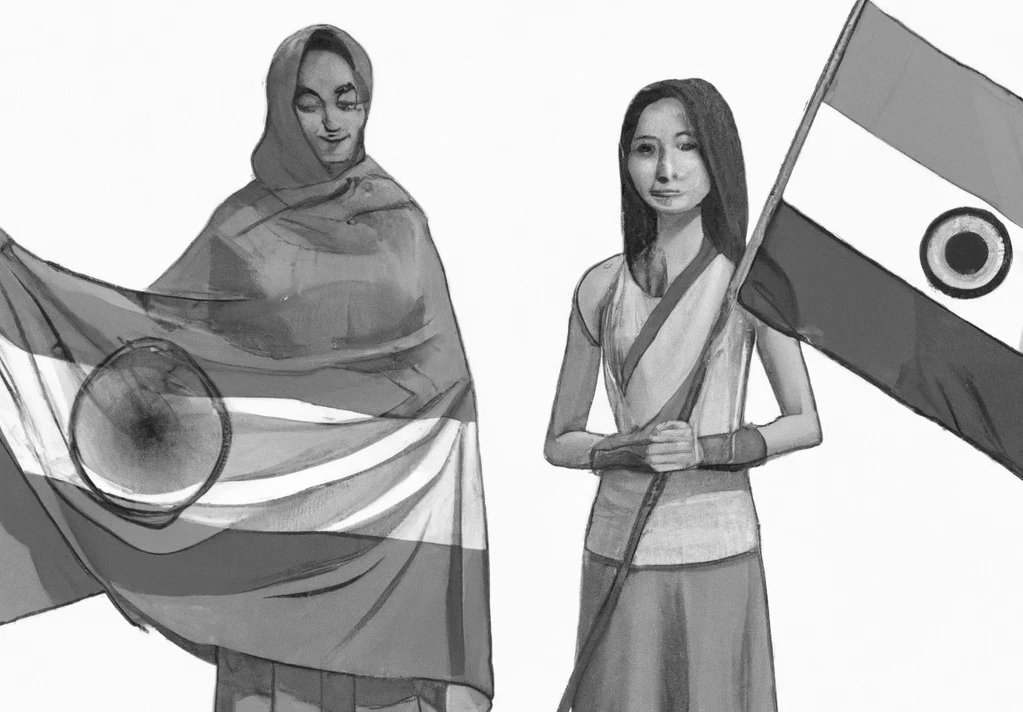
India is increasingly getting polarized. We have a pro-government clan and an anti-government clan. Both are equally stubborn in their own thoughts and action, believing with all their heart that the other is up to no good.
It has become impossible to be objective without offending someone. I hesitate before sharing a piece of good news about the country because the anti-government clan will attack me. It’s the same when you criticize the country because the pro-government clan will get offended.
As Indians, we have sadly lost the ability to differentiate between politics and the well-being of the nation. We are unable to take an objective stance or take a step back to consider ourselves as “one” instead of separate entities and are instead getting into petty fights and finger-pointing. Our national anthem talks beautifully of unity but the truth is we are increasingly becoming divided as the years go by. For a free thinker who cares only for the well-being of the country and not any political party, for someone who wants to see her nation prosper and become a global powerhouse in all aspects, the manner in which India is behaving currently is a huge disappointment.
The riots, hate, and division hardly boost the growth of the country. These elements throw us back financially and emotionally if at all they do something. So why are poeple engaging in them? Where is this polarization coming from? There are a few culprits here:
News Channels: No, I am not talking about only some channels. All are equally biased.
Social Media: The Modi clan supports the leader loyally; the non-Modi clan trolls the leader loyally. There is no middle ground.
Social Messengers: The WhatsApp University is relatively well-known. I need not elaborate on that.
When you subject yourself to a continuous flow of negative news from all three sources listed above, the frustration is imminent. The ground reality might be something else. Internet might be flooded with news of riots, outbursts, hysteria, and violence. However, in real life, you might be sitting in the comfort of your home, enjoying the peaceful surroundings, having a cordial relationship with your neighbors from all communities celebrating each other’s festivals with equal fervor. I have had people ask me if there’s an ongoing war in India, with people rioting 24×7. The fact is the media tends to highlight only the bad, not the good. So a person watching Indian news channels from abroad will end up thinking the country is a perpetual war zone with people getting beaten up or murdered every other second. This is quite extreme from reality. But it is an extreme that cannot be stopped. I happened to read this today in the Open magazine and I can’t agree more.
“The Noise Is Not The Conversation”
What can a citizen do in such situations? Each time you see a piece of polarizing news blasted across media, ask yourself a few questions:
Why do some incidents make it to the news, whereas others, like the Assam floods, do not get much coverage?
Why do we get only one-sided POVs from some social activists? They tend to hide the other side. What’s their agenda?
Why do we have debates on sensitive topics? And why are panelists who are well-known for making polarizing comments invited to such debates?
Always search for the other side, and not blindly follow what the media shows you. This mantra should be mainly applied when they are highlighting hatred or negativity. When you ask “why” to everything that’s happening, you will realize it’s all a game. A game where we are being played around like puppets. A game to spread hatred and disharmony, to cause division. Why? There might be political and personal reasons behind it. The motivation can also be business-oriented – negative news sells. We can never be 100% sure of the intention behind something, but that shouldn’t stop us from doubting and questioning someone’s agenda behind highlighting hatred – even if it’s coming from our favorite social activist or news channel.
The next step a citizen can take is to stop sharing hatred-inducing posts. We get tempted to share such posts because of the shock factor. I know I certainly do. But I had to step back and think, “Am I improving the situation by sharing this?” When we share polarizing news akin to “look what this person said about Islam/Hinduism” we are not promoting peace. We unknowingly encourage agitation and unrest as no person reads such posts with compassionate eyes.
I picture hatred as this greedy monster kept alive by our own dedicated, unwavering attention. We keep feeding this monster and recharging it with our own infinite supply of hatred. It then turns into an uncontainable being beyond our control. Maybe the only way to tame this monster is by ignoring it. We have given the monster so much attention till now, and it hasn’t worked. So maybe it’s time to do the opposite – ignore when someone is trying to divide us with hateful news or posts. Ignore when someone is trying to agitate you with spiteful comments. It is a long stretch because, as Indians, we are sensitive to a lot of things. But ignorance, sometimes, indeed can be bliss. If we learn to ignore the hatred and don’t give it enough attention, who knows, the greedy monster, with its excessive anger and polarization, might eventually die a slow, painful death.
Since it is International Yoga Day, I thought I should narrate my own experience with Yoga. I have an on-and-off relationship with it. The irregularity has nothing to do with the practice but my own laziness. I prefer walking. But each time I do Yoga, I am impressed by its benefits.
I started Yoga as a form of exercise to supplement my walking. At that time, I was unaware of the health benefits as the only reason I chose Yoga was to tone my body. I initially went through some basic asanas for beginners and then slowly shifted to Surya Namaskar. It involves 12 steps akin to providing sun salutations.
In one month of doing Yoga, I noticed the following:
It strengthened my neck muscles and helped prevent a stiff neck
My back pain reduced
And the most relieving of all – my periods became more manageable
I cannot comment on whether Yoga helped tone my body because I wasn’t committed enough to try it regularly. The stress is on the third point – how it helped ease my period flow.
I recently shifted to menstrual cups, so half of my period-related issues got resolved with that step. Before Yoga, I used to have 3-4 days of heavy flow. During the months I diligently practiced Yoga, my heavy flow reduced to 1 day. My period cycle was shorter and more manageable. This is a big win for me. But mind you, you cannot do Yoga just once and think your periods are manageable for life. I have to do it at least twice or thrice weekly to see the positive effects. I skip Yoga during periods because I do not wish to subject my body to stress and stretches at that time.
If you are facing any of the problems I mentioned, I would highly recommend trying Yoga.
It doesn’t seem that long ago when I used to be uncontrollably reactive. Being a hyper-sensitive soul, I would blurt out the moment I came across a social issue. I would write long posts on social media justifying why I felt the way I did. This behavior went on until realization hit – maybe, I was not helping by speaking out.
Maybe – worse – I was unintentionally fuelling hate.
Historically, a person speaking out against injustice with complete bravado has led to inspirational revolutions. The past is a witness to bold and courageous people who had kickstarted life-changing campaigns by speaking out (à la Rosa Parks). But I am beginning to think that similar changes emanating from collective online hysteria might be an exception in the modern era and not the norm.
What am I on about? The whole point of speaking out is to bring awareness and extend our support. But the reality is that we end up attracting only those who already feel the way we do. It is akin to having yes-men around you. The people I should have influenced with my pitch retorted defensively instead of listening, much to my dismay. Real change only happens when people are open to change – when they are willing to listen, acknowledge, and evolve. Real change is when a person with a different ideology finally understands the seriousness of the issue – when a bulb goes off in their head, and they tell you, “Now I get it. I am sorry for thinking otherwise.“
But how often do we hear that?
Instead, most refuse to listen. We talk again to explain further, and they get angrier, resulting in a never-ending cycle.
Bringing my personal experience into the picture, I will list down 3 sensitive topics I had often ranted about on social media and the outcome of each.
Spoiler Alert & Disclaimer: No one changed their viewpoint because of me. No one became any better because of my posts. I have only my personal experience to narrate. Your experience might be much better.
Topic #1 – Politics
I have strong political views. When my country is bleeding, I take it to heart. My loyalty lies with my nation and not any political party. I might prefer some over the others, maybe because they believe in some of the things that I deem important. But I have not pledged blind love to them – I can be rational and put them accountable if they fail.
Since I am not biased toward any political party, I tend to point out the pros and cons of each. Mostly, I like sharing the pros because India gets its fair share of negative publicity.
Here’s where it gets interesting.
Let’s assume there are two political parties – Political Party A (PPA) and Political Party B (PPB). The moment I laud PPA for implementing something noteworthy, the supporters of PPB get agitated. “But what about this other thing the PPA did? ” they ask me. When I applaud PPB, the supporters of PPA express their agitation. Of course, the opposite happens when I point out any cons of the party they support. No one wants to hear debauched stories about the political party they support either. There is no win-win situation here. This bias does not change even when you are armed with data and facts.
Did anyone change their political views because of me? Absolutely not.
Are they still blindly supporting the political party they love? Yes.
Did my energy get wasted in the process? A big YES.
Topic #2 – Women Empowerment
The #MeToo movement was a gamechanger for women across the world. It gave them the courage to speak out. But was it successful in powerfully conveying the message to the opposite sex that sexual molestation or abuse will not be tolerated? Not on the scale we wanted to.
Instead of supporting sexual abuse survivors, I have witnessed men (offline and online) explain haphazardly that women too can be abusive liars. Of course, without a doubt, women can be all of that. But when a man gets into a fight-or-flight mode citing #NotAllMen whenever you start talking about women’s issues, you know something has gone awry. When people are more invested in the #NotAllMen issue than the primary #MeToo issue, it means the whole purpose of the movement has been defeated.
Here too, we fell short of making a real change.
Topic #3 – Religion
Religion is a super-sensitive topic that should be handled with extreme caution. The “me” and “mine” mentality takes precedence over the collective well-being of a country when religion comes into the scene. Each one thinks other religions are inferior compared to theirs. Each one thinks their compatriots can never be wrong.
The more someone stresses the hate their religion gets, the more it seems to make the other communities angry. The responses become similar to what I had penned concerning women empowerment – the whataboutery starts.
When the minority communities talk about the harassment they face in the country, the religious majority gets offended, and vice versa. Religion is the trickiest of all the sensitive topics because it hits people right where it hurts the most. Each one thinks their religion is in danger. One community thinks, “What if our religion becomes a minority?” In contrast, the other one thinks, “What if they demolish our religion?” The main culprit is fear. The more we talk about our religion-based fears, the more it seems to be escalating the fear of our own and others.
Since there are more religious people than atheists globally, politicians worldwide undoubtedly know that the way to any country’s heart is through religion. And they take this to good advantage. Stories are planted, fake data is presented, and all types of hara-kiri happen, especially in corrupted nations. We fall for such antics. They string us around like puppets, and we dance to their tunes blissfully unaware.
The most sensible thing one can do is not give undue attention to toxic, hate-mongering politics. The more attention we give it, the bigger the hate-spitting snake seems to get. When attention wanes, the snake shrivels and dies. It does not know where to go, this attention-seeking monster.
In practicality, restraining oneself from polarizing topics is not easy. It definitely wasn’t for me.
Why is this happening?
I subconsciously knew that speaking out wasn’t panning out as intended. People seem to be getting more polarized. It was only after I read an article by Amit Verma that the truth stared right back at me. I am quoting the results from the 2005 Sunstein experiment from his page. It holds the answers for all this ruckus.
In almost every group, members ended up holding more extreme positions after they spoke with one another. […] Aside from increasing extremism, the experiment had an independent effect: it made both liberal and conservative groups significantly more homogeneous—and thus squelched diversity. […] Moreover, the rift between liberals and conservatives widened as a result of discussing.
Sunstein called this effect ‘Group Polarisation.’ Sunstein defined it thus: “When like-minded people deliberate, they typically end up adopting a more extreme position in line with their pre-deliberation inclinations.”
In other words, the more we discuss something, the more polarized we become. If we look around us and observe what’s happening from a distance, we might realize the truth of it all. With the advent of the internet, it has become easy to discuss things and become more polarized.
I have found that I, too, get agitated after discussing a sensitive topic. My rants do not make anyone better, nor do they enlighten anyone. The only adverse effect is on me – I feel agitated and unhappy. And wait for it – more polarized. I get angry when people with a different thought process don’t get what I’m saying. I get angry when people are quiet and not saying the right things. Of course, being right is subjective. My right might not be the next person’s right – this awareness can help calm our emotions in those moments of despair.
Hypothetically speaking, if someone were to question my long-held beliefs constantly, it would be okay the first few times, but how long would I be okay? Everyone, unfortunately, has a listening threshold. It might explain why men get fed up with constant women empowerment and feminism stories, why religious people find it hard to constantly hear someone criticizing their religion, and why politically-inclined people find it hard to disown someone they blindly love. Beliefs and habits are difficult to break. You can lead a horse to water, but you cannot make it drink. You can lead a person to facts, but you cannot force them to think.
As an experiment, I decided to stop myself from sharing or discussing polarizing topics online. It has been a few months (I’ve stopped counting). I do express my discontent occasionally when someone is not being empathic, but only offline, in a more closed and restricted environment, not subject to foreign voices.
The outcome of this was that I immediately started feeling less agitated and secure. I stopped feeling angry over the slightest things. In short, I felt less polarized and more open to contrarian views. When the interaction is face-to-face, you get to express things more gracefully and compassionately – the things we often miss out on when we tweet or post on social media.
You must be logged in to post a comment.