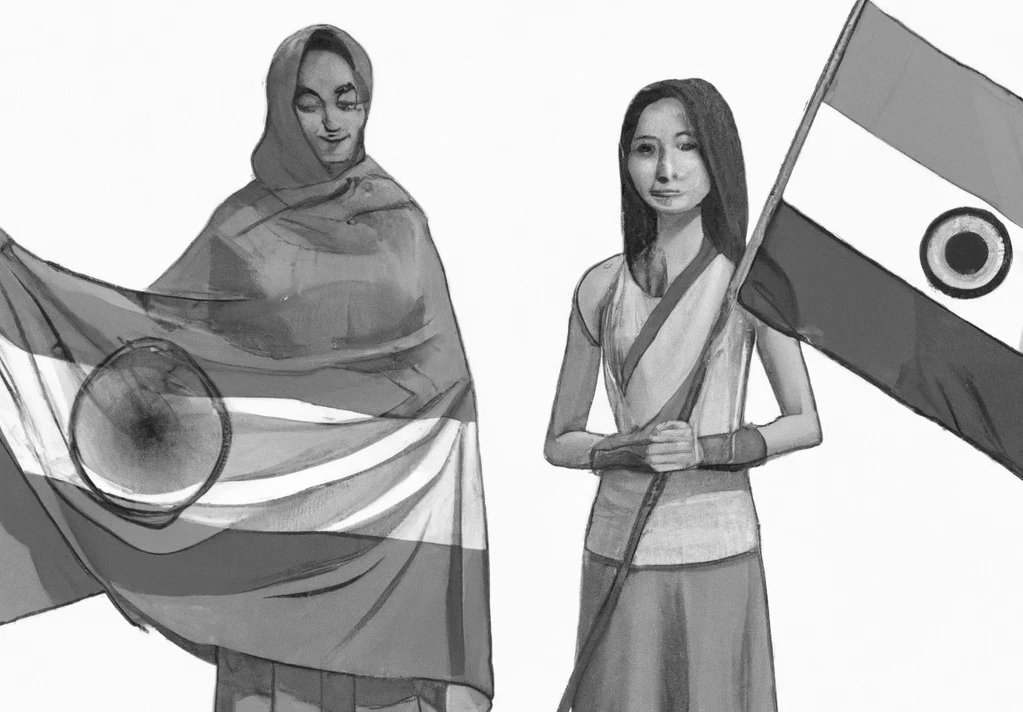
Why Blaming Modi Won’t Make India a Better Place for Indian Muslims

Hindu Muslim Unity in India

It’s a trend seen worldwide – to blame the Indian Prime Minister and the country for its alleged mistreatment of Indian Muslims. I say “alleged” because certain journalists present the scenario as such – that all Muslims are being targeted and attacked. This is absurd for someone like me, who stays in the country. I have had NRIs ask me if there are attacks happening 24/7. I had to explain that, no, you won’t see bodies strewn around like in actual war-torn places.

The journalists should stop portraying the situation as such and misleading our diaspora worldwide into believing we are a nation that is constantly rioting.

Yes, some Hindu extremists are attacking Muslims, but then some Muslim extremists are attacking Hindus as well. There is bound to be some form of extremism and violence where there is religion. This is true for all countries. Not everything is Islamophobia. Not everything is Hinduphobia. We should stop flashing our victim cards and start focusing on finding practical solutions to the actual problem India is facing – our disunity.

In India, we have seen religious polarization increasing over the years. Blaming Modi has not made the situation better for Indian Muslims. In fact, the divide has increased. A major culprit is social media. It is now for everyone to see that pointing fingers is not improving the situation. In fact, it ends up agitating the ones who are big supporters of the Prime Minister and may even lead them to become more hostile toward Indian Muslims. These are the people you need to pacify and not agitate further. Similarly, viewing controversial content like the BBC documentary can upset the ones who are not Modi supporters. They will most likely feel more bitterness towards Modi, even if they have never faced discrimination. This, in turn, would make them feel more polarized, distancing themselves further away from fellow citizens who support him. Totally counterproductive. So why are channels like the BBC working so hard to increase this polarization?

Follow Peace, Not Hatred

Modi has been reaching out to Muslim communities to bridge the divide. This is what the country currently needs. All communities should work towards creating a better India. We should hold talks, discussions, and campaigns and use social media to propagate peace, not hatred. We are one, and we should start behaving as one.

Hatemongers on social media are not looking for resolutions, only drama. They use language that is provocative, unfriendly, angry, and violent. Such people are rarely peaceful or solution-oriented. The first thing citizens need to do is unfollow such accounts on social media. Do not share their accusatory content on your feed, either, even if they support your own community. The more hatred you see on your feed and the more you engage with such posts, the more polarized you will feel over time.

Using Nonviolent Communication (NVC)

In my previous post, I talked about Nonviolent Communication (NVC). Wouldn’t the world be better if countries and communities just sat together, lay down their resources, focused on needs, and came to an amicable resolution? But in real life, we resort to violent and judgmental communication like blaming and pointing fingers. No one has become better with violent, critical language. In fact, people become more defensive and non-receptive to what you are saying when you use an accusatory tone.

Focusing on Needs

So, what “needs” should people focus on during conflict resolution? The main thing to understand here is that people who conflict are operating from a place of fear and not anger. People attached to their religion are afraid their community will face discrimination or violence from “others.” When we think about it this way, things make more sense. Fear evokes empathy as opposed to anger. So why not concentrate on talking about that fear and request ways to make each other feel safe? What does the other party want to hear? Listen and give them that assurance. This assurance should be given by authoritative figures. Someone their community will listen to and follow.

How better would the situation be if each warring nation and community acknowledged each other’s fears, empathized, and comforted each other? “You have nothing to fear from us. We treat you as our own.” This phrase can calm the agitated and anxious, provided all communities sincerely work towards it, finding ways to gain each other’s trust.

Avoiding “Us” Vs. “Others” Mentality

It is always “us” vs. “others” instead of “Indians.” This is where the problem lies. To shift our focus outside of the community and to focus on nationality is proving difficult.

If we continue to have this “us” vs. “others” mentality, we will not be able to address our disparities efficiently. For any kind of conflict to be resolved, that feeling of “one” should be inculcated first. Maybe the communities in India should go through counseling sessions like how couples do when they face marital issues. Therapy is the need of the hour. But here, each individual will need to take on the therapist’s role and advise their near and dear ones.

Am I glad the BBC documentary is banned in India? Absolutely. We do not need more agitations or religion-based violence here. We need our people to unite and make India a peaceful place. This cannot be done with hurtful words and allegations from ourselves or the (actual) “others.” We require our communities to actively connect as one. Only then can we work towards building a better India.

An Ode to Rewatching Movies

A still from Wake Up Sid

It was an irregular day in my life. I had not watched any new movies or tv series in the last 4-5 days on any of the OTT platforms I had religiously subscribed to. This is huge, considering I never went a day without new content.

I realized the moment you subscribe to something, your mentality shifts in that direction of wanting to make the most out of it. You want to get your money’s worth. And once things turn into a habit, there’s no looking back. OTT platforms had become a habit. Not watching new movies or series in the last few days didn’t stop me from zealously adding new items to my watchlist, but I wasn’t tempted to start any. Was it saturation? Was I tired of the new?

Out of the blue last night, I felt like rewatching a 2009 Hindi movie – Wake Up Sid. I remember loving it the first time I watched it. I did not remember any of the dialogues. I only vaguely remembered the feeling it gave me back then – the mushy, soft, warm kind. I was curious whether I would feel the same way again. So rewatch the movie, I did.

It’s a rarity nowadays to watch a movie twice, mainly because you are subjected to many choices. Why go for the old when you can make way for the new? With the rise of OTT platforms, we have more on our platter. We add items to our watchlist, just like a shopping cart. We start multiple movies or tv shows and taste a bit of each, just like a buffet. Movie watching is no longer an immersive experience. It feels like a chore we need to finish quickly because we are already eyeing another.

There was a time when we used to watch and rewatch our favorite stories. By the time we were done, we were able to crack dialogues in the movie as effortlessly as the actors themselves. I do not remember lyrics or movie dialogues nowadays, but that’s understandable. Things stick only when there’s repetition.

I feel when we have more choices, we tend to become confused. Human nature is such that we are tempted to try everything readily available. Nowadays, surrendering yourself to one experience has become rare. There’s a mishmash of multiple experiences that you are driven to partake in simultaneously.

I couldn’t stop smiling while watching Wake Up Sid. The emotions are all contemporary, very now. It has aged like fine wine. Everything in the movie from 13 years back is still relevant today – the angst of a man who’s disinterested in regular office work, his journey to understand himself and his goals, and gradually falling in love with a passionate, ambitious woman. A woman who says with conviction that she’s not interested in him but her actions and expressions prove otherwise. Sid is very relatable, and so is Aisha. When the characters fall in love, you end up falling for them too. Their charm is such. The magic of good storytelling is such.

We don’t make such movies anymore. Is it because love stories are nowadays made with the male gaze in mind, or is the female gaze less fashionable? I doubt it’s the latter.

Would I get back to any of the movies released nowadays ten years or maybe twenty years from now? Would I sit and rewatch with a smile or cringe at the corniness of it all? Only time can tell. I think it’s about time our Hindi filmmakers resumed making feel-good movies again — so that the romantics, like me, have a decent movie to cuddle up to on a dreary, overworked weekday night.

Being a Loner in an Extroverted World

Photo by RF._.studio

I have always been a private person, much to the chagrin of my friends.

In distress, as far as possible, I prefer to process my situation without involving a second person. Venting and ranting bring relief to many, but I regain my composure by pondering over my issues – the ifs, buts, and whys. Of course, this is not always healthy because I end up bottling my emotions and eventually bursting like a volcano.

I have lost friends or faced misunderstandings because people could not understand my introversion. I was never rude to anyone, but I simply could not find the energy to pick up the phone and keep in touch. This would upset those who expected more from me and wished to be in sync with my private life. Being a single woman, everyone is curious to know whom I’m dating, why I’m dating him, and what my future plans are with him. I find this intrusive, even if well-intentioned. Maybe I have no future plans with him, but would they understand that? Mostly no. To add to that, I never found the need to discuss my life events, scrutinize them, or share every little info with friends. I find the process exhausting and find it difficult to manage many friends as I get older. I am good as long as I have one listening, non-judging ear. Yes, even we loners wish to be heard sometimes.

In friendship, I realize that communicating regularly helps build a deep connection. This is why extroverts have many close friends. Keeping in touch comes naturally to them. The more friends they have and the more socializing they do, the more fulfilled they feel. Loners, like me, prefer to have that one good friend, with whom we can talk without restraint. We want to invest our energy wisely without draining out. This may give us an impression of aloofness as we are not actively seeking new friends.

What I find uncomfortable about discussing my life is that most would expect a follow-up story. If timely updates are not shared, questions arise. It is why numerous anonymous posts asking for advice are seen on Reddit. There are issues you are wary of telling your friends and family, no matter how close you are to them. You want to talk about them, but without the responsibility of being answerable to anyone in the future. I don’t have a problem sharing my life events, but it’s the questions thereafter I have an issue with – because you never know when they will stop.

My hesitation is not entirely inherent. I cannot put the whole blame on nature. It is part contrived as well. Experience has taught me that some things are better left unspoken. Recently, I let go of my inhibitions and, in a state of vulnerability, told a few friends at a party about my brother-in-law’s infidelity. I was feeling disoriented and needed someone to confide in desperately. I regret it now because what I did in the process of revealing something private was enable my friends to openly judge my sibling’s life, probably till the end of time. My brother-in-law and sister sorted out their problems, but the judgments did not stop. It is difficult to forgive and forget a terrible event in your life when there’s someone constantly reminding you about it. “My brother-in-law took my sister out for dinner.” “Oh, is it? (smirks and eye-rolling ensue)“. After facing the judgments, you hesitate to share your issues if you know there’s a remote chance that the situation might improve later. And what happens when you stop talking about such intimate parts of your life? Friendships become stale.

Self-reliance can be a boon as it teaches you to be independent, but it’s a bane if you wish to establish a solid network. I love to keep to myself most of the time but also love sharing ideas. These conflicting interests can prove overwhelming at times.

I sometimes envy extroverts. They come fully equipped into a world exclusively built for them. While they start life from ground zero, introverts have to start from minus 10. Introverts reach ground zero sometime later in life when they begin to understand the art of faking extroversion. Being an introvert, socializing never came easy. I have now learned to put up a façade of extroversion to please the people I love and work with, but I end up exhausted by the end of the day. I would wait to get back home and be myself. Finding a partner, who gets my true self, is difficult. They usually fall for the extroverted side I reserve for the world and back off as soon as they learn I am not all that. I have been called “weird” for not liking parties and being quiet. But now I am in a space where I get the solitude I need and a partner who is comfortable with my solitude.

According to Susan Cain’s Quiet, most introverts develop this dual personality to keep up with the extroverted world around them. Society expects them to be outgoing, jovial, and giving – such energy consumers for the quiet. It might be impossible for an extrovert to understand how much energy goes into socializing because mingling comes naturally to them. When the whole world is geared towards extroversion in all forms of life, an introvert has no choice but to conform and act as if they fit right in.

The Unseen, The Unheard

Anthem
Photo by Jatin Baghel

An anthem that exudes unity,

Of being one,

Brothers and sisters of the same soil.

But the words are empty,

As meaningless as a liar’s embrace.

As hurtful as a kin’s animosity.

As rancid as a forgotten fruit.

The unseen, the unheard,

Took over humanity,

Over love, compassion, empathy,

Burning them to dust.

Any wonder why hope is lost each day?

Why hearts break so easily?

Why fires light up hastily?

Why words tremble feebly?

We see more harm than good,

More violence than peace,

More hatred than love,

More you than ours.

More “you” than “ours.”

Eyes burn with hope,

Waiting wistfully for the day,

Humanity wins,

Love wins,

We win.

Over the unseen, unheard.

Fading Friendships

Photo by Rodrigo Souza

Being an introvert, I often find it challenging to make friends easily. By the time I become comfortable with someone, I’m branded an arrogant snob. There is no win-win here. This was true as a youngster and even more so as an adult. The only difference is that new friendships are more challenging for grown-up introverts. As we socialize less than before, our social circles become negligible. By our 30s or 40s, we are too busy with work to care about anything else.

It also hurts when a friendship is falling apart.

Sometimes, after a period of time, you realize you and some of your friends are no longer compatible. You laugh at different jokes; you start taking an interest in different topics and don’t like talking about the same things anymore.

We move on, evolve, and so does our friendship with the people around us.

I remember making bitchy friends when I was in a gossiping phase.

I remember making sweet friends when I was in a vulnerable state.

Some of us bond over the uplifting, enriching positives, whereas some share a fun camaraderie maliciously giggling over the sinful negatives.

The universe gifts us with different kinds of friends during different seasons. The caveat being these seasons are exclusively yours. Each season can be as long or short as your destiny allows them to be. And it is rare that a friend sticks through it all. When you are in summer and in need of light, love, and passion, your friend might be in winter, in need of subtlety, distance, and introspection. There might come a point in the future when you both are summers, or you both are winters. But life is too short to wait for that perfect harmonious season because it might never even arrive.

Over time, I realized I was just not comfortable gossiping and backbiting just for the sake of maintaining a friendship. I was a part of a group (let’s call it The Umbridges) who would say the meanest things about the people they didn’t like – unwarranted comments related to looks, character, and lifestyle. I was no saint. I used to enjoy it tremendously back then. But when I reached my 30s, I couldn’t do it all the time anymore. It didn’t feel right, the gang didn’t feel right, and being in this group of friends felt.. suffocating. I didn’t want to hear any of their nasty jibes. It was obvious to me that the amount of bitching we were doing was not healthy. It felt like I was on Twitter 24×7.

I now wonder if this need for a break from The Umbridges was new or if it was always buried within me, waiting for the right time to surface. Eventually, it did surface, and I started keeping a distance from friends who didn’t feel right for me.

Then they started keeping their distance as well (rightfully so).

The Umbridges slowly started fading. A mere ghost of its previous version. Now the friendship is limited to birthday or festival wishes, casual exchanges, and social media comments.

I feel at peace with this change.

But I also feel sad.

Because no matter how wrong someone was for you or how toxic, you miss the connection it gave you at one point in life. That connection meant something then, though it feels tiresome now. The word “connection” usually has a positive ring to it. But it can exclusively stem from negativity (gossip, backbiting, complaining) or positivity (encouragement, care, good humor). Both can be equally addictive. You often move on from this addiction, but you never forget the feelings you experienced at that point. You were genuine, and you gave it your best.

All types of connections are hard to let go of.

I remember a friend forlornly telling a younger, bitchier me that she didn’t want to gossip with me anymore about anyone as she felt terrible about it. I didn’t understand that emotion then, but now I do. I understand this feeling of desperation that prompts you to stop talking negatively. I cannot describe the feeling in words. It is akin to getting your supply of clean air disrupted, and now you desperately want it back.

You realize sometimes friendships need to fade for you to sprout back to life, to start afresh. You also realize it is going to be that more difficult to find new friends because your social circle diminishes as you age and your affinity for small talk reduces. As a kid, all it took was a new class or a walk to the park to find new friends and initiate a fresh beginning without egos or dozen trepidations coming in between. Now, the best we can do is roll around in bed, sighing and hoping that one day we will find someone, anyone, to share a deep connection with – a friend after our own heart.

An Ode to Comestic Surgery and Embracing Distorted Realities

Photo: Monstera

It’s no secret that celebrities undergo cosmetic surgeries, which are far from discreet, despite what they would like to think. The changes are always noticeable; you know when they get a procedure done. Most of them look stunning as they already are, so it is often difficult to understand why they opt for such procedures.

When I recently discussed this with a friend, she shared an interesting perspective – try to look at it from the celebrity’s angle. They often go through immense pressure regarding their looks. Insecurity and hyper-focusing on “flaws” become the norm. Most often, these flaws are subjective – we usually conclude that we are defective on our own. But sometimes, the people around us plant the seed of insecurity in us by constantly commenting on what they think are our flaws.

Commoners indeed face mean remarks for features that don’t meet beauty standards, but not on the scale as celebs do. I was ridiculed for my long nose for the longest time (I still am). I was someone who was absolutely at peace with my nose. I wasn’t even aware of this “flaw” until people around me started pointing it out. Initially, I welcomed all jokes. I did not wish to offend anyone or be considered a snowflake. The mocking got irritating after a point. I then started explicitly telling my offenders that I did not find such jokes funny. I had no qualms in distancing myself from those who continued joking about it. In hindsight, if I was regularly subjected to unwarranted comments from strangers, who knows, I might have resorted to cosmetic surgery. But I was never surrounded by faceless, nameless people spewing mean comments. I also had the liberty of anonymity, so I moved on happily with my imperfect nose. When I reached adulthood, my insecurity concerning my nose reduced. I like my natural nose; I just stay away from unnatural comments.

Popularity can aggravate insecurity. It is impossible for someone to exist without insecurities of some kind. The public eye, however, tends to exacerbate those insecurities, engulfing you as a whole.

Celebs eventually depend on surgery to correct what their eyes have disliked for a long time. They have the means, so why not? After surgery, that part looks acceptable to them, even if it doesn’t sit right with the rest of their face. And once that problem point is fixed, they move on to the next one. Eventually, they become a distorted version of themselves. I have often seen celebrities altering their faces to no recognition. The version youngsters strive to be without knowing their idols had extensive corrections done to get to where they are, the version that aches to mimic the Instagram ‘Paris’ filter.

In the highly perfectionist modern world, almost everyone has undergone an invasive or non-invasive procedure to correct or enhance their features. If we can get braces, which is in no way “natural,” why is it so sacrilegious to get a nose job or lip filler? But I have often wondered why celebrities’ friends and neighbors do not step up when a procedure goes wrong and advise them not to undergo any more horrendous transformations? One reason might be empathy, kindness, and everything wholesome. Another reason might be that these well-wishers, who might be celebs themselves, are probably unaware of those changes. For the commoner, it is easier to spot such alterations because we are not surrounded by people who have undergone cosmetic procedures. But in a sea of celebrities who have undergone some enhancement or the other, your eyes get trained to adapt and ignore.

If we consider everything from a celebrity’s point of view, things start making sense. You tend to judge less and accept that in some people’s worlds, the realities may not confine with ours. However, it is still a reality – theirs – that we need to empathize with, acknowledge and accept.

“You never really understand a person until you consider things from his point of view—until you climb into his skin and walk around in it.”

Harper Lee’s “To Kill a Mockingbird” (1960)