‘Nobody Wants This’ Delves into a Rarely Explored Topic

Nobody Wants This Netflix

I decided to watch “Nobody Wants This”, starring Adam Brody and Kristen Bell, after reading positive reviews by friends and acquaintances on social media. The synopsis on Netflix initially failed to interest me, so it never made it to my watchlist. However, after going through reviews, I decided to give it a try. “I could always stop if I didn’t enjoy it,” I reasoned. Thankfully, I found the romcom drama refreshing.

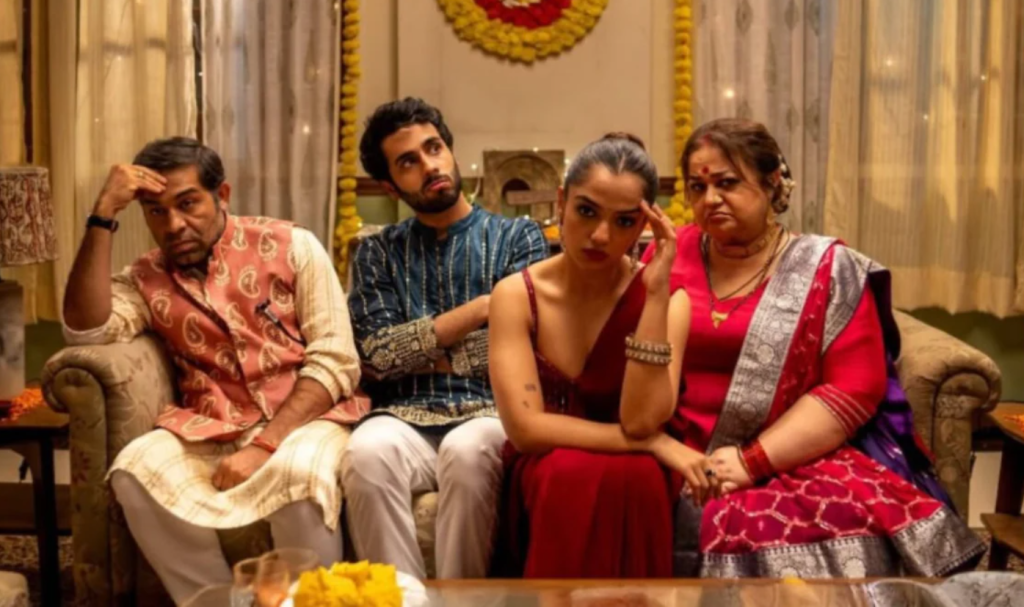
I enjoyed the side characters more than the main leads, especially the Jewish family members. They were quirky, hilarious, and surprisingly felt close to home. My country, India, is not exactly the most open when it comes to interfaith relationships. Sure, it is happening more than ever, but some questions persist.

“How will the two adjust to different religious beliefs?”

“Whose religion would the kids inherit?”

“Would we lose our child to another religion?”

These are some common questions that arise in the minds of many Hindu families when their child’s interfaith relationship progresses to the marriage stage.

Netflix’s ‘Nobody Wants This’ interestingly tackles a subject that not many interfaith romcoms have done before – conversion. Should you convert if your partner from another faith insists on it, claiming (or emotionally blackmailing) marriage is impossible otherwise? I will be honest. I do not think one has to sacrifice their identity in love. Requiring conversion as a condition for marriage feels manipulative and unfair. If your partner truly loves you, why would they expect you to change your identity?

I wouldn’t have hesitated to convert for love in my younger days. Back then, love mattered more to me than anything else, even religion. However, as I matured and understood life better, I realized you can follow your heart without leaving your brain behind. You don’t have to bend over backward in love. That’s the beauty of aging – you realize that sacrificing your identity is never an option. Your partner has to accept the way you are.

Yet, some people, unable to disappoint their parents, push their partners to take this extreme step. If they can’t disagree with their parents over an important issue such as the partner’s identity, how will they ever be able to support the partner when issues involving parents over less important matters pop up in the future? Once you let go of your identity, more demands pour in – you are expected to raise your children following only one belief and break off all ties with your “old” religion. It is an overwhelming decision no one should be subjected to, especially on the people you love. One sacrifice is often followed by umpteen other sacrifices.

I am glad this aversion to conversion is gaining traction in India, with many refusing to convert for marriage. In fact, some people are even choosing to end their relationships over it. Why convert when our legal system allows couples from different faiths to marry in court?

The romcom touches on this sensitive topic of conversion and the ideological differences between the two communities. One is liberal, the other conservative. How to tackle differing opinions? The main characters aspire to provide you with an answer.

‘Nobody Wants This’ is streaming on Netflix. It has a total of 10 episodes, with each lasting around 30 minutes.

The Worries of a Lover with a History of Heartbreak

The worries of a lover with a history of heartbreak

Relationships have never been a smooth sail for me. The kind of love glorified in movies and online platforms always felt like a distant dream. Agreed that cinema and social media do not always portray the complete picture. Yet, I envy people with uncomplicated relationships – they meet, like each other, and live happily ever after. Simple as that. For me, it has always been – we meet, we like each other, things fizzle out, distance, heartbreak, and increased caution.

I can cite many reasons for my past relationships not ending as I wanted them to. By this, I do not mean marriage, as that is not my end goal. I have been married once, and it was enough to make me realize that a traditional marriage, with its many rules and regulations, is not meant for someone unorthodox like me. It also wouldn’t be fair to impose my eccentric perspective on a family that adheres strictly to traditional marriage norms. In India, let’s face it, most families do want a marriage that sticks with the conventional route. Anyway, that’s a topic for another day.

What I seek is a long-lasting, peaceful, healthy, uncomplicated companionship rooted in friendship. The type that doesn’t make you stand on your toes or feel a sense of dread. The kind that doesn’t try to control or abuse. It is free-flowing and natural. A type of love that is as comforting as a warm cup of chai.

This post is not about my past relationships. It does not seek to give any motivational, positive advice. The thing I want to focus on is my feelings. There is always a fear lingering, no thanks to previous experiences.

I am currently in a relationship with the most caring man I have ever met. Someone who makes me feel at ease. I am at my most authentic self in his presence. However, sometimes, I look at his kindness with skepticism.

When you have had people playing with your feelings in the past, you eye even the sincere ones with suspicion. It’s a survival mechanism. You want to protect yourself from any impending heartbreak. You do that by asking yourself tough questions. You put yourself in a spot. You wonder if there will ever come a point when they, too, will start acting distant. Would the person, over time, forget that you two shared meaningful moments together, and end up talking in a manner devoid of any warmth or friendship as if you are a complete stranger wasting their time? Do you have it in you to deal with one more heartbreak, one more connection that transitions towards indifference?

These dark emotions are exclusive to us, the lovers with a broken track record.

It’s a terrible game your mind plays. Even your heart. You find yourself saying, “Be careful. Keep a safe distance always. It helps.” However, it is easier said than done. Gaining control over matters of the heart is not easy. It almost sounds robotic to do so. Humans often default to trust, hoping they’ve made the right choice and leaving the rest to fate. If events are destined, they’ll unfold regardless. Obsessing over control only brings suffocation and regret.

Life has this uncanny ability to unravel answers to your most pressing questions over time. That’s the one pro of aging – you gain this awareness that the answer will indeed arrive, if not now, then at a later stage. The sane thing to do would be to wait patiently instead of torturing yourself with questions that no one, even yourself, would be able to answer at the moment.

***

Photo by Hassan OUAJBIR

An Ode to Love in the Times of Ageing

An Ode to Love in the Times of Ageing

“What does love feel like?” asked a member of a community I am a part of. She had never experienced romantic love before and was genuinely curious about what to expect when she eventually falls in love – Is love easy? Is it kind? Is it everything movies and books make it out to be?

In my 20s, my answer would have been, “Love means you are willing to do anything for the person.” It meant no inhibitions, forgiving all mistakes, and smiling positively through the storms. There is no sense of self. You are engulfed by passion and intimacy to the point your brain cells cease to function.

The way we look at love in our 20s might be derived from various sources – movies, shows, books, music videos, social media, interviews, etc. The love depicted in public is often dreamy, romantic, and glossy. The type that makes our hearts sing. We expect our partners to follow the same route – always say and do the right things at the right time. However, it is not as simple. One must undergo real experiences to truly understand and form our own definition of love.

My perception of love changed considerably in my 40s.

Love no longer means giving up everything to make a relationship work, especially your self-respect. Love means being at ease with your partner, not walking on your toes, and being anxious about their reaction. Love is comfort, like a tight hug after a tiring day, like a cup of coffee embracing you with its warmth. An emotion that is balanced, not agitating and swinging back and forth between extremes of love and hate.

I have experienced bad relationships and am thankful I overcame them unscathed. Back then, blinded by love, I would find excuses to justify any form of disrespect I got. I would tell myself, “They must have had a bad day.” “Maybe they didn’t mean what they said.” But over time, you learn not everything is done unintentionally. If a mistake happens more than once, it is not a mistake, it’s a habit, a conscious decision. But the young me did not understand all this. I was under the impression that the harder I worked in my relationship, the easier it would be for my partner to love me.

Love requires some amount of compromise, for sure. But how much is too much? Only you can answer that yourself. Different people have different levels of tolerance. What might sound disrespectful to me might not be for the other person. However, a general rule of thumb is that I should feel at ease with my partner and be able to communicate freely without fear.

I am curious how my definition of love will change over the next 20 years. Will love be more balanced than it is now, or would it sway? Only time can tell.

***

Photo by cottonbro studio

Korean Movie Spotlight: A Man and a Woman

Detouring a bit from the usual saccharine sweet K-dramas, I decided to give this Korean movie named “A Man and a Woman” a try.

A Man and a Woman

Disclaimer: This post shouldn’t be treated as a review because I am far from qualified to give an objective and professional take on cinema. It should be treated as a subjective viewpoint of a cinephile who loves to watch movies and dramas purely for entertainment. I have only one criterion – I shouldn’t get bored. The film will be judged on that factor alone.

What’s It About?

“A Man and a Woman” is an emotional story of Sang-min (played by Jeon Do-yeon) and Ki-hong (played by Gong Yoo), two individuals who meet by chance and form a deep connection. They embark on a passionate but bittersweet extramarital affair amid their complicated personal lives.

Thoughts

The movie starts at a leisurely pace. I am generally not a fan of slow films, so I wasn’t sure whether I would like it. But I realized this pacing was essential to build the melancholy rhythm of the extramarital affair and to make us invested in their whole journey. It is a tumultuous relationship that is delicate and emotional, kind yet painful.

You end up rooting for the cheaters, something I have never done before. Two people quietly enduring the drudgery of everyday issues with a dry smile, eventually finding some warmth in each other’s arms. It’s tough to chide them. You know they are doing something morally wrong, but you want them to be together forever.

The credit goes to the makers and the actors for making us feel emotions out of the norm. We should be offended, angry, and betrayed seeing two people cheating on their spouses. But weirdly, we are not. That’s the effect of good creative storytelling. They make you feel what they want you to feel.

I would recommend the movie to serious cinema watchers, regardless of your take on extramarital affairs. Both the actors are brilliant. There is nothing as emotionally wrecking as the final few scenes. It is also an ugly reminder of how some of us, unfortunately, get the raw part of the deal, no matter how sincere we are. It’s just how life is, and the makers of “A Man and a Woman” have managed to capture this aspect brilliantly on camera.

6 Things I Find Scarier Than Being Alone

Solitude. Enjoying a view alone from a mountain top.

Most people are scared of ending up alone. The single ones want to get married, thinking it’s the answer to their loneliness. The married ones do not even want to think of a life where they would be without their partner. Both are justified.

But my problem lies with this – the single life is made the villain here. It has unnecessarily got a bad reputation, something that you need to steer clear of at all costs.

People tend to forget that being alone cannot be avoided. You will be alone at some point in your life, if not now, then later – when a partner passes away, or your children migrate, or due to other unforeseen circumstances.

Rather than being afraid of being alone, learn to embrace it.

Humans cannot do without love or some form of social interaction, but we shouldn’t be left flustered or lost if left on our own.

Picture your kids and your partner on an extended vacation. Maybe a year or more. Are you confident that you can manage things comfortably? I am not talking about emotional dependence. We all are emotionally dependent on the ones we love. But are you relying on others to manage your life for you?

One thing I learned when my father passed away was how dependent my mother was on him. She was left clueless on how to deal with life, financial responsibilities, and day-to-day chores that my father used to handle till then. So I had to take on my dad’s role when he passed away, even though I was just as clueless as my mother was. It was then I realized I wasted many years not learning enough from him, especially crucial matters related to finance.

Also, as someone who was once married and has lived alone for the past 15 years, I would like to say there are things in relationships that I certainly find scarier than being alone.

Being clueless about finance

We all must know how to handle our finances, irrespective of whether we have a partner or not. God forbid, if something happens to our partner, we should learn to navigate the situation.

Times are such that we cannot depend on outsiders to handle our money. We should take small steps to be financially literate.

The first step to awareness is to start learning from the member managing your family’s finances. Have conversations with them, understand what kind of investments they have made and why, and what your responsibilities would be in the future when it comes to managing any assets or liabilities in the future.

Being stuck with someone who can’t understand me

I find this scary because no matter what I do or how deeply I express myself, a partner whose emotional wavelength does not match mine might never be able to understand me.

It’s not the partner’s fault. It’s not yours either.

You both are just wired differently.

So to expect your partner to “get you” when they cannot is scary and unfair.

Wanting different things in life

There is a reason you “fall” in love. You are literally freefalling without any second thought. You ignore all the red flags because you have been blinded by love and are ready to forgive even toxic traits. You miss the blatant differences because they appear tolerable when new to love.

I did not understand this when I was young. However, I later realized that the more commonalities you share, the less turbulent your relationship will be.

Your core values should align, if not anything else, so communicating what is important to you (the dealbreakers) is a must.

Not being able to connect once the honeymoon phase is over

You never get to know someone’s love language unless you spend significant quantifiable time with them.

When you fall in love, your hormones are on overdrive.

You get to know how right you are for each other when things settle down.

Feeling alone in a relationship

This stems from point 2 – being with someone who can’t understand you. The second phase of this issue is usually loneliness, which creeps in when you try to make your partner understand you, but they are unable to.

All our lives, we are looking for someone to fill that void, but when that person themselves is responsible for the void, it is the most dreadful feeling.

Sometimes couples drift apart, and the only thing that remains is the relationship tag. This change cannot be predicted, but when it happens, it is more scary than being alone.

Not having complete control over my life

We fall in love, and we succumb entirely to the other person.

We lose some of our individuality and control over ourselves in the process.

Some amount of compromising is required for any relationship to survive. But how much is too much?

When I was married, I realized I had to let go of many things I enjoyed while I was single – my solitude, freedom to spend and invest my money the way I like, etc. This sudden loss of control was a scary thing for me. It is also a reason why I never remarried.

Conclusion

There are a lot more things that are scarier than being alone.

The purpose of this post is to educate young ones not to make rash decisions based on societal pressure or your own insecurities.

A partnership is to be pursued with full awareness. If you are afraid of being alone, you will never be able to view a relationship in a practical light. Worse, you might end up compromising on all the negatives or the red flags your partner throws at you just so you won’t end up alone.

Embrace solitude; it’s not all bad as society paints it to be.

***

Photo by Arthur Brognoli

An Ode to My Failed Love Stories

An ode to my failed love stories
Photo by Quang Nguyen Vinh

Love, for me, has always been complicated. As a youngster, I always thought my first love would be for keeps. That the first kiss meant the deal was sealed forever, and the relationship was locked in for life. But real life is not a movie. It is definitely not a fairy tale. Different plans were charted out by forces beyond my control. Plans that would, at times, suck the soul out of me.

I have had the privilege of experiencing intense, passionate, illogical romance. The type that makes you forget the world around you and causes you to stutter and act foolish in your partner’s presence. It nudges you to write cheesy poems and bestow embarrassing gifts. You go to great lengths for the person to ensure they understand the value you bring to their life. The type of love where the self merges with the other and all boundaries and individualities diminish. On the flip side, the sort of young, inexperienced affection that cajoles you into tolerating mistreatment or disrespect and threatens you to compromise on your values just so you would stay confined to that perpetual dark zone. Your mind conveniently wants you to romanticize your forgiveness. “These things happen in love,” it protests, and you continue to give your partner the benefit of the doubt.

These love stories of mine never (thankfully) lasted.

An ex once told me it’s better to be in a relationship with someone who loves you more than you love them. It acts as an effective self-preservation mechanism. When you are neck-deep in love, you kind of understand this theory. Minor disagreements tend to hurt, even if your partner is not at fault. Too much love can suffocate you. What else would explain us becoming overwhelmed by our own emotions to the point of no return? But how much is too much love? That’s subjective.

Deep love can often hurt because the level of emotional involvement is more. To step back and think logically is implausible, especially when all you want to do is cling to the person for dear life and unabashedly consume any space that exists between the two of you. It may be why many of us hang on to toxic love because, in a way, we are addicted to the person. Our love-struck system cannot tolerate being apart from the one we adore, even if we know the person is detrimental to our health. We longingly look out for our next “dose.”

Experience teaches you that some level of detachment is required to preserve your self-respect. You cannot merge yourself with your partner so fully that you lose your common sense along the way. “Follow your heart, but take your brain with you” is the new mantra. If you ignore this life hack, you lose.

Love has the power to keep you in a chokehold. All the chemicals in your body work harmoniously to prevent you from escaping this sea of love that, at times, is more adamant about drowning you than keeping you afloat. “You need them,” your mind justifies. “You won’t be able to survive without them.” Sometimes, you wonder why your own system is working against you. Why can’t it produce fewer chemicals and give your brain a chance to defog at least twice a day so you get some leeway to make rational decisions?

Often, some intensity imbalance is required to balance a relationship. Ironical, isn’t it? It’s never 50-50. Fighting for that 50-50 is when the balance goes haywire. Your whole focus is on whether equality is being maintained. A 40-60 is good enough, where each partner is mature enough to take the lower percentage of the deal, depending on the situation. But maturity is scarce, often leading to one partner compromising more than the other, accumulating bitterness in the long run.

I am in a proper healthy relationship at the moment, which feels different. Does he love me more than I love him? I am not sure. It feels equal. But less intense than any of the previous ones. It feels more mature, where things are discussed rationally, and no disrespect or insults are thrown generously into the air. We talk like proper adults with our negative emotions in check. For someone so used to an overflow of feelings, war of words, and flurry of insults, this silent, peaceful lull feels refreshing.

I can’t help but wonder if age and experience have a role to play in how he and I feel. He confided in me that he used to have no control over his words or emotions in his 20s. He used to be an angry young man, possessive, and naive. This contrasts with his current version, a wise man humbled by his own life experiences. It may be why “first love” is unique. Our emotions are intense in our formative years, and age has a way of watering them down. It is not that the love we experience later in life isn’t true. It becomes more guarded because you subconsciously filter your emotions through the lenses of your previous relationships. You learn your lessons, and you get better. But some of the dreamy rawness gets lost in the process.

If you are happily married to your first love, you might not relate to this post. But those who have had some failed passionate relationships would understand this feeling of being “in love” but also knowing the person isn’t right for you. The agony ends up changing you and even your future relationships because nothing molds you more intricately than experience. We are a sum of all the experiences we have been through, and each of us has a different journey that we have carved out on our own. It is understandable, then, why the concept of the “ideal relationship” may vary from person to person and may evolve over time. What I feel about love now is drastically different from my 20s. Earlier, I used to prioritize PDA and gifts. Nowadays, I prefer the subdued kind.

Do I miss the passion and cheesiness of my earlier relationships? Sure. But they have also taught me to step back and feel gratitude for the security and peace that comes with a healthy, respectful one.