The Introvert-Extrovert Chat Paradox

Picture of two people looking at each other, depicting introversion and extroversion

Something that has caught my eye often over the years is the difference between how introverts and extroverts communicate in real life and online. I wonder if you’ve noticed it too.

I’m an introvert who loves writing and blogging. But I’m someone with a fairly extroverted chatting personality.

On the other hand, many extroverts I know are surprisingly quiet on chat. Some even come across as shy. Meanwhile, introverts like me can appear far more outgoing and expressive online.

This is where things get interesting.

Imagine a friendship that begins through real-life interactions. Someone gets to know your actual personality, and then later comes across your online personality or chat personality. What if they don’t like that version of you as much? The opposite can happen too. Someone may enjoy your confident, talkative online presence but struggle to connect with the quieter, more reserved version of you in real life.

I think this is where many misunderstandings and personality clashes happen today.

This post is simply an observation. It’s just something I’ve noticed while navigating friendship and online conversations.

As someone in my 40s, I didn’t grow up with this confusion because there was no online personality to manage. The people around you knew only one version of you.

I did start blogging during my college days. Over time, I developed an online personality that was more outgoing and expressive. The internet felt like a safe space where I could communicate freely. As someone who was studious and never benefited from what people call “pretty privilege,” writing online allowed me to share my thoughts without feeling judged.

My appearance may have changed over the years, but my introverted nature never really did. The internet continues to be a comfortable space where I could express my feelings and connect with others in a way that felt natural to me.

Today, we live in a digital age where friendships and even relationships are shaped by multiple versions of ourselves. Real-life conversations, text messages, social media interactions, blogs, and online communities collectively play a role in how others judge us.

Maybe that’s why getting to know someone has become both easier and more complicated than ever before.

***

Photo by cottonbro studio

Day 1 of My Acne Scar Treatment Journey

So today, I officially started my acne treatment journey after finally consulting a dermatologist. I do not have severe acne all the time, but I do get hormonal acne around my periods, and I also have some stubborn acne scars from older breakouts.

I am also considering adding my cleaning lady and aunt to my will because both confidently told me I did not need a dermatologist. To be fair, it could also be because they cannot actually see my acne scars without their glasses on. But I am ignoring that reality. Sometimes you need to be in a “delulu” space for mental peace and happiness.

Type of Acne

My acne usually shows up as white pimples on my cheeks every now and then. The bigger issue for me has always been the aftermath. Even a tiny breakout tends to leave behind deep brown or pink acne marks that take forever to fade. That is honestly what pushed me to finally visit a dermatology clinic instead of experimenting with random skincare products from the internet. I did not want to ruin my skin further (has happened before).

After my consultation, I was diagnosed with Acne Vulgaris (Grade 2). This mainly includes recurring pimples along with small, inflamed bumps called papules and pustules.

Acne is generally classified from Grade 1 to Grade 4:

  • Grade 1: Mostly blackheads and whiteheads with very few pimples
  • Grade 2: More pimples with mild inflammation and small bumps (papules/pustules)
  • Grade 3: More widespread inflammation with larger painful bumps or nodules
  • Grade 4: Severe cystic acne with deep painful lesions and a higher risk of permanent acne scarring

So, Grade 4 is considered the most severe type of common acne.

My Customized Acne Treatment Routine

I am not going to mention the exact prescription medicines because treatments like retinoids should only be used under a doctor’s guidance. Skincare is definitely not one-size-fits-all, and self-treating strong acne medications can do more harm than good. So the products recommended were:

  • Facewash
  • Moisturizer
  • Sunscreen
  • Retinoid (at night)

My dermatologist prescribed a simple skincare routine for me.

For cleansing, I was asked to use AHAglow Face Wash, which is available on quick delivery apps like Blinkit and Swiggy Instamart. After cleansing, I was told to use Olesoft Moisturizer followed by Acne-UV Sunscreen during the daytime.

At night, she prescribed me a retinoid cream. I am intentionally not sharing the name because prescription retinoids should never be used without proper medical advice. I was specifically instructed to use only a pea-sized amount across both cheeks, forehead, and chin, while avoiding sensitive areas such as the corners of the mouth, the sides of the nose, and the under-eye area. This shows how strong the cream is.

Honestly, the retinoid is the part that scares me the most because it is known to cause skin purging in some people during the initial weeks. But at the same time, it is also considered one of the most effective dermatologist-approved treatments for acne and acne scars when used correctly.

This is officially Day 1 of my skincare and acne healing journey, and I plan to document the process, including the good, bad, and dramatic moments. My dermatologist did say results take time, so I am trying to stay patient and trust the process. to see her again after 6 weeks, so I am guessing it takes 6 weeks to see a change.

I’ll know the treatment is working when my friends have to reduce their phone brightness after opening my selfies. Fingers crossed.

***

Photo by Ron Lach

The Sad Part of Travel No One Warns You About

Travel Photo

Most people say travel is rejuvenating, but no one really talks about what happens after the trip ends. This feels especially true for people with desk jobs, regular 9-to-5 schedules, or the kind of overtime-heavy work culture that has become common in India.

Once you return from travelling, you are often left with an unsettling feeling. You begin to realise how much of your life is spent restricted to a desk, tied to routines and responsibilities, while there is an entire world outside waiting to be explored. New cities, different cultures, mountain roads, local food, conversations with strangers, and experiences that make life feel bigger than your daily routine. Travel has a strange way of making ordinary life suddenly feel very small.

The truth is that most of our lives are spent working. We spend decades chasing stability, salaries, deadlines, and financial security. Only after retirement do many people finally get the chance to explore the world properly, spend more time on meaningful things, or simply move through life at a slower pace without constantly watching the clock.

After my recent trip, I finally understood why many people choose to limit travelling to retirement. Because when you travel while still working, the months that follow are spent thinking about retirement itself. You start questioning the structure of life in a way you probably never did before.

I think most people are not really craving luxury nowadays. They want peace. A chance to step away from competition, pressure, expectations, and the endless cycle of productivity. But financial responsibilities keep most of us attached to the lives we currently live. And if you think about it, it really is a sad state of affairs. So much of life passes without us truly knowing the world outside our routines. We spend our healthiest years working, saving, and postponing experiences for “someday.” Then, when we finally have enough time and freedom to explore, our physical health may no longer allow us to travel the way we once dreamed of.

Sometimes it genuinely feels like a trap. That is just how modern life is designed. The very rich can afford to live slowly, travel often, and experience the world freely, while the rest of us remain tied to jobs so we can eventually retire with enough money to live comfortably later in life. Until then, most people continue surviving between deadlines, stress, and short vacations that end far too quickly.

It has now been two months since my trip ended, and the feeling of missing the mountains still has not faded. I miss the slow life and mental peace I experienced there deeply. Returning has brought a quiet sadness that has stayed with me ever since. During those ten days of travelling, I experienced bliss as I consciously stayed away from the internet and social media. Honestly, it felt like a relief. When you are travelling, you do not really need distractions because the world around you becomes interesting enough on its own. Every moment feels fuller and more present.

Back home, though, life goes back to screens, schedules, and desk work. And sometimes the internet becomes the only way to explore the world when your real life feels limited to routines.

So now I sit with these thoughts quite often. There is a sombre feeling attached to them. I acknowledge these emotions and quietly hope that one day I return to the version of myself that existed before the trip, when I did not constantly think about whether I was missing out on life, the world, new people, or new experiences. Back then, work and everyday routines felt enough. I was content simply engaging daily with the people I already knew and focusing on responsibilities without questioning life too much.

But travel changes something inside you. That is the difficult part about it. It is both beautiful and cruel at the same time. It opens your eyes to how much more life has to offer, while also reminding you how little time most people actually get to experience it. As the euphoria of the trip fades, the ache lingers.

***

Photo by George Pak

Do Deewane Seher Mein: Simple Love, Real Insecurities

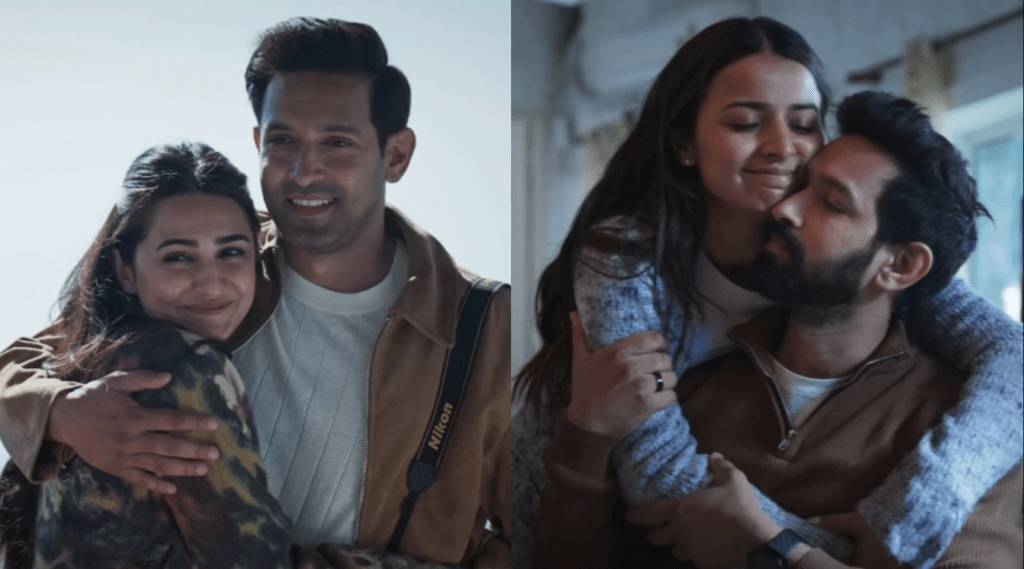
Do Deewane Seher Main Poster

I recently watched Do Deewane Seher Mein on Netflix. Since it’s backed by Sanjay Leela Bhansali, I was naturally curious. We hardly get old-school romantic movies anymore, the kind where love feels simple, and tradition is not mocked. That’s also what pushed me to check out Bada Naam Karenge on Sony Liv, created by Sooraj Barjatya.

If you’ve grown up watching Barjatya and Bhansali films, both these productions will feel familiar in a comforting way. At a time when romance on screen often leans heavily into physicality, these stories bring back themes like family, matchmaking, and mutual respect. They are the kind of feel-good watches you’d pick for a relaxed weekend.

Coming back to Do Deewane Seher Mein, the story revolves around two individuals dealing with their own insecurities and how those insecurities affect their relationship. The female lead struggles with her appearance, shaped by years of comments and comparisons, especially with her sister. That part felt very real to me. Growing up, I was the “ugly duckling” in my family too. I had thick glasses, was painfully shy, and very thin. It was only in my 20s that I began to fit into what society considers “good-looking.” Even now, compliments feel a bit superficial to me. That’s what constant criticism during your formative years can do. So I completely understood her emotional journey.

The male lead’s insecurity is also relatable, but I wish the film had spent more time building these emotional layers. The foundation is there, but the depth feels slightly underdeveloped. Because of that, when the characters reach their breaking point, it doesn’t hit as hard as it could have. The story had strong potential but seemed to lose momentum along the way.

That said, both Siddhant Chaturvedi and Mrunal Thakur deliver solid performances and do justice to their roles.

Overall, Do Deewane Seher Mein is a decent one-time watch, especially if you enjoy classic-style romantic storytelling. It’s currently streaming on Netflix.