Even Goddesses Have Their Limits: Learning to Walk Away

I’m a divorcee. I have been for many years now. I’ve never hidden this fact. But I also never imagined my marriage would end the way it did. Then again, who does?

We all grow up believing our marriages will last forever. I also used to think of myself as a tolerant person, so the idea of my marriage failing felt impossible. In my mind, this is something that others might have to go through, the ones with anger issues, those who couldn’t compromise. Not me.

I followed every piece of advice perfectly. The kind you might have seen relationship gurus meting out on social media nowadays, i.e., communicate respectfully, try to understand the other person’s perspective, etc. But over time, I realized communication isn’t a one-way effort; it takes two people to make it work. If only one partner keeps trying while the other sits back, believing they have nothing to change, it slowly chips away at your happiness.

With time, after observing other marriages around me, I understood that maybe I wasn’t as tolerant as I thought — at least not by Indian standards.

Different Levels of Tolerance in Relationships

My regrets in relationships are less about the ex and more about how I handled things. “Why did I let others influence my decisions? Why did I tolerate and compromise more than required?

Of course, every relationship requires compromises. But each partner also has their own tolerance limits. For me, physical or emotional abuse is unacceptable. Yet, even I, someone who might appear intolerant of everything, tolerated it for a while before deciding I’d had enough. Many women, however, make peace with such situations in their marriages (and relationships in general) for their own reasons (dependency, fear, children, financial pressures, and more).

To cite an example of varying levels of tolerance: When I kept hearing cries of domestic violence in my building, I complained to the building association, even though people advised me not to. “It’s their family, their rules.” But I couldn’t just sit there doing nothing while hearing those cries. It was traumatizing. I took this step because there were times, even in my own relationship, that I wished my neighbors had intervened. Probably, ring the doorbell or knock on the door. It would have provided that much-needed relief.

After my complaint, it hasn’t happened since. But who’s to say the guy didn’t just find quieter ways to hurt his wife? I would’ve run away if such things had happened to me repeatedly, even if it meant begging on the streets for the rest of my life. But his wife might be thinking, “It’s okay. He’s doing it all out of love.” Who’s to know? You can’t save someone who doesn’t want to be saved.

Different levels of tolerance.

People also need to understand that no one files for divorce after just one instance of mistreatment. It happens when the same behavior repeats, even after requests, pleas, and calm conversations. Some choose to walk away, while others make peace with the idea that this is how their life will be. So the common advice of “give it one more chance” is mostly useless, and a bit insensitive, because the ones involved might have already given it multiple chances before deciding to let go.

Power of Faith During Tough Times

Even though I’m not a religious Hindu, having faith in some form has always helped me through tough times. It’s the one thing to hold onto when it feels like your world is falling apart. Even now, I rarely visit temples or follow rituals properly, but in moments of extreme heaviness, I still pray. Not to any specific god. I believe we’re all praying to the same divine force, just using different names and stories. What else could explain miracles happening in every community?

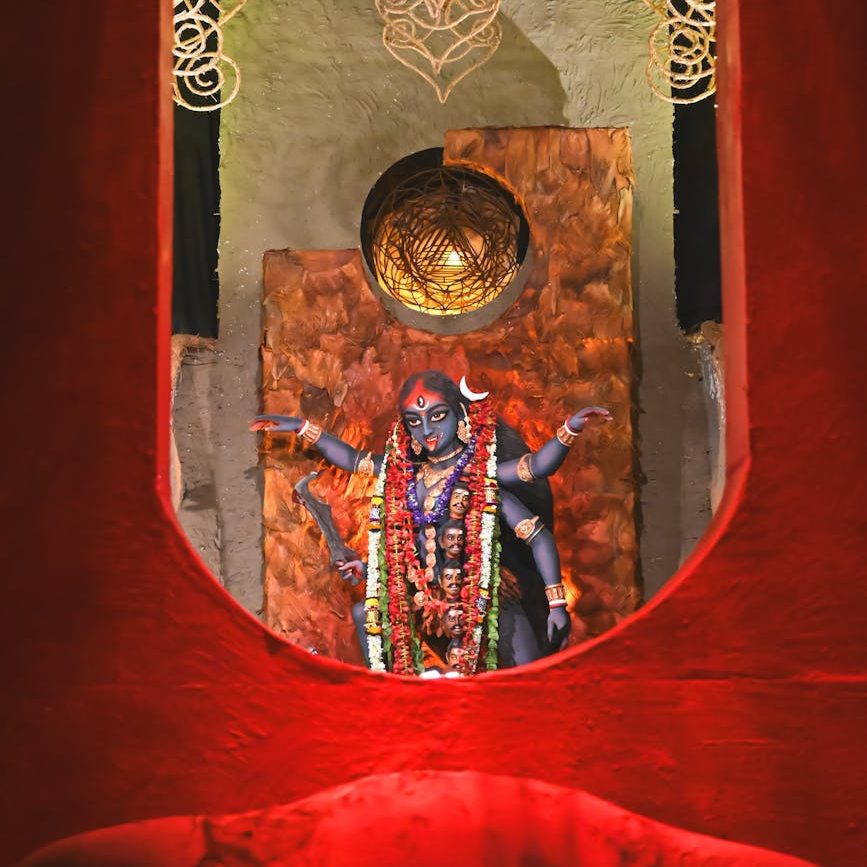
I remember, when I was married, our home had a lone idol of Goddess Kali, a deity I had rarely prayed to before. My parents usually had Lord Krishna at home. I still remember looking at the deity and crying. I asked if this was how it would be for the rest of my life – painful and broken on the inside, faking happiness on the outside (especially for social media).

I sometimes think I might have continued living that way if I hadn’t been pushed by some greater power to take a stand for myself. Probably it was Her. Must have been fed up with me always looking at Her, crying and whining. Even goddesses have their tolerance limits. Also, gods only help those who help themselves, right? Or as we Malayalees say, “Thaan paathi, dhaivam paathi” (you must put in your half of the effort, and God will take care of the rest). Maa Kali might have gone, “Bitch, why don’t you just leave the marriage, instead of troubling me all the bloody time?

The day I walked out of my marriage was also the day I told my parents, “If you don’t help me, I’ll do it on my own.” Thankfully, they stood by me when I made that decision. I also had the confidence to stand on my own feet. I wasn’t employed then, but my freelance work brought in some income. I knew that if I left the marriage, I wouldn’t be a burden on anyone. That same freelance experience later helped me secure a job. It formed the bulk of my resume, and it convinced my employers that I could handle responsibilities independently, even while working from home, at a time when WFH wasn’t even common.

When I look back, I feel the universe was guiding me in small but meaningful ways toward a life that may be inadequate for someone else, but is absolutely correct for a homebody, introverted feminist like me.

Taking Marriage Advice from Society

But the point is, society will tell you not to take advice from a woman like me. Because I’m a divorcee. What would I know about marriage and relationships, right?

Yet it will encourage you to listen to the woman who keeps enduring it all, at the cost of her well-being, because that’s what a “good wife” does.

Society doesn’t really care about what a woman thinks or feels. It just wants you to stick to the rules.

***

Photo by Monojit Dutta

Redefining What Success Means

Success Go Get It Image

I came across the following post online:

I think a lot about how we as a culture have turned “forever” into the only acceptable definition of success. Like… if you open a coffee shop and run it for a while and it makes you happy but then stuff gets too expensive and stressful and you want to do something else so you close it, it’s a “failed” business. If you write a book or two, then decide that you don’t actually want to keep doing that, you’re a “failed” writer. If you marry someone, and that marriage is good for a while, and then stops working and you get divorced, it’s a “failed” marriage.

The only acceptable “win condition” is “you keep doing that thing forever”. A friendship that lasts for a few years but then its time is done and you move on is considered less valuable or not a “real” friendship. A hobby that you do for a while and then are done with is a “phase” – or, alternatively, a “pity” that you don’t do that thing any more. A fandom is “dying” because people have had a lot of fun with it but are now moving on to other things.

I just think that something can be good, and also end, and that thing was still good. And it’s okay to be sad that it ended, too. But the idea that anything that ends is automatically less than this hypothetical eternal state of success… I don’t think that’s doing us any good at all.

It’s never “the person successfully got out of a bad marriage or bad friendship,” which, in my opinion, is one of the toughest things to do, at least in India. There are always a hundred people telling you to save the marriage or friendship, even if it sucks your soul. They go all out to make you feel guilty. When you do manage to get out of it eventually, it’s labelled a “failed” relationship.

Have we got our definition of success all wrong? The way it stands today, it often makes us cling to things that are no longer healthy, just for the sake of appearances. We try to make them work, even when we know they’re a lost cause, because society’s approval depends on it. We want people to look at us from afar and say, “Yes, they’re doing well in life.” This happened to me when I was trying to get out of my bad marriage. Society did not see my anguish; they simply wanted me to save the marriage.

Over time, I’ve grown less dependent on that kind of validation. Experience teaches you that to find true happiness, you need to first understand what happiness is to you, not others. I no longer feel the need to prove anything to anyone. There’s a calmness that comes with stepping out of the race. But it does not come without effort. In a world that constantly pushes you to do more, choosing to stay still and steady is often misunderstood. Living a life that balances financial independence (not luxury) with peace of mind rarely gets branded as “success.” However, luxury and fame without peace of mind are often labelled as the ultimate life.

Success takes on different meanings, even outside personal or professional life. Take politics, for instance. Many Indians see Modi’s stance against Trump’s tariffs and his refusal to bow down to demands (such as where India should purchase their oil from) as a mark of success. Others, however, view it as a diplomatic setback for India. And then there are those who believe it was actually a diplomatic failure for the U.S., considering India is among the fastest-growing economies in the world.

Of course, success looks different for everyone. We judge others by our own yardsticks. But clarity comes when you start asking yourself:

  • What do I actually want? Do I want wealth in heaps, or do I want balance?
  • What are the trade-offs, and am I okay with them?
  • How long am I willing to sacrifice? Am I truly passionate enough to give up other things I hold dear for this one pursuit?

When you have that honest conversation with yourself, defining success on your own terms rather than society’s, life feels lighter. And you stop depending on others for validation and how you should live your life. This does not apply to kids and young adults, though, who still need guidance on how to navigate life. A child cannot simply say, “Screw studies, it makes me upset,” and get away with it in the name of freedom of choice.

Effort is important, but so is knowing when to hold on and when to let go. True freedom comes only after achieving some level of financial independence. So that should be the first pursuit, regardless of gender.

***

Photo by Gerd Altmann

Comedy Movie Review: Prince and Family

Prince and Family

I think it’s safe to say I’m seriously craving a good comedy film. The genre seems to be fading in Indian cinema. I’m not enjoying that shift one bit. Remember the Andaz Apna Apna era? Pure classic. Even Malayalam cinema had its fair share of timeless comedies that still hold up today. That comedy void is exactly what led me to subscribe to Zee5, just to watch the Malayalam film Prince and Family.

To be honest, I’ve become quite disconnected from new movie releases. Life in your 40s tends to be more news-oriented and less in touch with the entertainment world. And to make it worse, the kind of feel-good content I enjoy seems to be rare these days. I was brought up in the era of Yash Chopra and Karan Johar movies. So it’s natural that I miss the soft aesthetics of good ol’ Bollywood romance and the comedy movies of Malayalee actors like Mohanlal and Sreenivasan.

Considering my disconnect, I actually discovered Prince and Family through Instagram Reels. It was the viral dance entry of Chinju Rani that caught my eye and motivated me to subscribe to Zee5.

What’s It About?

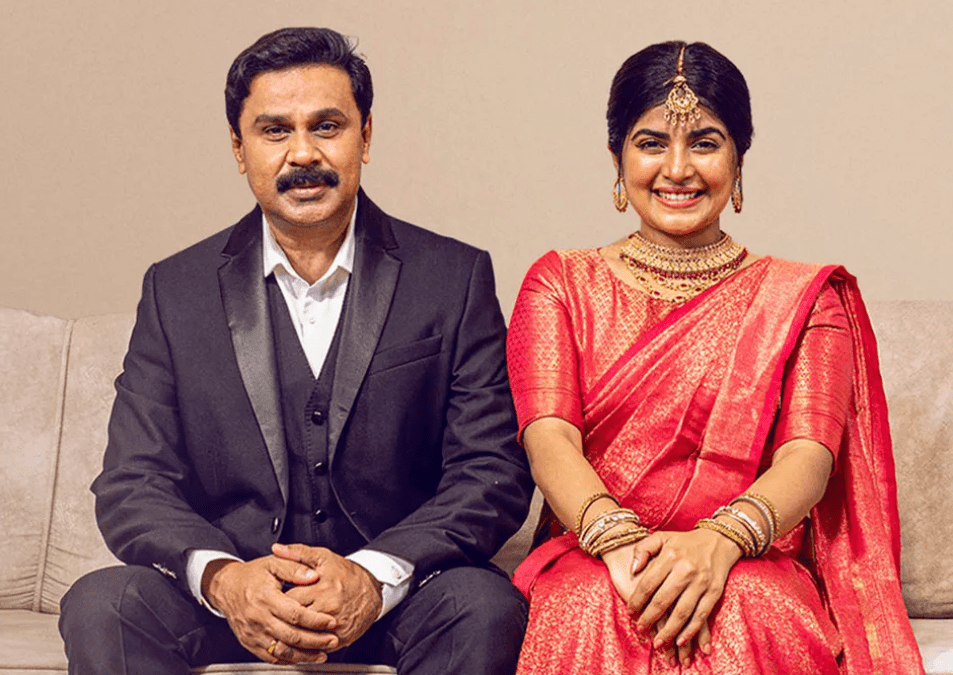
Prince and Family tells the story of Prince Chakkalakkal, a well-known fashion designer in his 40s working in Kerala. He carries the weight of his entire family, including his two unemployed brothers and their families, on his shoulders. Despite his success, Prince remains unmarried, struggling to find the right partner.

Enter Chinju Rani. A hyper-energetic woman in her 20s and a popular social media influencer. Their match is arranged through an online matrimonial site.

Chinju Rani lives for the ‘likes.’ Every decision she makes is filtered through the lens of her followers. So much so that on her wedding night, she’s busy editing and posting her wedding video, while her husband waits and eventually falls asleep.

Can two people from such different worlds build a happy marriage? That’s the heart of Prince and Family.

Thoughts

I enjoyed Prince and Family overall. It had a promising comic tone at the start. I only wish they had stuck with that all the way through. While I understand the film’s intention, that is to highlight the dangers of living through social media at the cost of real-life connections, the shift to a more serious tone felt a bit abrupt. Honestly, the world of influencers offers plenty of material for comedy, and the film could have explored that further in a subtle manner without losing its message.

Some of the emotional scenes felt exaggerated. But not to the point of losing interest. The film kept its entertainment quotient intact throughout.

Dileep’s character is particularly interesting. He’s choosy about marriage proposals, with one preference that seems to be clearly dominant over all others even though it’s not explicitly stated: he wants a young, unmarried, attractive woman. Despite being in his 40s, this mindset makes him dismiss proposals from women his own age with a certain disdain. It’s old-school thinking, but it mirrors real-life attitudes in India that still persist. This is why we see 50-year-old Indian male actors romancing 20-year-olds on-screen, while actresses of the same age group play their mothers.

The real star of the movie, though, is Raniya Raanaa. Some might say she’s overacting, but I think she nails the hyper energy of a social media influencer who lives for the camera. Her performance is full of life, and she handles emotional scenes with ease. Siddique and Bindu Panicker are excellent in their supporting roles as well.

All in all, Prince and Family is worth a watch. Just don’t expect too much logic or nuance. It’s streaming now on Zee5.

How to Know if the Unmarried Life is Right for You

How to Know if the Unmarried Life is Right for You

As a woman in my 40s, I am living an unconventional life in India, a conservative country that believes a woman’s life is incomplete if unmarried. I have experienced the ups and downs of living this kind of life while exploring new territories and learning from my experiences along the way. None of my family members or friends have chosen to live this way, so I don’t have anyone to look to for guidance. Is it daunting? Of course. But would I have it any different? Definitely not.

It’s amusing that many people who warn about the drawbacks of being single are usually married. They haven’t experienced living alone for a significant amount of time, so they may not be the best advisors on “the other side” of the single life. These wellwishers often point to that one person they know who is feeling lonely in their 40s to push you to get married. Is it a genuine concern for your well-being, or is it a way for them to reaffirm their own choices? It’s hard to say for sure. In my view, only someone who has lived alone for 10+ years is truly qualified to answer whether the single life is as daunting as it’s made out to be.

Some advocates of marriage believe it to be the solution to all problems, especially for women in India. Feeling bored? Get married. Want to travel to foreign countries? Get married. Want to party at a club? Get married. Getting married is an all-in-one solution.

I got married in my 20s due to pressure. It was an arranged marriage. Unfortunately, it did not end well, as we were incompatible. Our culture and beliefs clashed from day one. We knew we were poles apart before we got married, but we fell for the usual narrative that marriage is the solution to all problems, even compatibility issues. No one was sensible enough to advise us that basic compatibility is required for a marriage to work. In fact, both sides of the family were desperate for us to get married as we were quickly crossing the ideal age for marriage.

My marriage eventually ended. It’s been 15+ years since my divorce, and I haven’t still tied the knot. I have no plan to. A year after my divorce, relatives started telling me how marriage is important and that I should consider getting married again. They told me to think of how my life would be in my 40s without a husband. In their eyes, it would be torture. But now that I am in my 40s and still unmarried, I will tell you a little secret. I have never felt freer and happier.

Someone now might say, “Wait till you are in your 50s“. I am ready to accept that challenge too. No one knows me better than I do. And I am sure it’s the case with you too. However, if you are in your early 20s and wondering if marriage is for you, here are some points to consider.

Get married if you are a social butterfly

If you are naturally extroverted and love being around people, chances are you would crave companionship at some point in your life. I am an introvert, bordering on being a loner. For me, solitude is a way of life.

As you age, you will find yourself spending a lot of time by yourself because everyone in your age group will be busy with life. You might get together once in a while, but meeting up every day would be unfeasible. Picture yourself in such a scenario. Would you crave constant companionship? Or would you be fine without it? As per my experience, most extroverts are not comfortable with stillness, silence, and calm. They need some human presence around them to feel energetic.

Find out the actual reason for your disinterest in marriage

I have seen that those who wish to get married but cannot find a partner end up choosing to live alone out of frustration or tiredness that emanates from constant disappointment. There is a chance such people might end up feeling lonely in their 40s. They have that “if only” in the back of their minds. Genuinely ask yourself if you are choosing to stay unmarried because it’s the best lifestyle for you or because you are unable to find a partner. If it’s the latter, you should not give up on the idea of marriage.  

Living alone can be expensive

If you plan to stay single, you will need to save more. A pro of being married is that both of you can contribute to your daily expenses, whereas if you stay single, the onus falls on you alone – to earn well, invest wisely, and save efficiently. Of course, you shouldn’t get married thinking it will be costly to stay alone. Marriage is for companionship. However, this is a point that I found worth mentioning.

Living alone can be frustrating at times

I have been living alone for ages now, but there are times when I feel, “If only I could share this chore with someone.” But wanting a person to delegate my chores to isn’t a good enough reason for me to get married. I know for a fact that this need would be fulfilled if I hired some help. Alas, I am someone who wants to do it all by myself. This often leads to me being overwhelmed. But I take each experience as a lesson. If I were married, I wouldn’t have learned many things I know today. I would have been overly dependent on my husband to handle everything – from finances to decision-making. But yes, be prepared to be overwhelmed while you navigate through stressful times on your own.

Staying unmarried doesn’t mean saying no to love

You can be in love and still choose to remain unmarried. This is not widely understood. Many people assume that being unmarried means rejecting love. I have been in a committed relationship for many years, and I have no plans to marry because the traditional Indian married life is not what either of us wants.

What about the future?

Many people in favor of marriage often pose the question, “What about the future? What will happen when you’re 70 or 80?” It’s a valid question but not a compelling reason to get married. Your spouse may pass away, and if you don’t have children, you may find yourself alone. In Indian culture, parents often view their children as a safety net for their old age. However, many elderly parents in India find themselves alone as their children are settled abroad and only visit occasionally.

I have a few options to consider for my future living arrangements. I could stay in a good retirement home or move in with a friend or relative who is living alone and could use some companionship. It’s important to me that I don’t become a burden to the people I care about because of my health issues. There are many potential paths to choose from, and the decisions I make will depend on the trajectory of my life. I simply want to be financially independent and not rely on anyone else.

Having the confidence that I can thrive regardless of what life brings my way means I don’t have to fear being unmarried.

***
Photo by Mihman Duu011fanlu0131

The Worries of a Lover with a History of Heartbreak

The worries of a lover with a history of heartbreak

Relationships have never been a smooth sail for me. The kind of love glorified in movies and online platforms always felt like a distant dream. Agreed that cinema and social media do not always portray the complete picture. Yet, I envy people with uncomplicated relationships – they meet, like each other, and live happily ever after. Simple as that. For me, it has always been – we meet, we like each other, things fizzle out, distance, heartbreak, and increased caution.

I can cite many reasons for my past relationships not ending as I wanted them to. By this, I do not mean marriage, as that is not my end goal. I have been married once, and it was enough to make me realize that a traditional marriage, with its many rules and regulations, is not meant for someone unorthodox like me. It also wouldn’t be fair to impose my eccentric perspective on a family that adheres strictly to traditional marriage norms. In India, let’s face it, most families do want a marriage that sticks with the conventional route. Anyway, that’s a topic for another day.

What I seek is a long-lasting, peaceful, healthy, uncomplicated companionship rooted in friendship. The type that doesn’t make you stand on your toes or feel a sense of dread. The kind that doesn’t try to control or abuse. It is free-flowing and natural. A type of love that is as comforting as a warm cup of chai.

This post is not about my past relationships. It does not seek to give any motivational, positive advice. The thing I want to focus on is my feelings. There is always a fear lingering, no thanks to previous experiences.

I am currently in a relationship with the most caring man I have ever met. Someone who makes me feel at ease. I am at my most authentic self in his presence. However, sometimes, I look at his kindness with skepticism.

When you have had people playing with your feelings in the past, you eye even the sincere ones with suspicion. It’s a survival mechanism. You want to protect yourself from any impending heartbreak. You do that by asking yourself tough questions. You put yourself in a spot. You wonder if there will ever come a point when they, too, will start acting distant. Would the person, over time, forget that you two shared meaningful moments together, and end up talking in a manner devoid of any warmth or friendship as if you are a complete stranger wasting their time? Do you have it in you to deal with one more heartbreak, one more connection that transitions towards indifference?

These dark emotions are exclusive to us, the lovers with a broken track record.

It’s a terrible game your mind plays. Even your heart. You find yourself saying, “Be careful. Keep a safe distance always. It helps.” However, it is easier said than done. Gaining control over matters of the heart is not easy. It almost sounds robotic to do so. Humans often default to trust, hoping they’ve made the right choice and leaving the rest to fate. If events are destined, they’ll unfold regardless. Obsessing over control only brings suffocation and regret.

Life has this uncanny ability to unravel answers to your most pressing questions over time. That’s the one pro of aging – you gain this awareness that the answer will indeed arrive, if not now, then at a later stage. The sane thing to do would be to wait patiently instead of torturing yourself with questions that no one, even yourself, would be able to answer at the moment.

***

Photo by Hassan OUAJBIR

An Ode to Being Unmarried and Childless

Yellow flower
Photo by Miguel u00c1. Padriu00f1u00e1n

I am in my late 30s, unmarried, and might never have a child.

My biological clock is past its prime, which means that if I ever get married, it might be too late to conceive naturally. Right now, I am in a complicated relationship that I am okay with since my ultimate goal is, anyway, not marriage. I had been tempted a few times to get married to partners in the past, but it never materialized. In a way, I am thankful that the mother universe did not grant me those wishes. If she did, I would have landed in some serious trouble. I wasn’t right for them, and they weren’t for me either. It was a two-way street of disappointment and incompatibility that new love often tends to cover up and sideline.

When love is new and all-things-dreamy, it overrides potential issues. Everything seems solvable, including toxicity. Over time, when you are “used” to this feeling of love, you start paying attention to the issues you had conveniently ignored the first time around. This is where the real test begins – when the honeymoon phase ends. For some, the dreaminess and butterflies linger on for life. For others, the relationship becomes a compromise. Some others, like myself, realize it is best to move on. I often wonder what my life would have been if I had succumbed to marriage in my honeymoon phase, only to realize later that we are incompatible. So, yes, I am thankful things did not work out the way I desperately wanted at that point in time.

Talking about universal manifestations reminds me of this profound poetry from Blythe Baird’s If My Body Could Speak. I found it very relatable.

Poem on theories of the universe by Blythe Baird
Theories About The Universe – Blythe Baird

So here I am in a world that is the polar opposite of my peers, taking it one day at a time, living on my own terms, dealing with my own demons, and at peace with my courteous angels. Frankly, you tend to become less flexible and stuck to your patterns at this age. Probably, this is why they tell you to marry early – so you can adjust to differences better.

Presently, I find it unbearable to let go of this freedom of choice and, mainly, the freedom from compromises of any kind. I don’t have to entertain people I don’t like just because they are my partner’s family. I don’t have to sweet-talk anyone because they are my child’s BFF’s parents. It’s the kind of freedom I have become attached to. It is, without a doubt, I am where I am for purely selfish (or self-love; there are many ways of looking at this) reasons and not for the “world” and “climate control” as is the norm nowadays. I believe you should only have children because you want to experience what it is like to raise a child. Not because you think you might end up lonely and definitely not because it’s what society demands.

When someone tells me I should get married and have children, I ask them why. Most often, the answer would be immediate, “So you don’t end up alone when you are old.” This answer is quite tricky. All around, I see partners who are “not there” entirely, caught up in their own busy worlds. I see senior citizens living alone, their children comfortably settled abroad or outside their native place. Marriage becomes a gamble when you get into it expecting “help.” You may or may not receive what you seek. The help we get from our children might mostly be financial. Then again, the senior citizens I see are well-off and are not entirely dependent on their children. I often wonder why we have to burden our kids with our expectations. Is that why we give birth to new beings – so that they can fulfill our demands? I consider myself selfish for not wanting to give up my freedom. But isn’t it equally selfish to burden someone with our expectations?

Returning to the question of “Who will take care of you?” It is a concern, yes. But what is the guarantee that a partner or child will provide us with the best care?

As a single woman who would probably prefer to be single all her life, I can’t help think about my future time-to-time. What would I do when I turn old? Right now, my mind is leaning towards a high-quality assisted living facility. This information is not to evoke pity or compassion but to keep an open mind about the practicality of it all. Such high-end centers are extremely senior-citizen-friendly – they have a doctor-on-call, in-house chefs that cater to your dietary restrictions, people who help you with grocery and chores, wheelchair-friendly living quarters, and much more. The paid caregivers would be more interested in helping you than anyone near you. In an assisted living environment, people are trained to deal with elderly issues. Since it’s a job, they will try to give it their best. Moreover, you are surrounded by people your age, and they would be more interested in talking to you than someone younger.

Of course, you need to forego some luxuries in real-time to afford this. I am in half a mind to buy a new property (to show everyone I can). But the sensible half wants to hold that thought so I could pool the money into my “assisted living fund.”

Why can’t I stay with my family, you ask? Though our loved ones adore us, no one can be at our beck and call 24×7 without losing their sanity. Over time, my family might understandably grow bitter (even if they love me) due to exhaustion, frustration, and lack of freedom that comes with taking care of my needs, which could be both mental and physical. Such pressure can ultimately ruin a perfectly healthy relationship.

That’s how I look at it – I rather someone take care of me mindfully than grudgingly out of a false sense of obligation.