An Ode to Calming My Monkey Mind Through Meditation

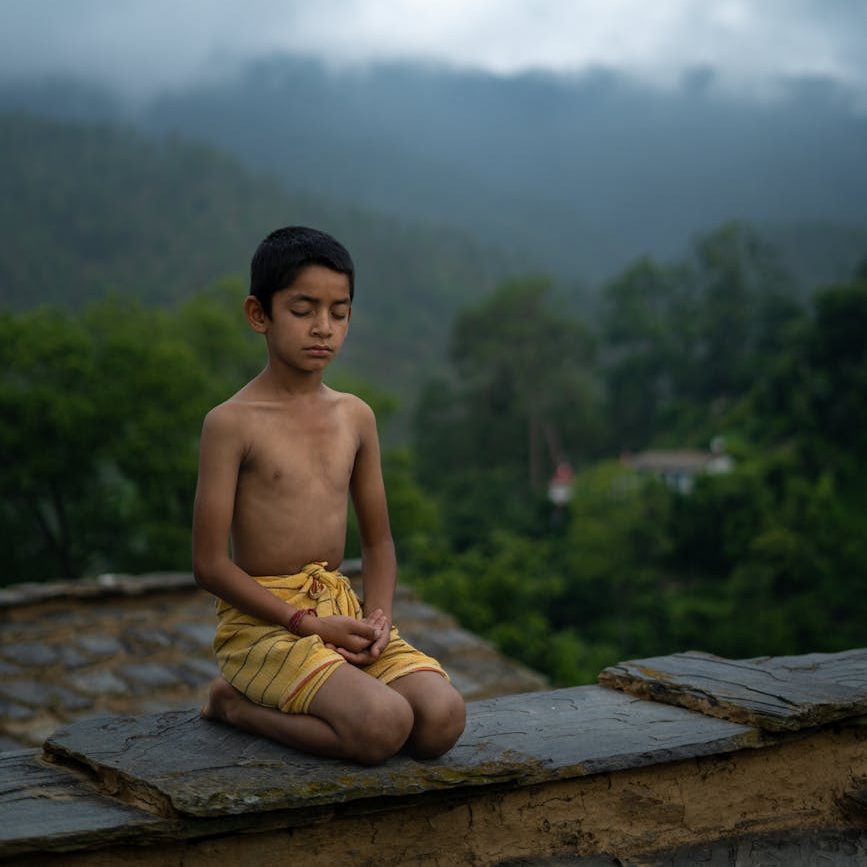
Indian Boy Meditating

There’s so much bad news everywhere. Wars, riots, terror attacks, persecution, and discrimination. I don’t know about you, but I’ve started to feel helpless, knowing I hold no power to fix these problems. As individuals, there’s only so much we can do. What is in our control is how we express our views, calmly and with clarity. But even that becomes difficult when those around us try to silence any perspective that doesn’t match their own. They get aggressive. We get perplexed. It becomes a vicious cycle. One that’s hard to escape. It drains our time, disturbs our emotional balance, and pushes away those who genuinely want to understand us.

In the midst of all this, I recently attended an online yoga session on International Yoga Day. We meditated together as a group, and it turned out to be one of the most peaceful and calming experiences I’ve had in a while. The meditation lasted only 7 minutes, but it had a noticeable, immediate impact. I felt centred. It helped me go about the rest of my day with a calm focus, even while handling everyday chores or reading the news. This is new for me. For the past few years, my mind has been troubled by witnessing the coldness with which society operates. There was a lingering sense of doom that had become hard to manage. So when meditation helped soften that heaviness, even slightly, it came as a welcome relief. I allowed myself to sit with that emotion and savour it.

The guide assured us that the control over our minds would improve even further with consistent practice. He said that even just 7 minutes of daily meditation can make a noticeable difference over time. I’m still new to the practice, so it’s too early for me to say how lasting the effects are. But one thing I can say for sure: you feel noticeably better after just the first session.

What made those few minutes so calming was the simple act of focusing only on the breath and the space between the eyebrows. In that short span, there were no screens, no distractions. Just stillness. It felt like a small step toward making peace with myself. This is what I experienced in my first few days of meditation. I’m not sure yet if I can commit to doing it every single day, but it’s something I genuinely want to try.

I’m not the body, I’m not the mind

As we meditated, this chant of “I’m not the body, I’m not the mind” by Sadhguru played in the background, accompanied by soothing flute music. It felt like an invitation to disconnect from the body and mind, to simply let yourself be. You don’t have to react to everything. You can observe your experiences as an outsider, from a third-person perspective. Feel your emotions, acknowledge them, but don’t let them consume you beyond control so that you lose sight of logic.

If you’re interested in trying the same meditation, you can do it at home by downloading the “Miracle of Mind by Sadhguru” app on your phone. The session includes the same calming chant and ends with a short 1-minute video from Sadhguru, offering simple insights on daily practice.

Now, I understand some may have reservations about Sadhguru due to political or personal views, or unverified claims. But I’d encourage you to look past that and focus instead on what this practice can offer you personally.

I’ve tried other meditation apps too, but they often felt too Western in their approach. This one, however, feels grounded in Indian sensibilities, with gentle flute music and guided instructions that actually help you stay focused. In a culture where complete silence isn’t always easy to adapt to, this format works well. It’s thoughtfully designed for an Indian audience, making meditation more accessible and less intimidating.

***

Photo by Yogendra Singh

Important Life Lessons Learned in the Past Month

As mentioned in my last post, I had a whirlwind of a month. It was emotionally stressful, and I was in an overthinking mode. But all’s well that ends well. Thankful to the universe for every little blessing.

With each unchartered experience, you learn something new. Lessons that overshadow the learnings of the past. Here are some things I realized in the past month alone.

Indian managers often act like robots when there is a personal crisis.

The bigwigs did not share any emotion when I gave my reasons for a leave request. No “hope your mother feels better soon” or “hope everything goes well.” What was I expecting? Humanity in the Indian corporate world is a myth. We preach on LinkedIn with the most quotable quotes, but actions prove otherwise.

For the top-level, nothing warrants a response unless it is related to work. In fact, I got dumped with more work and some uncalled-for criticisms on the day of my mother’s hospitalization, even if I had notified my issue well in advance. On that day, I must have thought about quitting at least 10 times. But keeping the robotic virtues aside, the company is quite good. And, of course, you have bills to pay. So you carry on.

After my mom’s heart procedure, a few colleagues asked how my mother was doing. The number of people from top-level management who enquired about her health? Zero. My stress was there for them to see. Yet, none cared.

People often tell you to keep your professional and personal lives apart. I follow and believe this to a large extent. Still, when someone is going through a tough time, I make it a point to provide some motivation, whether a junior or senior. My conscience does not let me rest otherwise.

It was alarming to see the level of indifference from senior managers. Is this what professionalism is all about? Killing your empathy? Another point to add to my An Ode to People Who Are Not CEOs post.

We are giving importance to the wrong things.

For most of our lives, we stress over trivial things – relationships, work disputes, earning more money, materialistic gains, etc. But all it takes is one medical emergency to see the true light – that nothing comes above health.

The last month was a major eye-opener for me. I learned that I should be thankful for each day for all the miracles it offers, no matter how small and no matter how insignificant it may seem to be. It also showed how important it is to keep our physical and mental health happy and stress-free. If I had to choose between peace and more money now, I would undoubtedly choose peace.

Most people will be unavailable.

The people you know will primarily be available only through words, phone calls, and social media messages. But very few will physically show up when you need support, including your siblings. Ultimately, you will have to deal with most of the things yourself. It doesn’t matter if you have a big family or a huge friendship circle; there will be a lot of routes you will have to navigate by yourself. It will be overwhelming and frustrating, but that’s just how life is. You live. You learn.

Regular medical checkups and second opinions are important.

In India, we do not prioritize our health. Many do not have health insurance, especially older people, because it is expensive. We do not get annual health checkups done. This needs to change.

It was during my mother’s regular health checkup that we spotted a variation in her ECG. The doctor did not take it seriously. He declared it as anxiety and aging and told us to let it go. Big mistake. We should have asked for a second opinion.

Always treat minor variations in your tests with great seriousness, especially if you have a family history of heart disease or genetic disorders. Always get a second opinion.

Social media can be deceptive.

In the past month, I did not reveal anywhere online that I was stressed (except for this blog which is unknown to many). I posted memes as usual because it was a form of escapism for me. It might be the same for many others. Things might just be an act. Never take social media too seriously. There might be a lot happening behind the scenes.

Korean drama is like medicine.

When you are having a stressful day, there is nothing like a good Korean drama to melt your worries away. This is important because it made me realize how feel-good entertainment is sorely lacking nowadays. Stuff that people like me can relax to and feel a bit better at the end of the day, even if the emotion is superficial.

Almost all movies and tv shows are dark and serious, with the focus being on realism. Why aren’t there more light-hearted, feel-good, clean, romantic stuff? Looking at you, Indian cinema. Enough of reality. Bring back the escapism.

***

Photo by Pixabay on Pexels.com

What Do I Miss the Most from Childhood?

Missing childhood

Out of all the nostalgia-filled flashbacks showered upon me by this thing called “childhood,” the one I sorely miss is having fewer responsibilities.

When we were kids, someone was always taking care of our needs. You weren’t the one everyone turned to when it was decision-making time. You could let an adult take the burden. But now you are the adult (oh, the dread). And the baton of responsibility has been passed to you.

Adulthood robs you of that freedom to just be. You are now responsible for everyone and everything, including the people who brought you up.

I have had a whirlwind of a month. Running back and forth to hospitals in India and getting things sorted out for my mother. Sometimes, it gets a bit much, not the physical activity itself, but the mental stress of the unknown. You wish you could take a break from it for a while, so you can return to being a child to your parent again, not a parent to your parent.

Though I have a sibling, she is settled outside the country. Honestly, sometimes, I am envious of her. She is blissfully unaware of many things that can only be witnessed in person – a thoughtful pause from the doctor after seeing the report, the concerned look on relatives’ faces, and the resulting panic mode. She gets to hear only words, whereas I have to witness stress-inducing body language. I am not bitter, just exhausted, mentally tired, and wishing I had my sibling around to share the responsibility with.

Sometimes, you feel alone in this journey called life, even if you have a family. However, you pull yourself together and say, “I’ve got this.” You learn to flow with the flow with blinders on and see where it takes you.

Often, after testing times, you look at yourself with awe over how you managed to pull through the muck. Challenging situations warrant bravery. It comes out of you automatically; you know the only way is forward. It is nerve-wracking but also educational. You stop thinking about petty things, and all your mental resources are made to focus on the issue at hand. After some tears, things settle eventually. It becomes your new normal. This is how you enter a new uncomfortable phase in life.

In your 40s, you will go through many moments like these, especially when your parents are aging. It’s tough when you witness them encountering the symptoms of their system slowing down a notch. You wonder why you stressed over less-important things like failed relationships, exams, and flippant comments from coworkers when you could have been grateful for all those days you spent with your loved ones in good health. We take the good things for granted and fret over the wrong stuff.

Right now, I have to realign myself into thinking each day is a blessing because I have my loved ones around. To appreciate things for how they are without dwelling on the past or future is not easy. Still, experience has the knack of drilling that lesson into you in the most unsuspecting manner.

****

Photo by Pixabay

An Ode to Taking One Step at a Time

Photo by Tatiana Syrikova on Pexels

I always get anxious when I think of a big task or chore. I look at the outcome and its tediousness instead of focusing on the small steps that can lead to the result.

When you shift your attention to each step, things appear simpler. The overwhelming burden of the goal dies down, and you feel more energized to begin the task. On the other hand, shift your focus to the task in its entirety, and you are sure to feel stuck, without any motivation to move any further. Yet, this is what I end up doing – concentrating on the big, chunky, mammoth of a task instead of slicing it down into small digestible bites.

Last year though, I had decided on some resolutions, and I broke them all down into achievable steps.

Here’s how they went.

Walking 10,000 Steps

I had gained a bit of weight because of work stress. I hardly moved from my seat, stuck to my never-ending workload day in and out. This weight gain affected my mental and physical health. That’s when I decided to take things back into my control and I started walking. I set my goal as 10,000 steps, 5 days a week. Sounds overwhelming, right? It certainly was for me – someone who has never walked anywhere near 5000 steps, let alone 10,000.

I decided to go easy on myself.

The first day, I walked 2000 steps and continued it for a week. The following week, I increased my target to 4000 steps. I kept doubling it every week until I reached 10,000. I continued this for one whole year without a break. It worked; I lost the flab. My immunity and metabolism also improved considerably. I did not end up looking like a supermodel with my walks, but I now feel healthy, and that’s what matters.

Here’s the secret to how I could sustain my walks for one whole year – I had decided I would not complete all my steps at one go. Instead, I would distribute it throughout the day. That way, I was constantly moving without exerting too much pressure on myself. It also did not take up too much time in between work. When you force yourself to exercise only at a scheduled time slot, it eventually sucks the joy out of fitness (at least it does for me). When that happens, you are naturally tempted to stop exercising after the initial enthusiasm dies down.

The book, Ikigai, talks of how the Japanese, ever-famous for their longevity and happiness, thrive by walking and moving throughout the day, engaged in their hobbies and interests. They do not sit still for long, as opposed to most of us. Our routine may or may not allow us to follow the Japanese mantra, but we can try to get up from our seats every one hour and walk around for 5-10 mins. It might make a considerable difference

Completed a 60-Hour Long Online Course

I am a working woman with a full-time job. I love to write a bit on my blog (right here) during my spare time. It keeps me energized. Other than that, I do not get much time for anything else. I love to learn new things, but I never found time for it. Last year, I finally decided to take up a course to help me understand my work better. It was 60 hours long. A bit overwhelming for someone who hardly had any free time. But I completed it (yay!) by slicing it down to small lessons each day.

I would dedicate a learning timeslot that would range from 10 to 20 minutes, depending on my energy levels. It’s not much, right? But look at what 10-20 minutes every day can do. It can help you finish an entire course. It took a lot of time to complete overall (one whole year!), but never once did I feel overwhelmed or tempted to leave the course midway.

Started Learning a New Language

The only foreign language I had any chance of using for real was Arabic. I travel to the Middle East now and then. I wanted to learn the language so that I could understand the shop boards and converse in simple Arabic if required.

I dedicate 10 minutes every day to learning new alphabets or words.

I am still not fluent, but I can read and understand basic sentences. Again, all by committing just 10 minutes every day.

Conclusion

Anything can be achieved if we break it down into small achievable steps.

If you want to start reading more, spend 10-15 minutes every day. From experience, I can tell you that you will end up surpassing your allotted reading time.

If you want to start waking up earlier, start by waking up 15 minutes earlier than usual for one week. Then, 30 minutes earlier, and so on, until you reach your target.

If you think this way, you can achieve almost anything without losing steam. You are being kind to yourself, so there is no chance of fatigue. You won’t get far (at first), but at least you will be a step closer to your goal. After a while, when you look back, you will be astonished at how much progress you have made.

Sometimes, all we need is a push to take that first step.

Do not look at the outcome and enjoy the journey. Relish the whole process, and the results will automatically follow.

An Ode to Not Being Positive All The Time

Photo by Keenan Constance on Pexels.com

Covid anxiety is real.

As the number of cases in India continue to increase, it has induced a sort of panic attack in most of us in the country.

Needless to say, I have been posting available resources (oxygen cylinders, beds) across my private social media accounts so that those who need them can utilize the info. All this fact sharing does not make for entertaining, positive, motivational or inspirational viewing. No one is going to feel happy seeing such posts.

But somehow, when you can’t really do anything else, all this resource sharing matters a huge deal for someone like me. That hope that maybe you will be able to help at least one person is what keeps you going.

Take a good look into Indian Twitter, and you will find many doing the same. Everyone wants to contribute in a way or other to help out. It is heartwarming and sad at the same time. Heartwarming because people want to help, sad because of the unending doom.

We keep seeing quotes similar to “share only the good news, share only positivity, see only positive things” but I wish we could see posts on how we need not pretend to be fine all the time. Let’s normalize NOT being positive 24×7. It’s okay to vent out. I hope venting out gets normalized.

I know happy posts (song, dance, smiles) generate a lot of positivity but I know many like me who are suffering along with the country and do not feel like indulging in entertainment as such. There’s a word for this: languish. It borders between happiness and depression and that’s what exactly many are feeling at the moment. For us, too much positivity can be draining and to be frank, slightly annoying.

If you are feeling it all way too intensely, it’s fine, as long as you are in control. If not, please reach over to a professional! Friends & family might not always give the correct advice in dealing with the situation whereas a professional is trained in handling such matters.

Stay safe and don’t forget to mask up!