
The Best Part of Project Hail Mary Wasn’t The Space Adventure

Project Hail Mary Movie Grab

The most impressive part of Project Hail Mary isn’t the science, the space adventure, or the mission. It’s the friendship between two complete opposites. Two beings who don’t share the same language, appearance, history, or culture, yet somehow come together to create something beautiful.

When you think about it, we’re all aliens to someone from another culture. The way we speak, the food we eat, the way we dress, our traditions, our manners, everything can feel unfamiliar.

But those differences disappear when there’s mutual respect and a genuine willingness to understand and acknowledge each other. That’s what makes the friendship in Project Hail Mary special. It reminds you that connection doesn’t always need similarity. Sometimes, it just needs empathy.

It’s also the kind of friendship you wish existed in real life. The kind where someone chooses to stay, no matter how uncomfortable or polarizing things get.

Recently, I came across a beautiful Instagram post about what it means to be consciously “kept” in someone’s life, to be chosen day after day, without giving up. It stayed with me because I’ve had friendships and relationships that didn’t last. Sometimes I was the one who didn’t want to continue. Other times, they didn’t. But in almost every case, at least one of us wanted it to survive. We wanted the other person not to walk away. We hoped they would understand, stay, or try a little harder. It’s neither’s fault, because everyone has their own breaking point, but you can’t help hold that idealistic thought that we would all fight to keep each other.

When you eventually realize that you’re the only one doing that fighting, it hurts. It affects your self-esteem. “Wasn’t I worth it?” It’s one of those heartbreaks that doesn’t always have a dramatic ending. You move on, quietly. Accepting it as your fate. Other times, you dwell in self-pity.

But some things can never be forced. Not love. Not affection. And certainly not friendship.

Watching Project Hail Mary reminded me of all of that. I don’t know if a friendship as pure and selfless as the one in the movie really exists, but it was comforting to watch. It made me believe, at least for a couple of hours, that such connections are possible.

I wish I had watched it on the big screen instead of on Amazon Prime. The visuals are absolutely stunning, and this is one of those sci-fi movies that deserves to be experienced in a theater. Still, I’m glad I finally watched it.

And Ryan Gosling was simply fantastic. At no point does it feel like he’s acting. He disappears into the character so completely that you forget you’re watching one of Hollywood’s biggest stars. That’s always the sign of a great performance.

I would absolutely recommend watching the movie on the biggest screen at home if possible. Streaming on Amazon Prime.

An Ode to Feminichi Fathima

Feminichi Fathima Movie Poster

Feminichi Fathima is a Malayalam movie I had been waiting to watch for a long time. The film received strong appreciation at several film festivals. Many critics also spoke highly of it in their reviews. Now that it has finally released on OTT, the wait feels worth it. After watching the film, I can say it truly lives up to the praise it received.

The movie is a bold and thoughtful effort by director Fasil Muhammed to explore feminism from the perspective of a Muslim woman. This is a refreshing shift in Indian cinema, where feminist narratives are often shown through a cultural Hindu lens. Films like The Great Indian Kitchen (Mrs. in Hindi) and Thappad shaped much of that earlier conversation. Against that backdrop, this film feels timely and necessary. It adds a new voice to discussions on gender, faith, and everyday patriarchy.

What’s It About?

Fathima is married into a conservative and deeply religious family in the Malappuram district in Kerala. Her husband is a usthad (a religious leader) who expects his household to follow every rule without question. Life in the home is seen only through a strict, conservative lens.

Trouble begins when their young son wets the mattress. Fathima cleans it and leaves it outside to dry, but a dog later urinates on it. Since dogs are viewed as ritually impure, her husband reacts with anger and disgust. What follows is Fathima’s quiet struggle to fix the situation, facing resistance at every step.

The film makes a strong point that a woman in religious clothing can also be a feminichi (a slur often used by Malayalee misogynists to dismiss feminists).

Thoughts

Shamla Hamza and Kumar Sunil deliver standout performances. Shamla Hamza, in particular, is remarkable throughout the movie. It is hard to believe this is only her second project, after 1001 Nunakal, released in 2022. She performs with the ease and control of a seasoned actor. Her expressions carry much of the film’s emotional weight. Shamla winning the Kerala State Film Award for Best Actress feels well deserved. The storyline is fresh and quietly rebellious, which makes her performance even more powerful.

In many ways, the film feels braver than other feminist movies. Dissent is rarely encouraged in conservative Muslim families, which makes this narrative more powerful. The story shows how questioning norms itself becomes an act of courage. That is what sets this Malayalam feminist film apart. It opens space for conversations that are often silenced. Ideally, it will inspire more Feminichi Fathimas to speak up and stand for their rights.

Even though the subject is heavy, the movie never becomes overwhelming. It avoids melodrama and keeps emotions grounded. Light comedy is woven into the narrative. This balance makes the film feel surprisingly breezy. The pacing is tight and engaging throughout. You can easily watch the full 1.5 hours in one sitting without needing a break.

I would call this movie a must-watch for anyone interested in meaningful Malayalam cinema. Feminichi Fathima is now streaming on Manorama Max. You can also watch it via Amazon Prime with a Manorama Max subscription. English subtitles are available.

Movie Spotlight: Paradha

Paradha Movie Poster

I actually wanted to watch Paradha in the theatre, because I thought the cast was interesting. It had my lovely curly-haired favourites: Anupama Parameshwaran and Darshana Rajendran, who are known faces in the South. But then I got caught up with other priorities and missed booking a ticket that weekend. Later, I came across some reviews that made me second-guess whether it was worth watching on the big screen and decided to skip going to the theatre. Recently, when it was released on Amazon Prime, I finally decided to watch it.

The movie made me realize that not every review online is meant for you. Reviews often reflect the reviewer’s personal taste, but we tend to assume we’ll feel the same way. I’ve had similar experiences with other films, too, where the reviews were harsh, yet I ended up enjoying them. I still don’t get the importance of movie reviews, because whether we like a movie or not is subjective. But here I am, giving my own movie reviews from a highly subjective viewpoint. I think we should treat reviews as such: personal opinions of someone who loves watching movies, and not the absolute truth.

What’s It About?

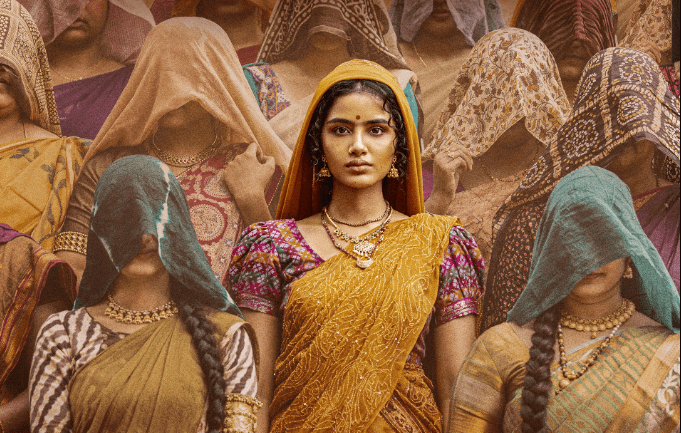
Paradha, true to its name, centers on Subbu (Anupama Parameshwaran), a young Hindu woman from a remote Indian village where the tradition of paradha (dupatta veiling) is strictly practiced. While this custom is largely cultural in many parts of India, the film presents it as a religious mandate. The villagers worship Goddess Jwalamma, who they believe commanded that women remain hidden behind a veil. From puberty onward, every girl is forced to follow this rule, with severe consequences for defiance. Subbu, however, finds herself caught in a controversy that threatens her marriage to the man she loves.

Thoughts

Though the story begins with a devout woman who strictly follows religious practices, Paradha is not just about her. It portrays women from different walks of life, each facing gender discrimination in unique ways.

The first woman is deeply religious, bound by the strict purdah or dupatta system. The second, married outside the village, has left purdah behind but remains traditional in other aspects. The third rejects religious traditions altogether, embraces modern values, and focuses on her career. The fourth is a policewoman who’s happily married, enjoying full freedom, and choosing to follow certain traditions out of personal preference rather than compulsion. The movie keeps the narrative balanced this way.

Paradha is a feminist film centered on women’s empowerment, and it may not appeal to everyone. It highlights how women, even the most progressive, continue to face discrimination, no matter how far they try to escape from it.

I really enjoyed the movie. The climax was chilling, and the performances, especially by Anupama Parameshwaran, Darshana Rajendran, and Sangeetha, were superb. It’s a brave film, because criticizing patriarchy is never easy. Often, women themselves defend restrictive practices by saying, “It’s our choice.” But true choice exists only when opting out doesn’t bring harsh criticism or punishment. Many women follow norms not out of freedom, but because they have no other option. The movie captures this truth powerfully.

Paradha is now streaming on Amazon Prime. I watched it in the original Telugu with English subtitles.

Cultural Surprises and Shocks in Zard Patton Ka Bunn

Zard Patton Ka Bunn

I have only completed one episode of Zard Patton Ka Bunn (I have no idea what this means) so far on YouTube, but I already have a feeling I will like this Pakistani drama better than Kabhi Main Kabhi Tum. Sharjeena and Mustafa were cute and the series started off well but I didn’t find the story engrossing enough towards the end.

The first episode of ZPKB is endearing. A girl is praying intensely that she passes her exams, while the Maulawi (religious scholar) requests everyone through the mic in the mosque to pray for her. He says it’s admirable that a girl in the village wants to study more. 

This Maulawi is hilarious! When a village officer visits the mosque to announce a population control drive, the Maulawi asks, “What’s the population of Pakistan?” The officer replies, “It’s now 22 crore.” The Maulawi then mumbles to himself in a lighthearted moment, “What’s the use of these 22 crore people if they can’t even sponsor one motor for the mosque well!” 

It’s funny how the Maulawi is shown as a comical character who no one in the village takes seriously. It’s surprising because I always thought Maulawis were treated with utmost respect. On the contrary, this series treats the Maulawi exactly like how some Indian movies show swamis and gurus in a funny light. In the first episode, the villagers are shown berating him for overusing the mosque mic. He’s on it every other minute, asking for donations for the motor.

Now, the shocking part was how casually a female character scolded her husband for waking up late, saying, “You’re a Muslim, not a kafir,” as if it were normal, everyday language. The way the word “kafir” (non-believer) was used so casually suggests it’s deeply ingrained in the cultural discourse. To a Hindu, like me, the word hit me like a jolt. In contemporary times, the word kafir can be seen as an insult by non-Muslims, especially when it is used to highlight the superiority of one religion over another. As a tolerant kafir, I’ll let it slide and move on, but it does make me wonder about its impact, especially among impressionable Indian youth who are into Pakistani dramas. My concern is that it could reinforce divisive ideas, encouraging people to see others through a binary lens of “believers” and “kafirs”. That’s a troubling thought in any diverse, multi-faith society. But here’s hoping Pakistani dramas will be more mindful of such polarized language in the future. As the world becomes more interconnected and local entertainment reaches a global audience, paying attention to details like language can help ensure you don’t alienate anyone who appreciates your work.

That said, I have no intention of boycotting the series. I look forward to watching the remaining episodes on YouTube. It’s not every day you come across such feel-good wholesome witty content. I will savor every moment of it.

An Ode to Intermingling With Other Faiths

An Ode to Intermingling with Other Faiths

Yesterday, a Muslim friend visited, and we ended up discussing religion. She’s a practicing Muslim but not overly devout; for instance, she only wears a hijab when her mother-in-law visits.

During our conversation, she shared something beautiful:

People do things in the hope of reaching paradise. There’s so much fear surrounding it. But no one has ever returned from death to confirm if paradise truly exists. What we have now is paradise, isn’t it? You and I, of different faiths, sitting here together, conversing, laughing, and enjoying each other’s company—what better paradise could there be?

I asked her how she developed this perspective when everyone around her follows religious rules so strictly. She said it might be because she attended a non-religious school instead of an Islamic one. She emphasized how important it is to interact with other communities rather than only associating with people from our own. Her husband shares the same outlook. While he offers Namaz five times a day, he hasn’t imposed any religious restrictions on his wife or children. They are the only ones in their family who approach religion this way.

This principle is applicable to all communities. The more we engage with people from different backgrounds, the more open-minded and accepting we become of diverse ideas and perspectives. Conversely, isolating ourselves can lead to more rigid and extreme viewpoints.

I believe this may be why Indians tend to integrate more easily in foreign countries. Growing up in a society where different faiths coexist has shaped our ability to adapt. This is why I feel we should be sharing our culture with the world rather than adopting foreign ones. India’s inclusive culture, which embraces all faiths, is truly beautiful. I hope we continue to honor and preserve it.

***

Photo by Markus Spiske

Quick Bytes: The New India

The recent controversy surrounding TM Krishna made me ponder: Is there a rise in intolerance in India, or are Hindus simply becoming more vocal about disrespect toward their culture and religion?

Nirmalyam, a Malayalam movie released in 1973, showed a man spitting on the idol of a goddess. There was no controversy back then. Maybe Hindus took offence but they endured the insult. No one can dare imagine releasing a movie with such a scene now. Some might call it the death of art, but is the survival of art dependent on humiliating Hindu religious beliefs? How often do you see an Indian artist scrutinizing other religions? If we’re going to engage in this game, let’s do so fairly. Selective activism is no longer accepted or praised.

Times have changed. Hindus are no longer silent. They are defending their religion. So does this mean Hindus have become intolerant? Or does this mean they have finally found their voice under the leadership of Modi after decades of suppression? It’s a matter of perspective, but one thing is certain: Criticizing Hinduism in India now comes with greater scrutiny and potential consequences. It’s no longer forgiven as easily as before.

***

Tweet courtesy: @dushyanthsridar / X