An Ode to 26 Thought-Provoking Life Quotes from Fredrik Backman’s Anxious People

Anxious People

I recently completed Fredrik Backman’s Anxious People. The book is about a failed bank robbery that turns into a hostage situation during an open-house apartment viewing. The story unfolds as a group of diverse characters, each with their own personal struggles and secrets, are brought together in an unexpected and tense situation.

“Anxious People” includes dollops of humor and empathy. Backman delves into the complexities of human emotions, vulnerabilities, and how human connection and shared experiences can bind even the most distinct characters. Ultimately, humanity and kindness win.

Fredrik Backman has a knack for words. His quotes in Beartown were a class apart and remain one of the most popular pages on this blog. His writing in Anxious People is no different. In no time, he captures your heart with his words to describe emotions that are generally not easy to translate into words.

Here are some of my most favorite quotes from the book:

This story is about a lot of things, but mostly about idiots. So it needs saying from the outset that it’s always very easy to declare that other people are idiots, but only if you forget how idiotically difficult being human is.

Our hearts are bars of soap that we keep losing hold of; the moment we relax, they drift off and fall in love and get broken, all in the wink of an eye. We’re not in control.

He presses his thumbs hard against his eyebrows, as if he hopes they’re two buttons and if he keeps them pressed at the same time for ten seconds he’ll be able to restore life to its factory settings.

Because you’ve probably been depressed yourself, you’ve had days when you’ve been in terrible pain in places that don’t show up in X-rays, when you can’t find the words to explain it even to the people who love you.

At the end of your career you’re trying to find a point to it all, and at the start of it you’re looking for a purpose.

Older men rarely know what to say to younger men to let them know that they care. It’s so hard to find the words when all you really want to say is: ‘I can see you’re hurting.’

‘Do you know what the worst thing about being a parent is? That you’re always judged by your worst moments. You can do a million things right, but if you do one single thing wrong you’re for ever that parent who was checking his phone in the park when your child was hit in the head by a swing. We don’t take our eyes off them for days at a time, but then you read just one text message and it’s as if all your best moments never happened. No one goes to see a psychologist to talk about all the times they weren’t hit in the head by a swing as a child. Parents are defined by their mistakes.’

She said you can’t protect your kids from life, because life gets us all in the end.

That’s an impossible thing for sons to grasp, and a source of shame for fathers to have to admit: that we don’t want our children to pursue their own dreams or walk in our footsteps. We want to walk in their footsteps while they pursue our dreams.

There was a time when a bank was a bank. But now there are evidently ‘cashless’ banks, banks without any money, which is surely something of a travesty? It’s hardly surprising that people get confused and society is going to the dogs when it’s full of caffeine-free coffee, gluten-free bread, alcohol-free beer.

We give those we love nicknames, because love requires a word that belongs to us alone.

Good grief, no one could cope with being newly infatuated, year after year. When you’re infatuated you can’t think about anything else, you forget about your friends, your work, your lunch. If we were infatuated all the time we’d starve to death. And being in love means being infatuated … from time to time. You have to be sensible.

The problem is that everything is relative, happiness is based on expectations, and we have the Internet now. A whole world constantly asking us: ‘But is your life as perfect as this? Well? How about now? Is it as perfect as this? If it isn’t, change it!’

The worst thing a divorce does to a person isn’t that it makes all the time you devoted to the relationship feel wasted, but that it steals all the plans you had for the future.

‘And … winners earn a lot of money, which is also important, I assume? What do you do with yours?’

‘I buy distance from other people.’

The psychologist had never heard that response before. ‘How do you mean?’

‘Expensive restaurants have bigger gaps between the tables. First class on aeroplanes has no middle seats. Exclusive hotels have separate entrances for guests staying in suites. The most expensive thing you can buy in the most densely populated places on the planet is distance.’

You can always tell by the way people who love each other argue: the longer they’ve been together, the fewer words they need to start a fight.

When you’re a child you long to be an adult and decide everything for yourself, but when you’re an adult you realize that’s the worst part of it.

We can’t change the world, and a lot of the time we can’t even change people. No more than one bit at a time. So we do what we can to help whenever we get the chance, sweetheart. We save those we can.

We do our best. Then we try to find a way to convince ourselves that that will just have to … be enough. So we can live with our failures without drowning.

One of the most human things about anxiety is that we try to cure chaos with chaos. Someone who has got themselves into a catastrophic situation rarely retreats from it, we’re far more inclined to carry on even faster. We’ve created lives where we can watch other people crash into the wall but still hope that somehow we’re going to pass straight through it. The closer we get, the more confidently we believe that some unlikely solution is miraculously going to save us, while everyone watching us is just waiting for the crash.

Boats that stay in the harbour are safe, sweetheart, but that’s not what boats were built for.

Young people today. You’re so aware of how you affect your children. I heard a paediatrician say on television that a generation ago, parents used to come to him and say, “Our child’s wetting the bed, what’s wrong with him?” Now, a generation later, they come to him and say, “Our child’s wetting the bed, what’s wrong with us?” You take the blame for everything.

Nothing must happen to you

No, what am I saying

Everything must happen to you

And it must be wonderful

They say that a person’s personality is the sum of their experiences. But that isn’t true, at least not entirely, because if our past was all that defined us, we’d never be able to put up with ourselves. We need to be allowed to convince ourselves that we’re more than the mistakes we made yesterday. That we are all of our next choices, too, all of our tomorrows.

Perhaps it’s true what they say, that up to a certain age a child loves you unconditionally and uncontrollably for one simple reason: you’re theirs. Your parents and siblings can love you for the rest of your life, too, for precisely the same reason.

Not knowing is a good place to start.

***

Picture Courtesy: cottonbro studio

An Ode to The Last Girl

Nadia Murad had luck on her side the day she escaped ISIS. The door was unlocked, and no guards surrounded the area. She says their negligence could have stemmed from the assumption that she was too weak, both physically and mentally, to attempt an escape. To add to the luck factor, the family she eventually sought help from while on the move turned out to be empathetic rather than deceitful, a fortunate outcome not experienced by most Yazidi women who tried to escape.

Keeping luck aside, Nadia exhibited a quality that day uncommon for someone in her position – courage. To muster the strength and determination to capitalize on an opportunity, especially when you are exhausted, is heart-wrenchingly admirable.

The Last Girl chronicles the harrowing journey of a woman who had to go through hell on earth as the perpetrators sought heaven on “the other side.”

Nadia’s story serves as a lesson – never take your peace or soldiers of the nation for granted. You are safe because the soldiers of your country are spending countless hours and energy to ensure no harm comes your way. You realize the importance of this only when you read and research extensively, go through history, and pay attention to actions.

The book is heartbreaking. You feel incredible sadness for Yazidis. But you also feel sorry for the people who get radicalized to the extent that they end up thinking violence is the answer. How can we save them? How can we protect our youngsters? How can we extinguish their hate and make them realize we are all, ultimately, children of the same universe?

Reader discretion is advised: The following content may contain sensitive or mature themes that could be distressing to some individuals.

Here are some of the quotes from the book that caught my attention:

People say that Yazidism isn’t a “real” religion because we have no official book like the Bible or the Koran. Because we pray toward the sun, we are called pagans. Our belief in reincarnation, which helps us cope with death and keep our community together, is rejected. Some Yazidis avoid certain foods, like lettuce, and are mocked for their strange habits. Others don’t wear blue because they see it as the color of Tawusi Melek and too holy for a human, and even that choice is ridiculed.

We (Yazidis) would, over generations, get used to a small pain or injustice until it became normal enough to ignore. I imagine this must be why we had come to accept certain insults, like our food being refused, that probably felt like a crime to whoever first noticed it. Even the threat of another firman was something Yazidis had gotten used to, although that adjustment was more like a contortion. It hurt.

I used to pray for my own future—to finish school and open my salon—and the futures of my siblings and my mother. Now I pray for the survival of my religion and my people.

For a young Yazidi girl, life only got better after the Americans and the Kurds took over. Kocho was expanding, I was going to school, and we were gradually lifting ourselves out of poverty. A new constitution gave more power to the Kurds and demanded that minorities be part of the government. I knew that my country was at war, but it didn’t seem like it was our fight.

I still think that being forced to leave your home out of fear is one of the worst injustices a human being can face. Everything you love is stolen, and you risk your life to live in a place that means nothing to you and where, because you come from a country now known for war and terrorism, you are not really wanted. So you spend the rest of your years longing for what you left behind while praying not to be deported.

Rape has been used throughout history as a weapon of war. I never thought I would have something in common with women in Rwanda—before all this, I didn’t know that a country called Rwanda existed—and now I am linked to them in the worst possible way, as a victim of a war crime that is so hard to talk about that no one in the world was prosecuted for committing it until just sixteen years before ISIS came to Sinjar.

Everyone thinks Yazidi women are weak because we are poor and live outside the cities, and I have heard people say female fighters with ISIS are, in their own way, proving their strength among men. But none of them—not Morteja’s mother, not even a suicide bomber—was a fraction as strong as my mother, who overcame so many struggles and who never would have let another woman be sold into slavery, no matter her religion.

Fear was better. With fear, there is the assumption that what is happening isn’t normal. Hopelessness is close to death.

I was quickly learning that my story, which I still thought of as a personal tragedy, could be someone else’s political tool, particularly in a place like Iraq. I would have to be careful what I said, because words mean different things to different people, and your story can easily become a weapon to be turned on you.

Every time I tell my story, I feel that I am taking some power away from the terrorists.

I have begged Sunni leaders to more strongly denounce ISIS publicly; they have so much power to stop the violence. I have worked alongside all the men and women with Yazda to help survivors like me who have to live every day with what we have been through, as well as to convince the world to recognize what happened to the Yazidis as genocide and to bring ISIS to justice.

I told them I wasn’t raised to give speeches. I told them that it was in their power to help protect vulnerable people all over the world. I told them that I wanted to look the men who raped me in the eye and see them brought to justice. More than anything else, I said, I want to be the last girl in the world with a story like mine.

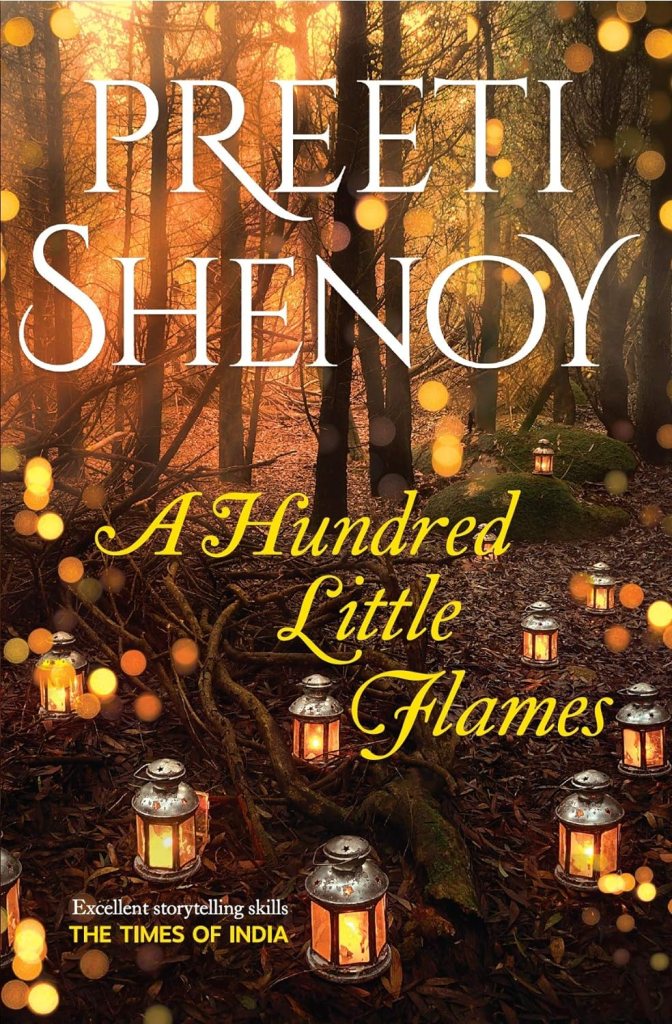
An Ode to A Hundred Little Flames

A Hundred Little Flames

I recently finished reading A Hundred Little Flames by Preeti Shenoy. I bought the book assuming it would be a romantic novel (and I was proven right, but not in the way I expected). I had not taken the time to read the synopsis or reviews. I wanted the element of surprise, so I chose the book merely by looking at the title.

This is my first Preeti Shenoy book, so I was unsure what to expect. I was not looking for an ultra-cheesy romance but something wholesome and warm. I am happy to report that I got what I needed.

The main character, a young urban male residing in India, is pushed to leave his cozy job in a metro due to unprecedented situations and return to Kerala to visit his grandfather. As my base is in Kerala (Palakkad), this particular bit captured my attention. It played a major factor in my buying the book. How Preeti Shenoy beautifully narrated the ethereal, laidback beauty of a typical village in Kerala won my heart.  

There are many layers to this book. And many lessons. Here are some of my observations:

As most might know, Kerala is an aging state. The youngsters are leaving for better opportunities, while the parents and the elderly are choosing to stay behind. The many anxieties of an old person living a lonely life in Kerala are explained with much sensitivity in this book. It is something I witness whenever I visit home. Apart from my family, my elderly neighbors rush to me when they need help. There is always some mobile phone, gadget, or internet-related issue to be resolved. Their doubts could be as simple as “Will my WhatsApp DP appear to everyone on my contact list? Or only those whom I chat with?” These senior citizens often hesitate to call their children for help. “They will be busy,” they tell me. So they rely on youngsters around them to help with online work like booking vaccination slots during COVID-19, registering an online complaint, etc.

When they fall sick, they usually depend on neighbors to help them reach the hospital. Their children are able to arrive only a few days later, if at all they can. Their stay often does not last beyond a week. “We don’t have any leaves left,” they say. The fact that their children are out of reach might pinch the parents a bit during such pressing times. But they endure it, saying kids should enjoy themselves and life goes on.

As a silent observer, I often see the anxiety written on their faces and their mild helplessness. There’s concern regarding whom to ask for help. I guess, when we age, we all reach such a stage.

All these elements are captured well in Preeti Shenoy’s book – the problems of the elderly. I wonder if she has stayed with a senior citizen for an extended period, as only such people get to experience what an elderly goes through on a day-to-day basis.

Apart from this, I also immensely enjoyed the sweet, poetic love story depicted in the book. It caught me by surprise. The story was delicately told, and the characters were perfectly etched out. A warm romance with many layers, where the couple engages in a striking serenade of comforting words. The book shows how love is not always a straight, perfect line. It can be complex and unpredictable, hurtful even. Yet, love persists. The book captures this complexity brilliantly. It has an old-world charm to it. I am of the impression it would make a great movie.

I would definitely recommend buying the book. It is engaging from page one, and it will hook you into a world that is peaceful, and bright, yet somber and bittersweet all at the same time.

An Ode to Dr. Ambedkar’s Thoughts & Speeches

Dr Ambedkar Thoughts and Speeches

In recent years, I’ve shifted towards reading more non-fiction books. I’m not entirely sure why. There was a time when I exclusively indulged in fiction, but maybe as one grows older, there’s a desire for substance over escapism.

Currently, my topic of interest is my own country, India. For 40 years, I was mostly indifferent and satisfied with my understanding of India’s history. However, over the past few years, I’ve developed a strong desire to learn more. I’ve become curious about the psyche of our people, especially those who had to endure several seasons of conflict and unrest. I wish to understand our country’s past. What did our people go through during centuries of colonial rule? How did it mold our perspectives? What were the hurdles we faced before and after independence? As a nation, we have experienced true freedom only since 1947, which is less than a century. Considering this relatively short period, what valuable lessons should we absorb from our recent history as we navigate the present? At any point in history, did we feel a sense of unity? I am seeking hints because the present does not seem to offer any positive answers.

I never felt compelled to delve into books by influential leaders. It was during this quest to know more about India that I started reading Dr Ambedkar’s works. It feels surreal how a simple book could offer a glimpse into how Indians thought in the past, their sentiments, fears, anger, sorrow, etc. Everything feels like déjà vu.

History often repeats itself. By navigating the pages of Ambedkar’s book, you see glimpses of the present reflected in the past.

Some of his thought-provoking quotes include:

I measure the progress of a community by the degree of progress which women have achieved.

Cultivation of mind should be the ultimate aim of human existence.

History shows that where ethics and economics come in conflict, victory is always with economics. Vested interests have never been known to have willingly divested themselves unless there was sufficient force to compel them.

Religion must mainly be a matter of principles only. It cannot be a matter of rules. The moment it degenerates into rules, it ceases to be a religion, as it kills responsibility which is an essence of the true religious act.

I like the religion that teaches liberty, equality, and fraternity.

Law and order are the medicine of the body politic and when the body politic gets sick, medicine must be administered.

Life should be great rather than long.

Unlike a drop of water which loses its identity when it joins the ocean, man does not lose his being in the society in which he lives. Man’s life is independent. He is born not for the development of the society alone, but for the development of his self.

Dr. Ambedkar’s books offer numerous insights. I highly recommend Volume 8 to all Indians for a comprehensive analysis of the thoughts of Hindus and Muslims regarding the Partition of India. It deep-dives into arguments of each. Dr. Ambedkar fearlessly acknowledges and criticizes the cases from both communities while offering candid and constructive feedback. Ultimately, he leaves it up to you, the reader, to derive a conclusion.

For those interested in Dr. Ambedkar’s books, did you know that the MEA website allows you to download all volumes of his “Thoughts & Speeches” for free?

Here’s the link:  Books & Writings of Ambedkar

Enjoy!

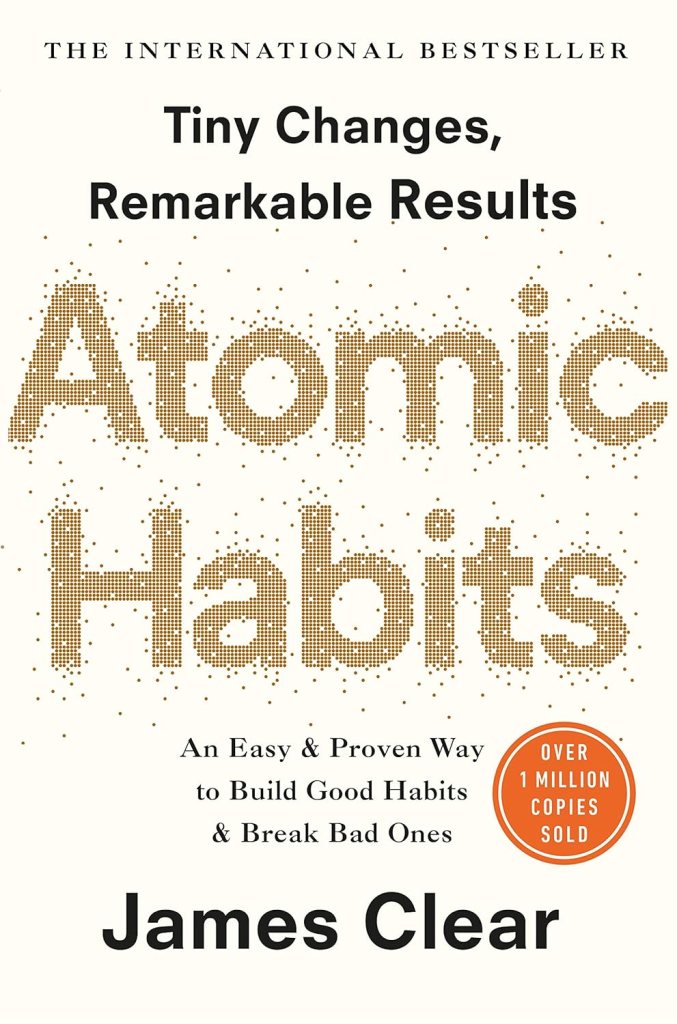
19 Inspirational Quotes from James Clear’s Atomic Habits

Atomic Habits by James Clear

I always gravitate towards non-fiction books hoping to learn something new. However, self-help books often contain repetitive information already covered by other authors. If you read a new non-fiction book on a certain topic, subsequent books on the same topic often contain similar tips and suggestions beneath different covers. There is always a déjà vu feeling lingering in the background, “This tip seems familiar,” or “Have I read this quote somewhere?

Atomic Habits does not fall into the I-Feel-I-Have-Read-It-Before category. A lot of it felt new. The author’s thought process was refreshing, and I was introduced to new perspectives and ideas that beautifully emphasize the power of small habits. James Clear has a knack for writing engagingly using clear (pun intended) and concise language. I would even go so far as to say that Atomic Habits was the best non-fiction book I read this year.

I will list some of the quotes from the book that left an impression on me. Hope you like them as much as I did.

Changes that seem small and unimportant at first will compound into remarkable results if you’re willing to stick with them for years.

Time magnifies the margin between success and failure. It will multiply whatever you feed it. Good habits make time your ally. Bad habits make time your enemy.

The San Antonio Spurs, one of the most successful teams in NBA history, have a quote from social reformer Jacob Riis hanging in their locker room: “When nothing seems to help, I go and look at a stonecutter hammering away at his rock, perhaps a hundred times without as much as a crack showing in it. Yet at the hundred and first blow it will split in two, and I know it was not that last blow that did it—but all that had gone before.”

If you want better results, then forget about setting goals. Focus on your system instead. The purpose of setting goals is to win the game. The purpose of building systems is to continue playing the game.

Small changes often appear to make no difference until you cross a critical threshold. The most powerful outcomes of any compounding process are delayed. You need to be patient.

The ultimate form of intrinsic motivation is when a habit becomes part of your identity. It’s one thing to say I’m the type of person who wants this. It’s something very different to say I’m the type of person who is this.

As the psychologist Carl Jung said, “Until you make the unconscious conscious, it will direct your life and you will call it fate.”

When and where you choose to insert a habit into your daily routine can make a big difference. If you’re trying to add meditation into your morning routine but mornings are chaotic and your kids keep running into the room, then that may be the wrong place and time. Consider when you are most likely to be successful. Don’t ask yourself to do a habit when you’re likely to be occupied with something else.

When scientists analyze people who appear to have tremendous self-control, it turns out those individuals aren’t all that different from those who are struggling. Instead, “disciplined” people are better at structuring their lives in a way that does not require heroic willpower and self-control. In other words, they spend less time in tempting situations.

I once heard a story about a man who uses a wheelchair. When asked if it was difficult being confined, he responded, “I’m not confined to my wheelchair—I am liberated by it. If it wasn’t for my wheelchair, I would be bed-bound and never able to leave my house.” This shift in perspective completely transformed how he lived each day. Reframing your habits to highlight their benefits rather than their drawbacks is a fast and lightweight way to reprogram your mind and make a habit seem more attractive.

The most effective form of learning is practice, not planning.

Habits are easier to build when they fit into the flow of your life. You are more likely to go to the gym if it is on your way to work because stopping doesn’t add much friction to your lifestyle. By comparison, if the gym is off the path of your normal commute—even by just a few blocks—now you’re going “out of your way” to get there.

The truth is, a habit must be established before it can be improved. If you can’t learn the basic skill of showing up, then you have little hope of mastering the finer details.

Even when you know you should start small, it’s easy to start too big. When you dream about making a change, excitement inevitably takes over and you end up trying to do too much too soon. The most effective way I know to counteract this tendency is to use the Two-Minute Rule, which states, “When you start a new habit, it should take less than two minutes to do.”

The takeaway is that you should build habits that work for your personality. People can get ripped working out like a bodybuilder, but if you prefer rock climbing or cycling or rowing, then shape your exercise habit around your interests. If your friend follows a low-carb diet but you find that low-fat works for you, then more power to you. If you want to read more, don’t be embarrassed if you prefer steamy romance novels over nonfiction. Read whatever fascinates you. You don’t have to build the habits everyone tells you to build. Choose the habit that best suits you, not the one that is most popular.

The Goldilocks Rule states that humans experience peak motivation when working on tasks that are right on the edge of their current abilities. Not too hard. Not too easy. Just right.

When a habit is truly important to you, you have to be willing to stick to it in any mood. Professionals take action even when the mood isn’t right. They might not enjoy it, but they find a way to put the reps in.

The only way to become excellent is to be endlessly fascinated by doing the same thing over and over. You have to fall in love with boredom.

The upside of habits is that we can do things without thinking. The downside is that we stop paying attention to little errors.

Why You Should Read Non-Fiction

Why You Should Read Non-Fiction

Recently, I came across a proficient Bollywood actress saying, “I don’t read non-fiction. My mind is fine as it is. I don’t need to learn anything more.” I was a bit taken aback by her statement. Not because she said she didn’t like non-fiction, which is entirely her personal choice, but by the fact that she thinks there’s nothing more to learn.

When we stop learning, we stop growing. I don’t think we ever reach a saturation point when it comes to knowledge. There’s always something new to study – be it from our own experiences or others. It’s impossible to learn everything by ourselves, which is where non-fiction comes in. Such books expand your horizons, even if they demand a certain amount of mental effort from us.

Not many enjoy non-fiction. It makes you feel like you are studying in contrast to a fictional book that offers a more relaxed, entertaining vibe. We have always associated non-fiction with our school textbooks. So it’s no surprise why many detest reading the genre. Personally, I find myself having to work my grey cells more when I am reading an autobiography or a self-help book. They require you to think and retrospect, which does not qualify for “easy reading.”

But to never read non-fiction, in my opinion, is a sin. You have some of the world’s best documenting their experiences and learnings on a subject of interest in the most compact form possible to help others who would otherwise have spent countless hours trying to learn the same. Why miss that golden opportunity?

Here are some reasons why you should consider reading non-fiction:

It allows you to learn from other people’s mistakes. The people who have written the books have more experience than us regarding certain subjects, so why not trust them? When you read through their mistakes, you get to learn what to avoid.

Some points stick. When you read non-fiction, you can be assured some valuable points will stick. You will end up discarding a lot of info that doesn’t align with your thought process. Still, you will unknowingly absorb valuable insights for future use. When the time comes, these tidbits will hover over in the background, helping you make the right decision. You might not remember which book you got the idea from, but the important thing is you retained the information for personal use. This can be very useful, be it at work, studies, or even personal day-to-day interactions.

They give you a new perspective. When I go through self-help books, I am almost always gifted with a new way of perceiving things, which I wouldn’t have if left to my own devices. The people around me are echo chambers, and we often hear the same viewpoints repeatedly. This is why people tell you to travel – so you get to experience different cultures, values, and insights. A more accessible, affordable option is to read non-fiction. It broadens your horizons, making you understand that yours is not the only way to live. There are many different kinds of people with different stories, unique experiences, and beliefs. Non-fiction helps you explore all of it in the comfort of your home.

I agree you can do all three by watching YouTube videos or listening to podcasts, but there’s only so much you can include in video and audio formats. In comparison, books are able to contain a lot more information. Plus, scanning or searching for info in a book is easier, especially if you own a Kindle.

So, do give non-fiction a chance by picking a topic of interest. You do not have to finish everything in one go. Try five pages, a chapter, or even one page instead. Each page you finish takes you that much closer to developing a new mindset.

***

Photo by Gu00fcl Iu015fu0131k