An Ode to This American Woman

Zarna Garga's This American Woman Book Cover

As someone living in India, I enjoy hearing the stories of the Indian-American diaspora. In many ways, we are alike, yet also very different. While India itself holds a wide diversity of thoughts, the experiences of Indian-origin people abroad offer something unique – they make you see your own country from a fresh perspective. Zarna Garg’s This American Woman was one such story that offered me a deep dive into that view.

I have to admit, at first, I was put off by Zarna’s description of India in the few Instagram reels I came across. My patriotism made me defensive. But over time, she grew on me, and I realized that everyone sees a country through their own lens. As an ex-NRI myself, my perspective on India is very different from Zarna’s and her family’s. They see the USA as the best, while I believe India is the best – and that’s okay. Different views deserve respect. It was this curiosity about Zarna’s unique journey that ultimately led me to buy her book.

I loved this book. It made me both laugh and cry. Zarna’s life reads like a movie. Born in Mumbai, she ran away to the US as a teenager after her father tried to force her into an arranged marriage following her mother’s death. From there, she stayed with her sister and slowly built her life in America. Her journey has been tough, leaving her with mental blocks about returning to India. Yet she tells it all with such lightness, as if life itself is a comedy not meant to be taken too seriously.

Pain is my destiny and my company and my affinity. Embracing pain and not wasting time wondering “Why me?” will put you on the fast track to success.

What truly brought me to tears was the chapter her daughter dedicated to her. Even now, writing about it makes my eyes well up (though, to be fair, it might also be that time of the month – we women never really know what’s behind the tears). It’s a chapter worth reading. Everyone faces moments of self-doubt, especially women who’ve had to set aside their careers for family. But when that same family becomes your greatest support system, it’s a blessing. Zarna has that blessing in Zoya.

“For many parents, their children’s careers are their greatest accomplishment, but for me my mom’s is mine” – Zoya

The final part with Zarna’s brother was truly heart-warming. The speech she delivers on stage is pure heart.

I would strongly recommend reading This American Woman. It’s inspirational, funny, and heartwarming, capturing life in its own uniquely Indian-American way.

Book Review: “A House Without Windows” by Nadia Hashimi

Afghan women walking in front of a blue building image

I just finished A House Without Windows by Afghan-American writer Nadia Hashimi. These days, I gravitate more toward non-fiction and find it more engaging. Still, I’m not ready to give up fiction entirely. A House Without Windows was my fiction pick of the month.

What’s It About?

The story begins with a murder in an Afghan home. A woman, Zeba, is accused of killing her husband and is detained, with almost no chance of survival under Afghanistan’s strict laws for women in such cases. An Afghan-American lawyer, Yusuf, arrives in the country to connect with his roots, stumbles upon her case, and decides to defend her.

Thoughts

I really enjoyed the storyline, though I found the narration slow and somewhat predictable. What stood out most was how Nadia Hashimi portrayed the Afghan-American lawyer’s struggle to balance two cultures in America. This is a story familiar to many migrants. They want to embrace the new, yet can’t fully let go of their roots.

When Yusuf starts dating, everything boils down to one question: Will she bond well with my mother? That’s such a desi trait: wanting your partner to get along with your parents, and if there’s friction, it’s often the partner who pays the price. I also liked the part where he decides to travel to Afghanistan to reconnect with his roots, eventually making peace with the country’s imperfections, because where there’s love, hate doesn’t stand a chance.

The storyline is unique, with a blend of mystique, magic, and sacrifice. I wouldn’t say I strongly recommend the book, as I personally found it slow. However, what’s slow for me might be perfectly paced for someone else.

Ending this post with some quotable quotes from the book:

Alone and free of angst and sorrow
I’ve bled enough for today and tomorrow
Now it is time for my bud to bloom
I’m a sparrow in love with solitude
All my secrets contained within me
I sing aloud—I’m alone, finally!

SHE DID NOT REGRET THE CHILDREN, BUT AT TIMES SHE DID resent them. All mothers did, didn’t they? How could they not bear a little resentment toward people who took took took all the time? How could she be expected to feed them all? Where was Kamal when they were sick or tired or unreasonable?

Medicine is what this man calls his liquor
Strange is the remedy that only makes him sicker.

“And women?” she asked thoughtfully. “What is the world to us?”
Gulnaz offered a meek smile. “Do you not know, my daughter? Our world is the spaces between the rocks and meat. We see the face that should but doesn’t smile, the sliver of sun between dead tree branches. Time passes differently through a woman’s body. We are haunted by all the hours of yesterday and teased by a few moments of tomorrow. That is how we live—torn between what has already happened and what is yet to come.”

People only say nice things about the dead, so you never know what the truth is. You can be a brute in life, but the moment you die, all is forgiven. It used to make me mad, but now that I’m old and know what people say about me, I’m glad for it.

Men were always so frightened by their mortality that they obsessed over ways to live forever: sons to carry on their work, grandsons to carry on their name, their legacies in books, on streets, or in newspapers. Some became more desperate as their black hairs turned silver.

***

Photo by Wasim Mirzaie

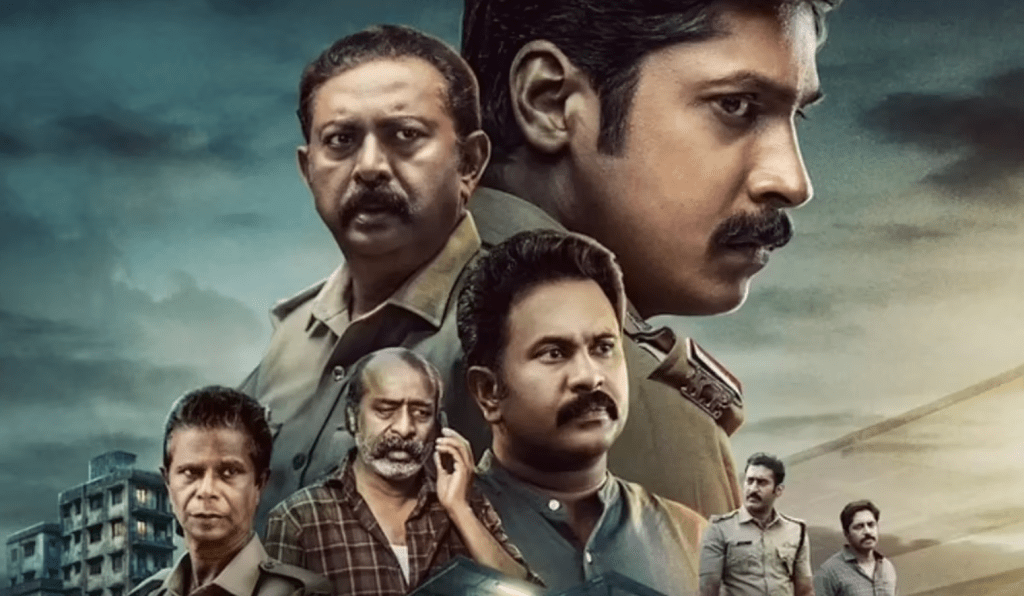
Thriller Series Review: Kerala Crime Files

Kerala Crime Files

If you haven’t yet watched Kerala Crime Files on JioHotstar, I would recommend doing it now. It’s a Malayalam-language Indian crime series set in Kerala, and it delivers on every front: gripping treatment that matches international standards, solid performances, and fresh storylines. I binged both seasons back-to-back over the weekend and thoroughly enjoyed them.

What’s It About?

Season 1 of Kerala Crime Files revolves around the murder of a sex worker found in a dingy lodge. The police, initially indifferent due to the victim’s profession, treat it as just another case. In one telling scene, a woman asks her police officer husband, “So there’s discrimination in cases too?” What begins as apathy turns into an ego-driven pursuit. The officers are frustrated by their inability to crack the case quickly. Though the victim is a sex worker and the case is treated casually at first, their bruised egos and the complicated nature of the case push them to dig deeper.

The heart and soul of Kerala Crime Files Season 2 are the dogs. They are present from the very first frame to the last. Set in a quiet town in Kerala, the story begins with a police officer going missing. As the investigation unfolds, the plot thickens with unexpected twists. What sets this season apart is its demand for viewer engagement. You need to connect the dots yourself. There’s no spoon feeding. I’ll admit, I had to rely on Reddit to fully piece things together, since I usually go into passive mode while watching fiction. The performances are exceptional, especially Indrans and Harisree Ashokan. Known for comedy, they prove their mettle in intense, dramatic roles too.

Kerala Crime Files is streaming on JioHotstar. Both seasons have just 6 short episodes, each around 20–30 minutes. You can easily finish them in one sitting. In a time when attention spans are shrinking and many shows drag episodes beyond an hour, this crisp format is a welcome change. I hope to see more dramas adopting this format.

Book Review: Convenience Store Woman

The protagonist of Convenience Store Woman by Sayaka Murata is unlike anyone I’ve encountered in any book. Keiko is quietly charming, yet deeply unconventional. She’s content with her simple routine at a convenience store, a place she has worked for over 18 years. This does not gel well with people around her who expect her to climb the career ladder, or “at least get married”, instead of sticking to this “lowly” job. They are unable to comprehend her happiness or her emotional detachment in situations where strong feelings are typically expected. In her own words, she’s a “foreign object.”

There are parts of Keiko’s personality I could relate to, especially her tendency to operate more from the brain than the heart. I’ve often questioned this trait in myself, particularly in political matters, where I naturally lean toward a calculated, strategic view rather than reacting emotionally. This sometimes makes people see me as cold. But that’s where my similarities with Keiko end.

I tend to get deeply emotional about things that may not always move others in the same way. My responses aren’t absent, like Keiko’s. I cry easily when I see children being affectionate with their parents or when animals are hurt. I feel emotional and distraught when I see small children picking up guns or stones in conflict zones. I want them to study and grow up contributing to society in peaceful ways. I well up seeing warmth in society. For example, when the visually impaired children sang “Happy Birthday” to our Indian President Murmu, she cried, I cried, we all cried. I’m also deeply moved by the struggles of elderly people, perhaps because I’ve spent time with them and seen what many others, especially those living far from their parents, often overlook. I do feel deeply, just not always in ways others expect, a bit like Keiko.

If you are wondering what makes Keiko strange, this snippet from the book gives an idea:

I wouldn’t say I loved Convenience Store Woman, but it was certainly thought-provoking, especially how society treats you as a “foreign object” that needs to be discarded if you don’t follow the rules. Society insists Keiko must adapt to its norms to be seen as “normal.” It does not matter to them how fulfilled or happy she is. Keiko’s struggle to meet societal expectations forms the core of the novel. Many of us might relate to this struggle with conformity. Not everyone is wired to follow every rule or expectation to the letter.

Ending this post with some thought-provoking quotes from the book:

The normal world has no room for exceptions and always quietly eliminates foreign objects. Anyone who is lacking is disposed of.

He seemed to have this odd circuitry in his mind that allowed him to see himself only as the victim and never the perpetrator l thought as I watched him.

It occurred to me that it wasn’t such a stretch to say that contemporary society was still stuck in the Stone Age after all. So the manual for life already existed. It was just that it was already ingrained in everyone’s heads, and there wasn’t any need to put it in writing. The specific form of what is considered an “ordinary person” had been there all along, unchanged since prehistoric times I finally realized.

“Look, anyone who doesn’t fit in with the village loses any right to privacy. They’ll trample all over you as they please. You either get married and have kids or go hunting and earn money, and anyone who doesn’t contribute to the village in one of these forms is a heretic.”

***

Photo by Caio

Book Review: “I Am A Troll” by Swati Chaturvedi

I finished I Am a Troll by Swati Chaturvedi last night. It’s an insightful read if you’re unaware that the BJP, like all major parties, has a dedicated IT cell.

I am a Troll by Swati Chaturvedi

However, if you’re already familiar with the BJP’s IT cell, the book doesn’t offer much new, apart from a few interviews with former BJP insiders who strongly criticize the party. But in Indian politics, this isn’t unusual. Members who leave any party, be it the BJP or Congress, often openly highlight its flaws. This trend isn’t unique to the BJP.

The book also points out that Modi’s official Twitter handle follows some controversial right-wing accounts like OpIndia, which is a valid observation. This is somewhat unusual; I’m not aware of any left-leaning political leader or party officially following social media influencers or accounts considered far-left. In that sense, this could be something unique to the BJP, and worth re-evaluating if it raises credibility concerns.

All that aside, the author’s pro-Congress bias is evident. She claims Rahul Gandhi was becoming as popular as Modi and predicted strong results for the Congress in the 2019 elections (the book was published in 2017). She lays emphasis on Rahul Gandhi’s social media growth, rather than his on-ground political performance. Chaturvedi presents his increasing followers and engagement as indicators of his strength and popularity, which feels selective and somewhat misleading. To appear balanced, she briefly mentions 2–3 false narratives that were pushed by the Congress IT cell, but downplays their impact.

The writing has its issues. Critiquing someone’s views is fine, but body-shaming, stereotyping Indian men, and mocking someone’s English skills feels unprofessional, especially from a journalist aiming to be objective. For example, consider the sample below, where she generalizes right-wing “trolls”.

Chaturvedi also complains that trolls refuse to engage with her reasoning on why the BJP is problematic, yet admits she zones out when they begin to speak. This contradiction weakens her argument and suggests a similar unwillingness to listen.

Interestingly, the book indirectly acknowledges that mainstream media was largely pro-Congress in 2014 (and still is in states like Kerala), which made it difficult for the BJP to be heard without strong social media outreach (reference to this is below).

These are a few minor concerns I had with the book, but overall, it provides a revealing look into political online warfare, though not without its caveats.

Book Review: “Pretty Girls” by Karin Slaughter

Karin Slaughter Pretty Girls

It took some time to complete Karin Slaughter’s Pretty Girls. This is not because the plot wasn’t interesting, but because I was trying to divide my time equally among other interests in life. The storytelling is intense, descriptive, and graphic. So, I had to take breaks. Anyone who cannot handle violence should stay away from the book. It’s by far the most violent book I have ever read.

The crime thriller follows the story of three sisters. One of them has been missing for years, while the other two navigate their lives without their eldest sister’s presence. Their parents are separated, unable to cope with their daughter’s absence. What happened to their eldest? Why aren’t the cops providing clear answers? This mystery forms the crux of the story.

If you enjoy thrillers, I’d highly recommend Pretty Girls. Personally, I felt the descriptions were a bit lengthy at times, which slowed the pace for me. However, readers who appreciate detailed scenes and emotional depth may find that aspect especially engaging.

Ending this review with some interesting quotes from the book:

That she ended up with a boy who had grown up less than twenty miles from her childhood home was just further proof that no matter how far you ran, you always ended up back where you started.

People did not change their basic, core personalities. Their values tended to stay the same.

“The world stops for you when you’re pretty. That’s why women spend billions on crap for their faces. Their whole life, they’re the center of attention. People want to be around them just because they’re attractive. Their jokes are funnier. Their lives are better. And then suddenly, they get bags under their eyes or they put on a little weight and no one cares about them anymore. They cease to exist.”

“Reductio ad Hitlerum.” Claire couldn’t stop quoting Paul. “It’s when you compare someone to Hitler to win an argument.”

“Dyadic Completion,” Paul would’ve told Claire. “The human brain tends to assume that, if there’s a victim, there has to be a villain.”

He reminds me of the worst kind of student I used to have—the kind who is certain that they already know everything worth knowing