19 Inspirational Quotes from James Clear’s Atomic Habits

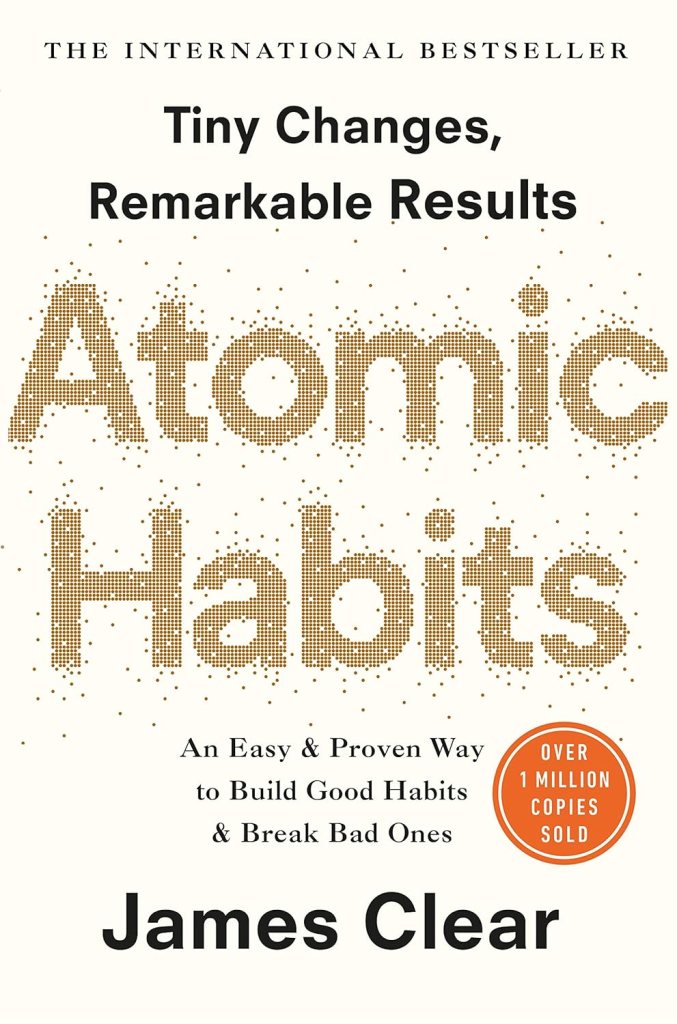
Atomic Habits by James Clear

I always gravitate towards non-fiction books hoping to learn something new. However, self-help books often contain repetitive information already covered by other authors. If you read a new non-fiction book on a certain topic, subsequent books on the same topic often contain similar tips and suggestions beneath different covers. There is always a déjà vu feeling lingering in the background, “This tip seems familiar,” or “Have I read this quote somewhere?

Atomic Habits does not fall into the I-Feel-I-Have-Read-It-Before category. A lot of it felt new. The author’s thought process was refreshing, and I was introduced to new perspectives and ideas that beautifully emphasize the power of small habits. James Clear has a knack for writing engagingly using clear (pun intended) and concise language. I would even go so far as to say that Atomic Habits was the best non-fiction book I read this year.

I will list some of the quotes from the book that left an impression on me. Hope you like them as much as I did.

Changes that seem small and unimportant at first will compound into remarkable results if you’re willing to stick with them for years.

Time magnifies the margin between success and failure. It will multiply whatever you feed it. Good habits make time your ally. Bad habits make time your enemy.

The San Antonio Spurs, one of the most successful teams in NBA history, have a quote from social reformer Jacob Riis hanging in their locker room: “When nothing seems to help, I go and look at a stonecutter hammering away at his rock, perhaps a hundred times without as much as a crack showing in it. Yet at the hundred and first blow it will split in two, and I know it was not that last blow that did it—but all that had gone before.”

If you want better results, then forget about setting goals. Focus on your system instead. The purpose of setting goals is to win the game. The purpose of building systems is to continue playing the game.

Small changes often appear to make no difference until you cross a critical threshold. The most powerful outcomes of any compounding process are delayed. You need to be patient.

The ultimate form of intrinsic motivation is when a habit becomes part of your identity. It’s one thing to say I’m the type of person who wants this. It’s something very different to say I’m the type of person who is this.

As the psychologist Carl Jung said, “Until you make the unconscious conscious, it will direct your life and you will call it fate.”

When and where you choose to insert a habit into your daily routine can make a big difference. If you’re trying to add meditation into your morning routine but mornings are chaotic and your kids keep running into the room, then that may be the wrong place and time. Consider when you are most likely to be successful. Don’t ask yourself to do a habit when you’re likely to be occupied with something else.

When scientists analyze people who appear to have tremendous self-control, it turns out those individuals aren’t all that different from those who are struggling. Instead, “disciplined” people are better at structuring their lives in a way that does not require heroic willpower and self-control. In other words, they spend less time in tempting situations.

I once heard a story about a man who uses a wheelchair. When asked if it was difficult being confined, he responded, “I’m not confined to my wheelchair—I am liberated by it. If it wasn’t for my wheelchair, I would be bed-bound and never able to leave my house.” This shift in perspective completely transformed how he lived each day. Reframing your habits to highlight their benefits rather than their drawbacks is a fast and lightweight way to reprogram your mind and make a habit seem more attractive.

The most effective form of learning is practice, not planning.

Habits are easier to build when they fit into the flow of your life. You are more likely to go to the gym if it is on your way to work because stopping doesn’t add much friction to your lifestyle. By comparison, if the gym is off the path of your normal commute—even by just a few blocks—now you’re going “out of your way” to get there.

The truth is, a habit must be established before it can be improved. If you can’t learn the basic skill of showing up, then you have little hope of mastering the finer details.

Even when you know you should start small, it’s easy to start too big. When you dream about making a change, excitement inevitably takes over and you end up trying to do too much too soon. The most effective way I know to counteract this tendency is to use the Two-Minute Rule, which states, “When you start a new habit, it should take less than two minutes to do.”

The takeaway is that you should build habits that work for your personality. People can get ripped working out like a bodybuilder, but if you prefer rock climbing or cycling or rowing, then shape your exercise habit around your interests. If your friend follows a low-carb diet but you find that low-fat works for you, then more power to you. If you want to read more, don’t be embarrassed if you prefer steamy romance novels over nonfiction. Read whatever fascinates you. You don’t have to build the habits everyone tells you to build. Choose the habit that best suits you, not the one that is most popular.

The Goldilocks Rule states that humans experience peak motivation when working on tasks that are right on the edge of their current abilities. Not too hard. Not too easy. Just right.

When a habit is truly important to you, you have to be willing to stick to it in any mood. Professionals take action even when the mood isn’t right. They might not enjoy it, but they find a way to put the reps in.

The only way to become excellent is to be endlessly fascinated by doing the same thing over and over. You have to fall in love with boredom.

The upside of habits is that we can do things without thinking. The downside is that we stop paying attention to little errors.


Why You Should Read Non-Fiction

Why You Should Read Non-Fiction

Recently, I came across a proficient Bollywood actress saying, “I don’t read non-fiction. My mind is fine as it is. I don’t need to learn anything more.” I was a bit taken aback by her statement. Not because she said she didn’t like non-fiction, which is entirely her personal choice, but by the fact that she thinks there’s nothing more to learn.

When we stop learning, we stop growing. I don’t think we ever reach a saturation point when it comes to knowledge. There’s always something new to study – be it from our own experiences or others. It’s impossible to learn everything by ourselves, which is where non-fiction comes in. Such books expand your horizons, even if they demand a certain amount of mental effort from us.

Not many enjoy non-fiction. It makes you feel like you are studying in contrast to a fictional book that offers a more relaxed, entertaining vibe. We have always associated non-fiction with our school textbooks. So it’s no surprise why many detest reading the genre. Personally, I find myself having to work my grey cells more when I am reading an autobiography or a self-help book. They require you to think and retrospect, which does not qualify for “easy reading.”

But to never read non-fiction, in my opinion, is a sin. You have some of the world’s best documenting their experiences and learnings on a subject of interest in the most compact form possible to help others who would otherwise have spent countless hours trying to learn the same. Why miss that golden opportunity?

Here are some reasons why you should consider reading non-fiction:

It allows you to learn from other people’s mistakes. The people who have written the books have more experience than us regarding certain subjects, so why not trust them? When you read through their mistakes, you get to learn what to avoid.

Some points stick. When you read non-fiction, you can be assured some valuable points will stick. You will end up discarding a lot of info that doesn’t align with your thought process. Still, you will unknowingly absorb valuable insights for future use. When the time comes, these tidbits will hover over in the background, helping you make the right decision. You might not remember which book you got the idea from, but the important thing is you retained the information for personal use. This can be very useful, be it at work, studies, or even personal day-to-day interactions.

They give you a new perspective. When I go through self-help books, I am almost always gifted with a new way of perceiving things, which I wouldn’t have if left to my own devices. The people around me are echo chambers, and we often hear the same viewpoints repeatedly. This is why people tell you to travel – so you get to experience different cultures, values, and insights. A more accessible, affordable option is to read non-fiction. It broadens your horizons, making you understand that yours is not the only way to live. There are many different kinds of people with different stories, unique experiences, and beliefs. Non-fiction helps you explore all of it in the comfort of your home.

I agree you can do all three by watching YouTube videos or listening to podcasts, but there’s only so much you can include in video and audio formats. In comparison, books are able to contain a lot more information. Plus, scanning or searching for info in a book is easier, especially if you own a Kindle.

So, do give non-fiction a chance by picking a topic of interest. You do not have to finish everything in one go. Try five pages, a chapter, or even one page instead. Each page you finish takes you that much closer to developing a new mindset.

***

Photo by Gu00fcl Iu015fu0131k

An Ode to 36 Thought-Provoking Quotes from The Monk Who Sold His Ferrari

The Monk Who Sold His Ferrari Quotes

The Monk Who Sold His Ferrari needs no introduction. The book shares a treasure trove of ideas, concepts, and mental wellness gems we could do well to absorb. As the world progresses towards increased capitalism, we have forgotten to take care of our core emotional needs in the pursuit of fulfilling our materialistic ones. We have become workaholics with no work-life balance. Robin Sharma drills down the fact that work is important, but so is life. If you don’t take care of your health and happiness now, then when? Certainly not after you retire, the age your bank account is filled with money, but your energy becomes bankrupt.

Without further ado, here are some of my favorite thought-provoking quotes from the book. Hope you enjoy them as much as I did!

My dad said it best when he said, “John, on your deathbed you will never wish you spent more time at the office.”

To live life to the fullest, you must stand guard at the gate of your garden (mind) and let only the very best information enter.

There is no such thing as objective reality or ‘the real world.’ There are no absolutes. The face of your greatest enemy might be the face of my finest friend. An event that appears to be a tragedy to one might reveal the seeds of unlimited opportunity to another. What really separates people who are habitually upbeat and optimistic from those who are consistently miserable is how the circumstances of life are interpreted and processed.

From struggle comes strength. Even pain can be a wonderful teacher. Or to put it another way, how can you really know the joy of being on the summit of the mountain unless you have first visited the lowest valley.

Stop judging events as either positive or negative. Rather, simply experience them, celebrate them and learn from them.

The secret of happiness is simple: find out what you truly love to do and then direct all of your energy towards doing it. If you study the happiest, healthiest, most satisfied people of our world, you will see that each and every one of them has found their passion in life, and then spent their days pursuing it. This calling is almost always one that, in some way, serves others.

Saying that you don’t have time to improve your thoughts and your life is like saying you don’t have time to stop for gas because you are too busy driving. Eventually it will catch up with you.

Your self-image affects the way you feel, act and achieve. If your self-image tells you that you are too young to be a successful lawyer or too old to change your habits for the better, you never will achieve these goals. If your self-image tells you that lives rich with purpose, excellent health and happiness are only for people from backgrounds other than your own, this prophecy will ultimately become your reality.

There is nothing noble about being superior to some other person. True nobility lies in being superior to your former self.

Never get into the petty habit of measuring your self-worth against other people’s net worth.

Every second you spend thinking about someone else’s dreams you take time away from your own.

People who study others are wise but those who study themselves are enlightened.

The Chinese define image in these terms: there are three mirrors that form a person’s reflection; the first is how you see yourself, the second is how others see you and the third mirror reflects the truth. Know yourself. Know the truth.

My point is this: never do anything because you have to. The only reason to do something is because you want to and because you know it is the right thing for you to do.

Never be reluctant to ask even the most basic of questions. Questions are the most effective method of eliciting knowledge.

Happiness comes through good judgment, good judgment comes through experience, and experience comes through bad judgment.

The ten-minute period before you sleep and the ten-minute period after you wake up are profoundly influential on your subconscious mind. Only the most inspiring and serene thoughts should be programmed into your mind at those times.

Focus only on your priorities, those activities that are truly meaningful. Your life will be uncluttered, rewarding and exceptionally peaceful.

When spider webs unite, they tie up a lion.

This is the mantra I suggest you repeat at least thirty times a day: ‘I am more than I appear to be, all the world’s strength and power rests inside me.’ It will manifest profound changes in your life.

Few things are as meaningful as being a part of your children’s childhood. What is the point of climbing the steps of success if you have missed the first steps of your own kids? What good is owning the biggest house on your block if you have not taken the time to create a home? What is the use of being known across the country as a red-hot trial lawyer if your kids don’t even know their father?

Life doesn’t always give you what you ask for, but it always gives you what you need.

An addiction to distraction is the death of your creative production.

When you go after what you want, with love and wild abandon, you tap into the energy that created the stars and the seas. A kind of magic begins to enter your life and things happen that defy your comprehension. Signs start to appear, suggesting that you are on the right track.

Yes, make plans and set goals. Work hard and go for what you desire. That’s part of being a responsible person — it is true that setting intentions does make many of them come to life. But hold on to your plans and goals with a very loose grip. Often, the universe will send you a treasure in an unexpected package.

One of the most enduring of all the ancient laws of humanity is that we see the world not as it is, but as we are.

Too many potentially soaring lives are degraded and defeated by an attraction to busyness rather than a monomaniacal focus around what matters most.

No idea works for someone unwilling to do the work.

To have the results only 5 percent of the population have, do what 95 percent of society is unwilling to do.

If you do not know who you are and what it is you truly want to be, then how can you recognize and seize your destiny when it presents itself to you? Know yourself and your destiny will find you. Clarity precedes mastery.

Your wounds can be turned into your wisdom. Your stumbling blocks can become your stepping stones if you choose. Do not miss the remarkable opportunity that adversity and even tragedy presents. Your life can be made even better by the things that break your heart.

The more deeply we know ourselves, the more we can make authentic choices to make the leadership journey back home to the place that we have always known, at our core, we have wanted to be. In the Greco-Roman temples of the past, above the entrance one would often find the following words: “Know thyself and you will know the secrets of the universe and the gods.”

Once and for all stop being so hard on yourself. You are a human being and human beings have been designed to make mistakes. Coming to the realization that we all make mistakes and that they are essential to our growth and progress is liberating.

Life’s simplest pleasures are life’s best ones.

Saying things we don’t really mean becomes a habit when we practice it long enough. The real problem is that when you don’t keep your word, you lose credibility. When you lose credibility, you break the bonds of trust. And breaking the bonds of trust ultimately leads to a string of broken relationships. Say what you mean and mean what you say. This simple practice will have powerful results.

A problem only becomes a problem when seen as a problem.

***************

Photo by Pixabay

An Ode to 11 Thought-Provoking Life Quotes from Julian Barnes’ The Sense of An Ending

Photo by Nita on Pexels

The Sense of An Ending by Julian Barnes is a slow burner. It is the first time I took to a Booker Prize winner, enjoying it thoroughly from start to finish without my interest wavering or feeling unnecessarily overwhelmed. It was not grim at all, and that took me by surprise, for I was expecting a story as gloomy as the title. I was hooked to the mystifying story arc and character sketches. Even more amusing was how the characters spoke – sometimes comical, sometimes pessimistic, sometimes a bit aggravating (as intended).

Several instances and dialogues in the book offer a different perspective on life and its various eccentricities. I have listed some of my favorite lines below.

“History is the certainty produced at the point where the imperfections of memory meet the inadequacies of documentation.”

“He was too clever. If you’re that clever, you can argue yourself into anything. You just leave common sense behind.”

“He thought logically and then acted on the conclusion of logical thought. Whereas most of us, I suspect, do the opposite: we make an instinctive decision, then build up an infrastructure of reasoning to justify it. And call the result common sense.”

“Some Englishman once said that marriage is a long, dull meal with the pudding served first.”

“History isn’t the lies of the victors, as I once glibly assured Old Joe Hunt; I know that now. It’s more the memories of the survivors, most of whom are neither victorious nor defeated.”

“There were some women who aren’t at all mysterious but are only made so by men’s inability to understand them.”

“It strikes me that this may be one of the differences between youth and age: when we are young, we invent different futures for ourselves, when we are old, we invent different pasts for others.”

“But time … how time first grounds us and then confounds us. We thought we were being mature when we were only being safe. We imagined we were being responsible but were only being cowardly. What we called realism turned out to be a way of avoiding things rather than facing them. Time … give us enough time and our best-supported decisions will seem wobbly, our certainties whimsical.”

“The question of accumulation – you put money on a horse, it wins, and your winnings go one to the next horse in the next race, and so on. Your winnings accumulate. But do your losses? Not at the racetrack – there, you just lose your original stake. But in life? Perhaps here, different rules apply. You bet on a relationship, it fails; you go on to the next relationship, it fails too: and maybe what you lose is not two simple minus sums but the multiple of what you staked. That’s what it feels like, anyway. Life isn’t just addition and subtraction. There’s also the accumulation, the multiplication, of loss, of failure.”

“Because just as all political and historical change sooner or later disappoints, so does adulthood. So does life. Sometimes I think the purpose of life is to reconcile us to its eventual loss by wearing us down, by proving, however long it takes, that life isn’t all it’s cracked up to be.”

“I had a friend who trained as a lawyer, then became disenchanted and never practised. He told me that the one benefit of those wasted years was that he no longer feared either the law or lawyers. And something like that happens more generally, doesn’t it? The more you learn, the less you fear. ‘Learn’ not in the sense of academic study, but in the practical understanding of life.”

An Ode to 17 Thought-Provoking Life Quotes from Fredrik Backman’s Beartown

Photo by Tony Schnagl on Pexels

I am a big fan of Fredrik Backman, even though I have read only 2 of his books.

The first one was A Man Called Ove. I completed the second one quite recently. It is a beautiful, emotional, intense story of a sleepy little cold town called Beartown. A place where people are laidback in all things except one – ice hockey. Their love for the sport transcends everything. It reminds me of professional football club fans. The same passion, the same energy, the same love. The same disappointment when their team loses or when a controversy pops up. If you are a sports fan or know someone who is, you would find this book extremely relatable.

Fredrik Backman is a genius when it comes to explaining moments and expressing emotions. I got goosebumps while reading through many of the quotes in Beartown.

I am listing some of my favorites here.

“The only thing the sport gives us are moments. But what the hell is life, Peter, apart from moments?”

“Being a parent makes you feel like a blanket that’s always too small. No matter how hard you try to cover everyone, there’s always someone who’s freezing.”

“Religion is something between you and other people; it’s full of interpretations and theories and opinions. But faith … that’s just between you and God.”

“People sometimes say that sorrow is mental but longing is physical. One is a wound, the other an amputated limb, a withered petal compared to a snapped stem.”

“One of all the terrible effects of grief is that we interpret its absence as egotism. It’s impossible to explain what you have to do in order to carry on after a funeral, how to put the pieces of a family back together again, how to live with the jagged edges. So what do you end up asking for? You ask for a good day. One single good day. A few hours of amnesia.”

“In a few years’ time she’ll read an old newspaper article about research showing that the part of the brain that registers physical pain is the same part that registers jealousy. And then Ana will understand why she hurt so badly.”

“A great deal is expected of anyone who’s been given a lot.”

“Community is the fact that we work towards the same goal, that we accept our respective roles in order to reach it. Values is the fact that we trust each other. That we love each other.”

“If Peter has learned one thing about human nature during all his years in hockey, it’s that almost everyone regards themselves as a good team player, but that very few indeed understand what that really means.”

“When you can accept the worst aspects of your teammates because you love the collective, that’s when you’re a team player.”

“Because the thing you can never be prepared for when you have children is your increased sensitivity. Not just feeling, but hypersensitivity. He didn’t know he was capable of feeling this much, to the point where he can hardly bear to be in his own skin.”

“One of the first things you learn as a leader, whether you choose the position or have it forced upon you, is that leadership is as much about what you don’t say as what you do say.”

“The easiest way to unite a group isn’t through love, because love is hard. It makes demands. Hate is simple.”

“Every child in every town in every country has at some point played games that are dangerous to the point of being lethal. Every gang of friends includes someone who always takes things too far, who is the first to jump from the highest rock, the last to jump across the rails when the train comes. That child isn’t the bravest, just the least frightened. And possibly the one who feels he or she doesn’t have as much to lose as the others.”

“The simplest and truest thing David knows about hockey is that teams win games. It doesn’t matter how good a coach’s tactics are: if they’re to stand any chance of working, first the players need to believe in them.”

“Fighting isn’t hard. It’s the starting and stopping that are hard.”

“There are few words that are harder to explain than ‘loyalty’. It’s always regarded as a positive characteristic, because a lot of people would say that many of the best things people do for each other occur precisely because of loyalty. The only problem is that many of the very worst things we do to each other occur because of the same thing.”