
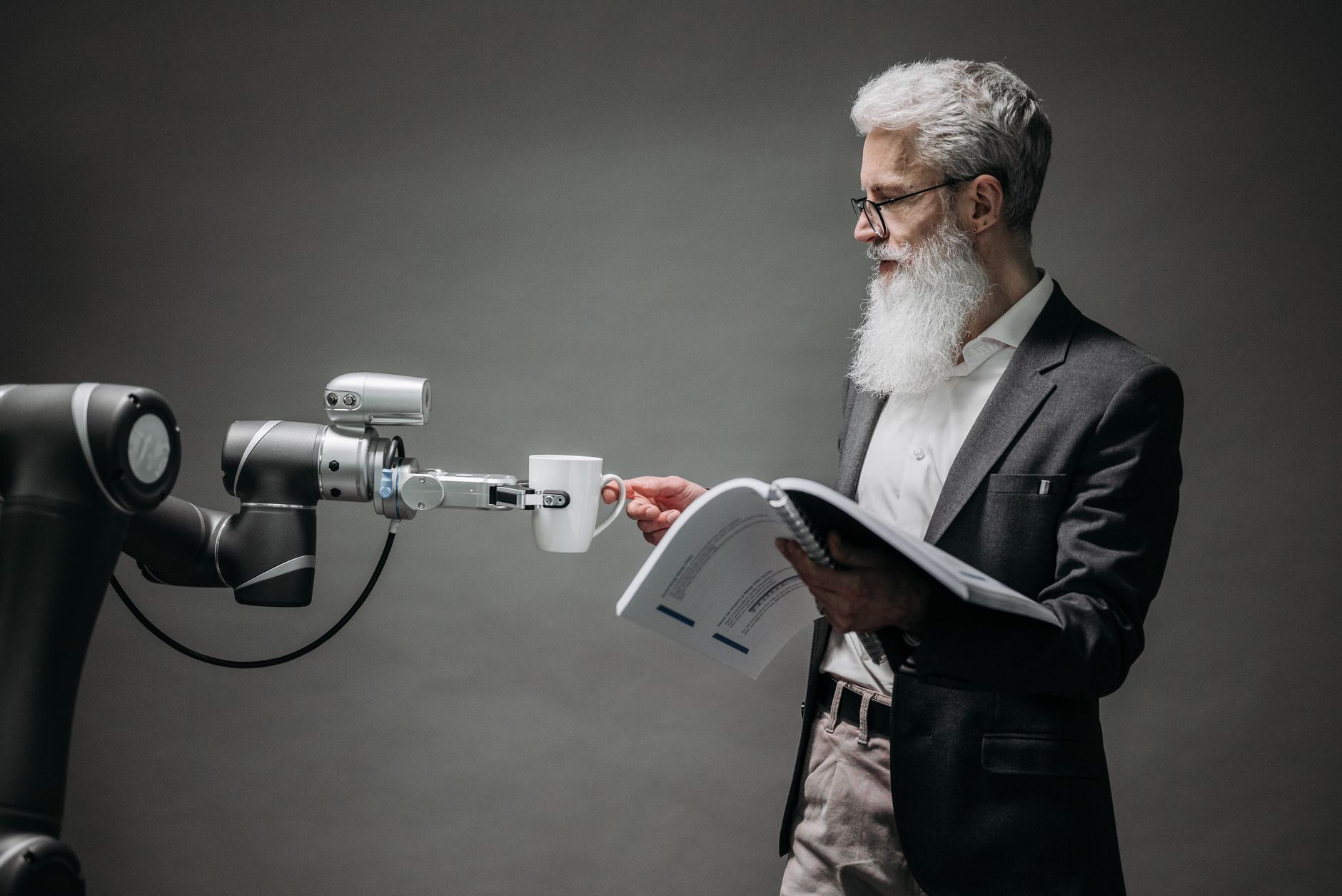
Recently, Jacob Coxon, a safety researcher who resigned from Anthropic in September 2026, said that both Anthropic and Open AI were “gambling with our lives” by racing toward self-improving superintelligence. He warned that there is a strong chance unchecked progress in artificial intelligence could lead to human extinction by the end of this decade.
The “self-improving superintelligence” part immediately reminded me of a fictional story I read recently called My Friend Aaron by Rory McMeekin (Google it). It was published in August, and it has all the elements of a Black Mirror short story. After reading Coxon’s recent comments about AI safety and superintelligence, that story feels almost uncomfortably real.
As someone who has been working for 15+ years in IT and now uses AI extensively for research, work, and fun, I can understand why many people aren’t taking these warnings from AI experts too seriously. Millennials have heard similar criticisms before, although about different technologies.
A few years back, AI for me at work basically meant Grammarly. It would automatically detect and correct my grammar mistakes. But there was almost a sense of guilt attached to using it, especially with so many people online shaming those who relied on writing tools. Apparently, if we are writers, we should get everything right on our own.
But I am someone who is much more comfortable thinking quickly and writing as I think than writing slowly, consciously, and perfectly. So I found Grammarly to be the perfect companion. It would catch my mistakes when I was speeding up my writing. Yet I still felt like I was doing something wrong by using the app.
It was only after ChatGPT came along that using Grammarly somehow became the lesser sin.
Now, people say, “Don’t use ChatGPT. Use Grammarly for writing and correcting small mistakes.”
If we look at the history of technology, I think this has always been the norm. A new product or technology arrives, people criticize it, and there are predictions about how it is going to ruin society or even end humanity. We saw it with the internet. We saw it with computers. And now we are seeing it with artificial intelligence.
Then something newer and more powerful comes along, and the technology that was previously considered controversial suddenly becomes normal.
I wonder if online AI bots will eventually achieve the same acceptance when something even more advanced comes along. Maybe that will be robots that look and speak like humans. Maybe it will be something we can’t even imagine yet.
Only time can tell.
Technology is definitely moving at a pace that I couldn’t have imagined a few years ago. Things that seemed like science fiction are becoming part of everyday life, and the conversation around AI is changing almost as quickly as the technology itself.
I don’t think banning AI is the answer. AI tools are helping many people, including me, speed up their work and get things done more efficiently. At the same time, I understand the criticism that AI can also make people lazy.
The problem is not using AI itself. It is how we use it. There is a big difference between using AI as an “add-on” to your work, something that helps you speed up what you already know, and using it as a complete replacement for your own knowledge and thinking.
Where that line should be drawn is something technology experts will have to figure out. And, as ordinary users, it is something we will only understand better as AI continues to evolve.
***
Photo by Pavel Danilyuk


You must be logged in to post a comment.