Even Goddesses Have Their Limits: Learning to Walk Away

I’m a divorcee. I have been for many years now. I’ve never hidden this fact. But I also never imagined my marriage would end the way it did. Then again, who does?

We all grow up believing our marriages will last forever. I also used to think of myself as a tolerant person, so the idea of my marriage failing felt impossible. In my mind, this is something that others might have to go through, the ones with anger issues, those who couldn’t compromise. Not me.

I followed every piece of advice perfectly. The kind you might have seen relationship gurus meting out on social media nowadays, i.e., communicate respectfully, try to understand the other person’s perspective, etc. But over time, I realized communication isn’t a one-way effort; it takes two people to make it work. If only one partner keeps trying while the other sits back, believing they have nothing to change, it slowly chips away at your happiness.

With time, after observing other marriages around me, I understood that maybe I wasn’t as tolerant as I thought — at least not by Indian standards.

Different Levels of Tolerance in Relationships

My regrets in relationships are less about the ex and more about how I handled things. “Why did I let others influence my decisions? Why did I tolerate and compromise more than required?

Of course, every relationship requires compromises. But each partner also has their own tolerance limits. For me, physical or emotional abuse is unacceptable. Yet, even I, someone who might appear intolerant of everything, tolerated it for a while before deciding I’d had enough. Many women, however, make peace with such situations in their marriages (and relationships in general) for their own reasons (dependency, fear, children, financial pressures, and more).

To cite an example of varying levels of tolerance: When I kept hearing cries of domestic violence in my building, I complained to the building association, even though people advised me not to. “It’s their family, their rules.” But I couldn’t just sit there doing nothing while hearing those cries. It was traumatizing. I took this step because there were times, even in my own relationship, that I wished my neighbors had intervened. Probably, ring the doorbell or knock on the door. It would have provided that much-needed relief.

After my complaint, it hasn’t happened since. But who’s to say the guy didn’t just find quieter ways to hurt his wife? I would’ve run away if such things had happened to me repeatedly, even if it meant begging on the streets for the rest of my life. But his wife might be thinking, “It’s okay. He’s doing it all out of love.” Who’s to know? You can’t save someone who doesn’t want to be saved.

Different levels of tolerance.

People also need to understand that no one files for divorce after just one instance of mistreatment. It happens when the same behavior repeats, even after requests, pleas, and calm conversations. Some choose to walk away, while others make peace with the idea that this is how their life will be. So the common advice of “give it one more chance” is mostly useless, and a bit insensitive, because the ones involved might have already given it multiple chances before deciding to let go.

Power of Faith During Tough Times

Even though I’m not a religious Hindu, having faith in some form has always helped me through tough times. It’s the one thing to hold onto when it feels like your world is falling apart. Even now, I rarely visit temples or follow rituals properly, but in moments of extreme heaviness, I still pray. Not to any specific god. I believe we’re all praying to the same divine force, just using different names and stories. What else could explain miracles happening in every community?

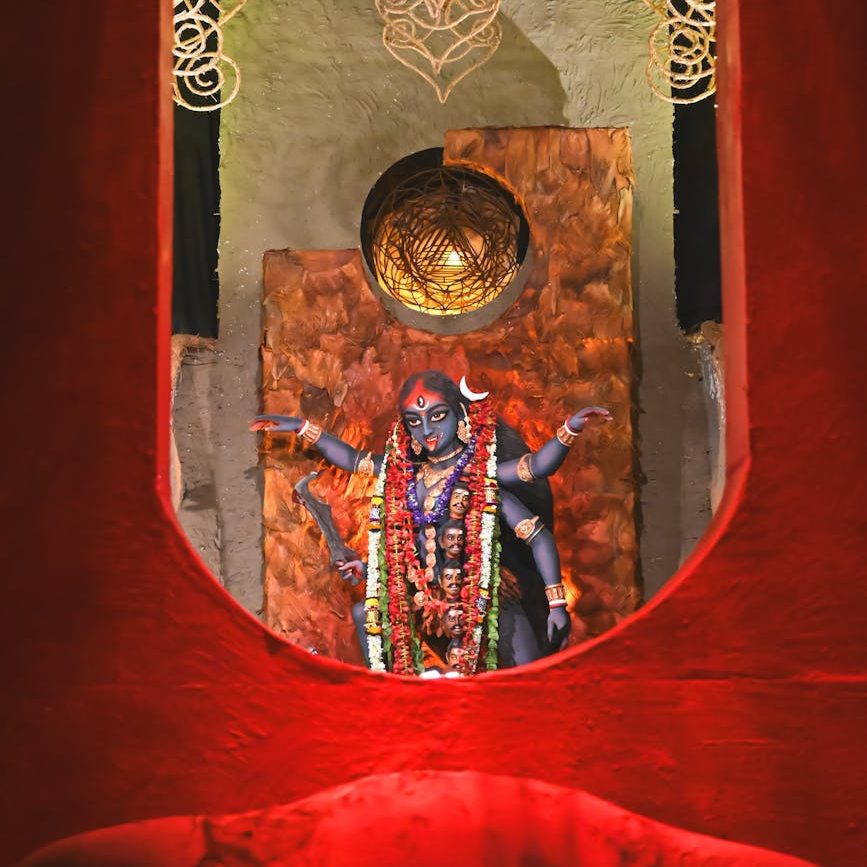
I remember, when I was married, our home had a lone idol of Goddess Kali, a deity I had rarely prayed to before. My parents usually had Lord Krishna at home. I still remember looking at the deity and crying. I asked if this was how it would be for the rest of my life – painful and broken on the inside, faking happiness on the outside (especially for social media).

I sometimes think I might have continued living that way if I hadn’t been pushed by some greater power to take a stand for myself. Probably it was Her. Must have been fed up with me always looking at Her, crying and whining. Even goddesses have their tolerance limits. Also, gods only help those who help themselves, right? Or as we Malayalees say, “Thaan paathi, dhaivam paathi” (you must put in your half of the effort, and God will take care of the rest). Maa Kali might have gone, “Bitch, why don’t you just leave the marriage, instead of troubling me all the bloody time?

The day I walked out of my marriage was also the day I told my parents, “If you don’t help me, I’ll do it on my own.” Thankfully, they stood by me when I made that decision. I also had the confidence to stand on my own feet. I wasn’t employed then, but my freelance work brought in some income. I knew that if I left the marriage, I wouldn’t be a burden on anyone. That same freelance experience later helped me secure a job. It formed the bulk of my resume, and it convinced my employers that I could handle responsibilities independently, even while working from home, at a time when WFH wasn’t even common.

When I look back, I feel the universe was guiding me in small but meaningful ways toward a life that may be inadequate for someone else, but is absolutely correct for a homebody, introverted feminist like me.

Taking Marriage Advice from Society

But the point is, society will tell you not to take advice from a woman like me. Because I’m a divorcee. What would I know about marriage and relationships, right?

Yet it will encourage you to listen to the woman who keeps enduring it all, at the cost of her well-being, because that’s what a “good wife” does.

Society doesn’t really care about what a woman thinks or feels. It just wants you to stick to the rules.

***

Photo by Monojit Dutta

An Ode to Zarna Garg & Family

Zarna Garg and Family

I recently started watching Zarna Garg’s stand-up videos. Until then, I had only seen snippets of her interviews on Instagram reels. At that time, I assumed she was yet another comic who makes a living by criticizing India, as many Indian comedians do. Negative takes on India tend to get more attention, and I, honestly, had grown a bit tired of that negativity. So I stayed away from watching Zarna’s videos for the longest time.

Eventually, I decided to watch her special Practical People Win on JioHotstar (originally on Hulu). That special led me to the Zarna Garg Family podcast on YouTube, where I found Zarna, her husband, Shalabh, and their three children having honest, open conversations. Something every Indian family could learn from.

In my opinion, it’s a brilliant marketing tactic on her part to build that curiosity around her family in her specials. She says, “My son… so handsome,” “My daughter… so nerdy,” so you naturally want to know more about this family, what they look like, and witness their quirks in real life. This is the intention of the podcast – to get you more involved in the Garg family brand.

People like me crave a more personal connection with celebrities, influencers, and comedians. I want to hear their real thoughts, personal likes and dislikes, without sugarcoating or political correctness. The Garg family brings exactly that authenticity, which keeps you hooked. Bollywood, on the other hand, lacks this today. Most interviews feel overly scripted, with celebrities giving dull, promotional takes right before a movie release.

Zarna calls herself the quintessential “Indian aunty.” As someone in my 40s, I relate to many of her traditional views. Opinions that I did not hold in my 20s. Her daughter Zoya, on the other hand, reminds me of my younger self: idealistic and confident that hard work and determination can achieve anything. But life eventually teaches you that not everything goes your way. However, this is a lesson only experience teaches you. It cannot be taught by others.

I would like to take this chance to point out how much I admire Zoya. She is articulate and strikingly pretty, with the most gorgeous eyes, even though the Garg family often jokes about the eldest son being the most attractive. Zoya is never dismissive or disrespectful to her parents, even when they go against her views. I find this refreshing, especially today when many youngsters tend to be more casual, even rude, with their parents. As an old-school millennial who values parental respect, this stands out to me.

The podcast drew me into Zarna’s world. I ended up binge-watching episodes where the family openly discusses topics like dating, marriage, interracial relationships, and finances. All of them, including the children, are articulate and express themselves clearly and thoughtfully. As someone unmarried and child-free, I couldn’t help but compare their conversations to those my cousins and siblings have with their children. One of my nieces is dating a white man (and she has a history of dating only white men), so Zarna and her husband’s confusion and concerns felt very relatable. The podcast not only helps you reflect on your own feelings but also offers a fresh perspective from the younger generation. This is something new-gen parents can highly benefit from.

What endears me most to Zarna is her unapologetic Indianness. Many Indians abroad change their attire, avoid Indian clothes or bindis, culture, and even end up cooking less traditional food so that the masala smell doesn’t linger on their clothes. They have to compromise on their Indianness, just to blend in, be accepted, and respected. Despite these compromises, racism still continues. So, how much of this “blending in” has proven effective?

I’m of the belief that to enjoy Indian culture fully and unabashedly, one needs to stay back in India. Other countries, unfamiliar with the Indian, especially Hindu, way of life, may not be as accepting or comfortable with it. Living abroad often means diluting many aspects of your culture just to make others feel at ease. Zarna, however, proudly wears her Indian identity on her sleeve. She wears Indian outfits and a bindi on stage, despite admitting she constantly faces racist remarks in the USA over it. Her refusal to shed her identity to fit in is admirable. It takes courage and conviction to stay true to oneself in a foreign land, and Zarna has that in abundance. As racism against Indians has reached new heights globally, Zarna’s pride in her identity is truly inspiring. She shows that we should not cower before hate but instead embrace and celebrate our culture and traditions without fear.

***

Picture Source: Instagram/ZarnaGarg

How Online Interactions Improved My Social Behavior

I was a timid youngster. Shy and introverted. You can say even socially anxious. When guests arrived, I would run and lock myself up in my bedroom. I was not interested in common courtesy or formalities. Many mistook it for arrogance or rudeness. Looking back at it, I feel this behavior stemmed from insecurity. I was not confident with the way I looked.

Till my pre-adolescent days, I was a cute kid. I was pampered, received compliments, and always got attention. This changed once I became a teenager. I had the thickest prescription glasses, and my complexion changed from white (coveted by most Indians) to a dusky brown. I also lost my cute chubbiness along the way because my appetite had died, making me a lanky young woman. Not the kind that got attention or compliments, but the kind who was frequently mocked.

The people around me also ensured I knew I wasn’t as eye-pleasing as before. I got comments like, “She was so cute as a kid,” making it evident that they were dissatisfied with my current imagery. I was given medications to increase my appetite, so I could restore some of my lost glory. I despised the medicines and eventually stopped taking them.

I was continuously told to become more outgoing like my sibling, a far more attractive personality. How could I when I did not have the confidence? From a bubbly kid, I became more withdrawn, lost in my own world, finding solace in books and songs. I thought if I stayed away from people, I wouldn’t disappoint them, and they wouldn’t hurt me either.

It was during my late teenage years that I stumbled upon the online world. I had just gotten access to the internet at home. I was mesmerized by the sea of opportunities that opened up to me. The plus being I could hide behind a screen and avoid being judged for my looks or my introversion. It felt like a less judgemental world. Back then, it was. Social media platforms did not exist, and people were not spewing hatred at each other.

One fine day, I happened to chance upon a public chat platform for youngsters. Word was going around in school that it was a fun group. I jumped on the bandwagon, curious to know what it was like. It was where I finally found my voice.

I am not sure if it was the comfort of facelessness or the fact that there was no pretty privilege involved that did the trick of helping me get out of my shell. In the online world, only your persona is seen. Your thoughts, your emotions become the highlights. That’s what I put forth in my chats with random strangers. All messages were posted publicly, and people could tag you and respond to them. It was safe and secure since it was a closed group where creeps were promptly banned or blocked. Due vigilance is required when you chat with strangers, and the group moderators ensured it was a safe space for everyone.

Talking in the group was like having a big group discussion. And for the first time in my life, I felt I was a part of something. People were engaging with my words. They found me interesting. They laughed at my jokes. I was the center of attention. Something I thought I would never be again.

The interactions were a stepping stone in my life and contributed to my change in attitude. It gave me confidence that even if my looks are against me, I have what it takes to engage someone. It was a slow but sure climb from then on.

The universe works in a funny way. As soon as I gained confidence, I started making friends. I even started to look better. I was and will always be introverted and never be the party starter or the energetic go-getter, but I learned how to deal with people. I am at my most confident at the moment, but it has been a long, steady ride to get there.

The impact of online interactions has been anything but inconsequential in my life. It helped me realize I was much more than what people offline gave me credit for.

An Ode to Dopamine Detoxes

I’m at that stage now where I can discern the reason behind my restlessness. The symptoms that previously used to confound me can finally be attributed to a source and countered with practical solutions. I say this with pride because discovering the cause of any turmoil is always the first step to recovery.

The reason for my dopamine going out of whack and my feeling a flurry of erratic emotion? Social media.

I have a love-hate relationship with social media. Because of social media, I found my voice. Because of social media, my introverted self learned to be a tad more expressive. I could post online, and there would always be someone to listen to my endless thoughts, view my never-ending selfies, and validate my existence. As much as I enjoy the platforms, I often find myself getting lost in engaging with the myriad of interesting content while also feeling bad about someone close not liking my photos or reels or videos, wondering if everyone had a life far superior to mine, wanting to go on the same expensive trips that others do even if it’s not what I want. Social media can be draining. It takes away your mental resources and leaves you with very little to deal with the everyday complexities of life.

When you feel like a puppet in a system with no say over your actions, you know it’s time to take back control. It’s time for a dopamine detox. I turn off my notifications, log out from social media, and take a break from doomscrolling. What I get in return is an incredible sense of relief and calm.

My dopamine detoxes help me connect with myself, reflect and refocus my energy. I enjoy the stillness and the ability to engage with my work, family, and thoughts without being bombarded with external distractions.

I find such dopamine detoxes more valuable at work. When you’re neck-deep immersed in tasks, the last thing you need is a distracting WhatsApp chat demanding your attention. Turning the wi-fi off helps me in cutting down on unwanted noise. To combat my Fear of Missing Out (FOMO), I remind myself that I’m just a phone call away from those who need me. Sometimes, when I need 100% me-time, I enable the flight mode on my phone. It has been a life-changer.

Enough people don’t realize what staying connected 24×7 does to your brain. If they did, everyone, including myself, would have attempted to disconnect more regularly. I know what social media does to me, and I try to step away, but it’s not long before I turn delusional again and turn a blind eye to the side effects. I relapse and restart doomscrolling.

The irony is that I have to experience the dreaded symptoms again for my brain to knock some sense into my dopamine-hungry system. The symptoms being — feeling angry about nothing, annoyed over everything, and mentally and physically empty. These symptoms are my wake-up calls to step back. The moment I do, I feel refreshed. It always astonishes me how forgiving our bodies tend to be. They are quick to spring back to life if you give them a chance. A few hours of downtime is often all it takes.

I wonder how many people must have mistaken mental overstimulation for depression and continued using social media without understanding its negative impact on them. Overstimulation is not depression, but it may lead to depression. Prolonged use of social media can result in your body crying SOS in the form of a nervous breakdown, loneliness, and anxiety. If you feel irritated when your internet is down, even though you have nothing important to finish online, you are addicted – no second thoughts about it.

Correlation between social media and depression (courtesy: system.com)

If you are interested in the studies shown in the above image, here are the links:

We can see the symptoms but somehow fail to attribute them to social media. Even if we understand the negatives, it doesn’t stop most of us from endlessly scrolling through our feeds. It might be similar to how drug addicts feel. They know the side effects of the drugs they consume and how it physically and mentally affects them, but it doesn’t stop consumption.

I was at that stage again recently, ignoring the fact that it’s time for a digital detox, when I stumbled upon the book Dopamine Detox by Thibaut Meurisse on Prime Reading. The book is available for free if you are an Amazon Prime user in India. After exhausting my monthly budget for books, I decided to give it a go. It’s a quick read. It takes about 30 minutes or less to finish but is jam-packed with information.

The book helped as a reality check. Somehow I had conveniently forgotten what social media could do to my mental health and had started overusing it. I even attributed my increased irritability and lack of energy to sleep deprivation, vitamin deficiency, or lack of exercise. I fixed all these issues but turned a blind eye to my social media usage. Eventually, from a state of surrender, I accepted that disconnecting from social media was the best way to resolve my problem. So, dear readers, if everything fails to lift up your mood, try logging out from your social media accounts.

I have cut down my usage, but I have no idea when things will go down south again. For now, I enjoy being wide awake, in the present, and the temporary freedom from negativity. I have set up social media time restrictions on my phone to prevent doomscrolling, but how long before I disable them and return to my old ways? Only time can tell.

An Ode to Taking Fewer Photos and Living in the Moment

Photo by Vlad Cheu021ban

I take a sip of refreshing chai and relish the warmth it brings.

I visit a striking green paradise and breathe in the intoxicating air.

I spend time laughing with my loved ones, engaging in deep conversations.

Time stands still.

I welcome the moment with a big smile, comfortable baggy clothes, and frizzy hair.

All of it, without taking a single photograph to lock the moment.

There’s no pressure to look perfect.

There’s no pressure to get the perfect photographs, angles, filters, and light.

It’s perfect as it is.

In this age of social media, consciously taking a step back to enjoy life has proven therapeutic. It’s a transition that happened naturally for me during the pandemic. A metamorphosis that seeped unconsciously and significantly helped to reduce my anxiety. Along with it came the realization that we don’t have to lock everything in static images or never-ending videos. Sometimes, it’s okay to not record and to take that risk of losing a moment forever. Rest assured, the important things will stick and refuse to detach from you. You don’t really need a camera for that.

The constant pressure of social media, with its likes, shares, and validation, can weaken even the bravest. If our first reaction to a beautiful scenery is to take our phone out and view it through the camera’s lens, rest assured, we are not genuinely engaging. Our mind gets distracted by the constant back-and-forth shuffle between real life and reel life (Instagram or otherwise). The pressure doesn’t end there. Once you post the image, you are then distracted by who liked your pictures and what they commented. Each of these tasks might only take a few seconds. Still, collectively that’s a lot of time wasted navigating away from the present.

Contrary to popular notions, human beings are terrible at multitasking. Our brains are not wired to handle these many distractions. You can get things done, of course, but the overall value would reduce if you indulge in multiple interests simultaneously. Don’t believe me? Try to cut out other sensory reactions when you are listening to music – switch off the lights and engage in your favorite melodies. You will experience it like never before. The vocals and instruments sound sharper, richly intense, and more beautiful, purely because you are only focusing on the music alone and nothing else.

As a New Year resolution, maybe more people should learn to ignore the 24/7 pressure box they hold so tenderly in their hands. You can do more good for your body with this simple act – probably more than a gym membership would be able to.

An Ode to Supportive Strangers

Photo by Shamia Casiano on Pexels

As a kid, you’re told not to talk to strangers. But with experience, I have come to the realization that talking to strangers is not such a bad thing after all. In fact, I would say, out with the old “don’t talk to strangers” and in with the new “reach out to more strangers.”

It all started with my first blog. I received the most support from strangers.

Then came my business (now defunct). Again, I received incredible support from strangers.

At each phase of my life, I was indebted to the fact that strangers have always been more kind to me than the ones I personally know. With some observation, I realized this is the story for a lot of people. Strangers often tend to support more.

Is this because strangers are more kind? Or because more strangers than friends/relatives are on the lookout for what you have to offer? Maybe distance makes the heart go fonder, and up-close we are full of blunder? Or perhaps, it’s because strangers know how it is to feel unseen, to be treated like a stranger.

The world is vast, and people are boundless with distinct personalities and mental models. If our content does not cater to the needs of a small group of friends/relatives, instead of sticking to the archaic scripture of not talking to strangers, we should, maybe just maybe, reach out to more. The ones who would eventually become your tribe. The ones who understand your thought process and techniques.

I often feel intensely grateful to the strangers who have taken the time out to support me, often juxtaposed with an uncomfortable question, “Why are the people I know less supportive?

Some of these kind strangers have moved on, but in that short span of time, they have offered me more love and encouragement than any person I know. I am armed with the knowledge that strangers can be beautiful, and probably this is why I am more open to newcomers joining any close-knit community that I am in, whereas others appear to be wary or hostile.

I am convinced that this is why the universe sends us strangers—to play an important but short role in our life. So we don’t lose hope in our core beliefs, the ones we would love to passionately share with the world.