19 Inspirational Quotes from James Clear’s Atomic Habits

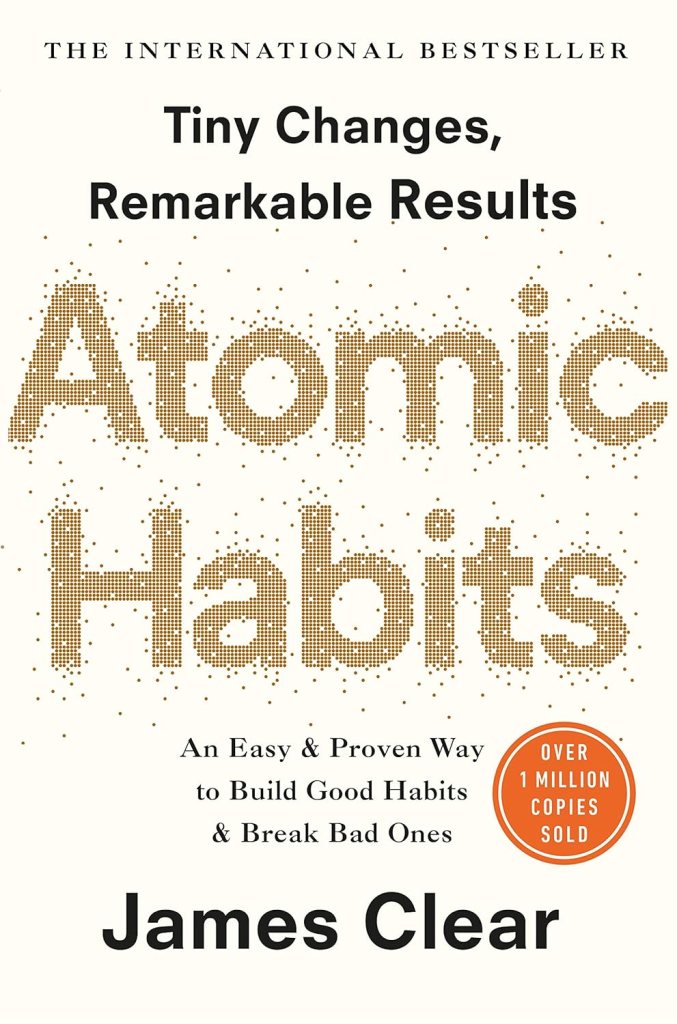
Atomic Habits by James Clear

I always gravitate towards non-fiction books hoping to learn something new. However, self-help books often contain repetitive information already covered by other authors. If you read a new non-fiction book on a certain topic, subsequent books on the same topic often contain similar tips and suggestions beneath different covers. There is always a déjà vu feeling lingering in the background, “This tip seems familiar,” or “Have I read this quote somewhere?

Atomic Habits does not fall into the I-Feel-I-Have-Read-It-Before category. A lot of it felt new. The author’s thought process was refreshing, and I was introduced to new perspectives and ideas that beautifully emphasize the power of small habits. James Clear has a knack for writing engagingly using clear (pun intended) and concise language. I would even go so far as to say that Atomic Habits was the best non-fiction book I read this year.

I will list some of the quotes from the book that left an impression on me. Hope you like them as much as I did.

Changes that seem small and unimportant at first will compound into remarkable results if you’re willing to stick with them for years.

Time magnifies the margin between success and failure. It will multiply whatever you feed it. Good habits make time your ally. Bad habits make time your enemy.

The San Antonio Spurs, one of the most successful teams in NBA history, have a quote from social reformer Jacob Riis hanging in their locker room: “When nothing seems to help, I go and look at a stonecutter hammering away at his rock, perhaps a hundred times without as much as a crack showing in it. Yet at the hundred and first blow it will split in two, and I know it was not that last blow that did it—but all that had gone before.”

If you want better results, then forget about setting goals. Focus on your system instead. The purpose of setting goals is to win the game. The purpose of building systems is to continue playing the game.

Small changes often appear to make no difference until you cross a critical threshold. The most powerful outcomes of any compounding process are delayed. You need to be patient.

The ultimate form of intrinsic motivation is when a habit becomes part of your identity. It’s one thing to say I’m the type of person who wants this. It’s something very different to say I’m the type of person who is this.

As the psychologist Carl Jung said, “Until you make the unconscious conscious, it will direct your life and you will call it fate.”

When and where you choose to insert a habit into your daily routine can make a big difference. If you’re trying to add meditation into your morning routine but mornings are chaotic and your kids keep running into the room, then that may be the wrong place and time. Consider when you are most likely to be successful. Don’t ask yourself to do a habit when you’re likely to be occupied with something else.

When scientists analyze people who appear to have tremendous self-control, it turns out those individuals aren’t all that different from those who are struggling. Instead, “disciplined” people are better at structuring their lives in a way that does not require heroic willpower and self-control. In other words, they spend less time in tempting situations.

I once heard a story about a man who uses a wheelchair. When asked if it was difficult being confined, he responded, “I’m not confined to my wheelchair—I am liberated by it. If it wasn’t for my wheelchair, I would be bed-bound and never able to leave my house.” This shift in perspective completely transformed how he lived each day. Reframing your habits to highlight their benefits rather than their drawbacks is a fast and lightweight way to reprogram your mind and make a habit seem more attractive.

The most effective form of learning is practice, not planning.

Habits are easier to build when they fit into the flow of your life. You are more likely to go to the gym if it is on your way to work because stopping doesn’t add much friction to your lifestyle. By comparison, if the gym is off the path of your normal commute—even by just a few blocks—now you’re going “out of your way” to get there.

The truth is, a habit must be established before it can be improved. If you can’t learn the basic skill of showing up, then you have little hope of mastering the finer details.

Even when you know you should start small, it’s easy to start too big. When you dream about making a change, excitement inevitably takes over and you end up trying to do too much too soon. The most effective way I know to counteract this tendency is to use the Two-Minute Rule, which states, “When you start a new habit, it should take less than two minutes to do.”

The takeaway is that you should build habits that work for your personality. People can get ripped working out like a bodybuilder, but if you prefer rock climbing or cycling or rowing, then shape your exercise habit around your interests. If your friend follows a low-carb diet but you find that low-fat works for you, then more power to you. If you want to read more, don’t be embarrassed if you prefer steamy romance novels over nonfiction. Read whatever fascinates you. You don’t have to build the habits everyone tells you to build. Choose the habit that best suits you, not the one that is most popular.

The Goldilocks Rule states that humans experience peak motivation when working on tasks that are right on the edge of their current abilities. Not too hard. Not too easy. Just right.

When a habit is truly important to you, you have to be willing to stick to it in any mood. Professionals take action even when the mood isn’t right. They might not enjoy it, but they find a way to put the reps in.

The only way to become excellent is to be endlessly fascinated by doing the same thing over and over. You have to fall in love with boredom.

The upside of habits is that we can do things without thinking. The downside is that we stop paying attention to little errors.
An Ode to Aligning With Your Natural Skills

Natural skills

An excerpt from Atomic Habits by James Clear:

Habits are easier to perform, and more satisfying to stick with, when they align with your natural inclinations and abilities. You want to play a game where the odds are in your favor. Embracing this strategy requires the acceptance of the simple truth that people are born with different abilities. Some people don’t like to discuss this fact. On the surface, your genes seem to be fixed, and it’s no fun to talk about things you cannot control. The areas where you are genetically predisposed to success are the areas where habits are more likely to be satisfying. The key is to direct your effort toward areas that both excite you and match your natural skills, to align your ambition with your ability.

This paragraph got me nodding away.

We all believe hard work can get us anywhere. It does, to a limit. If we are not naturally talented in what we are doing, more effort is required. But how much effort is too much? When do we stop? This requires some self-awareness. As the famous adage goes, “You cannot judge a fish by its ability to climb a tree.” No matter how much you believe “I will learn to fly one day,” it is physically impossible, even if you practice for hours on end flapping your arms, thinking your hard work will pay off one day.

Consider my case. I am not particularly good at math. I can solve problems, but it takes more time than average. My strengths are my patience and determination, which almost always help me figure out a solution. If I were to start a career in finance (which I did once upon a time), I would have been a disaster due to my dislike for numbers. Currently, I have made my financial life more manageable by outsourcing money-related decisions to experts. Instead, I took up a job that rewarded my problem-solving skills, irrespective of how long it took me to discover a solution. My work is challenging, but since it naturally aligns with what I am good at, there is considerably less friction. As a result, I am happier doing what I do. 

Acknowledging your limitations shouldn’t be treated as a failure. On the contrary, it’s more energy-efficient to align with your natural skills and play to your strengths instead of moving far away from them. You need not over-stress yourself with things that do not seem to improve, no matter how hard you try. Maybe there is something else you are naturally good at.

I read that as kids, BTS members V and Jung Kook experimented in different fields to understand their aptitude. Their parents encouraged it. Both eventually chose music. Afterward, when V had a stress-related emotional meltdown, his father told him it was okay to come back home. “We can find something else you’re good at,” he said. However, V persisted because he didn’t want to disappoint his family. Those words of encouragement meant a lot to him. It made him realize that even if he quit, he could sail through. But not everyone is like V (or his parents).

I honestly feel we should be told it is okay to give up and try out other things when the time comes so we don’t get stuck in a depressing rut. Not everything in life can be achieved with hard work. And that’s okay.

***

Photo by Pok Rie

An Ode to Paving Your Own Paradise

An Ode to Paving Your Own Paradise

I went on the road that I was told not to take,

I did things I was told not to do,

I wanted things I couldn’t want, I got hurt and hurt again;

You can call me stupid, then I’ll just smile

I don’t wanna succeed by doing things I don’t wanna do.

Wings by BTS

I came across the above verse by RM (kindly translated by a Reddit user), and it made me think of my own life decisions. The words resonated with me a lot – taking the path that isn’t the norm because it feels right. It could be a path filled with mistakes, it could be stupid or nonsensical, ridiculed by others, but it does not matter because the path is authentically mine.

I went against the tide when I was young and still am – living as a 40-year-old single woman in a society that emphasizes marriage and having a family is not for the faint-hearted. I am bang in the center of all the guilt-tripping and moral policing, but I still am going strong because there is no other way I would have it.

There are other things I do that aren’t considered ideal, like not being ambitious or wanting to race to the top. I am generally content in life. The new world requires you to be on your toes, aiming for the best always, and be in a constant state of restlessness. That streak was missing in me since childhood. I enjoy the slow life and the calmness and peace that it entails. I knew doing anything else could only result in me being unhappy.

How do we stay true to ourselves when the world wants us to go the opposite way?

They tell you not to live your life through your feelings, but that’s how I have been till now. I do not get into something half-hearted just because it is the norm. It may or may not seem like the best way for others, but it sure as well keeps me sane. It took me a long time to accept this side of me – I spent more than 30 years thinking something was wrong with how I felt. Considering I’m in my 40s, that’s a very short period of me feeling a sense of normalcy.

Don’t do that to yourself. And don’t let anyone make you spend more than 75% of your life thinking you are “weird” or “out of place” or an alien. Your feelings are valid. I don’t think people realize this when they are young because we are competitive and constantly comparing ourselves to others. But over time, you will realize there is only one authentic, wholesome, happy way to live your life – and that’s yours.

Ending with a beautiful song by BTS, titled Paradise. It’s a lyrical video, so sit back, relax, and enjoy the words of motivation:

It’s alright to stop

You don’t need to run without knowing why

It’s alright to not have any dreams

If you have moments where you can feel happiness

It’s alright to stop

Don’t run without knowing where you’re going anymore

It’s alright not to have any dreams

All of the air you breathe out is already paradise

***

Photo by Gabriel Hohol

An Ode to Playful Adults

Playful Adult

I am a new k-entertainment fan. I have started bingeing kdramas, kpop, kceleb interviews, and variety shows. I adore BTS and absolutely love all the members. As someone in her 40s, I am not ashamed to be a fan, though many people think k-entertainment is primarily for young adults. I feel art and music transcend all generations, and everyone, irrespective of age, should be able to enjoy creativity in all forms.

One thing that strikes me, especially in BTS, is how playful even the eldest member (Jin) is. That got me thinking – why don’t we see more adults being playful? Almost every adult you see has a serious, practically poker-faced sense of humor. They express their happiness less and worry more. I find it true in India, where I live, but I am sure it’s a practice across the globe. Probably because we relate seriousness with maturity. The more serious you look, the more mature you are considered to be.

Why can’t we be playful as we age instead of becoming no-nonsense adults?

Why do we have to lose our childlike qualities when we grow up?

Why can’t we look at the world with the same curiosity and wide-eyed wonder?

Most of these questions have one answer: life experiences. What we go through in life tends to sober us down and take some of that effervescent energy away. I look at my posts and realize how I have become more serious over the years. I kind of miss the younger, quirkier me. Friends who had the most incredible sense of humor have mellowed due to the pressure that age brings with it. When older people say that school and college offer the best days of your life, they mean it – you get to enjoy things with abandon when you are young. “Maturity” is a sham that can drain that enthusiasm away – we smile less, joke even less, and constantly worry about what the future will behold.

Another reason is society. People expect you to be serious and leave your childlike qualities behind when you turn older; otherwise, you’re deemed immature. It does not matter if you do your duties meticulously and perform all your responsibilities. If you project any playful traits, you are looked at with judgment.

Blessed are those, in my opinion, who get to retain their childlike playfulness in this world that tends to be a spoilsport. The ability to joke around, laugh wholeheartedly many times a day, and find happiness in the smallest things is a skill that many of us would do better to possess. Such qualities make the world a happier place to live in, for our own selves and the people around us.

So, to people who bring joy to those around them with their playful antics, instead of preaching, “Be more mature. This is not the age for such things,” I would like to say, “Please stay the same! You bring joy just the way you are.”

***

Photo by Godisable Jacob

An Ode to Not Being Kind

An Ode to Not Being Kind

We are often told to be kind and help people whenever possible. This is advice that is good on paper. In the real world, we often must exercise caution.

Experience has been my best teacher of how kindness is not always necessary. I have learned to tread cautiously with anyone other than my immediate family, no matter how dependable and sincere they might appear.

Two minor incidents this year left me disappointed.

A next-door neighbor landed at my door with his laptop to finish some urgent work. He did not have a WiFi connection at home as he was an NRI. He requested my internet password, and I shared it with him without any second thoughts. He sent a few emails and left soon afterward. One year later, by chance, I came to know my WiFi was accessible at his apartment as well, and he and his entire family were using it without my permission. This incident left a bitter taste in my mouth. I wondered why anyone would use items owned by someone else on the sly, thinking they would never get caught. Internet in India is dirt cheap compared to many countries, which further increased my annoyance, as it is not a commodity out of reach for the common man. It blew my mind how people are ever-willing to mooch off others, even those who are probably earning less than them, instead of paying for the necessities themselves.

Lesson learned: Never share your WiFi password with neighbors.

My second experience involves sharing my OTT (streaming) account. I shared it with an NRI friend so he could watch this one show he was highly interested in. I thought after he was done with the show, he would venture out to get an account of his own. But that did not happen. He stayed on and started using it regularly. Since it was a single-device account, I found myself locked out whenever he watched something. If I asked for access, he would request an additional thirty minutes. This went on for two years. I suggested that he create an account for himself, but he would always come up with excuses, claiming that he didn’t need a full account. I got the impression that he wanted to stay on without paying for it. I finally took a stand and changed my password recently, and that was the end of the issue.

Lesson learned: People are always on the lookout for freebies, irrespective of their financial status. Before you give away something for free out of kindness, contemplate whether you will be okay with giving it away for an extended period of time. You have to take into consideration that the person might not stop using what they are getting for free. Worse, they might even share it with others.

Why is kindness mistaken for weakness? The nicest people we know are often taken for granted because they struggle to vocalize their frustrations and annoyance. If you ask, “Are you okay with it?” they will probably say it’s okay, fearing the consequences that a negative answer might evoke. When such situations happen, and a saturation point is reached, the nice person ends up not being so nice anymore, leading to dialogues from others such as, “You have changed.”

The courteous thing to do is to use other people’s possessions only for a short while. If you like the product, purchase it for personal use. If this is not feasible, the least a person can do is offer to share the rental rate or costs.

So yes, my advice to naïve, soft-hearted people is to not blindly trust others to always take the right step. Sometimes, boundaries need to be spelled out. Offer kindness with precaution – in optimal doses only.

***

Photo by Jou00e3o

How Online Interactions Improved My Social Behavior

I was a timid youngster. Shy and introverted. You can say even socially anxious. When guests arrived, I would run and lock myself up in my bedroom. I was not interested in common courtesy or formalities. Many mistook it for arrogance or rudeness. Looking back at it, I feel this behavior stemmed from insecurity. I was not confident with the way I looked.

Till my pre-adolescent days, I was a cute kid. I was pampered, received compliments, and always got attention. This changed once I became a teenager. I had the thickest prescription glasses, and my complexion changed from white (coveted by most Indians) to a dusky brown. I also lost my cute chubbiness along the way because my appetite had died, making me a lanky young woman. Not the kind that got attention or compliments, but the kind who was frequently mocked.

The people around me also ensured I knew I wasn’t as eye-pleasing as before. I got comments like, “She was so cute as a kid,” making it evident that they were dissatisfied with my current imagery. I was given medications to increase my appetite, so I could restore some of my lost glory. I despised the medicines and eventually stopped taking them.

I was continuously told to become more outgoing like my sibling, a far more attractive personality. How could I when I did not have the confidence? From a bubbly kid, I became more withdrawn, lost in my own world, finding solace in books and songs. I thought if I stayed away from people, I wouldn’t disappoint them, and they wouldn’t hurt me either.

It was during my late teenage years that I stumbled upon the online world. I had just gotten access to the internet at home. I was mesmerized by the sea of opportunities that opened up to me. The plus being I could hide behind a screen and avoid being judged for my looks or my introversion. It felt like a less judgemental world. Back then, it was. Social media platforms did not exist, and people were not spewing hatred at each other.

One fine day, I happened to chance upon a public chat platform for youngsters. Word was going around in school that it was a fun group. I jumped on the bandwagon, curious to know what it was like. It was where I finally found my voice.

I am not sure if it was the comfort of facelessness or the fact that there was no pretty privilege involved that did the trick of helping me get out of my shell. In the online world, only your persona is seen. Your thoughts, your emotions become the highlights. That’s what I put forth in my chats with random strangers. All messages were posted publicly, and people could tag you and respond to them. It was safe and secure since it was a closed group where creeps were promptly banned or blocked. Due vigilance is required when you chat with strangers, and the group moderators ensured it was a safe space for everyone.

Talking in the group was like having a big group discussion. And for the first time in my life, I felt I was a part of something. People were engaging with my words. They found me interesting. They laughed at my jokes. I was the center of attention. Something I thought I would never be again.

The interactions were a stepping stone in my life and contributed to my change in attitude. It gave me confidence that even if my looks are against me, I have what it takes to engage someone. It was a slow but sure climb from then on.

The universe works in a funny way. As soon as I gained confidence, I started making friends. I even started to look better. I was and will always be introverted and never be the party starter or the energetic go-getter, but I learned how to deal with people. I am at my most confident at the moment, but it has been a long, steady ride to get there.

The impact of online interactions has been anything but inconsequential in my life. It helped me realize I was much more than what people offline gave me credit for.