An Ode to Calming My Monkey Mind Through Meditation

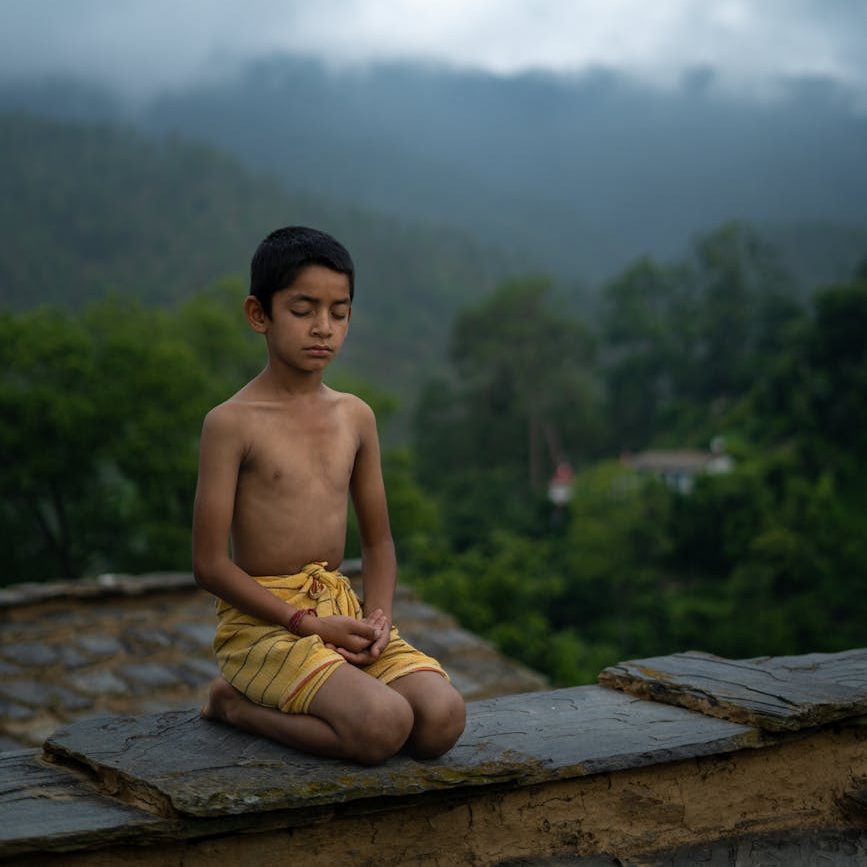
Indian Boy Meditating

There’s so much bad news everywhere. Wars, riots, terror attacks, persecution, and discrimination. I don’t know about you, but I’ve started to feel helpless, knowing I hold no power to fix these problems. As individuals, there’s only so much we can do. What is in our control is how we express our views, calmly and with clarity. But even that becomes difficult when those around us try to silence any perspective that doesn’t match their own. They get aggressive. We get perplexed. It becomes a vicious cycle. One that’s hard to escape. It drains our time, disturbs our emotional balance, and pushes away those who genuinely want to understand us.

In the midst of all this, I recently attended an online yoga session on International Yoga Day. We meditated together as a group, and it turned out to be one of the most peaceful and calming experiences I’ve had in a while. The meditation lasted only 7 minutes, but it had a noticeable, immediate impact. I felt centred. It helped me go about the rest of my day with a calm focus, even while handling everyday chores or reading the news. This is new for me. For the past few years, my mind has been troubled by witnessing the coldness with which society operates. There was a lingering sense of doom that had become hard to manage. So when meditation helped soften that heaviness, even slightly, it came as a welcome relief. I allowed myself to sit with that emotion and savour it.

The guide assured us that the control over our minds would improve even further with consistent practice. He said that even just 7 minutes of daily meditation can make a noticeable difference over time. I’m still new to the practice, so it’s too early for me to say how lasting the effects are. But one thing I can say for sure: you feel noticeably better after just the first session.

What made those few minutes so calming was the simple act of focusing only on the breath and the space between the eyebrows. In that short span, there were no screens, no distractions. Just stillness. It felt like a small step toward making peace with myself. This is what I experienced in my first few days of meditation. I’m not sure yet if I can commit to doing it every single day, but it’s something I genuinely want to try.

I’m not the body, I’m not the mind

As we meditated, this chant of “I’m not the body, I’m not the mind” by Sadhguru played in the background, accompanied by soothing flute music. It felt like an invitation to disconnect from the body and mind, to simply let yourself be. You don’t have to react to everything. You can observe your experiences as an outsider, from a third-person perspective. Feel your emotions, acknowledge them, but don’t let them consume you beyond control so that you lose sight of logic.

If you’re interested in trying the same meditation, you can do it at home by downloading the “Miracle of Mind by Sadhguru” app on your phone. The session includes the same calming chant and ends with a short 1-minute video from Sadhguru, offering simple insights on daily practice.

Now, I understand some may have reservations about Sadhguru due to political or personal views, or unverified claims. But I’d encourage you to look past that and focus instead on what this practice can offer you personally.

I’ve tried other meditation apps too, but they often felt too Western in their approach. This one, however, feels grounded in Indian sensibilities, with gentle flute music and guided instructions that actually help you stay focused. In a culture where complete silence isn’t always easy to adapt to, this format works well. It’s thoughtfully designed for an Indian audience, making meditation more accessible and less intimidating.

***

Photo by Yogendra Singh

An Ode to Surviving 2023

Survival 2023

As the year comes to a close, it’s time for introspection on goals achieved, comfort zones demolished, and new skills acquired. I don’t have much to report, except that I survived.

It was not an easy year. Most of my holidays were spent doing something I intensely dislike – hospital visits. They induce a great deal of stress in me, more mental than physical. For the uninitiated, my parent was diagnosed with a heart condition, which took several days of hospitalization, tests, and treatments. It is difficult for a child to see their parent falter as age catches up on them. This year was that kind of year for me, riddled with lessons.

What doesn’t break you makes you stronger

Time keeps on proving the legibility of this quote. I am a divorcee in India, so I am no stranger to struggles. However, 2023 went a tad extra by making my loved one suffer. Initially, I didn’t know how to deal with the situation, cried helpless tears, and dramatically kept asking, “Why me?” But then the universe kindly shows you a way.

At first, you feel a sort of resistance. You are not ready to accept this new phase in life. You’re breaking out of the comfort zone of all the struggles you have known till now. This is a new struggle, one that you need time to adapt. It becomes easier over time. You get stronger. Not because the concern is any less but because your system learns to handle it better.

I survived a difficult phase this year.

Not everyone will be by your side when you need them

I am grateful for everyone who graced me with their love and support. Their kindness knows no bounds. Some supported me by being present, some through their words, and some with quiet perseverance.

But sometimes, the people you expect the most support from fail to meet your expectations. This could be friends, family, or relatives. It comes as a bolt out of the blue because you realize you probably don’t mean as much to them. It’s a difficult pill to digest. However, I am taking it in my stride, marking it as a lesson that may come in handy in the future.

I survived the absence of (a few) loved ones.

Different ideologies shouldn’t spoil your friendship

I may not have a mainstream view on many issues, but that has never motivated me to lash out at someone with opposing views. This year, I learned to be more accommodating of contradictory views, both religious and political. Sometimes, it is difficult, especially when people use accusatory tones. Still, for the most part, I have been cordial, respectful, and unintimidating.

I survived the danger of fostering a different ideology.

Conclusion

If all you did this year was survive, I want to tell you from personal experience that it’s not something that should be casually dismissed with the notion that it is of less importance. It is a life-changing struggle, dealing with every fiber of your being not working as per protocol and finally making peace with it at some level. It takes courage and patience.

During this holiday season, feeling a sense of failure is natural when you see people around you list all their accomplishments. However, know that dealing with issues that life throws your way, no matter how big or small, is a significant accomplishment in itself. Survival is a beautiful thing. We should celebrate it more.

***

Photo by Suzy Hazelwood on Pexels.com

9 Key Takeaways from Dr Vanita Rattan’s Guide for Skin of Colour

Beautiful Skin of Colour

I recently finished reading Dr. Vanita Rattan’s Skin Revolution meant for people of color. It was an eye-opener, especially when she said most skincare products are formulated keeping Caucasian skin in mind and are not exactly suitable for skin of color. Dr Vanita Rattan is a cosmetic formulator of Indian origin. She is a doctor who decided to pursue cosmetology to help people of color care for their skin better.

Here are some key takeaways from the book:

If you are more likely to tan rather than burn in the sun, you are considered to have skin of color.

Oily skin: After a few hours of washing your face, your skin looks and feels shiny.

Dry skin: Skin feels tight and uncomfortable.

Combination skin: Skin is often drier on the cheeks and oilier on the T-zone.

Non-comedogenic – a label may indicate that it won’t clog the pores. However, this is an unregulated term, and in fact I struggle to find a non-comedogenic cream without comedogenic ingredients.

Natural – another unregulated term. Natural ingredients often need to be synthesized to be useful in a product.

Start your PM skincare routine at least 2 hours before bed so you have time for actives to penetrate before your face hits the pillow and the product comes off on your sheets.

Ideally, you should introduce only one new ingredient at a time, just once a week, to see how your skin tolerates it.

Purging is when skin cell turnover increases and cells come to the surface faster. This means clogged pores also come to the surface faster so you see a fresh new crop of white heads, black heads and pimples. They were already in the skin and would have shown up in their usual cycle four weeks later, but rapid cell turnover (due to skincare) accelerated the process, so you see it all at once.

I have also seen natural products without preservatives, which leads to mould in your skincare products. This is not safe.

People sometimes feel that if the skin is tingling and burning the product is working, but actually the opposite is true, especially for skin of colour. We should not experience any burning with cosmetic products. If you do, please stop straight away and seek advice.

If you are a person of color, I highly recommend purchasing the book as Dr. Vanita Rattan gives detailed skincare and haircare solutions/tips for all kinds of issues that people of color go through, including hyperpigmentation, acne, dermatitis, and eczema. The book even has dedicated skincare chapters for men, kids, and pregnant women, making it a good reference book for the entire family. I would definitely refer to the book in the future before buying a new product or if I want to treat any particular skin issue.

***

Photo by Riya Kumari

Important Life Lessons Learned in the Past Month

As mentioned in my last post, I had a whirlwind of a month. It was emotionally stressful, and I was in an overthinking mode. But all’s well that ends well. Thankful to the universe for every little blessing.

With each unchartered experience, you learn something new. Lessons that overshadow the learnings of the past. Here are some things I realized in the past month alone.

Indian managers often act like robots when there is a personal crisis.

The bigwigs did not share any emotion when I gave my reasons for a leave request. No “hope your mother feels better soon” or “hope everything goes well.” What was I expecting? Humanity in the Indian corporate world is a myth. We preach on LinkedIn with the most quotable quotes, but actions prove otherwise.

For the top-level, nothing warrants a response unless it is related to work. In fact, I got dumped with more work and some uncalled-for criticisms on the day of my mother’s hospitalization, even if I had notified my issue well in advance. On that day, I must have thought about quitting at least 10 times. But keeping the robotic virtues aside, the company is quite good. And, of course, you have bills to pay. So you carry on.

After my mom’s heart procedure, a few colleagues asked how my mother was doing. The number of people from top-level management who enquired about her health? Zero. My stress was there for them to see. Yet, none cared.

People often tell you to keep your professional and personal lives apart. I follow and believe this to a large extent. Still, when someone is going through a tough time, I make it a point to provide some motivation, whether a junior or senior. My conscience does not let me rest otherwise.

It was alarming to see the level of indifference from senior managers. Is this what professionalism is all about? Killing your empathy? Another point to add to my An Ode to People Who Are Not CEOs post.

We are giving importance to the wrong things.

For most of our lives, we stress over trivial things – relationships, work disputes, earning more money, materialistic gains, etc. But all it takes is one medical emergency to see the true light – that nothing comes above health.

The last month was a major eye-opener for me. I learned that I should be thankful for each day for all the miracles it offers, no matter how small and no matter how insignificant it may seem to be. It also showed how important it is to keep our physical and mental health happy and stress-free. If I had to choose between peace and more money now, I would undoubtedly choose peace.

Most people will be unavailable.

The people you know will primarily be available only through words, phone calls, and social media messages. But very few will physically show up when you need support, including your siblings. Ultimately, you will have to deal with most of the things yourself. It doesn’t matter if you have a big family or a huge friendship circle; there will be a lot of routes you will have to navigate by yourself. It will be overwhelming and frustrating, but that’s just how life is. You live. You learn.

Regular medical checkups and second opinions are important.

In India, we do not prioritize our health. Many do not have health insurance, especially older people, because it is expensive. We do not get annual health checkups done. This needs to change.

It was during my mother’s regular health checkup that we spotted a variation in her ECG. The doctor did not take it seriously. He declared it as anxiety and aging and told us to let it go. Big mistake. We should have asked for a second opinion.

Always treat minor variations in your tests with great seriousness, especially if you have a family history of heart disease or genetic disorders. Always get a second opinion.

Social media can be deceptive.

In the past month, I did not reveal anywhere online that I was stressed (except for this blog which is unknown to many). I posted memes as usual because it was a form of escapism for me. It might be the same for many others. Things might just be an act. Never take social media too seriously. There might be a lot happening behind the scenes.

Korean drama is like medicine.

When you are having a stressful day, there is nothing like a good Korean drama to melt your worries away. This is important because it made me realize how feel-good entertainment is sorely lacking nowadays. Stuff that people like me can relax to and feel a bit better at the end of the day, even if the emotion is superficial.

Almost all movies and tv shows are dark and serious, with the focus being on realism. Why aren’t there more light-hearted, feel-good, clean, romantic stuff? Looking at you, Indian cinema. Enough of reality. Bring back the escapism.

***

Photo by Pixabay on Pexels.com

What Do I Miss the Most from Childhood?

Missing childhood

Out of all the nostalgia-filled flashbacks showered upon me by this thing called “childhood,” the one I sorely miss is having fewer responsibilities.

When we were kids, someone was always taking care of our needs. You weren’t the one everyone turned to when it was decision-making time. You could let an adult take the burden. But now you are the adult (oh, the dread). And the baton of responsibility has been passed to you.

Adulthood robs you of that freedom to just be. You are now responsible for everyone and everything, including the people who brought you up.

I have had a whirlwind of a month. Running back and forth to hospitals in India and getting things sorted out for my mother. Sometimes, it gets a bit much, not the physical activity itself, but the mental stress of the unknown. You wish you could take a break from it for a while, so you can return to being a child to your parent again, not a parent to your parent.

Though I have a sibling, she is settled outside the country. Honestly, sometimes, I am envious of her. She is blissfully unaware of many things that can only be witnessed in person – a thoughtful pause from the doctor after seeing the report, the concerned look on relatives’ faces, and the resulting panic mode. She gets to hear only words, whereas I have to witness stress-inducing body language. I am not bitter, just exhausted, mentally tired, and wishing I had my sibling around to share the responsibility with.

Sometimes, you feel alone in this journey called life, even if you have a family. However, you pull yourself together and say, “I’ve got this.” You learn to flow with the flow with blinders on and see where it takes you.

Often, after testing times, you look at yourself with awe over how you managed to pull through the muck. Challenging situations warrant bravery. It comes out of you automatically; you know the only way is forward. It is nerve-wracking but also educational. You stop thinking about petty things, and all your mental resources are made to focus on the issue at hand. After some tears, things settle eventually. It becomes your new normal. This is how you enter a new uncomfortable phase in life.

In your 40s, you will go through many moments like these, especially when your parents are aging. It’s tough when you witness them encountering the symptoms of their system slowing down a notch. You wonder why you stressed over less-important things like failed relationships, exams, and flippant comments from coworkers when you could have been grateful for all those days you spent with your loved ones in good health. We take the good things for granted and fret over the wrong stuff.

Right now, I have to realign myself into thinking each day is a blessing because I have my loved ones around. To appreciate things for how they are without dwelling on the past or future is not easy. Still, experience has the knack of drilling that lesson into you in the most unsuspecting manner.

****

Photo by Pixabay

Is Comfort Zone a Place or an Emotion?

Is comfort zone a place or an emotion?
Photo by Pixabay

We are often encouraged to venture out of our comfort zones, push our boundaries and limits, and embrace the unknown. People say that’s where the real growth happens. I concur. Subjecting ourselves to new experiences is a sure-shot way to fuel personal development. Having a routine in place may or may not be detrimental, depending on the kind of person you are. Some people crave a time-tabled life, whereas others need a change every minute of the day.

We often try to stretch our comfort zones by altering our lives, such as starting a new job, relocating, trying novel exercises, or exploring new locations. These are primarily physical adjustments — you cajole your body into taking up these unaccustomed, exciting external goals to nourish your soul. But what about internal comfort zones? Are we open-minded enough to set aside the prejudices we have collected subconsciously over the years?

Mental transformation is unarguably more challenging than physical. Any change starts with the mind, even the physical. Encouraging yourself to expand your corporeal boundaries is often more fruitful than attempting to alter your thought process. It takes determination to discard years of conditioning, escape the chains of our preconceived notions, and declare, “Okay, I see and acknowledge this new way of living, even if it’s unfamiliar territory.” Personally, I find such people incredibly attractive. Their willingness to listen is commendable and praise-worthy. Yet, we don’t see it happen much.

Why are some people more flexible than others when it comes to accepting new ideas and ways of life, welcoming them wholeheartedly as if they were privy to this knowledge all along?

I would like to highlight one sector in particular to make my point: the Hindi movie industry. It is intriguing to observe how professionals evolve to keep up with the changing times. In the Indian series Gulmohar, an effervescent Sharmila Tagore, a senior citizen, plays a character that most in her cohort would have found blasphemous. Similarly, the iconic Madhuri Dixit portrays a determined mother in Maja Ma, traditional in some facets yet unconventional in others. A role many of her peers would have been unwilling to take on. Among the male actors, we have the young multifaceted Ayushmann Khurrana, renowned for taking up any daring character that comes his way. We have actors and actresses across age groups willing to change with the times. But these are just the minority. Most are reluctant to play characters who belong to the LGBTQIA+ community. Ranbir Kapoor, who’s within my age demographic, admitted in an interview a while back, during Shamshera‘s promotions, that he’s not brave enough to take up such roles.

Moving out of our emotional comfort zones is not age-dependent, as you can see. It requires a willingness to listen, understand, and acknowledge.

It is common to find friends and relatives who struggle to accept new ways of the world with its pressing issues simply because they find them unrelatable. They deny support despite knowing our backing may prove meaningful or pertinent to the intended group.

The most humane thing one can do is listen to the experiences and feelings of others and try to see things from their perspective without being judgmental. To sit with others’ thoughts for a while takes courage.

Sexuality is only one example. This rigidity in perceptions can be observed in a variety of scenarios. Conservatives look down upon women who wear clothes they consider vulgar. Feminists are thrashed because they are non-conformists. Men who display their emotions openly are often criticized by their peers and seen as inadequate to cope with daily tasks. Husbands who love PDA are called “hen-pecked.” We just have to take a look around to see the plethora of preconceived notions everyone, including you and I, are harboring.

The morality or behavioral police who preach righteousness are often people who have achieved much professional success in their respective fields by taking risks and boldly venturing beyond the boundaries of their concisely defined comfort zones. However, many refuse to embrace new lifestyles or cultural norms that challenge their convictions and emotional comfort. It is ironic to see them share inspirational videos about exceeding boundaries on social media when they themselves are not entirely free from the clutches of their comfort zones.

Sometimes it’s difficult to move away from what we have accepted so far as it’s an emotional state that we don’t want to let go of. Humans love their comfort zones — whether they be emotional or physical. An object at rest wants to continue being at rest. This theory is not just applicable physically but mentally as well. The discomfort of new fights, marches, debates, terminologies, laws, thoughts, and social media agitations build up our rage and make us criticize how the world is over-sensitive nowadays. Things are changing way too fast, and we can’t seem to keep up. It is overwhelmingly complex, and understandably so.

But whoever said we should accept the new all at once? Take it one at a time. Baby steps. Sit with the new, try to detach from the old, get acquainted with unfamiliar thoughts, ask questions (but kindly), and ruminate for a while. Give yourself time, as you deserve kindness too, to slowly break away from things you have treated as “home” until now.

But accept we should, if not immediately, maybe sometime in the future. To be a kinder person, less judgmental, and empathetic — traits that highlight growth as well. Acknowledging that change is a constant part of life and adapting to new ideas, beliefs, and perspectives is essential to becoming a well-rounded individual.

Shouldn’t we make a concerted effort to step outside our familiar settings, both in terms of our mindset and physical actions? Something to ponder as we continue to navigate the ever-changing world around us.