An Ode to K-Dramas and Why Bollywood Should Bring Back Authentic Feel-Good Romance

K-drama and Bollywood

Lately, I have ventured into watching Korean dramas. I have to admit I am completely hooked. I tried to stay away from K-dramas for the longest time, assuming it would be too cheesy for my liking. And honestly, the titles did not help.

But after watching just a few K-dramas over the past few months, I can confidently say – don’t judge a series by its name!

K-drama is anything but corny, cheesy, or cringe. It has well-crafted plots with impeccable, high quality writing. It’s admirable how much importance they place on everyday emotions. I now find it so wholesome, engaging, and fulfilling that I would advise anyone to watch at least one episode every day, especially if you’ve had a particularly draining day. A K-drama episode a day might just keep the doctor away.

The Korean dramas I tend to choose are solely focused on relationships because that is what I am craving at the moment. Over the past decade, I binge-watched several serious, abstract, intellectual, gory, and violent movies. The types that movie critics couldn’t stop raving about. And now I’ve had enough. I have reached a saturation point when it comes to reality-based cinema. Bring on the whimsical, captivating, addictive world of romance! I want to leave my troubles behind, I want to dream of a better world and romanticize about it.

As an Indian, I can’t help but wonder what happened to the quintessential feel-good romantic Yash Raj-esque movies? Why have we stopped making them? They used to perform incredibly well at the box office and are still cherished. DDLJ has been on a running spree for decades in Mumbai, with no end in sight. Which other genre can boast of having a similar impact on the audience? We can’t get enough of the charming Raj or the dreamy-eyed Simran. My friends reminisce about the etherealness of Chandni and the intoxicating love of Veer Zara. Forget Yash Chopra movies. Even a dark project like Dil Se had its share of aesthetically pleasing love-packed moments. Not to forget the playful mischief enacted by the lead actors with full gusto. A quirky Preeti (played by Preity Zinta) asks Amar (portrayed by the king of romance Shah Rukh Khan), “Are you a virgin?” which catches him off-guard, like the rest of us. We loved the dialogue, the crackling chemistry, and the freshness of it all.

Personally, my favorite Bollywood pair is Konkona and Ranbir in Wake Up Sid. The romantic angle was offbeat – a young guy in his 20s falling for an older working woman. You might think this unconventional pairing might not work, but they proved their detractors wrong. The chemistry was bang-on, scenes were memorable, dialogues were fun and thoughtful, and it boasted of the right mix of profoundness and escapism. You fell in love with the characters. It was difficult not to.

Romantic stories used to sell big in Bollywood. So this sudden shift from romance to violence and trauma-inducing reality cinema is unreasonable. The ones that Bollywood does end up making nowadays have no soul and are almost, for the lack of a better word – “cringe.” They lack emotional intensity and nuance. It is difficult to connect with the characters and delve into their world. A sign of a compelling romantic story is when you find yourself developing an emotional connection with the characters. Their love feels like your love. You want to hug them when they are sad, cheer for them when their passion gets reciprocated, or blush when romance is in the air. This holds true whether you are reading a book or watching a movie. If this feeling is missing, the story fails to make a mark.

It is not that India has stopped indulging in romantic stories entirely. We get to witness some well-made series on OTT, such as Mismatched and Little Things. They have done well, proving that there is an audience out there for authentic Hindi romantic sagas.

I thought I would have to resort to books for my kind of romance. Still, lo and behold, I was introduced to the world of K-drama, where everything is just as mushy and glossy as it used to be in Bollywood.

What makes K-drama so different from regular Bollywood movies released nowadays?

Focus is on emotions and feelings

Hometown Cha-Cha-Cha Romance
Hometown Cha-Cha-Cha

Those stolen glances, broad smiles, and yearning looks are what makes K-drama so swoon-worthy. While Bollywood has moved to a more lusty “fast food” kind of romance, Korean drama still hangs on to the original slow-cooked YRF magic with a tight leash. Why stop making something that is doing well?

Stories for the soul

Crash Landing On You Romance
Crash Landing On You

We all know romantic movies are a world of make-believe, and we can’t possibly expect all of that sweet idealism to seamlessly transfer into our everyday lives. It’s not practical. But that’s what movies should do, if not regularly, then at least occasionally, offer a form of escapism to its audience from real-life issues.

The cute playfulness, heart-warming dialogues, gestures, and scenes that revolve around emotions are what make K-drama so sinfully good and make anyone forget their worries.

Family-oriented

Twenty Five Twenty One Romance
Twenty Five Twenty One

One thing I dread nowadays is watching a movie or a TV series with family. You never know what kind of provocative scene will jump out of nowhere, leaving you and your family overwhelmed with embarrassment and a sense of existential crisis.

Most of the K-dramas I have seen are family-oriented. You can sit and watch the shows in the open, reassured that nothing awkward will unexpectedly appear on your screen.

Binge-worthy
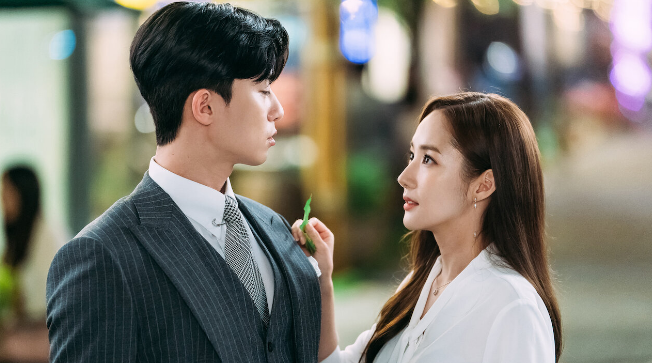
What's Wrong With Secretary Kim Romance
What’s Wrong with Secretary Kim

Each episode in Korean dramas tends to be lengthy! It can be over an hour long. But since the focus is on everyday relationships, you don’t end up getting bored.

The right amount of playfulness and romance
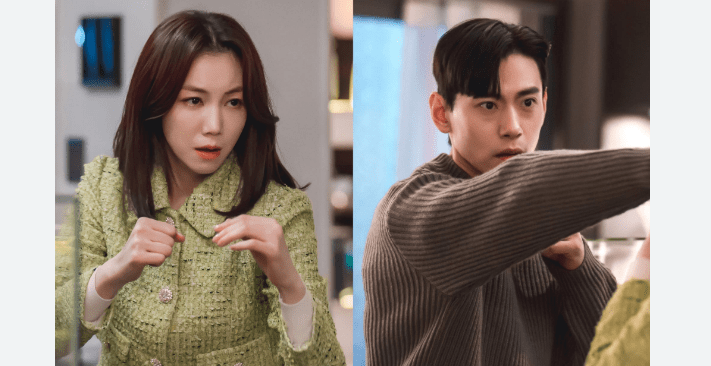
Love To Hate You Romance
Love To Hate You

The couples in K-dramas tease each other, have healthy banter, crack jokes, and are playful. Contrary to the common belief held by those who haven’t yet watched K-dramas, the shows are not all about soppy dialogues. The noteworthy part is that it all looks organic, not forced, adding to the authenticity of the experience.

Catchy music
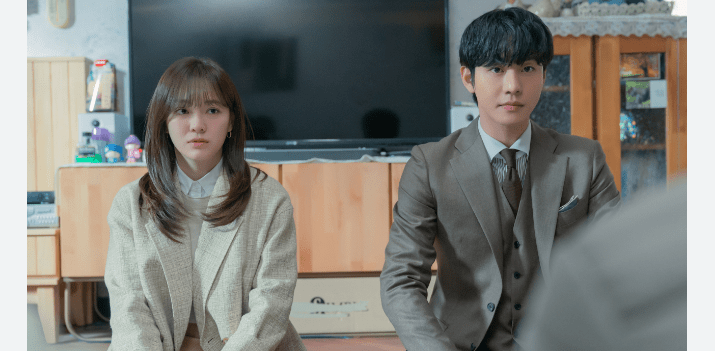
Business Proposal Romance
Business Proposal

The music and background score in K-drama blends in with the situations, and in no time, you find yourself humming the tunes while doing your everyday chores. It exudes a gentle yet addictive vibe.

More relatability for 30+-year-olds

Hometown Cha-Cha-Cha Romance

While many romantic movies in India cater to a younger audience, I have noticed that most of the K-dramas I have watched feature older and more mature characters. This offers more relatability for people in my age group who want to see people their age romance on-screen as well.

It’s Your Turn Bollywood

In the 80s and 90s, Bollywood films incorporated many of these points I listed above, except maybe featuring characters in their 30s and older. However, the current landscape of Bollywood movies doesn’t provide the same enjoyment as those classic films.

A look into the popularity of K-drama proves that romantic stories still sell. It is well-liked world-over across all nationalities. In India, I am surrounded by K-drama enthusiasts. It’s safe to say there is still a broad audience for the romantic genre in India, but they are forced to venture beyond the confines of the Indian movie industry as there’s a scarcity of feel-good, wholesome cinema here.

Hindi filmmakers should seriously consider creating good ol’ romantic movies again infused with emotions, aesthetics, endearing chemistry, and romantic dialogues. Maybe then, they may witness the box office numbers soar, finally putting an end to complaints about the underperformance of Hindi movies in recent times.


An Ode to Beloved Indian Witches

Indian witch reading a book

I was surprised when I learned Wicca is openly practised in India.

Till then, I had only read about it in blogs written by people in the U.S.

Witches are just like ordinary people, blending in seamlessly with society. They don’t ride broomsticks or cast spells on unsuspecting individuals. The real ones tell you not to use the universal energy for negative agendas – “It will hit you back,” they warn. This differs from the stereotypical witches in movies and television dramas, who are portrayed as evil and adept at spewing words of hatred.

As I went through articles and posts by real witches advocating for the principle of “Do no bad to others,” I couldn’t help but notice the similarity to the teachings of practitioners of more mainstream religions who promote similar values. I often wonder if we are all indeed praying collectively to the same energy. Even a book on atheism, The God Delusion by Richard Dawkins, does not negate the power of nature and its mystical ways.

Personally, it’s gratifying to know that we all are more united than we think we are – not divided by religion, caste, or community. We are one, all seeking the same things in life – hoping to be heard, protected, and blessed by a higher energy to navigate life more smoothly. The possibility that we must all be asking favors from the same being, using different names, is a heady feeling. It erases any semblance of boundaries. It assures you that humanity is above all. If more individuals shared this perspective, the divisive “us vs. them” mentality could diminish, allowing us to function from a unified standpoint.

I read about Ipsita Roy Chakraverti in a local newspaper. I was mindblown by the fact that a witch existed in India. Such things are usually kept secret in a conservative country like mine, but here was a woman who was unabashedly vocal about her practice and teachings. It was then I learned that Ipsita has authored many books on witchcraft. I decided to try “Beloved Witch” as curiosity got the better of me.

Ipsita is different from other witches in the sense that she does not shy away from promoting her powers. She’s not modest and understands her worth, which is why you often see her showering herself with compliments in the book.

I found it refreshing that Ipsita encourages you to use the all-encompassing universal energy for your own greedy benefits but warns you to be prepared for repercussions. She does not say, “Don’t do this.” Instead, she says, “Do it. But whatever happens after that is your responsibility.” So basically, she’s like a parent telling her young ones to seek adventure, giving them the liberty to learn from their own mistakes.

Now that I am done with my views on the subject, I am going to present some of my favorite thought-provoking quotes and anecdotes from Ipsita’s book. Hope you enjoy them as much as I did!

The earth is a great storehouse of energy. Merge with that source he told me, and you shall be whatever you wish to be.

She’ll flick some ash off from her cigarette (no, smoking is not permitted in the chalet, but she’ll sneak around the garden shed and wink at us). As the ash plops down and crumbles away, she’ll say, ‘That’s worldly fame for you. Fun while it lasts but don’t count on it to be around. Besides, it leaves a bad taste in the mouth.’

The following quote is what I had blogged about previously. It was after writing the post that I read this book, so it was a pleasant surprise for me to see those thoughts come to life in print.

Somehow, eastern yoginis never ‘flew’ but western witches were supposed to ride the broom over hill and dale. I have often wondered about this. And this is what I have discovered. What did the broom symbolize? It stood for hearth and home to which a woman was tied by male domination. As she ‘flew’ away on it, it meant that she was breaking the bonds. It symbolized her freedom. It might as well have been a flying carpet.

Colourful stories abounded about how a long-suffering wife would fly away into the night on this piece of domestic bondage, while her husband slept snugly unaware in his bed. She would revel all night long under the moon and return only at dawn to sweep the hearth with the very broom which had carried her off to her secret trysts.

It has been said that witches were women who were never afraid to ‘fly’. Maybe that is why they had to be burnt.

Women, strong, beautiful or independent minded were called witches so that they could be eliminated. The men who tortured and burnt innocent women in medieval Europe, live on in other places, in different guises. Witch-hunting never stopped. It just took on a more deceptive mask.

Of course, in my experience with thousands of women who have come to me for help, I would say that every strong woman is a witch and she is always hunted. It goes against the nature of most men to tolerate a woman they cannot dominate.

Witch-hunting is present not only in rural Bengal, Bihar, Orissa, Uttar Pradesh or Madhya Pradesh. It prevails everywhere in the world where women stand up for themselves and what they believe in. It is there whenever women refuse to be the pawns or playthings of a callous society. Who is a witch? Or more important, what does she do? As she is a Wiccan, it would be fair to say that she practises Wicca or wiccecraefte or the skills of the wise. She was the original wise woman, the shaman, the healer, the counsellor, the lawyer, the stateswoman of her community. Her power became a threat to men, to organised religion — and hence the persecution, the witch-hunts and the slander.

‘Dr Radhakrishnan, do people in our country work best when they are shouted at or spoken to with sarcasm?’ I asked. He smiled that famous smile of his. Serene, indulgent and amused. ‘Yes, I think three hundred years of servitude have taken their toll. The Indian mind wants and needs love, compassion and understanding but has been weakened by fear. Hence it reacts the most quickly to harshness for that is what it fears. You see, our people have had to put up with so many masters, that even now we understand only the language of compulsion.’

Manifestation and visualization are concepts endorsed by a lot of people, including yours truly. As made clear from the following quote, it is practised in witchcraft as well.

Visualization of what you desire is an important part of every Wiccan ritual.

I hated the thought of my parents making a will because it implied that one day I would be on my own on this planet. And if I was capable of love, they were the only ones I did love. Wills also confirm the worst in human nature. It makes one realize that without legal documents and safeguards, people are vile, greedy and corrupt. There is something very sad in this realization.

‘I agree with Nietzsche about what the free spirit needs. It abhors habits and rules. Everything which goes on and on.’

‘But can marriage become stifling then?’ I asked her. ‘I suppose it can, to certain natures. Such a nature, even if it marries, needs space. You know, don’t you, that Nietzsche compared marriage to a spider’s web. Finally, the threads become traps. That is why, after a time, the spider stuck in the middle, painfully tears apart the mesh enclosing him, even though it will suffer from the wounds — because it must tear these threads off itself, away from its body, away from its soul. It must learn to hate where it used to love and vice versa.’

Wicca was not a dark and sinister practice, it was above board and publicly practised for anybody to check and experience. I proved it to the country. I also brought back the ancient science of quartz therapy to India. Wicca showed the way, once the path had been cleared.

Amongst the men, a very famous Wiccan was said to be none other than Robin Hood. He lived in the green woods, a lover of nature. He had around him a coven of twelve members, he being the thirteenth. He was certainly anti-establishment and fought against all forms of exploitation of the poor and helpless. He was also against organized religion. The woods were his church.

The power seekers wanted control in their own hands. Control over the populace, control over laws and governance. Those with independent, free thinking ways and minds, were a threat. Hence the persecution of Wiccans. Specially if they were women. They became the ‘evil witches’ who always tried to harm people, specially children. Folklore and fairy tales abounded equating witchery with wickedness.

What is wicked? Evil is so relative. What is wrong today, may not be considered so tomorrow. Besides right and wrong are such personal, individual things. I have always set my own standards, keeping only one thing in mind. I do not willingly and purposefully harm another in body, mind or spirit. I do not initiate mischief.

Life was the greatest school, the best laboratory for the most interesting experiments with the human species.Look at them, listen to them, mingle with them and learn.

So is there a heaven where you go if you have been ‘good’? I think we make our own heavens (and hells?) right here — and we continue living in them with those we want near, even after we pass on from our physical bodies.

***

Photo by Bayram Musayev

Important Life Lessons Learned in the Past Month

As mentioned in my last post, I had a whirlwind of a month. It was emotionally stressful, and I was in an overthinking mode. But all’s well that ends well. Thankful to the universe for every little blessing.

With each unchartered experience, you learn something new. Lessons that overshadow the learnings of the past. Here are some things I realized in the past month alone.

Indian managers often act like robots when there is a personal crisis.

The bigwigs did not share any emotion when I gave my reasons for a leave request. No “hope your mother feels better soon” or “hope everything goes well.” What was I expecting? Humanity in the Indian corporate world is a myth. We preach on LinkedIn with the most quotable quotes, but actions prove otherwise.

For the top-level, nothing warrants a response unless it is related to work. In fact, I got dumped with more work and some uncalled-for criticisms on the day of my mother’s hospitalization, even if I had notified my issue well in advance. On that day, I must have thought about quitting at least 10 times. But keeping the robotic virtues aside, the company is quite good. And, of course, you have bills to pay. So you carry on.

After my mom’s heart procedure, a few colleagues asked how my mother was doing. The number of people from top-level management who enquired about her health? Zero. My stress was there for them to see. Yet, none cared.

People often tell you to keep your professional and personal lives apart. I follow and believe this to a large extent. Still, when someone is going through a tough time, I make it a point to provide some motivation, whether a junior or senior. My conscience does not let me rest otherwise.

It was alarming to see the level of indifference from senior managers. Is this what professionalism is all about? Killing your empathy? Another point to add to my An Ode to People Who Are Not CEOs post.

We are giving importance to the wrong things.

For most of our lives, we stress over trivial things – relationships, work disputes, earning more money, materialistic gains, etc. But all it takes is one medical emergency to see the true light – that nothing comes above health.

The last month was a major eye-opener for me. I learned that I should be thankful for each day for all the miracles it offers, no matter how small and no matter how insignificant it may seem to be. It also showed how important it is to keep our physical and mental health happy and stress-free. If I had to choose between peace and more money now, I would undoubtedly choose peace.

Most people will be unavailable.

The people you know will primarily be available only through words, phone calls, and social media messages. But very few will physically show up when you need support, including your siblings. Ultimately, you will have to deal with most of the things yourself. It doesn’t matter if you have a big family or a huge friendship circle; there will be a lot of routes you will have to navigate by yourself. It will be overwhelming and frustrating, but that’s just how life is. You live. You learn.

Regular medical checkups and second opinions are important.

In India, we do not prioritize our health. Many do not have health insurance, especially older people, because it is expensive. We do not get annual health checkups done. This needs to change.

It was during my mother’s regular health checkup that we spotted a variation in her ECG. The doctor did not take it seriously. He declared it as anxiety and aging and told us to let it go. Big mistake. We should have asked for a second opinion.

Always treat minor variations in your tests with great seriousness, especially if you have a family history of heart disease or genetic disorders. Always get a second opinion.

Social media can be deceptive.

In the past month, I did not reveal anywhere online that I was stressed (except for this blog which is unknown to many). I posted memes as usual because it was a form of escapism for me. It might be the same for many others. Things might just be an act. Never take social media too seriously. There might be a lot happening behind the scenes.

Korean drama is like medicine.

When you are having a stressful day, there is nothing like a good Korean drama to melt your worries away. This is important because it made me realize how feel-good entertainment is sorely lacking nowadays. Stuff that people like me can relax to and feel a bit better at the end of the day, even if the emotion is superficial.

Almost all movies and tv shows are dark and serious, with the focus being on realism. Why aren’t there more light-hearted, feel-good, clean, romantic stuff? Looking at you, Indian cinema. Enough of reality. Bring back the escapism.

***

Photo by Pixabay on Pexels.com

What Do I Miss the Most from Childhood?

Missing childhood

Out of all the nostalgia-filled flashbacks showered upon me by this thing called “childhood,” the one I sorely miss is having fewer responsibilities.

When we were kids, someone was always taking care of our needs. You weren’t the one everyone turned to when it was decision-making time. You could let an adult take the burden. But now you are the adult (oh, the dread). And the baton of responsibility has been passed to you.

Adulthood robs you of that freedom to just be. You are now responsible for everyone and everything, including the people who brought you up.

I have had a whirlwind of a month. Running back and forth to hospitals in India and getting things sorted out for my mother. Sometimes, it gets a bit much, not the physical activity itself, but the mental stress of the unknown. You wish you could take a break from it for a while, so you can return to being a child to your parent again, not a parent to your parent.

Though I have a sibling, she is settled outside the country. Honestly, sometimes, I am envious of her. She is blissfully unaware of many things that can only be witnessed in person – a thoughtful pause from the doctor after seeing the report, the concerned look on relatives’ faces, and the resulting panic mode. She gets to hear only words, whereas I have to witness stress-inducing body language. I am not bitter, just exhausted, mentally tired, and wishing I had my sibling around to share the responsibility with.

Sometimes, you feel alone in this journey called life, even if you have a family. However, you pull yourself together and say, “I’ve got this.” You learn to flow with the flow with blinders on and see where it takes you.

Often, after testing times, you look at yourself with awe over how you managed to pull through the muck. Challenging situations warrant bravery. It comes out of you automatically; you know the only way is forward. It is nerve-wracking but also educational. You stop thinking about petty things, and all your mental resources are made to focus on the issue at hand. After some tears, things settle eventually. It becomes your new normal. This is how you enter a new uncomfortable phase in life.

In your 40s, you will go through many moments like these, especially when your parents are aging. It’s tough when you witness them encountering the symptoms of their system slowing down a notch. You wonder why you stressed over less-important things like failed relationships, exams, and flippant comments from coworkers when you could have been grateful for all those days you spent with your loved ones in good health. We take the good things for granted and fret over the wrong stuff.

Right now, I have to realign myself into thinking each day is a blessing because I have my loved ones around. To appreciate things for how they are without dwelling on the past or future is not easy. Still, experience has the knack of drilling that lesson into you in the most unsuspecting manner.

****

Photo by Pixabay

An Ode to 5 Interesting Quotes from “Your Place or Mine?”

Your Place or Mine?

Before we begin, I want to point out that the quotes posted here are from Portia MacIntosh’s book Your Place or Mine? Not the movie. The book is an entertaining, cute, light-hearted story of two accidental roommates who eventually become much more than they signed up for. It’s a heady mix of fun and frolic, entertaining twists, and relatable scenarios that are part and parcel of life. It might not be the best romantic tale out there, but it keeps you hooked.

Here are some of my favorite quotes from the book:

Your wedding day is the most special day to ever occur… just like everyone else’s.

Watching a new movie is like rolling the dice, you don’t know if you’re going to love it or hate it, if you’re going to laugh or cry, if a dog is going to die and ruin the whole thing! So we reach for our old favourites for the comfort of the familiar, because you can always count on your favourite movies to make you feel better.

Grief is the cost of love. If you feel a lot of sadness to have lost someone, they must have given you a hell of a lot of love while they were alive. And I do love you, my darling. Never forget that. Until we meet again…

See, this is what happens when you get cocky, and you think everything is going your way. Life goes out of its way to laugh in your face, and show you just how bad things can be.

Sometimes I think that, when you’re going through a difficult time, you don’t realise just how tough things are while you’re going through them. It’s almost like you can’t think about it because, if you were to let yourself dwell on how unbearable things seem, the problems you were facing would seem impossible to overcome. But if you keep moving, you keep your head up and your eyes forward, you’ll be through it before you know it.

Photo by Pixabay

An Ode to 36 Thought-Provoking Quotes from The Monk Who Sold His Ferrari

The Monk Who Sold His Ferrari Quotes

The Monk Who Sold His Ferrari needs no introduction. The book shares a treasure trove of ideas, concepts, and mental wellness gems we could do well to absorb. As the world progresses towards increased capitalism, we have forgotten to take care of our core emotional needs in the pursuit of fulfilling our materialistic ones. We have become workaholics with no work-life balance. Robin Sharma drills down the fact that work is important, but so is life. If you don’t take care of your health and happiness now, then when? Certainly not after you retire, the age your bank account is filled with money, but your energy becomes bankrupt.

Without further ado, here are some of my favorite thought-provoking quotes from the book. Hope you enjoy them as much as I did!

My dad said it best when he said, “John, on your deathbed you will never wish you spent more time at the office.”

To live life to the fullest, you must stand guard at the gate of your garden (mind) and let only the very best information enter.

There is no such thing as objective reality or ‘the real world.’ There are no absolutes. The face of your greatest enemy might be the face of my finest friend. An event that appears to be a tragedy to one might reveal the seeds of unlimited opportunity to another. What really separates people who are habitually upbeat and optimistic from those who are consistently miserable is how the circumstances of life are interpreted and processed.

From struggle comes strength. Even pain can be a wonderful teacher. Or to put it another way, how can you really know the joy of being on the summit of the mountain unless you have first visited the lowest valley.

Stop judging events as either positive or negative. Rather, simply experience them, celebrate them and learn from them.

The secret of happiness is simple: find out what you truly love to do and then direct all of your energy towards doing it. If you study the happiest, healthiest, most satisfied people of our world, you will see that each and every one of them has found their passion in life, and then spent their days pursuing it. This calling is almost always one that, in some way, serves others.

Saying that you don’t have time to improve your thoughts and your life is like saying you don’t have time to stop for gas because you are too busy driving. Eventually it will catch up with you.

Your self-image affects the way you feel, act and achieve. If your self-image tells you that you are too young to be a successful lawyer or too old to change your habits for the better, you never will achieve these goals. If your self-image tells you that lives rich with purpose, excellent health and happiness are only for people from backgrounds other than your own, this prophecy will ultimately become your reality.

There is nothing noble about being superior to some other person. True nobility lies in being superior to your former self.

Never get into the petty habit of measuring your self-worth against other people’s net worth.

Every second you spend thinking about someone else’s dreams you take time away from your own.

People who study others are wise but those who study themselves are enlightened.

The Chinese define image in these terms: there are three mirrors that form a person’s reflection; the first is how you see yourself, the second is how others see you and the third mirror reflects the truth. Know yourself. Know the truth.

My point is this: never do anything because you have to. The only reason to do something is because you want to and because you know it is the right thing for you to do.

Never be reluctant to ask even the most basic of questions. Questions are the most effective method of eliciting knowledge.

Happiness comes through good judgment, good judgment comes through experience, and experience comes through bad judgment.

The ten-minute period before you sleep and the ten-minute period after you wake up are profoundly influential on your subconscious mind. Only the most inspiring and serene thoughts should be programmed into your mind at those times.

Focus only on your priorities, those activities that are truly meaningful. Your life will be uncluttered, rewarding and exceptionally peaceful.

When spider webs unite, they tie up a lion.

This is the mantra I suggest you repeat at least thirty times a day: ‘I am more than I appear to be, all the world’s strength and power rests inside me.’ It will manifest profound changes in your life.

Few things are as meaningful as being a part of your children’s childhood. What is the point of climbing the steps of success if you have missed the first steps of your own kids? What good is owning the biggest house on your block if you have not taken the time to create a home? What is the use of being known across the country as a red-hot trial lawyer if your kids don’t even know their father?

Life doesn’t always give you what you ask for, but it always gives you what you need.

An addiction to distraction is the death of your creative production.

When you go after what you want, with love and wild abandon, you tap into the energy that created the stars and the seas. A kind of magic begins to enter your life and things happen that defy your comprehension. Signs start to appear, suggesting that you are on the right track.

Yes, make plans and set goals. Work hard and go for what you desire. That’s part of being a responsible person — it is true that setting intentions does make many of them come to life. But hold on to your plans and goals with a very loose grip. Often, the universe will send you a treasure in an unexpected package.

One of the most enduring of all the ancient laws of humanity is that we see the world not as it is, but as we are.

Too many potentially soaring lives are degraded and defeated by an attraction to busyness rather than a monomaniacal focus around what matters most.

No idea works for someone unwilling to do the work.

To have the results only 5 percent of the population have, do what 95 percent of society is unwilling to do.

If you do not know who you are and what it is you truly want to be, then how can you recognize and seize your destiny when it presents itself to you? Know yourself and your destiny will find you. Clarity precedes mastery.

Your wounds can be turned into your wisdom. Your stumbling blocks can become your stepping stones if you choose. Do not miss the remarkable opportunity that adversity and even tragedy presents. Your life can be made even better by the things that break your heart.

The more deeply we know ourselves, the more we can make authentic choices to make the leadership journey back home to the place that we have always known, at our core, we have wanted to be. In the Greco-Roman temples of the past, above the entrance one would often find the following words: “Know thyself and you will know the secrets of the universe and the gods.”

Once and for all stop being so hard on yourself. You are a human being and human beings have been designed to make mistakes. Coming to the realization that we all make mistakes and that they are essential to our growth and progress is liberating.

Life’s simplest pleasures are life’s best ones.

Saying things we don’t really mean becomes a habit when we practice it long enough. The real problem is that when you don’t keep your word, you lose credibility. When you lose credibility, you break the bonds of trust. And breaking the bonds of trust ultimately leads to a string of broken relationships. Say what you mean and mean what you say. This simple practice will have powerful results.

A problem only becomes a problem when seen as a problem.

***************

Photo by Pixabay