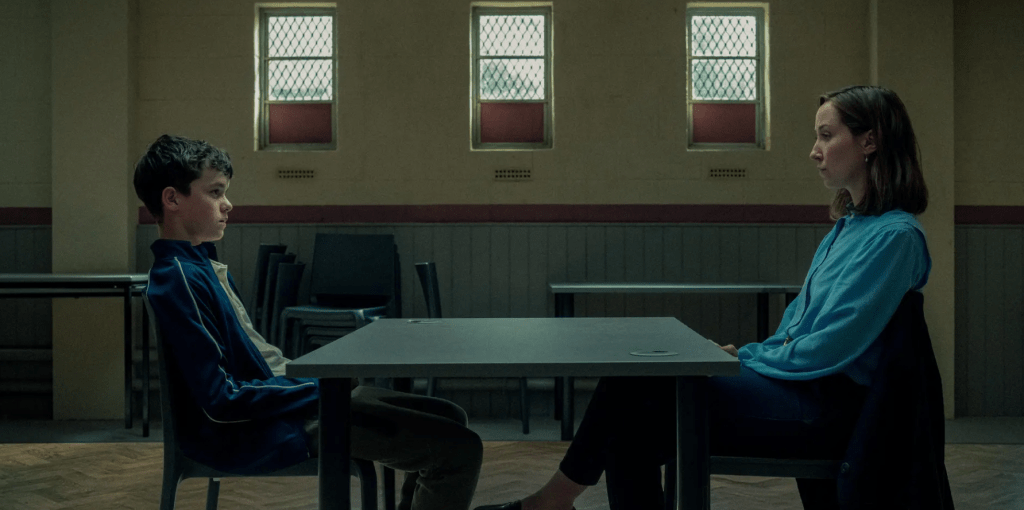
The Netflix series Adolescence is a wake-up call. It shook me to the core and shed light on the stark realities the new generation faces.
I grew up in a time when online influence was non-existent, and our worldview was shaped by the people around us. Today, that has changed. Algorithms dictate perspectives, feeding you opinions from across the world. Knowledge is no longer derived from just parents, teachers, or elders. This is a positive thing, but it has also resulted in an information overload.
There are several social media accounts trying to dump different perspectives on you. For every argument supporting point A, there’s another endorsing point B. Ultimately, it depends on which perspective you resonate with the most. Once you decide, the algorithm ensures you see more of it, reinforcing your beliefs. Sometimes, without you even realizing it. This can be dangerous. What if a child interacts with harmful content? The algorithm ensures they see more of it, shaping their beliefs in a troubling direction. We risk raising a generation programmed by these echo chambers. It’s a challenge we can’t ignore.
**Spoilers Ahead**
Every plus comes with a downside. Today, we have information at our fingertips, but this convenience comes at a cost. This is a reality that Adolescent portrays with unsettling accuracy. Jamie retreats to his room as soon as he gets home, immersing himself in his online world. His parents remain unaware of what he consumes, assuming, like many modern parents, that giving him complete freedom is the right approach. However, this unchecked digital exposure can shape young minds in ways they don’t anticipate, often with troubling consequences. It’s a new-age problem.
The series also introduced me to terms like Manosphere, Red Pill, and the 80-20 rule, making me realize how rapidly digital ideologies evolve. Figures like Andrew Tate are shaping young men’s perceptions of masculinity, often promoting the idea that being “alpha” means suppressing emotions. He preaches that men are providers and should be respected without being “given a headache.” This mindset isn’t foreign to India. I’ve noticed how men in my household particularly often express fewer emotions. When I was hospitalized recently, only the women in my family directly checked on me, while the men relied on them for updates. The burden of emotions lies on the women, whereas men are expected to be mere providers. Ironically, when men fall ill, women are expected to inquire directly. This emotional divide is ingrained in my household. I am unsure of other households. However, male-to-male interactions may differ. A “bro” might feel more comfortable checking in on a fellow “bro”.
I believe Adolescence should be screened in Indian classrooms with regional language dubbing. Andrew Tate-inspired accounts are emerging in India, pushing narratives that degrade women. If we don’t educate our youth about the dangers of such ideologies, we risk fostering a generation of men who lack empathy for women’s concerns, some of whom may even resort to violence to assert their views. The time to act is now.
The social message aside, this was Owen’s debut performance, yet he delivered with astonishing depth. It made me wonder how much the Indian film industry could thrive if it prioritized raw talent over nepotism, giving opportunities to newcomers who truly have the skill.
One of the most unsettling moments for me was Jamie’s chilling question to Briony with a steely, mocking gaze: “Are you afraid of a 13-year-old?” Owen Cooper’s portrayal was so disturbingly real that it made even a viewer like me uncomfortable. That’s the power of natural acting. His transformation, from an innocent boy insisting he has done nothing wrong, to someone consumed by uncontrollable rage, is nothing short of remarkable. It’s a performance that leaves a lasting impact.

 The Monkey Dilemma
You must be logged in to post a comment.