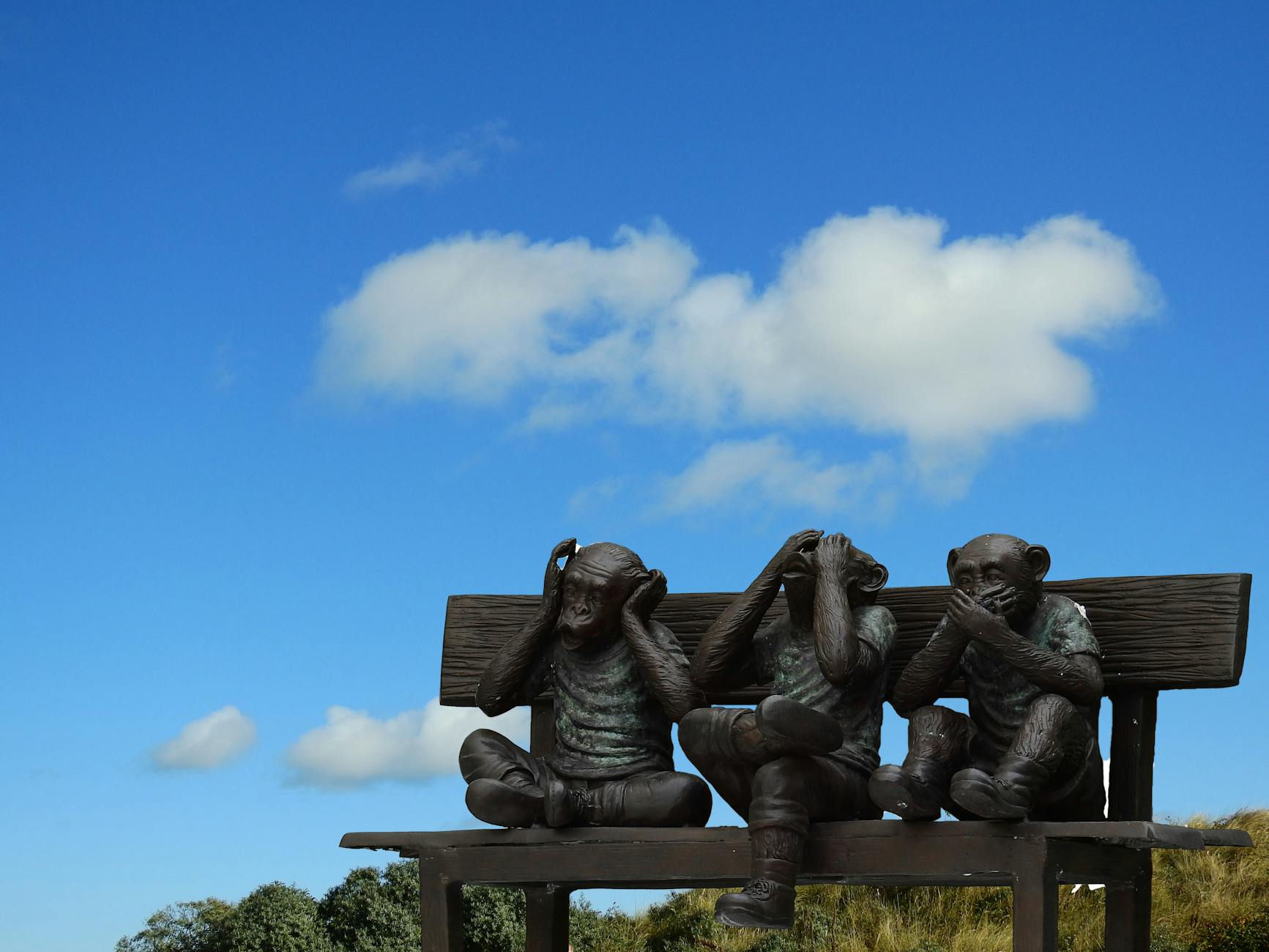
Religious fundamentalism is gradually rising in Kerala. Yet few dare to question it. Perhaps because it originates outside the Hindu community.
Members of the Muslim League, an ally of Congress in Kerala, now openly claim that the hijab is not a choice and are pushing for gender segregation in public spaces like the Mec7 exercise program. Recently, a religious leader criticized a Muslim widow for traveling to Manali, insisting that widows should remain at home and devote themselves to prayer. Others are now openly urging community members to refrain from participating in non-Muslim festivals, further deepening social divisions. Meanwhile, Hamas and Hezbollah supporters freely display posters of their leaders in Kerala, despite these groups’ ties to Pakistani terrorist organizations like JeM and LeT, which have carried out multiple attacks in India.
Was there any outrage from political parties or within the community? None at all.
When you point out the lack of internal criticism, the common response is that speaking out invites real danger and that reforms take time. While it’s true that advocating change within the Muslim community is difficult and radicals may threaten dissenters, how long must we wait? Another century? Should we remain silent and allow religious fundamentalism to grow unchecked? If no meaningful reforms have happened so far, what guarantees change in the future? If the community cannot challenge extremist views now, how will they resist when these forces become even stronger and impose their rules on others?
We are already seeing glimpses of this with the Waqf Board’s land disputes, where properties legally owned by other communities are being claimed. Why should non-Muslims be bound by Waqf rules? If the land originally belonged to Muslims, the claims may hold merit. However, many of these properties now belong to other communities. If they were encroachments, why did the Waqf Board fail to prevent them? In cases where the land was legally sold, why is it being reclaimed now? The Board’s mismanagement highlights the urgent need for Waqf reforms to prevent future disputes.
Unfortunately, political parties are misleading the Muslim community, falsely claiming that reforms would lead to property seizures. The reality is that corrupt politicians have more to lose than ordinary Muslims, especially the poor. Many are likely benefiting from Waqf properties, living in luxury through corruption. The revenue generated from Waqf assets is disproportionately low compared to their vast holdings, raising questions about where the money is going. Instead of being used for community development, it is likely being siphoned for personal gain.
This is why reforms are crucial. However, many in the community rely on their leaders for information, unaware that they are being misled. These leaders manipulate facts for their own interests, radicalizing and mobilizing people with lies. This is why it’s important that citizens seek information from multiple sources—both left- and right-leaning—to avoid being deceived.
It is a mistake to believe that only the BJP spreads communal hatred. Congress leaders have also exploited the Manipur issue, framing it as a Hindu vs. Christian conflict when it is, in fact, an ethnic dispute. When Hamas posters appear in Kerala and critics raise concerns, Congress dismisses them as “Islamophobia.” This selective outrage makes them unreliable as leaders. They are vocal against Hindu extremism but silent when it comes to Islamist fundamentalism.
Some progressive Muslims argue that meaningful reforms require both external pressure, such as government intervention, and internal efforts from within the community. However, in India, any government-led push for reform risks being labeled Islamophobic. This, in turn, gives radicals more ammunition and invites criticism from the Western world, which often misinterprets such actions as oppression rather than necessary change. Moreover, since Hindus form the majority, any move by the Indian government is framed as an attack on Muslims, further polarizing the discourse and making genuine reform even harder to achieve.
At this point, the situation feels like a deadlock. Either we wait indefinitely for internal reforms, which may never come, or the government steps in, triggering backlash and further polarization. Both paths are fraught with challenges, and in either case, things could turn messy. The fear of being labeled Islamophobic limits external intervention, while internal resistance to change keeps fundamentalist views unchecked. This leaves little room for meaningful progress, making the prospect of reform seem increasingly distant.
***
Photo by Pixabay

 The Monkey Dilemma
You must be logged in to post a comment.