It is with utter dismay I am reading the news about the attack on Hindus in Bangladesh. Secular Muslims in the country are trying to protect the Hindus. This is positive news, and you can’t help but feel grateful for such people in the community. However, radicals are still deliberately targeting the houses and religious places of Hindus. How can they be stopped?
Often, we have seen that in the struggle between radicals and seculars, the radicals emerge victorious. This has happened previously in Iran. A student uprising in Iran in 1979 played a significant role in the downfall of secularism and the emergence of the Islamic regime.
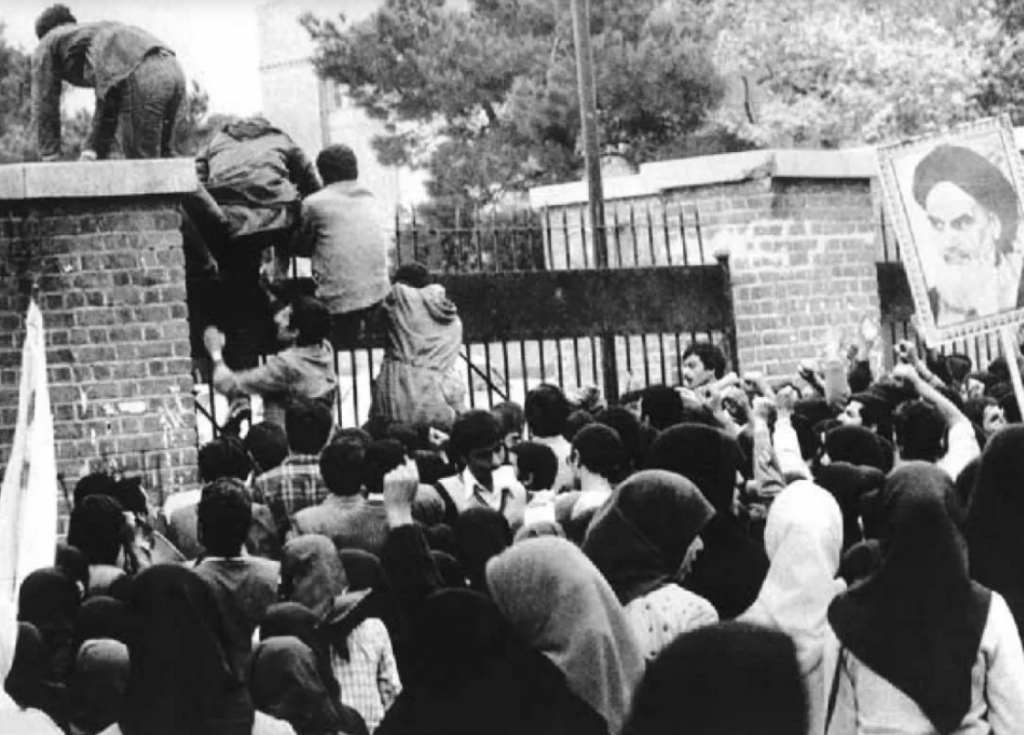
The reasons for the uprising back then were quite similar:
- Widespread discontent with the Shah’s authoritarian rule, political repression, and economic issues.
- Iranian students, both domestically and abroad, were active in organizing protests, disseminating anti-Shah literature, and galvanizing public opinion against the regime. They played a crucial role in spreading revolutionary ideas and mobilizing the masses.
A simple act of protesting an “authoritarian” rule in Iran brought in a more religious regime that was dictatorial in its tendencies. So how successful would one consider this student uprising, unless the original intention of the riots was not social justice, but a religious takeover? Shah, considered secular in nature, fled the country never to return, which in all probability will be Sheikh Hasina’s trajectory too. Comparisons are inevitable. Iran is still struggling to bring back its golden days of secularism. Will Bangladesh end up being the same? Only time will tell.
I saw Bangladeshi residents expressing their joy over Sheikh Hasina’s ouster, which is valid, as she was unnecessarily brutal in her approach. But I also saw them in private groups worrying about the future of the country and whether they will fall into the hands of radical Islamists. Some even said they would leave the country if it came to that.
What does this mean for India? Sheikh Hasina was considered pro-India in her approach. She kept the fundamentalists like the Jamaat-e-Islami and anti-India elements under check. This is of significance as India shares a long border with Bangladesh and any sort of instability has the potential to spill over to neighboring regions.
The new leader, Muhammad Yunus, is a Nobel Laureate. He has proven himself an intellectual, but how effective would he be as a politician and a peace-keeper? Will he be pro-India and continue to maintain peaceful relations with our country, promising to secure the borders and protect the minority community in Bangladesh? Or will he be a puppet for the radicals? Questions only time can answer.
As usual, the leftist ecosystem in India is working overtime to convince us that the Hindus in Bangladesh are not in trouble. This is not surprising. It is a standard approach when minorities in Pakistan, Bangladesh, and even within India (Kashmiri Pandits) are attacked. The events are quickly negated or justified and brushed under the carpet. A close observation of their responses provides enough proof of their bias. In my 40+ years, I have never seen them acknowledge attacks against Hindus. There is always a “reason” for it.
If by chance you point out the attacks, you are labeled a right-wing communal Sanghi (a BJP supporter). However, if you support any other community, you are a social justice warrior, an activist, and a secular. This double standard is difficult to fathom, and I have seen many becoming BJP supporters because of this hypocrisy.
In India, I am witnessing more secular Muslims openly supporting Bangladeshi Hindus than the so-called secular Hindus. Due to the indifference of left-leaning Indian Hindus, the community will continue to suffer persecution at the hands of radicals. There is not enough support. For the support to pour in, people need to first acknowledge the fact that there is an issue.
It is with some relief I read that all political parties in India are on the same page regarding the Bangladesh issue. The opposition hasn’t yet negated the Bangladeshi Hindu’s plight. They voiced concern for the minorities in Bangladesh and said they would work in unity with the central government. A nuanced approach their supporters need to learn.
Hopefully, peace will soon be restored in Bangladesh, rendering my concerns unnecessary. Until that day arrives, my worries persist.

 The Monkey Dilemma
You must be logged in to post a comment.