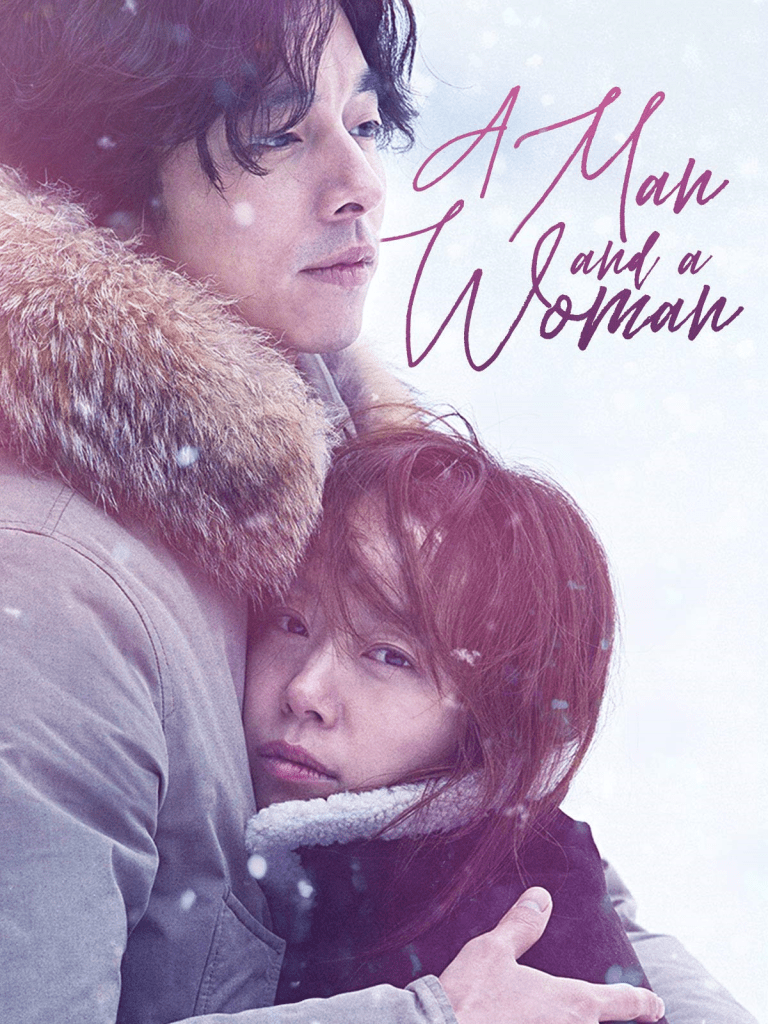
Detouring a bit from the usual saccharine sweet K-dramas, I decided to give this Korean movie named “A Man and a Woman” a try.
Disclaimer: This post shouldn’t be treated as a review because I am far from qualified to give an objective and professional take on cinema. It should be treated as a subjective viewpoint of a cinephile who loves to watch movies and dramas purely for entertainment. I have only one criterion – I shouldn’t get bored. The film will be judged on that factor alone.
What’s It About?
“A Man and a Woman” is an emotional story of Sang-min (played by Jeon Do-yeon) and Ki-hong (played by Gong Yoo), two individuals who meet by chance and form a deep connection. They embark on a passionate but bittersweet extramarital affair amid their complicated personal lives.
Thoughts
The movie starts at a leisurely pace. I am generally not a fan of slow films, so I wasn’t sure whether I would like it. But I realized this pacing was essential to build the melancholy rhythm of the extramarital affair and to make us invested in their whole journey. It is a tumultuous relationship that is delicate and emotional, kind yet painful.
You end up rooting for the cheaters, something I have never done before. Two people quietly enduring the drudgery of everyday issues with a dry smile, eventually finding some warmth in each other’s arms. It’s tough to chide them. You know they are doing something morally wrong, but you want them to be together forever.
The credit goes to the makers and the actors for making us feel emotions out of the norm. We should be offended, angry, and betrayed seeing two people cheating on their spouses. But weirdly, we are not. That’s the effect of good creative storytelling. They make you feel what they want you to feel.
I would recommend the movie to serious cinema watchers, regardless of your take on extramarital affairs. Both the actors are brilliant. There is nothing as emotionally wrecking as the final few scenes. It is also an ugly reminder of how some of us, unfortunately, get the raw part of the deal, no matter how sincere we are. It’s just how life is, and the makers of “A Man and a Woman” have managed to capture this aspect brilliantly on camera.
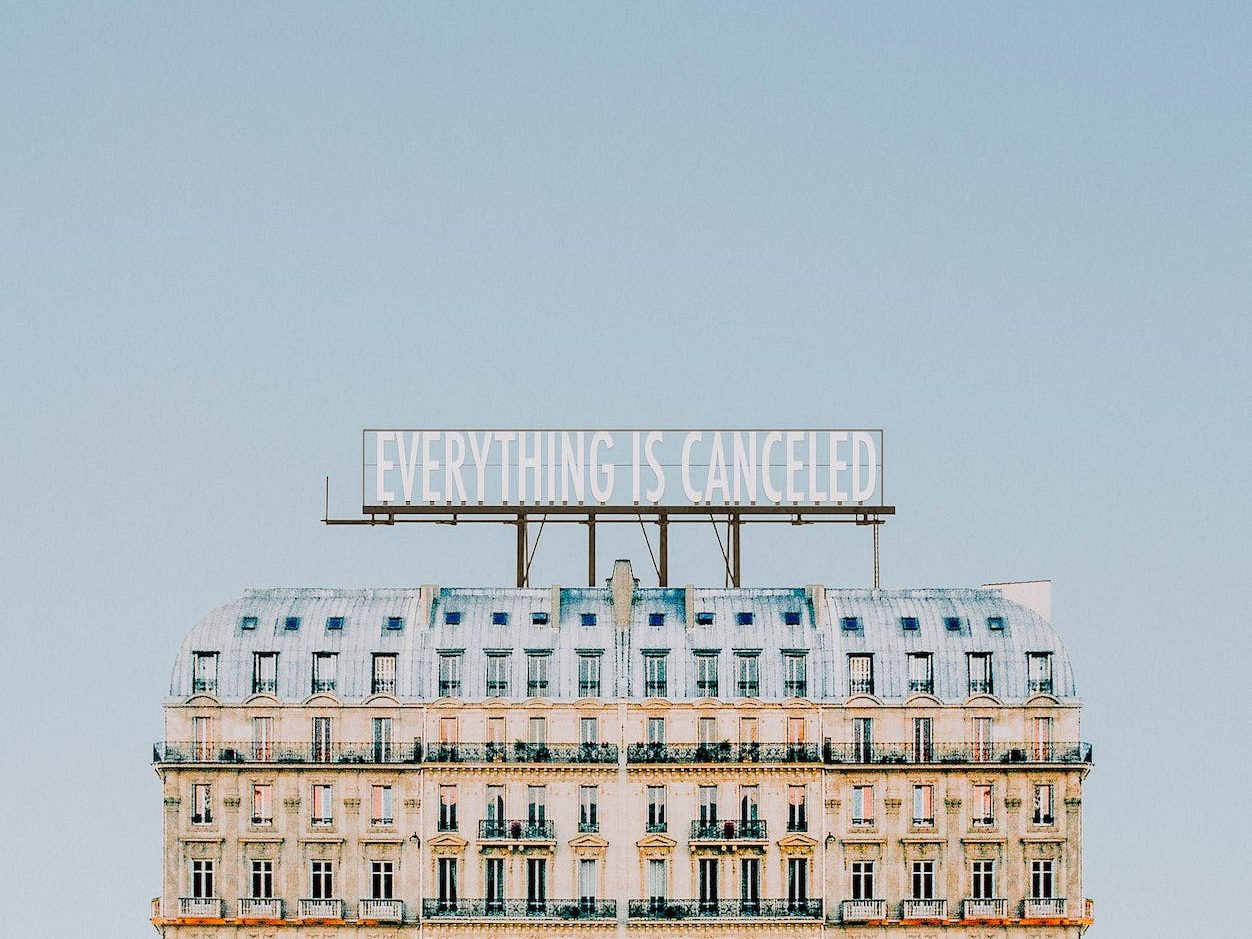
Some terminologies have been rightfully canceled. Words that do more harm than good. To use phrases like “I have OCD” when the person has not been medically diagnosed, or to call anyone “retarded” as a form of insult, is being inconsiderate toward people who are experiencing distress or discomfort from such conditions.
This post is not about the usage of problematic terms. It is about everything getting canceled nowadays based on subjective viewpoints. Social media encourages you to cancel someone if you disagree with them. The internet is so vast that you will always find someone who can cancel the same things along with you.
For example, nowadays, I see people calling someone “woke” if they don’t agree with the person. I have seen two sets of people use “woke” in two different contexts. One set calls feminists, activists, and anyone who smashes conventional norms as woke. The other set (which includes feminists) uses it for argumentative and politically correct people. The article “What Woke Means to Liberals and Conservatives” explains how the left and right decode the term.
Now imagine these two sets of people in the same room. They most probably would cancel each other out.
The cancel culture is mainly restricted to the online world. In the real world, people often exhibit greater acceptance and forgiveness. Rather than canceling, they are open to engaging in conversations and are willing to let go if someone holds a different perspective. They understand it is impossible to convince everyone to feel the way they do.
If you think about it, there are many concerns regarding endorsing this cancel culture: How much canceling is too much canceling? Where is the middle ground? Are we at risk of gradually negating each other’s voices to the point where our words become flavorless and self-righteous? Are we on the verge of losing the art of engaging and captivating conversations? Will the fear of offense diminish the essence of comedy, which often relies on pushing boundaries and challenging norms?
When we cancel people and force them to act our way, we unknowingly create a robotic world filled with yes-men. When this happens, we enter an emotional comfort zone devoid of growth. By avoiding conversations and explanations with individuals whose thoughts differ significantly from ours, we miss out on opportunities to engage in meaningful dialogue and expand each other’s perspectives. It is through such discussions that we can foster understanding, empathy, and potentially find common ground, even amidst differing opinions.
Change does not happen overnight, especially regarding principles and beliefs that have been drilled into us since childhood. It is only through increased exposure, experiences, and open-minded discussions that people can gradually become more receptive. Our willingness to engage with them, along with the assistance of others who share similar viewpoints, can play a role in encouraging them to take that important first step toward embracing different perspectives, if not now then later.
The beauty of life lies in the fact that there are many different personalities around us. If everyone acted the same way, how would we learn the art of acknowledging differences? If we don’t acknowledge differences, how do we stay sane? How do we practise empathy and kindness? The cancel culture makes people more intolerant, angry, polarized, and destructive. In my article, To Speak or Not To Speak, I voiced my concerns about the same.
It’s always better to leave room for disagreements, understand why someone feels a certain way (fear being almost always the root cause), and try to give your take on things using non-violent communication without any expectations. The result of such a discussion might not always be fruitful, but if the conversation is done right, you can expect your tolerance levels to improve and your mind to be more empathetic to people with a social conditioning that is different from yours. If each person felt this way, we could probably bring about the desired change more effectively without emotions playing a spoilsport.
Recently, I came across an article that said Japan has forgotten how to smile. The culprit being COVID-19 masking. When you wear a mask, you can forego formalities and skip smiling. Apparently, the Japanese continued this habit even after masking rules were relaxed.
As Japan gradually lifts its mask mandate, the nation grapples with the aftermath of prolonged mask usage. In response, “smile practice seminars” have surfaced nationwide to address the reported loss of smiles among the population.
indiatimes.com
While reading this article, something struck me out of the blue. I opened my phone gallery and scrolled through the pictures. I realized my recent photos did not show me smiling. I kept staring at them, livid that I had overlooked this obvious change. I had a poker-faced expression in almost all images, which wasn’t the case pre-covid.
I now have to consciously make it a point to smile for photos. It takes effort.
However, some things seem to instantly light my soul up, irrespective of whether it shows up on my face:
When someone remembers something I said ages ago
Warm smiles from strangers while shopping
Words with the power to tug heartstrings
Watching an uplifting movie on Friday night after a long, tiring week
Enjoying a good book in my bed on a Sunday afternoon
Immersing in music at night, lights off, with no distractions
Wandering outdoors aimlessly with an ice cream in hand
Comfortable silences
Peace
Warm bubble baths
Being around animals
Conversations that flow
Showing and receiving gratitude
Warm hugs and forehead kisses
Empathy and kindness
I am sure there are more.
It’s when you note down the small joys in life do you realize most of life’s prized gifts are things that cannot be bought with money. Things that rejuvenate and keep you sane. When I am down, I know I can rely on these items on my feel-good list to bring my mood back up.
Life happens, with all its challenges and unpredictability. Still, we should never let go or overlook things that light our souls up. Those bytes of sunshine might just be our medicine, the sure-shot solution that can help us regain a smile lost in the rubble of uncertainty that life often throws our way.
Most people are scared of ending up alone. The single ones want to get married, thinking it’s the answer to their loneliness. The married ones do not even want to think of a life where they would be without their partner. Both are justified.
But my problem lies with this – the single life is made the villain here. It has unnecessarily got a bad reputation, something that you need to steer clear of at all costs.
People tend to forget that being alone cannot be avoided. You will be alone at some point in your life, if not now, then later – when a partner passes away, or your children migrate, or due to other unforeseen circumstances.
Rather than being afraid of being alone, learn to embrace it.
Humans cannot do without love or some form of social interaction, but we shouldn’t be left flustered or lost if left on our own.
Picture your kids and your partner on an extended vacation. Maybe a year or more. Are you confident that you can manage things comfortably? I am not talking about emotional dependence. We all are emotionally dependent on the ones we love. But are you relying on others to manage your life for you?
One thing I learned when my father passed away was how dependent my mother was on him. She was left clueless on how to deal with life, financial responsibilities, and day-to-day chores that my father used to handle till then. So I had to take on my dad’s role when he passed away, even though I was just as clueless as my mother was. It was then I realized I wasted many years not learning enough from him, especially crucial matters related to finance.
Also, as someone who was once married and has lived alone for the past 15 years, I would like to say there are things in relationships that I certainly find scarier than being alone.
Being clueless about finance
We all must know how to handle our finances, irrespective of whether we have a partner or not. God forbid, if something happens to our partner, we should learn to navigate the situation.
Times are such that we cannot depend on outsiders to handle our money. We should take small steps to be financially literate.
The first step to awareness is to start learning from the member managing your family’s finances. Have conversations with them, understand what kind of investments they have made and why, and what your responsibilities would be in the future when it comes to managing any assets or liabilities in the future.
Being stuck with someone who can’t understand me
I find this scary because no matter what I do or how deeply I express myself, a partner whose emotional wavelength does not match mine might never be able to understand me.
It’s not the partner’s fault. It’s not yours either.
You both are just wired differently.
So to expect your partner to “get you” when they cannot is scary and unfair.
Wanting different things in life
There is a reason you “fall” in love. You are literally freefalling without any second thought. You ignore all the red flags because you have been blinded by love and are ready to forgive even toxic traits. You miss the blatant differences because they appear tolerable when new to love.
I did not understand this when I was young. However, I later realized that the more commonalities you share, the less turbulent your relationship will be.
Your core values should align, if not anything else, so communicating what is important to you (the dealbreakers) is a must.
Not being able to connect once the honeymoon phase is over
You never get to know someone’s love language unless you spend significant quantifiable time with them.
When you fall in love, your hormones are on overdrive.
You get to know how right you are for each other when things settle down.
Feeling alone in a relationship
This stems from point 2 – being with someone who can’t understand you. The second phase of this issue is usually loneliness, which creeps in when you try to make your partner understand you, but they are unable to.
All our lives, we are looking for someone to fill that void, but when that person themselves is responsible for the void, it is the most dreadful feeling.
Sometimes couples drift apart, and the only thing that remains is the relationship tag. This change cannot be predicted, but when it happens, it is more scary than being alone.
Not having complete control over my life
We fall in love, and we succumb entirely to the other person.
We lose some of our individuality and control over ourselves in the process.
Some amount of compromising is required for any relationship to survive. But how much is too much?
When I was married, I realized I had to let go of many things I enjoyed while I was single – my solitude, freedom to spend and invest my money the way I like, etc. This sudden loss of control was a scary thing for me. It is also a reason why I never remarried.
Conclusion
There are a lot more things that are scarier than being alone.
The purpose of this post is to educate young ones not to make rash decisions based on societal pressure or your own insecurities.
A partnership is to be pursued with full awareness. If you are afraid of being alone, you will never be able to view a relationship in a practical light. Worse, you might end up compromising on all the negatives or the red flags your partner throws at you just so you won’t end up alone.
Embrace solitude; it’s not all bad as society paints it to be.
I was surprised when I learned Wicca is openly practised in India.
Till then, I had only read about it in blogs written by people in the U.S.
Witches are just like ordinary people, blending in seamlessly with society. They don’t ride broomsticks or cast spells on unsuspecting individuals. The real ones tell you not to use the universal energy for negative agendas – “It will hit you back,” they warn. This differs from the stereotypical witches in movies and television dramas, who are portrayed as evil and adept at spewing words of hatred.
As I went through articles and posts by real witches advocating for the principle of “Do no bad to others,” I couldn’t help but notice the similarity to the teachings of practitioners of more mainstream religions who promote similar values. I often wonder if we are all indeed praying collectively to the same energy. Even a book on atheism, The God Delusion by Richard Dawkins, does not negate the power of nature and its mystical ways.
Personally, it’s gratifying to know that we all are more united than we think we are – not divided by religion, caste, or community. We are one, all seeking the same things in life – hoping to be heard, protected, and blessed by a higher energy to navigate life more smoothly. The possibility that we must all be asking favors from the same being, using different names, is a heady feeling. It erases any semblance of boundaries. It assures you that humanity is above all. If more individuals shared this perspective, the divisive “us vs. them” mentality could diminish, allowing us to function from a unified standpoint.
I read about Ipsita Roy Chakraverti in a local newspaper. I was mindblown by the fact that a witch existed in India. Such things are usually kept secret in a conservative country like mine, but here was a woman who was unabashedly vocal about her practice and teachings. It was then I learned that Ipsita has authored many books on witchcraft. I decided to try “Beloved Witch” as curiosity got the better of me.
Ipsita is different from other witches in the sense that she does not shy away from promoting her powers. She’s not modest and understands her worth, which is why you often see her showering herself with compliments in the book.
I found it refreshing that Ipsita encourages you to use the all-encompassing universal energy for your own greedy benefits but warns you to be prepared for repercussions. She does not say, “Don’t do this.” Instead, she says, “Do it. But whatever happens after that is your responsibility.” So basically, she’s like a parent telling her young ones to seek adventure, giving them the liberty to learn from their own mistakes.
Now that I am done with my views on the subject, I am going to present some of my favorite thought-provoking quotes and anecdotes from Ipsita’s book. Hope you enjoy them as much as I did!
The earth is a great storehouse of energy. Merge with that source he told me, and you shall be whatever you wish to be.
She’ll flick some ash off from her cigarette (no, smoking is not permitted in the chalet, but she’ll sneak around the garden shed and wink at us). As the ash plops down and crumbles away, she’ll say, ‘That’s worldly fame for you. Fun while it lasts but don’t count on it to be around. Besides, it leaves a bad taste in the mouth.’
The following quote is what I had blogged about previously. It was after writing the post that I read this book, so it was a pleasant surprise for me to see those thoughts come to life in print.
Somehow, eastern yoginis never ‘flew’ but western witches were supposed to ride the broom over hill and dale. I have often wondered about this. And this is what I have discovered. What did the broom symbolize? It stood for hearth and home to which a woman was tied by male domination. As she ‘flew’ away on it, it meant that she was breaking the bonds. It symbolized her freedom. It might as well have been a flying carpet.
Colourful stories abounded about how a long-suffering wife would fly away into the night on this piece of domestic bondage, while her husband slept snugly unaware in his bed. She would revel all night long under the moon and return only at dawn to sweep the hearth with the very broom which had carried her off to her secret trysts.
It has been said that witches were women who were never afraid to ‘fly’. Maybe that is why they had to be burnt.
Women, strong, beautiful or independent minded were called witches so that they could be eliminated. The men who tortured and burnt innocent women in medieval Europe, live on in other places, in different guises. Witch-hunting never stopped. It just took on a more deceptive mask.
Of course, in my experience with thousands of women who have come to me for help, I would say that every strong woman is a witch and she is always hunted. It goes against the nature of most men to tolerate a woman they cannot dominate.
Witch-hunting is present not only in rural Bengal, Bihar, Orissa, Uttar Pradesh or Madhya Pradesh. It prevails everywhere in the world where women stand up for themselves and what they believe in. It is there whenever women refuse to be the pawns or playthings of a callous society. Who is a witch? Or more important, what does she do? As she is a Wiccan, it would be fair to say that she practises Wicca or wiccecraefte or the skills of the wise. She was the original wise woman, the shaman, the healer, the counsellor, the lawyer, the stateswoman of her community. Her power became a threat to men, to organised religion — and hence the persecution, the witch-hunts and the slander.
‘Dr Radhakrishnan, do people in our country work best when they are shouted at or spoken to with sarcasm?’ I asked. He smiled that famous smile of his. Serene, indulgent and amused. ‘Yes, I think three hundred years of servitude have taken their toll. The Indian mind wants and needs love, compassion and understanding but has been weakened by fear. Hence it reacts the most quickly to harshness for that is what it fears. You see, our people have had to put up with so many masters, that even now we understand only the language of compulsion.’
Manifestation and visualization are concepts endorsed by a lot of people, including yours truly. As made clear from the following quote, it is practised in witchcraft as well.
Visualization of what you desire is an important part of every Wiccan ritual.
I hated the thought of my parents making a will because it implied that one day I would be on my own on this planet. And if I was capable of love, they were the only ones I did love. Wills also confirm the worst in human nature. It makes one realize that without legal documents and safeguards, people are vile, greedy and corrupt. There is something very sad in this realization.
‘I agree with Nietzsche about what the free spirit needs. It abhors habits and rules. Everything which goes on and on.’
‘But can marriage become stifling then?’ I asked her. ‘I suppose it can, to certain natures. Such a nature, even if it marries, needs space. You know, don’t you, that Nietzsche compared marriage to a spider’s web. Finally, the threads become traps. That is why, after a time, the spider stuck in the middle, painfully tears apart the mesh enclosing him, even though it will suffer from the wounds — because it must tear these threads off itself, away from its body, away from its soul. It must learn to hate where it used to love and vice versa.’
Wicca was not a dark and sinister practice, it was above board and publicly practised for anybody to check and experience. I proved it to the country. I also brought back the ancient science of quartz therapy to India. Wicca showed the way, once the path had been cleared.
Amongst the men, a very famous Wiccan was said to be none other than Robin Hood. He lived in the green woods, a lover of nature. He had around him a coven of twelve members, he being the thirteenth. He was certainly anti-establishment and fought against all forms of exploitation of the poor and helpless. He was also against organized religion. The woods were his church.
The power seekers wanted control in their own hands. Control over the populace, control over laws and governance. Those with independent, free thinking ways and minds, were a threat. Hence the persecution of Wiccans. Specially if they were women. They became the ‘evil witches’ who always tried to harm people, specially children. Folklore and fairy tales abounded equating witchery with wickedness.
What is wicked? Evil is so relative. What is wrong today, may not be considered so tomorrow. Besides right and wrong are such personal, individual things. I have always set my own standards, keeping only one thing in mind. I do not willingly and purposefully harm another in body, mind or spirit. I do not initiate mischief.
Life was the greatest school, the best laboratory for the most interesting experiments with the human species.Look at them, listen to them, mingle with them and learn.
So is there a heaven where you go if you have been ‘good’? I think we make our own heavens (and hells?) right here — and we continue living in them with those we want near, even after we pass on from our physical bodies.
Out of all the nostalgia-filled flashbacks showered upon me by this thing called “childhood,” the one I sorely miss is having fewer responsibilities.
When we were kids, someone was always taking care of our needs. You weren’t the one everyone turned to when it was decision-making time. You could let an adult take the burden. But now you are the adult (oh, the dread). And the baton of responsibility has been passed to you.
Adulthood robs you of that freedom to just be. You are now responsible for everyone and everything, including the people who brought you up.
I have had a whirlwind of a month. Running back and forth to hospitals in India and getting things sorted out for my mother. Sometimes, it gets a bit much, not the physical activity itself, but the mental stress of the unknown. You wish you could take a break from it for a while, so you can return to being a child to your parent again, not a parent to your parent.
Though I have a sibling, she is settled outside the country. Honestly, sometimes, I am envious of her. She is blissfully unaware of many things that can only be witnessed in person – a thoughtful pause from the doctor after seeing the report, the concerned look on relatives’ faces, and the resulting panic mode. She gets to hear only words, whereas I have to witness stress-inducing body language. I am not bitter, just exhausted, mentally tired, and wishing I had my sibling around to share the responsibility with.
Sometimes, you feel alone in this journey called life, even if you have a family. However, you pull yourself together and say, “I’ve got this.” You learn to flow with the flow with blinders on and see where it takes you.
Often, after testing times, you look at yourself with awe over how you managed to pull through the muck. Challenging situations warrant bravery. It comes out of you automatically; you know the only way is forward. It is nerve-wracking but also educational. You stop thinking about petty things, and all your mental resources are made to focus on the issue at hand. After some tears, things settle eventually. It becomes your new normal. This is how you enter a new uncomfortable phase in life.
In your 40s, you will go through many moments like these, especially when your parents are aging. It’s tough when you witness them encountering the symptoms of their system slowing down a notch. You wonder why you stressed over less-important things like failed relationships, exams, and flippant comments from coworkers when you could have been grateful for all those days you spent with your loved ones in good health. We take the good things for granted and fret over the wrong stuff.
Right now, I have to realign myself into thinking each day is a blessing because I have my loved ones around. To appreciate things for how they are without dwelling on the past or future is not easy. Still, experience has the knack of drilling that lesson into you in the most unsuspecting manner.




 The Monkey Dilemma
You must be logged in to post a comment.