Interracial Romance and the Indian Mindset

Interracial Romance in Indian Families

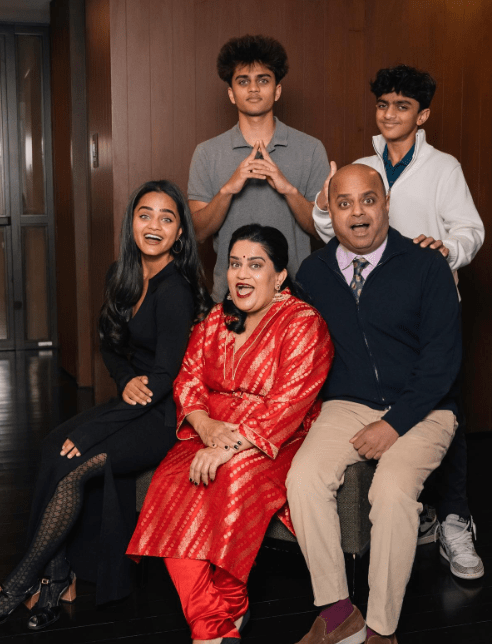
I recently watched a thoughtful discussion by Zarna Garg on interracial romance, featuring her own family. Based in the US, their candid conversation offers a refreshing glimpse into how Indian-American families are navigating such topics. It was heartening to see everyone, parents and kids, engage so openly. In many Indian households, these conversations either happen too late or not at all, often wrapped in hesitation or silence. But here was a family talking honestly about dating, identity, and interracial relationships. A big shoutout to them for their openness and clarity. It’s these dialogues that make a real difference.

Watch the video below:

Thoughts

I’ve spent most of my life abroad before choosing to return to India. Yet even while living overseas, I always knew my relationships would be with Indian men. Perhaps it’s because I studied in an Indian school and mostly socialized within the Indian community, even outside the country. I look Indian, dress Indian, and speak with an Indian accent. So it was natural to feel more comfortable with Indian men.

However, in today’s globalized world, with increasing interracial mingling, millennials like me must come to terms with the fact that more non-Indians are likely to become part of our families. Someone recently remarked how the world is blending in such a way that you can no longer easily tell someone’s ethnicity. Even appearances are getting “globalized.” It was an eye-opener. I’ve come to realize this holds especially true in the Indian context. Today’s new-generation kids often no longer look or sound traditionally Indian, especially the kids in Indian metros. Their accents, fashion, and even body language reflect a more global identity.

A few months ago, a relative married a Spanish man, the first white partner in our family. Surprisingly, everyone, including the older generation, was welcoming. No drama. No resistance. That in itself feels like progress. Our extended family no longer fusses over caste or religion in love marriages. Marrying someone from a “lower caste” has become normal (though I personally reject terms like “lower” and “upper” caste, which are inherently divisive). Only a few super-senior relatives seem to hold on to rigid views, but even that seems to be fading.

I wonder if this shift is due to the older generation’s growing access to YouTube and social media. Many now watch global discussions on love, identity, and acceptance. One moment really stood out: a senior aunt watched Kaathal, a Malayalam film about same-sex love, and casually remarked, “Being gay or lesbian is fine. It’s not a disease.” That kind of acceptance would’ve been unthinkable even a decade ago. But it’s happening now, and that matters.

More recently, one of my nieces fell in love with a white guy. It’s a bit more delicate because it hits closer to home. While I’m happy she found someone, I can’t help but feel a bit anxious. Our cultures are worlds apart, and it’s not just the couple that has to adjust, but the families too. At this age, do I or her parents have the patience? I’m unsure. On second thought, it doesn’t concern me or her family, as the relationship is hers to navigate. Still, as Zarna Garg wisely said in her family discussion, any relationship can thrive if the core values align: education, family, career, loyalty, and health. Everything else is secondary and can be worked around.

One comment from Zarna’s husband lingered with me. He mentioned that their eldest daughter has only dated white men, and he took it personally. He had read somewhere that girls whose fathers aren’t ideal husbands are more likely to do this. That struck a chord. My niece also has a pattern of dating white men, and to be honest, her father isn’t exactly the perfect partner either. Could there be a subconscious link? I wouldn’t dare bring it up now, especially since she lives abroad, but maybe someday in person.

There’s so much our generation is still figuring out. As millennials in our 40s, we stand between tradition and transition. We want to be open-minded and inclusive, but also grounded. At times, it worries us to see the younger generation drifting away from tradition. There’s a quiet fear: will our culture someday fade into oblivion? But these are changing times, and change demands a degree of acceptance. We may not always agree, but we must learn to adapt. I also see a growing trend among young parents today: trying too hard to be politically correct, often avoiding difficult conversations just to stay in their children’s good books. This might be a measure to ensure they don’t repeat their parents’ mistakes of being too restrictive. But experience teaches us that hard truths, spoken with love, are just as necessary today as it was yesterday.

Some of the advice I dismissed in my 20s now makes perfect sense. You only begin to understand your parents once you reach their age. That’s how life unfolds. You gain clarity with time. Until then, all we can do is trust, adapt, and hope it all works out in the end.

***

Photo by Bhavitya Indora

Hindi Movie Review: Aap Jaisa Koi

Aap Jaisa Koi on Netflix

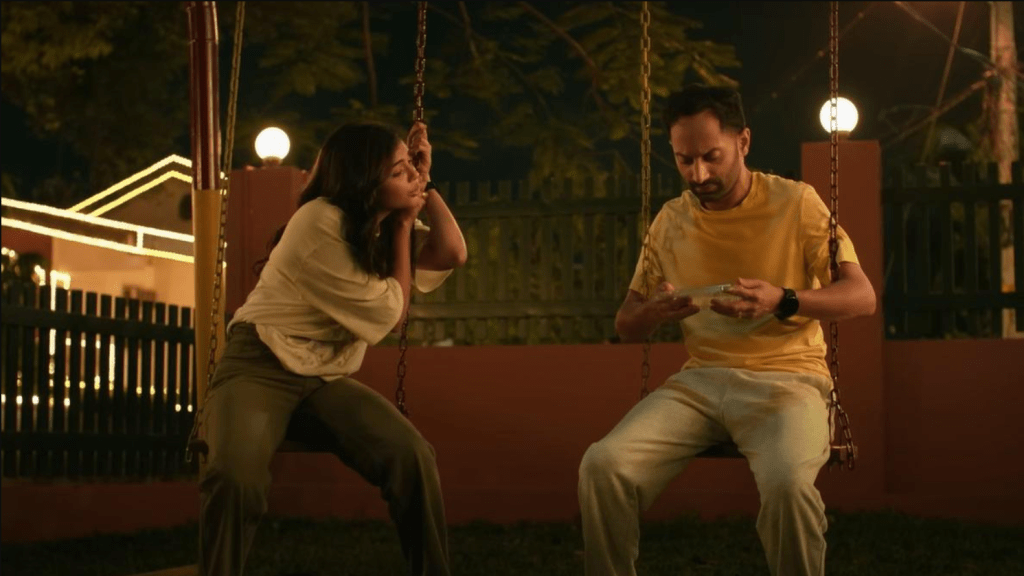
A socially awkward 42-year-old Sanskrit professor from Jamshedpur meets a free-spirited 32-year-old Bengali French teacher through an arranged marriage setup. He’s orthodox, she’s liberal. This description may feel like the movie is based on a war of languages (keeping up with the trend). But it’s not. At its core, Aap Jaisa Koi delves into the multifaceted nature of relationships. It brings a fresh and nuanced take on modern love, tradition, and society’s double standards.

I’ve often wondered why our romantic cinema sticks to the same old formulas when dynamics within relationships and individuals involved are far more complex. Our movie industry usually focuses on the stereotypical boy-meets-girl story, where the characters fall in love, and then external forces play the villain. There are no other angles to the story. In real life, the friction often lies within the relationship itself – compatibility issues, cultural/morality issues, and more. Such issues are often subtle at first but end up being harder to fix. They aren’t dramatic but quietly playing in the background and are dismissed as unimportant. But each day, it chips away at a part of your soul. Some deal with it openly, whereas others act ignorant to maintain harmony in the household.

There are a lot of relationship angles left unexplored in Indian cinema. Someday, I’d love to see a romantic story about two divorcees giving love a second chance. That dynamic carries a quiet vulnerability: the fear of repeating past pain, the hesitation of stepping into something that once broke you. It’s raw, real, and deeply human. However, just like how society stigmatizes divorcees, I think our Indian cinema stigmatizes them too. India is not a country devoid of divorcees, yet they are rarely shown in cinema.

Unlike many Indian films, K-dramas explore these internal dynamics with depth and nuance. That’s why Aap Jaisa Koi felt refreshing. It brings a romance that’s familiar in setting but different in treatment. It spends extra time focusing on emotions and character development. The dialogues are so warm and real, they might just bring tears to your eyes. A few lines had that effect on me. Not because they were sad, but because they were crafted with such thoughtfulness. It felt like poetry. If you’re a non-Indian reader who enjoys K-dramas for their focus on emotions, give this one a shot. I think you’ll genuinely enjoy it.

Aside from the crackling chemistry, the movie has some dreamy music. Mila Tujhe is my favourite of the lot. In a romantic drama, music plays a crucial role. It should be tender, laced with hope, longing, and desire, not melancholy, to heighten emotions and pull you in completely. That’s exactly what the Aap Jaisa Koi soundtrack does. The couple’s chemistry draws you in, and the music wraps around it, making the experience all the more immersive.

Fatima Sana Shaikh is an actress I’d love to see more of. Whether she’s playing a traditional hijabi in Modern Love: Mumbai or a fiery Bengali in Aap Jaisa Koi, she brings authenticity to every role. There’s so much untapped potential in her, and it’s time filmmakers gave her the space she truly deserves. Her character in Aap Jaisa Koi is a feminist, yet deeply rooted in tradition. She looks ethereal in beautiful, traditional sarees. In Bollywood, modern women are often stereotyped as party-goers in Western clothes, but this film takes a different route. It reminds us that modernity is a mindset, not a dress code. You can be progressive and still stay connected to your culture. Meanwhile, many who dress trendy are found to be regressive in their thoughts. Clothes are not a true indicator of someone’s personality. To know a person, you need to know their thoughts.

Madhavan, as always, does full justice to a role that’s equal parts comical and endearing. His comic timing is spot on, and he effortlessly switches expressions, reminding us once again of his natural screen presence.

Aap Jaisa Koi is a feel-good romance that stays with you. I enjoyed it. The movie is streaming on Netflix.

Dear Indian Filmmakers: It’s Time to Bring Back Superficiality in Cinema

Dilwale Dulhania Le Jayenge

When was the last time you really switched off and relaxed while watching an Indian movie? I remember getting lost in a make-believe world whenever I watched Yash Raj or Karan Johar films. But sadly, over time, these filmmakers were pushed to make more realistic movies, at the cost of “superficial” ones.

Right now, I can’t seem to switch off completely while watching an Indian movie and drift into a world completely different from mine. I don’t watch movies for reality; I watch to escape it. If I wanted reality, I’d just take a walk outside, not sit down for a movie. But times have changed, and I don’t think we can expect Indian filmmakers to go back to creating movies with grand sets, stunning scenery, and actors with natural beauty and amazing chemistry. The current trend is all about violence, gore (often to the point of regression), and hyper-realism (and plastic surgeries).

Nowadays, if by chance a superficial movie gets released, we have to endure actors with little to no acting skills or the kind of magical chemistry we used to see with iconic pairs like Shahrukh Khan-Kajol, Shahrukh Khan-Juhi, basically Shahrukh with any actress, or Aamir-Juhi.

It’s a very dull era for the Indian film industry when it comes to making feel-good movies. Movie-watchers like myself, who want to escape into a world that isn’t focused on realism, end up turning to Korean or Pakistani dramas. The fact that so many Indian viewers are enjoying these shows proves there’s still an audience for feel-good romantic movies. The demand is there, but unfortunately, the quality supply is missing in the Indian film industry.

Part of the blame also lies with the audience, who now look for realism even in make-believe movies. If many of the romantic Korean or Pakistani dramas were released in India, they’d probably face intense criticism, with thousands of critics dissecting every single scene and evaluating it based on reality. This is why feel-good movies from the past (except maybe Wake Up Sid) are heavily criticized in today’s India. Such criticism discourages filmmakers from making more feel-good movies. Movie watchers like me, who yearn for superficial, romantic cinema, end up feeling dejected in the process.

I hope we get to see some romantic films, but since filmmakers are minting more money and fame from realistic and violent movies, I don’t expect the trend to change anytime soon.

We have good-looking actors like Ibrahim Ali Khan making their debut probably this year. Let’s hope he gets cast in some feel-good movies and his acting skills are as impressive as his looks. However, the current crop of actresses seems too focused on plastic surgeries, leading to a lack of diversity in looks. In the 90s and early 2000s, actresses like Kajol, Juhi, Sonali Bendre, Madhuri Dixit, and Raveena Tandon had distinct appearances. Sadly, that can’t be said now. So, the question arises—who will pair well with Ibrahim Ali Khan in a romantic movie? No one really comes to mind, except maybe Pratibha Ranta.

An Ode to 5 Interesting Quotes from “Your Place or Mine?”

Your Place or Mine?

Before we begin, I want to point out that the quotes posted here are from Portia MacIntosh’s book Your Place or Mine? Not the movie. The book is an entertaining, cute, light-hearted story of two accidental roommates who eventually become much more than they signed up for. It’s a heady mix of fun and frolic, entertaining twists, and relatable scenarios that are part and parcel of life. It might not be the best romantic tale out there, but it keeps you hooked.

Here are some of my favorite quotes from the book:

Your wedding day is the most special day to ever occur… just like everyone else’s.

Watching a new movie is like rolling the dice, you don’t know if you’re going to love it or hate it, if you’re going to laugh or cry, if a dog is going to die and ruin the whole thing! So we reach for our old favourites for the comfort of the familiar, because you can always count on your favourite movies to make you feel better.

Grief is the cost of love. If you feel a lot of sadness to have lost someone, they must have given you a hell of a lot of love while they were alive. And I do love you, my darling. Never forget that. Until we meet again…

See, this is what happens when you get cocky, and you think everything is going your way. Life goes out of its way to laugh in your face, and show you just how bad things can be.

Sometimes I think that, when you’re going through a difficult time, you don’t realise just how tough things are while you’re going through them. It’s almost like you can’t think about it because, if you were to let yourself dwell on how unbearable things seem, the problems you were facing would seem impossible to overcome. But if you keep moving, you keep your head up and your eyes forward, you’ll be through it before you know it.

Photo by Pixabay