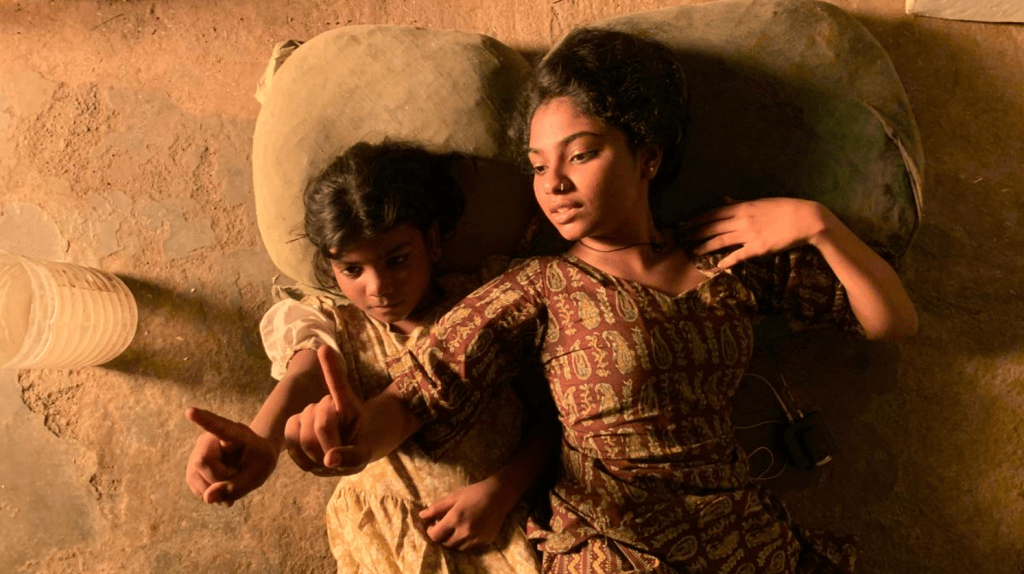
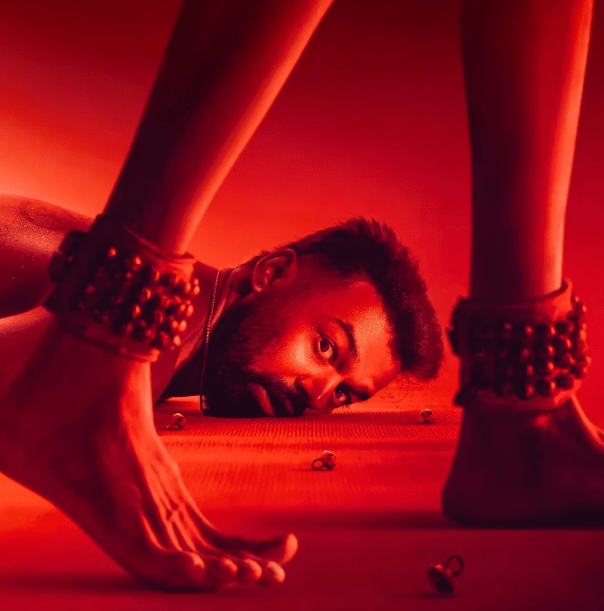
Like many, I found the movie’s name, Diés Iraé, tricky to pronounce. I’m quite sure I’m still saying it wrong. But the offbeat name adds to its charm. For those who don’t know, Diés Iraé is Latin for “Day of Wrath.” It’s a term from Christian theology referring to the day when souls are judged.
The first time I heard about Diés Iraé was when I went to watch Lokah. The trailer of the movie immediately captured my attention. The execution looked stylish, and Pranav Mohanlal looked good. I knew then that I had to watch this movie in a theatre.
What’s It About?
A young, wealthy man who lives life to the fullest begins experiencing strange supernatural events in his home after visiting the house of an ex-fling who was found dead in a well. The restless spirit haunting him seems furious for unknown reasons and determined to destroy his life.
Thoughts
Since Diés Iraé is a horror film, only adults were allowed inside the theatre. An ID card was required. The theatre I went to was almost empty, which I actually didn’t mind. It meant no one was around to make unwanted comments or jokes. This has become a real problem in many Kerala theatres. I faced this issue when I went to watch Bramayugam. I hope the film industry or theatre authorities take strict action against such behavior. If they want to attract more viewers, they must ensure a respectful environment. Otherwise, serious movie lovers will simply wait for the OTT release and enjoy the film peacefully at home.
Getting back to Diés Iraé, I wouldn’t call it mind-blowing. The special effects were impressive, though. Nothing looked fake or unintentionally funny. Pranav Mohanlal delivered a decent performance, and he looked great on screen, which helped balance out a few of his less convincing moments.
There are a few jump scares, so be prepared for that.
Overall, the story felt average. If you’ve seen a lot of horror films, this one might not surprise or scare you much. Still, the execution was solid, and the fact that a film of this scale and quality came from Kerala is definitely something to be proud of.
The creepiest part was seeing the line “inspired by true events.” I didn’t dare look up what those events were. Some things are better left unresearched if you want to sleep peacefully at night.
I would say Diés Iraé is a good one-time watch. At under two hours, it’s a quick and engaging film that keeps you entertained throughout.
I’m a divorcee. I have been for many years now. I’ve never hidden this fact. But I also never imagined my marriage would end the way it did. Then again, who does?
We all grow up believing our marriages will last forever. I also used to think of myself as a tolerant person, so the idea of my marriage failing felt impossible. In my mind, this is something that others might have to go through, the ones with anger issues, those who couldn’t compromise. Not me.
I followed every piece of advice perfectly. The kind you might have seen relationship gurus meting out on social media nowadays, i.e., communicate respectfully, try to understand the other person’s perspective, etc. But over time, I realized communication isn’t a one-way effort; it takes two people to make it work. If only one partner keeps trying while the other sits back, believing they have nothing to change, it slowly chips away at your happiness.
With time, after observing other marriages around me, I understood that maybe I wasn’t as tolerant as I thought — at least not by Indian standards.
Different Levels of Tolerance in Relationships
My regrets in relationships are less about the ex and more about how I handled things. “Why did I let others influence my decisions? Why did I tolerate and compromise more than required?“
Of course, every relationship requires compromises. But each partner also has their own tolerance limits. For me, physical or emotional abuse is unacceptable. Yet, even I, someone who might appear intolerant of everything, tolerated it for a while before deciding I’d had enough. Many women, however, make peace with such situations in their marriages (and relationships in general) for their own reasons (dependency, fear, children, financial pressures, and more).
To cite an example of varying levels of tolerance: When I kept hearing cries of domestic violence in my building, I complained to the building association, even though people advised me not to. “It’s their family, their rules.” But I couldn’t just sit there doing nothing while hearing those cries. It was traumatizing. I took this step because there were times, even in my own relationship, that I wished my neighbors had intervened. Probably, ring the doorbell or knock on the door. It would have provided that much-needed relief.
After my complaint, it hasn’t happened since. But who’s to say the guy didn’t just find quieter ways to hurt his wife? I would’ve run away if such things had happened to me repeatedly, even if it meant begging on the streets for the rest of my life. But his wife might be thinking, “It’s okay. He’s doing it all out of love.” Who’s to know? You can’t save someone who doesn’t want to be saved.
Different levels of tolerance.
People also need to understand that no one files for divorce after just one instance of mistreatment. It happens when the same behavior repeats, even after requests, pleas, and calm conversations. Some choose to walk away, while others make peace with the idea that this is how their life will be. So the common advice of “give it one more chance” is mostly useless, and a bit insensitive, because the ones involved might have already given it multiple chances before deciding to let go.
Power of Faith During Tough Times
Even though I’m not a religious Hindu, having faith in some form has always helped me through tough times. It’s the one thing to hold onto when it feels like your world is falling apart. Even now, I rarely visit temples or follow rituals properly, but in moments of extreme heaviness, I still pray. Not to any specific god. I believe we’re all praying to the same divine force, just using different names and stories. What else could explain miracles happening in every community?
I remember, when I was married, our home had a lone idol of Goddess Kali, a deity I had rarely prayed to before. My parents usually had Lord Krishna at home. I still remember looking at the deity and crying. I asked if this was how it would be for the rest of my life – painful and broken on the inside, faking happiness on the outside (especially for social media).
I sometimes think I might have continued living that way if I hadn’t been pushed by some greater power to take a stand for myself. Probably it was Her. Must have been fed up with me always looking at Her, crying and whining. Even goddesses have their tolerance limits. Also, gods only help those who help themselves, right? Or as we Malayalees say, “Thaan paathi, dhaivam paathi” (you must put in your half of the effort, and God will take care of the rest). Maa Kali might have gone, “Bitch, why don’t you just leave the marriage, instead of troubling me all the bloody time?“
The day I walked out of my marriage was also the day I told my parents, “If you don’t help me, I’ll do it on my own.” Thankfully, they stood by me when I made that decision. I also had the confidence to stand on my own feet. I wasn’t employed then, but my freelance work brought in some income. I knew that if I left the marriage, I wouldn’t be a burden on anyone. That same freelance experience later helped me secure a job. It formed the bulk of my resume, and it convinced my employers that I could handle responsibilities independently, even while working from home, at a time when WFH wasn’t even common.
When I look back, I feel the universe was guiding me in small but meaningful ways toward a life that may be inadequate for someone else, but is absolutely correct for a homebody, introverted feminist like me.
Taking Marriage Advice from Society
But the point is, society will tell you not to take advice from a woman like me. Because I’m a divorcee. What would I know about marriage and relationships, right?
Yet it will encourage you to listen to the woman who keeps enduring it all, at the cost of her well-being, because that’s what a “good wife” does.
Society doesn’t really care about what a woman thinks or feels. It just wants you to stick to the rules.
It’s Diwali season. This time of year always puts me in the mood for something cozy and family-friendly to watch. But honestly, we just don’t get those kinds of movies anymore. The ones you can enjoy with everyone at home.
Remember the golden ’90s? We’d all sit together and watch Jo Jeeta Wohi Sikandar, Hum Hain Rahi Pyar Ke, or Dilwale Dulhania Le Jayenge without a single dull moment. Okay, not exactly in my family, as I was the only one truly into Bollywood, while the rest were more drawn to Malayalam movies. But I imagine these were the kind of movies that one would typically watch with their families. Nowadays, to relax, I tune into psychological thrillers because family movies do not feel family-oriented anymore.
That’s why I was keen to watch Greater Kalesh when it dropped on Netflix. It’s perfect for people like me who just want to unwind with something light and heartwarming. At under an hour, it’s an easy, breezy watch before jumping right back into Diwali celebrations.
What’s It About?
A young career woman returns home after a long time to celebrate Diwali with her family. She’s excited for a warm, cheerful reunion, but the moment she steps inside, she’s greeted not by laughter, but by chaos. Her family members are in the middle of a heated argument, and she can’t quite figure out what started it.
Thoughts
Greater Kalesh is short, simple, and surprisingly sweet. It doesn’t have high-stakes drama or a strong, twisting storyline. But that’s exactly what makes it refreshing for me. Sometimes you just want something light, easy, and comforting, and this little film delivers that perfectly. It might not be everyone’s cup of tea, especially if you seek something more cerebral or non-woke, but to me it felt like peeking into the everyday life of a next-door family and watching them sort things out in their own warm, relatable way.
Ahsaas Channa and Supriya Shukla truly shine here. Their mother-daughter bond feels real and layered. The kind that might make you think of your own mom with a smile.
It’s definitely worth a quick watch. Greater Kalesh is now streaming on Netflix.
I think a lot about how we as a culture have turned “forever” into the only acceptable definition of success. Like… if you open a coffee shop and run it for a while and it makes you happy but then stuff gets too expensive and stressful and you want to do something else so you close it, it’s a “failed” business. If you write a book or two, then decide that you don’t actually want to keep doing that, you’re a “failed” writer. If you marry someone, and that marriage is good for a while, and then stops working and you get divorced, it’s a “failed” marriage.
The only acceptable “win condition” is “you keep doing that thing forever”. A friendship that lasts for a few years but then its time is done and you move on is considered less valuable or not a “real” friendship. A hobby that you do for a while and then are done with is a “phase” – or, alternatively, a “pity” that you don’t do that thing any more. A fandom is “dying” because people have had a lot of fun with it but are now moving on to other things.
I just think that something can be good, and also end, and that thing was still good. And it’s okay to be sad that it ended, too. But the idea that anything that ends is automatically less than this hypothetical eternal state of success… I don’t think that’s doing us any good at all.
It’s never “the person successfully got out of a bad marriage or bad friendship,” which, in my opinion, is one of the toughest things to do, at least in India. There are always a hundred people telling you to save the marriage or friendship, even if it sucks your soul. They go all out to make you feel guilty. When you do manage to get out of it eventually, it’s labelled a “failed” relationship.
Have we got our definition of success all wrong? The way it stands today, it often makes us cling to things that are no longer healthy, just for the sake of appearances. We try to make them work, even when we know they’re a lost cause, because society’s approval depends on it. We want people to look at us from afar and say, “Yes, they’re doing well in life.” This happened to me when I was trying to get out of my bad marriage. Society did not see my anguish; they simply wanted me to save the marriage.
Over time, I’ve grown less dependent on that kind of validation. Experience teaches you that to find true happiness, you need to first understand what happiness is to you, not others. I no longer feel the need to prove anything to anyone. There’s a calmness that comes with stepping out of the race. But it does not come without effort. In a world that constantly pushes you to do more, choosing to stay still and steady is often misunderstood. Living a life that balances financial independence (not luxury) with peace of mind rarely gets branded as “success.” However, luxury and fame without peace of mind are often labelled as the ultimate life.
Success takes on different meanings, even outside personal or professional life. Take politics, for instance. Many Indians see Modi’s stance against Trump’s tariffs and his refusal to bow down to demands (such as where India should purchase their oil from) as a mark of success. Others, however, view it as a diplomatic setback for India. And then there are those who believe it was actually a diplomatic failure for the U.S., considering India is among the fastest-growing economies in the world.
Of course, success looks different for everyone. We judge others by our own yardsticks. But clarity comes when you start asking yourself:
What do I actually want? Do I want wealth in heaps, or do I want balance?
What are the trade-offs, and am I okay with them?
How long am I willing to sacrifice? Am I truly passionate enough to give up other things I hold dear for this one pursuit?
When you have that honest conversation with yourself, defining success on your own terms rather than society’s, life feels lighter. And you stop depending on others for validation and how you should live your life. This does not apply to kids and young adults, though, who still need guidance on how to navigate life. A child cannot simply say, “Screw studies, it makes me upset,” and get away with it in the name of freedom of choice.
Effort is important, but so is knowing when to hold on and when to let go. True freedom comes only after achieving some level of financial independence. So that should be the first pursuit, regardless of gender.
I recently started watching Zarna Garg’s stand-up videos. Until then, I had only seen snippets of her interviews on Instagram reels. At that time, I assumed she was yet another comic who makes a living by criticizing India, as many Indian comedians do. Negative takes on India tend to get more attention, and I, honestly, had grown a bit tired of that negativity. So I stayed away from watching Zarna’s videos for the longest time.
Eventually, I decided to watch her special Practical People Win on JioHotstar (originally on Hulu). That special led me to the Zarna Garg Family podcast on YouTube, where I found Zarna, her husband, Shalabh, and their three children having honest, open conversations. Something every Indian family could learn from.
In my opinion, it’s a brilliant marketing tactic on her part to build that curiosity around her family in her specials. She says, “My son… so handsome,” “My daughter… so nerdy,” so you naturally want to know more about this family, what they look like, and witness their quirks in real life. This is the intention of the podcast – to get you more involved in the Garg family brand.
People like me crave a more personal connection with celebrities, influencers, and comedians. I want to hear their real thoughts, personal likes and dislikes, without sugarcoating or political correctness. The Garg family brings exactly that authenticity, which keeps you hooked. Bollywood, on the other hand, lacks this today. Most interviews feel overly scripted, with celebrities giving dull, promotional takes right before a movie release.
Zarna calls herself the quintessential “Indian aunty.” As someone in my 40s, I relate to many of her traditional views. Opinions that I did not hold in my 20s. Her daughter Zoya, on the other hand, reminds me of my younger self: idealistic and confident that hard work and determination can achieve anything. But life eventually teaches you that not everything goes your way. However, this is a lesson only experience teaches you. It cannot be taught by others.
I would like to take this chance to point out how much I admire Zoya. She is articulate and strikingly pretty, with the most gorgeous eyes, even though the Garg family often jokes about the eldest son being the most attractive. Zoya is never dismissive or disrespectful to her parents, even when they go against her views. I find this refreshing, especially today when many youngsters tend to be more casual, even rude, with their parents. As an old-school millennial who values parental respect, this stands out to me.
The podcast drew me into Zarna’s world. I ended up binge-watching episodes where the family openly discusses topics like dating, marriage, interracial relationships, and finances. All of them, including the children, are articulate and express themselves clearly and thoughtfully. As someone unmarried and child-free, I couldn’t help but compare their conversations to those my cousins and siblings have with their children. One of my nieces is dating a white man (and she has a history of dating only white men), so Zarna and her husband’s confusion and concerns felt very relatable. The podcast not only helps you reflect on your own feelings but also offers a fresh perspective from the younger generation. This is something new-gen parents can highly benefit from.
What endears me most to Zarna is her unapologetic Indianness. Many Indians abroad change their attire, avoid Indian clothes or bindis, culture, and even end up cooking less traditional food so that the masala smell doesn’t linger on their clothes. They have to compromise on their Indianness, just to blend in, be accepted, and respected. Despite these compromises, racism still continues. So, how much of this “blending in” has proven effective?
I’m of the belief that to enjoy Indian culture fully and unabashedly, one needs to stay back in India. Other countries, unfamiliar with the Indian, especially Hindu, way of life, may not be as accepting or comfortable with it. Living abroad often means diluting many aspects of your culture just to make others feel at ease. Zarna, however, proudly wears her Indian identity on her sleeve. She wears Indian outfits and a bindi on stage, despite admitting she constantly faces racist remarks in the USA over it. Her refusal to shed her identity to fit in is admirable. It takes courage and conviction to stay true to oneself in a foreign land, and Zarna has that in abundance. As racism against Indians has reached new heights globally, Zarna’s pride in her identity is truly inspiring. She shows that we should not cower before hate but instead embrace and celebrate our culture and traditions without fear.
I recently watched a thoughtful discussion by Zarna Garg on interracial romance, featuring her own family. Based in the US, their candid conversation offers a refreshing glimpse into how Indian-American families are navigating such topics. It was heartening to see everyone, parents and kids, engage so openly. In many Indian households, these conversations either happen too late or not at all, often wrapped in hesitation or silence. But here was a family talking honestly about dating, identity, and interracial relationships. A big shoutout to them for their openness and clarity. It’s these dialogues that make a real difference.
Watch the video below:
Thoughts
I’ve spent most of my life abroad before choosing to return to India. Yet even while living overseas, I always knew my relationships would be with Indian men. Perhaps it’s because I studied in an Indian school and mostly socialized within the Indian community, even outside the country. I look Indian, dress Indian, and speak with an Indian accent. So it was natural to feel more comfortable with Indian men.
However, in today’s globalized world, with increasing interracial mingling, millennials like me must come to terms with the fact that more non-Indians are likely to become part of our families. Someone recently remarked how the world is blending in such a way that you can no longer easily tell someone’s ethnicity. Even appearances are getting “globalized.” It was an eye-opener. I’ve come to realize this holds especially true in the Indian context. Today’s new-generation kids often no longer look or sound traditionally Indian, especially the kids in Indian metros. Their accents, fashion, and even body language reflect a more global identity.
A few months ago, a relative married a Spanish man, the first white partner in our family. Surprisingly, everyone, including the older generation, was welcoming. No drama. No resistance. That in itself feels like progress. Our extended family no longer fusses over caste or religion in love marriages. Marrying someone from a “lower caste” has become normal (though I personally reject terms like “lower” and “upper” caste, which are inherently divisive). Only a few super-senior relatives seem to hold on to rigid views, but even that seems to be fading.
I wonder if this shift is due to the older generation’s growing access to YouTube and social media. Many now watch global discussions on love, identity, and acceptance. One moment really stood out: a senior aunt watched Kaathal, a Malayalam film about same-sex love, and casually remarked, “Being gay or lesbian is fine. It’s not a disease.” That kind of acceptance would’ve been unthinkable even a decade ago. But it’s happening now, and that matters.
More recently, one of my nieces fell in love with a white guy. It’s a bit more delicate because it hits closer to home. While I’m happy she found someone, I can’t help but feel a bit anxious. Our cultures are worlds apart, and it’s not just the couple that has to adjust, but the families too. At this age, do I or her parents have the patience? I’m unsure. On second thought, it doesn’t concern me or her family, as the relationship is hers to navigate. Still, as Zarna Garg wisely said in her family discussion, any relationship can thrive if the core values align: education, family, career, loyalty, and health. Everything else is secondary and can be worked around.
One comment from Zarna’s husband lingered with me. He mentioned that their eldest daughter has only dated white men, and he took it personally. He had read somewhere that girls whose fathers aren’t ideal husbands are more likely to do this. That struck a chord. My niece also has a pattern of dating white men, and to be honest, her father isn’t exactly the perfect partner either. Could there be a subconscious link? I wouldn’t dare bring it up now, especially since she lives abroad, but maybe someday in person.
There’s so much our generation is still figuring out. As millennials in our 40s, we stand between tradition and transition. We want to be open-minded and inclusive, but also grounded. At times, it worries us to see the younger generation drifting away from tradition. There’s a quiet fear: will our culture someday fade into oblivion? But these are changing times, and change demands a degree of acceptance. We may not always agree, but we must learn to adapt. I also see a growing trend among young parents today: trying too hard to be politically correct, often avoiding difficult conversations just to stay in their children’s good books. This might be a measure to ensure they don’t repeat their parents’ mistakes of being too restrictive. But experience teaches us that hard truths, spoken with love, are just as necessary today as it was yesterday.
Some of the advice I dismissed in my 20s now makes perfect sense. You only begin to understand your parents once you reach their age. That’s how life unfolds. You gain clarity with time. Until then, all we can do is trust, adapt, and hope it all works out in the end.
You must be logged in to post a comment.