I’ll start by saying I’m in my 40s, so I’m not exactly the target audience for this film. Still, I enjoyed seeing fresh faces on screen. Actors who look natural, expressive, and free from the usual heavy Botox work.
What’s It About?
Saiyaara opens with the female lead at the registrar’s office, ready to formalize her marriage. She’s a dreamer and a poet, someone who finds inspiration in life’s fleeting moments. Even in the office, she pulls out her diary to capture the beauty of what she believes is the start of a new chapter. But life takes an unexpected turn.
She soon crosses paths with the male lead, an angst-ridden singer determined to make it big. The film traces their love story and the way they navigate the highs and lows of their relationship.
Thoughts
The story felt like a mix of Aashiqui2 and Rockstar. As I’m not drawn to melancholy, tragic romances, it didn’t resonate with me as much as I’d hoped. That said, it was refreshing to see young, expressive talent on screen.
Director Mohit Suri specifically sought an actress without cosmetic enhancements (a “botox-free beauty”), and I think that was a brilliant choice. As an audience member, I’ve found lip jobs and other obvious procedures very distracting, so the natural look was a welcome change.
The lead actress (Aneet Padda) is adorable, and the actor (Ahaan Panday) is quite charming, too. Their chemistry was lovely. Personally, I would have loved to watch this pair in a light-hearted romcom instead. Hopefully soon. We need more youthful, happy, meet-cute romantic stories in Bollywood.
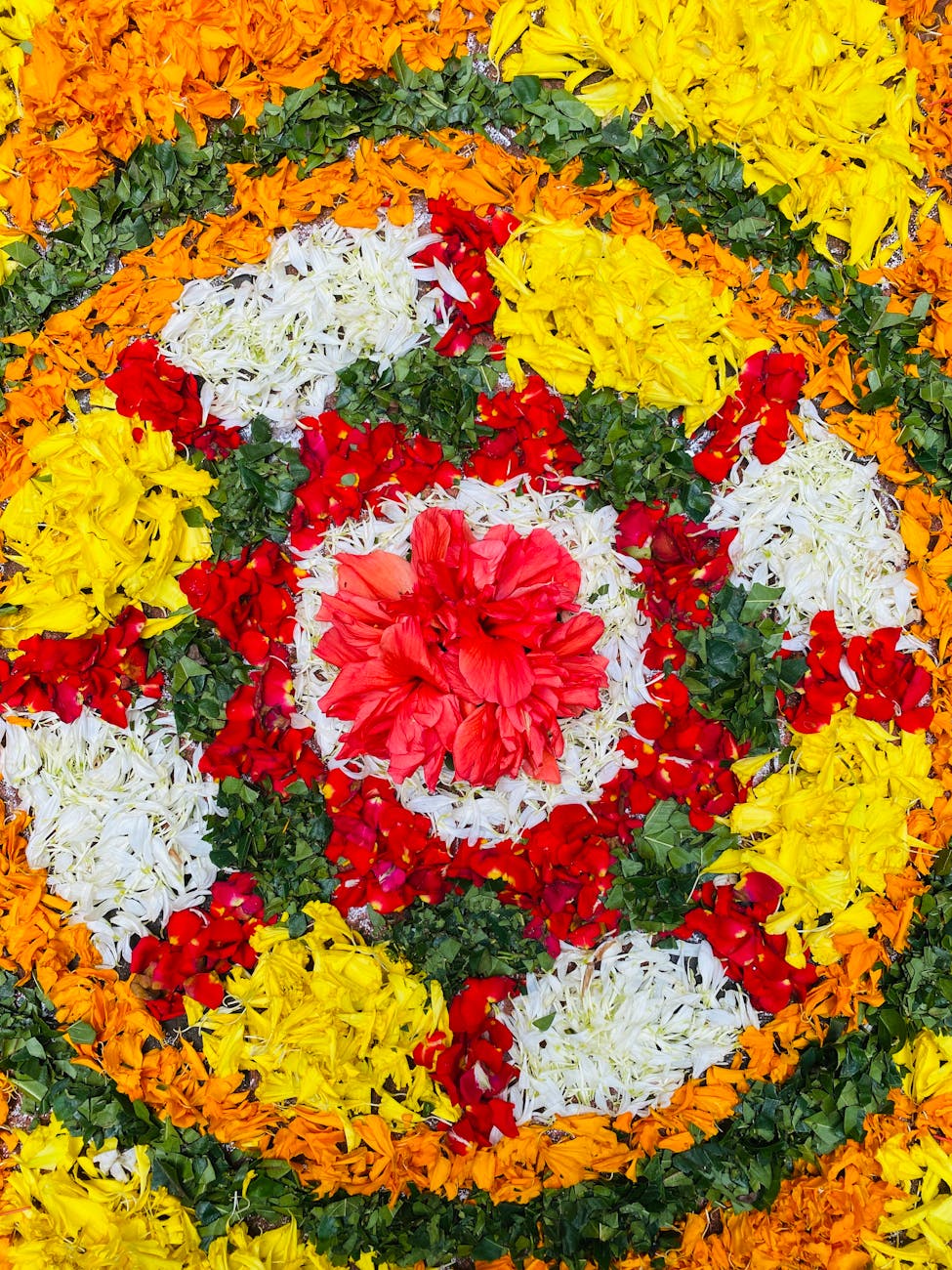
After celebrating Onam and engaging in numerous social activities, my introvert battery hit rock bottom. I needed a desperate recharge. So what do I do? Naturally, I retreated to every introvert’s most favourite new-gen comfort zone: scrolling endless Instagram reels. Nothing says “I’ve had enough of people” quite like being a couch potato, locked up in your house, while going through everyone else’s social lives.
As I scrolled through the multiple Onam-related posts, I couldn’t help but appreciate the inclusivity in Kerala. Malayalees across religions, whether they are Hindus, Christians, or Muslims, celebrated Onam with equal enthusiasm. Everyone welcomed Mahabali with open arms. A few voices did try to stop their communities, saying Onam is a “Hindu festival,” but not many paid attention. That’s a good sign. People are choosing to step out of religious bubbles to celebrate together.
Still, Kerala, often praised as a secular state, has been showing sporadic worrying signs of exclusion. Just before Onam, a teacher told students not to participate in the festival because “our religion doesn’t allow it.” The outrage led to her suspension, but this mindset isn’t limited to one person. How widespread is the thought? No one can quantify. It’s impossible to analyze each and every Indian’s thought. However, there is an increasing number of cases that advocate for exclusionary behaviour. You are penalized for celebrating other festivals, or for respecting someone else’s god, or for chanting something as simple as “Bharat Mata ki Jai.”
India guarantees freedom of religion for all communities. But if we use that freedom only to exclude ourselves from others, we risk creating deeper divides. True communal harmony comes from participation: joining in festivals, enjoying each other’s food, and refusing to see other faiths as “untouchable.”
For India to stay secular, this effort has to come from all of us. We’ve come far since independence, but there’s still a long way to go. It’s up to us to ensure religion doesn’t become a wall, but a bridge.
I think a lot about how we as a culture have turned “forever” into the only acceptable definition of success. Like… if you open a coffee shop and run it for a while and it makes you happy but then stuff gets too expensive and stressful and you want to do something else so you close it, it’s a “failed” business. If you write a book or two, then decide that you don’t actually want to keep doing that, you’re a “failed” writer. If you marry someone, and that marriage is good for a while, and then stops working and you get divorced, it’s a “failed” marriage.
The only acceptable “win condition” is “you keep doing that thing forever”. A friendship that lasts for a few years but then its time is done and you move on is considered less valuable or not a “real” friendship. A hobby that you do for a while and then are done with is a “phase” – or, alternatively, a “pity” that you don’t do that thing any more. A fandom is “dying” because people have had a lot of fun with it but are now moving on to other things.
I just think that something can be good, and also end, and that thing was still good. And it’s okay to be sad that it ended, too. But the idea that anything that ends is automatically less than this hypothetical eternal state of success… I don’t think that’s doing us any good at all.
It’s never “the person successfully got out of a bad marriage or bad friendship,” which, in my opinion, is one of the toughest things to do, at least in India. There are always a hundred people telling you to save the marriage or friendship, even if it sucks your soul. They go all out to make you feel guilty. When you do manage to get out of it eventually, it’s labelled a “failed” relationship.
Have we got our definition of success all wrong? The way it stands today, it often makes us cling to things that are no longer healthy, just for the sake of appearances. We try to make them work, even when we know they’re a lost cause, because society’s approval depends on it. We want people to look at us from afar and say, “Yes, they’re doing well in life.” This happened to me when I was trying to get out of my bad marriage. Society did not see my anguish; they simply wanted me to save the marriage.
Over time, I’ve grown less dependent on that kind of validation. Experience teaches you that to find true happiness, you need to first understand what happiness is to you, not others. I no longer feel the need to prove anything to anyone. There’s a calmness that comes with stepping out of the race. But it does not come without effort. In a world that constantly pushes you to do more, choosing to stay still and steady is often misunderstood. Living a life that balances financial independence (not luxury) with peace of mind rarely gets branded as “success.” However, luxury and fame without peace of mind are often labelled as the ultimate life.
Success takes on different meanings, even outside personal or professional life. Take politics, for instance. Many Indians see Modi’s stance against Trump’s tariffs and his refusal to bow down to demands (such as where India should purchase their oil from) as a mark of success. Others, however, view it as a diplomatic setback for India. And then there are those who believe it was actually a diplomatic failure for the U.S., considering India is among the fastest-growing economies in the world.
Of course, success looks different for everyone. We judge others by our own yardsticks. But clarity comes when you start asking yourself:
What do I actually want? Do I want wealth in heaps, or do I want balance?
What are the trade-offs, and am I okay with them?
How long am I willing to sacrifice? Am I truly passionate enough to give up other things I hold dear for this one pursuit?
When you have that honest conversation with yourself, defining success on your own terms rather than society’s, life feels lighter. And you stop depending on others for validation and how you should live your life. This does not apply to kids and young adults, though, who still need guidance on how to navigate life. A child cannot simply say, “Screw studies, it makes me upset,” and get away with it in the name of freedom of choice.
Effort is important, but so is knowing when to hold on and when to let go. True freedom comes only after achieving some level of financial independence. So that should be the first pursuit, regardless of gender.
I recently watched a thoughtful discussion by Zarna Garg on interracial romance, featuring her own family. Based in the US, their candid conversation offers a refreshing glimpse into how Indian-American families are navigating such topics. It was heartening to see everyone, parents and kids, engage so openly. In many Indian households, these conversations either happen too late or not at all, often wrapped in hesitation or silence. But here was a family talking honestly about dating, identity, and interracial relationships. A big shoutout to them for their openness and clarity. It’s these dialogues that make a real difference.
Watch the video below:
Thoughts
I’ve spent most of my life abroad before choosing to return to India. Yet even while living overseas, I always knew my relationships would be with Indian men. Perhaps it’s because I studied in an Indian school and mostly socialized within the Indian community, even outside the country. I look Indian, dress Indian, and speak with an Indian accent. So it was natural to feel more comfortable with Indian men.
However, in today’s globalized world, with increasing interracial mingling, millennials like me must come to terms with the fact that more non-Indians are likely to become part of our families. Someone recently remarked how the world is blending in such a way that you can no longer easily tell someone’s ethnicity. Even appearances are getting “globalized.” It was an eye-opener. I’ve come to realize this holds especially true in the Indian context. Today’s new-generation kids often no longer look or sound traditionally Indian, especially the kids in Indian metros. Their accents, fashion, and even body language reflect a more global identity.
A few months ago, a relative married a Spanish man, the first white partner in our family. Surprisingly, everyone, including the older generation, was welcoming. No drama. No resistance. That in itself feels like progress. Our extended family no longer fusses over caste or religion in love marriages. Marrying someone from a “lower caste” has become normal (though I personally reject terms like “lower” and “upper” caste, which are inherently divisive). Only a few super-senior relatives seem to hold on to rigid views, but even that seems to be fading.
I wonder if this shift is due to the older generation’s growing access to YouTube and social media. Many now watch global discussions on love, identity, and acceptance. One moment really stood out: a senior aunt watched Kaathal, a Malayalam film about same-sex love, and casually remarked, “Being gay or lesbian is fine. It’s not a disease.” That kind of acceptance would’ve been unthinkable even a decade ago. But it’s happening now, and that matters.
More recently, one of my nieces fell in love with a white guy. It’s a bit more delicate because it hits closer to home. While I’m happy she found someone, I can’t help but feel a bit anxious. Our cultures are worlds apart, and it’s not just the couple that has to adjust, but the families too. At this age, do I or her parents have the patience? I’m unsure. On second thought, it doesn’t concern me or her family, as the relationship is hers to navigate. Still, as Zarna Garg wisely said in her family discussion, any relationship can thrive if the core values align: education, family, career, loyalty, and health. Everything else is secondary and can be worked around.
One comment from Zarna’s husband lingered with me. He mentioned that their eldest daughter has only dated white men, and he took it personally. He had read somewhere that girls whose fathers aren’t ideal husbands are more likely to do this. That struck a chord. My niece also has a pattern of dating white men, and to be honest, her father isn’t exactly the perfect partner either. Could there be a subconscious link? I wouldn’t dare bring it up now, especially since she lives abroad, but maybe someday in person.
There’s so much our generation is still figuring out. As millennials in our 40s, we stand between tradition and transition. We want to be open-minded and inclusive, but also grounded. At times, it worries us to see the younger generation drifting away from tradition. There’s a quiet fear: will our culture someday fade into oblivion? But these are changing times, and change demands a degree of acceptance. We may not always agree, but we must learn to adapt. I also see a growing trend among young parents today: trying too hard to be politically correct, often avoiding difficult conversations just to stay in their children’s good books. This might be a measure to ensure they don’t repeat their parents’ mistakes of being too restrictive. But experience teaches us that hard truths, spoken with love, are just as necessary today as it was yesterday.
Some of the advice I dismissed in my 20s now makes perfect sense. You only begin to understand your parents once you reach their age. That’s how life unfolds. You gain clarity with time. Until then, all we can do is trust, adapt, and hope it all works out in the end.
There’s so much bad news everywhere. Wars, riots, terror attacks, persecution, and discrimination. I don’t know about you, but I’ve started to feel helpless, knowing I hold no power to fix these problems. As individuals, there’s only so much we can do. What is in our control is how we express our views, calmly and with clarity. But even that becomes difficult when those around us try to silence any perspective that doesn’t match their own. They get aggressive. We get perplexed. It becomes a vicious cycle. One that’s hard to escape. It drains our time, disturbs our emotional balance, and pushes away those who genuinely want to understand us.
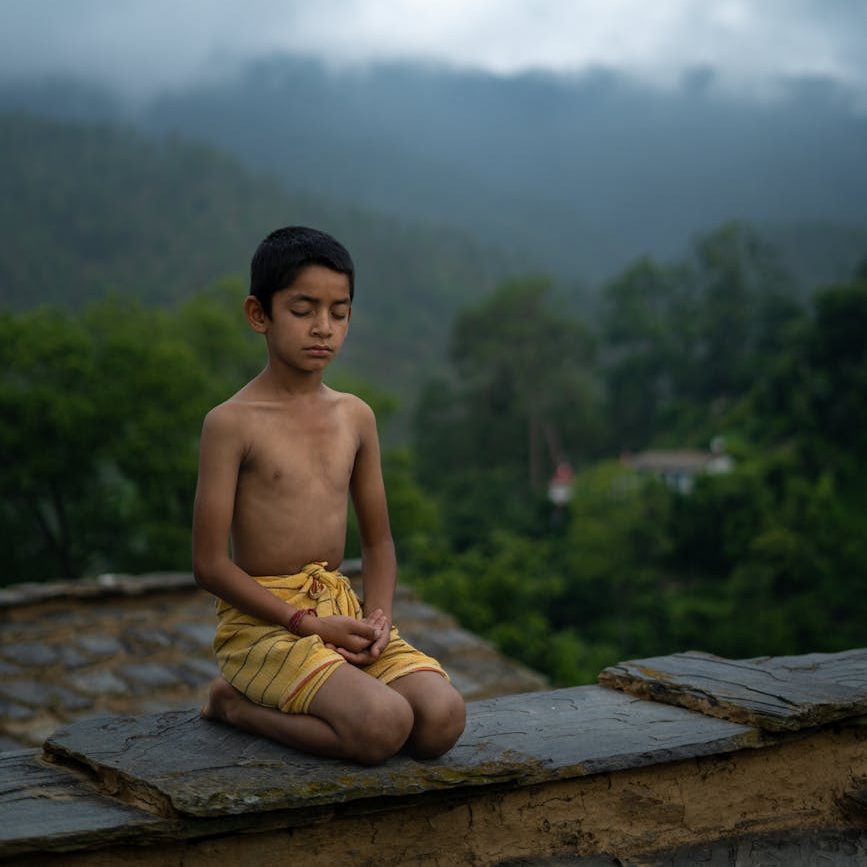
In the midst of all this, I recently attended an online yoga session on International Yoga Day. We meditated together as a group, and it turned out to be one of the most peaceful and calming experiences I’ve had in a while. The meditation lasted only 7 minutes, but it had a noticeable, immediate impact. I felt centred. It helped me go about the rest of my day with a calm focus, even while handling everyday chores or reading the news. This is new for me. For the past few years, my mind has been troubled by witnessing the coldness with which society operates. There was a lingering sense of doom that had become hard to manage. So when meditation helped soften that heaviness, even slightly, it came as a welcome relief. I allowed myself to sit with that emotion and savour it.
The guide assured us that the control over our minds would improve even further with consistent practice. He said that even just 7 minutes of daily meditation can make a noticeable difference over time. I’m still new to the practice, so it’s too early for me to say how lasting the effects are. But one thing I can say for sure: you feel noticeably better after just the first session.
What made those few minutes so calming was the simple act of focusing only on the breath and the space between the eyebrows. In that short span, there were no screens, no distractions. Just stillness. It felt like a small step toward making peace with myself. This is what I experienced in my first few days of meditation. I’m not sure yet if I can commit to doing it every single day, but it’s something I genuinely want to try.
I’m not the body, I’m not the mind
As we meditated, this chant of “I’m not the body, I’m not the mind” by Sadhguru played in the background, accompanied by soothing flute music. It felt like an invitation to disconnect from the body and mind, to simply let yourself be. You don’t have to react to everything. You can observe your experiences as an outsider, from a third-person perspective. Feel your emotions, acknowledge them, but don’t let them consume you beyond control so that you lose sight of logic.
If you’re interested in trying the same meditation, you can do it at home by downloading the “Miracle of Mind by Sadhguru” app on your phone. The session includes the same calming chant and ends with a short 1-minute video from Sadhguru, offering simple insights on daily practice.
Now, I understand some may have reservations about Sadhguru due to political or personal views, or unverified claims. But I’d encourage you to look past that and focus instead on what this practice can offer you personally.
I’ve tried other meditation apps too, but they often felt too Western in their approach. This one, however, feels grounded in Indian sensibilities, with gentle flute music and guided instructions that actually help you stay focused. In a culture where complete silence isn’t always easy to adapt to, this format works well. It’s thoughtfully designed for an Indian audience, making meditation more accessible and less intimidating.
As the year comes to a close, it’s time to reflect on the lessons learned this year. I have the utmost gratitude for those who showered me with love, kindness, and patience. However, I also felt discomfort knowing that not everyone who greets me with gifts, smiles, and sweet words considers me as someone worth their time.
Small things that irked me this year:
A relative who never supported my writing ventures expected me to support her new Instagram page.
People being frighteningly okay with one kind of death over another based on religion, beliefs, and ideologies.
When people whom I consider dear went to events without informing me.
The lessons I learned from each of these:
You need not feel guilt for treating people like they treat you. You are not a holy saint but a living, breathing, ordinary human being who harbors a myriad of emotions. Having expectations from people you care about is healthy so that boundaries aren’t crossed. Consistent compromises can affect your mental health and even bring down your self-esteem.
People are inherently biased. This fact is uncomfortable and dark but true. The way we look at anything is colored by our upbringing, our own experiences, and our way of life. So, for example, when you see someone advocating for human rights, you need to be wary of their agenda – is it genuine? Do they advocate for the rights of all humans or only a select few?
We have to accept that we are not everyone’s cup of tea. This holds more true for someone like me, an unmarried woman who says the most unorthodox things and is a social hermit by nature. When you live a life that is the most authentic to you, you will not gain many friends, as you are largely unrelatable. This self-realization will help reduce unnecessary expectations from people who genuinely require something else from the people around them, not what you have to offer.
Instead of blaming people, the solution often lies within. It’s impossible to change everyone and everything to your liking. The answer sometimes is to accept the reality and move on. Maybe in this quest, you will find your tribe that understands and accepts the person that you are, and things will feel less forced and more genuine.
For me, it’s often not the acts, like seasonal gift-giving, that show someone’s true nature, but in the little things – remembering you and asking you to tag along to events they know you would enjoy, uninhibited support to passions that mean a lot to you, and not finding you weird when you show your vulnerable side. It’s also the acknowledgment of the fact that you expected something more and them making an effort to meet that expectation the next time around. Touch wood, I have a select few who understand me the way I want to be understood. But being a hypersensitive individual could mean you get disturbed when people you expected to cheer you take a step back and treat you and the things you love with indifference.
But such is life. Every year, you learn new lessons and new aspects of people around you that you never observed before. You communicate your grievances. But if the subpar treatment continues, you accept, adapt, and move on. It’s the only way to live. The disappointment may linger for some time, but then the lessons merge and become a part of you, and eventually, you start embracing the new normal. That is until you learn your next lesson.
P.S.: This would be my last post for the month and year. Holidays beckon. I wish you and your family a happy, joyous new year!




 The Monkey Dilemma
You must be logged in to post a comment.